Nepal, nestled in the Himalayas, navigated the colonial era as an independent nation, engaging in the Anglo-Nepalese war (1814-1816) which defined its current borders. After 104 years of autocratic hereditary rule of Rana Prime Ministers, who were the de facto rulers while maintaining the Shah Monarch in a ceremonial role. Nepal formally opened to the foreigners only in 1951 after the end of Rana regime. Prior to that, Nepal was closed to foreigners, with only limited access for some scientific and mountaineering expeditions.
During those days, travelling to foreign countries was almost forbidden for ordinary citizens of Nepal. But a pioneer of industrial revolution in Nepal, a 28-year-old entrepreneur Juddha Bahadur Shrestha dared to travel to Europe by ship in 1946, just after the 2nd World War, with a special permit from the Rana ruler. Shrestha had convinced them that the transfer of technology was paramount for Nepal’s industrial development. During that industrial tour of Europe, he visited Allmanna Svenska Elektrika Aktieleloget (ASEA) in Vesteras, Sweden and ordered generators for his factory. He was the first Nepali entrepreneur to land in Sweden. That was the beginning of the Swedish connection to the Shrestha family.
Diplomatic relations between Sweden and Nepal were established on June 10, 1960. The Nepali Ambassador in Copenhagen is concurrently accredited to Sweden. Similarly, the Swedish Ambassador based in New Delhi is accredited to Nepal. Both the Governments have appointed Honorary Consul Generals in each other’s capital cities Kathmandu and Stockholm.
Sweden’s support to the movement of democracy, gender equality, peace and human rights has contributed in developing close relations between the two countries. Bilateral relations between Sweden and Nepal are based on friendliness, cooperation, equality and mutual interest. Sweden as a developed nation assists Nepal mainly through multilateral cooperation. Both the counties hold similar views on many international issues, have voiced for international peace and stability, and have made significant contributions to UN peacekeeping activities.
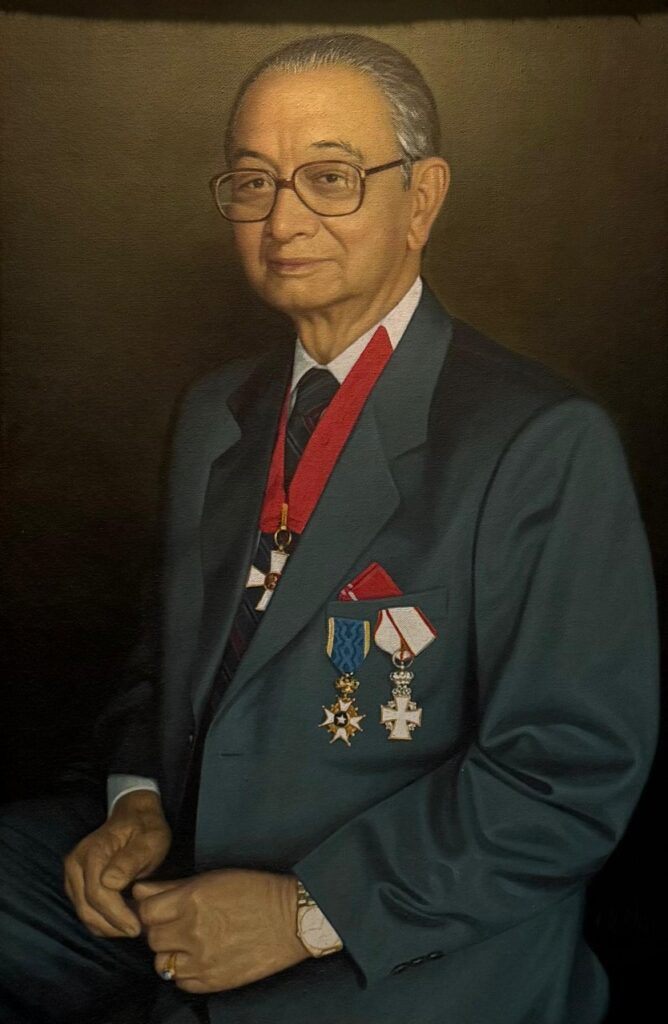
The Vienna Convention on Consular Relations 1963 was adopted at the United Nations Conference on Consular Relations in Vienna on April 24,1963, which was made effective only in March 1967. As such, in the absence of residential Embassies, the demanding diplomatic challenges, promoting economic diplomacy and safeguarding the interest of the sending States has further necessitated the presence of Honorary Consuls in international scenarios. As such, Sweden appointed Juddha Bahadur Shrestha in 1969 as the first Honorary Consul General for Sweden in Nepal and probably he must be the one of the first few individuals to be appointed as Honorary Consul General in the world. The historical Honorary Swedish Consulate General’s office was inaugurated jointly by the then eminent Swedish Ambassador residing in Delhi, H.E. Prof. Gunnar Edward Heckscher, and the then Hon’ble Foreign Minister of Nepal Gehendra Bahadur Rajbhandari on 10 February 1970. Later on, he was also appointed as the Honorary Consul General of Denmark and Finland in addition to Sweden. He was also bestowed with prestigious decorations from His Majesty the King of Sweden, Her Majesty the Queen of Denmark and the President of Finland recognizing the significant role he played in strengthening cordial ties, trade, tourism and people to people relations between the sending and receiving States.
During the 1970-80’s, Nepal was one the cherished destination for Hippies mainly from Scandinavian countries, and the Consulate in Nepal served the young distressed tourists with great efficacy, which was a very challenging, sensitive, and emotional task. Consul General Shrestha took great initiative for the exchange of high level political and business leaders’ visits and introduced Sweden to Nepal and Nepal to Sweden fostering early understanding and collaborative approach in key sectors. He also played a prime role in laying the foundation for official cooperations and cordiality between Nepal and Scandinavian countries.
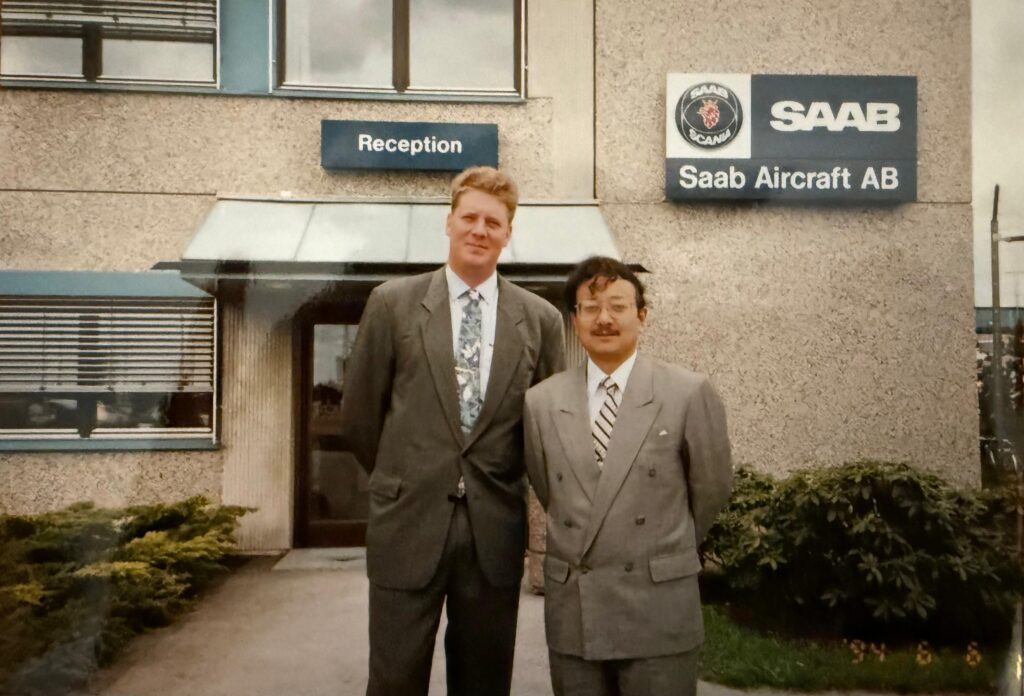
Building upon the solid foundation of his illustrious legendary father Juddha Bahadur Shrestha, Gajendra Bahadur Shrestha took the helm and significantly enhanced the scope of Sweden-Nepal relations. Appointed as Honorary Consul in 1986 and subsequently as Honorary Consul General in 1988, he navigated a crucial period in Nepal’s history, including the restoration of multiparty democracy reform, a Maoist insurgency, new constitution through Constituent Assembly, abolition of Monarchy and making Nepal a Federal Republic. He initiated furthering human resource development and strengthening democracy in Nepal. He promoted the engagement of Nepali journalists and politicians in a Swedish study tour focusing on mass media and democracy contributing to consolidating Nepal’s recently achieved hard earned democracy. Furthermore, he facilitated the involvement of several Swedish multinational companies such as ASEA/ABB, NCC, VOLVO, IKEA, SKANSA, SWECO, Atlas Copco, Tumba Bruk, SAAB, and so on, boosting economic collaboration of Swedish Companies in Nepal. He also facilitated visits of prominent personalities including Hon’ble Ministers, Parliamentarians, business and political leaders from both Sweden and Nepal, and even a brief transit visit of their Majesties King and Queen of Sweden during visit to Bhutan and received at the Nepal Airport by the then King and Queen of Nepal and Consul General in 1993.
He also advocated for Nepali professionals to pursue advanced training courses in Sweden in various disciplines such as Management, Communication, Hydropower, Banking, Watershed Management, Human Rights, Disaster Risk, Public Transport, and more. More than 700 Nepali professionals went to Sweden for the course. There were high-level exchanges of visits between Swedish and Nepali dignitaries, officials, political and business leaders and Ministers.
Nepal faced the most dreadful earthquake of 25th April 2015 in our living memory, destroying thousands of lives and livelihood, shelters and structures. However, the solidarity of the enduring resilient and resolute people of Nepal and overwhelming moral and material support from friendly countries like Sweden, has given substantial strength to overcome the terrible tragedy. Just four days after the disastrous earthquake, around 40 specialized field staff from Swedish Civil Contingency Agency landed in a special charter flight in Kathmandu on 29th April 2015. In close coordination with Nepali authorities and UN Humanitarian organizations, Swedish experts in the field of engineering, health care and management were in action coordinating need assessment in earthquake damaged areas of Kathmandu, Gorkha and Chautara. Furthermore, Swedish International Development Cooperation Agency (Sida) approved substantial funds, channeling it through UN agencies to aid in the relief and recovery efforts in Nepal and Sweden pledged 10 million dollars for earthquake response.
During the dreadful earthquake in 2015 in Nepal, the Consulate with good guidance of the Swedish Embassy in New Delhi rescued and repatriated many stranded Swedes. The then Swedish Ambassador Harald Sandberg also visited Nepal and personally supervised the rescue operation. In the aftermath of the earthquake, many Swedish dignitaries including Ministers visited Nepal. During that time, Deputy Secretary General of the UN, a Swedish national Jan Eliasson, also visited to inspect the damage and see the UN supported project of reconstruction and rehabilitation.
The global crisis of COVID-19 pandemic severely affected Nepal and the Consulate’s dedicated staff acted with great care and courage to overcome the most dangerous situation and assisted many stranded Swedes with timely support from the Embassy of Sweden in New Delhi.
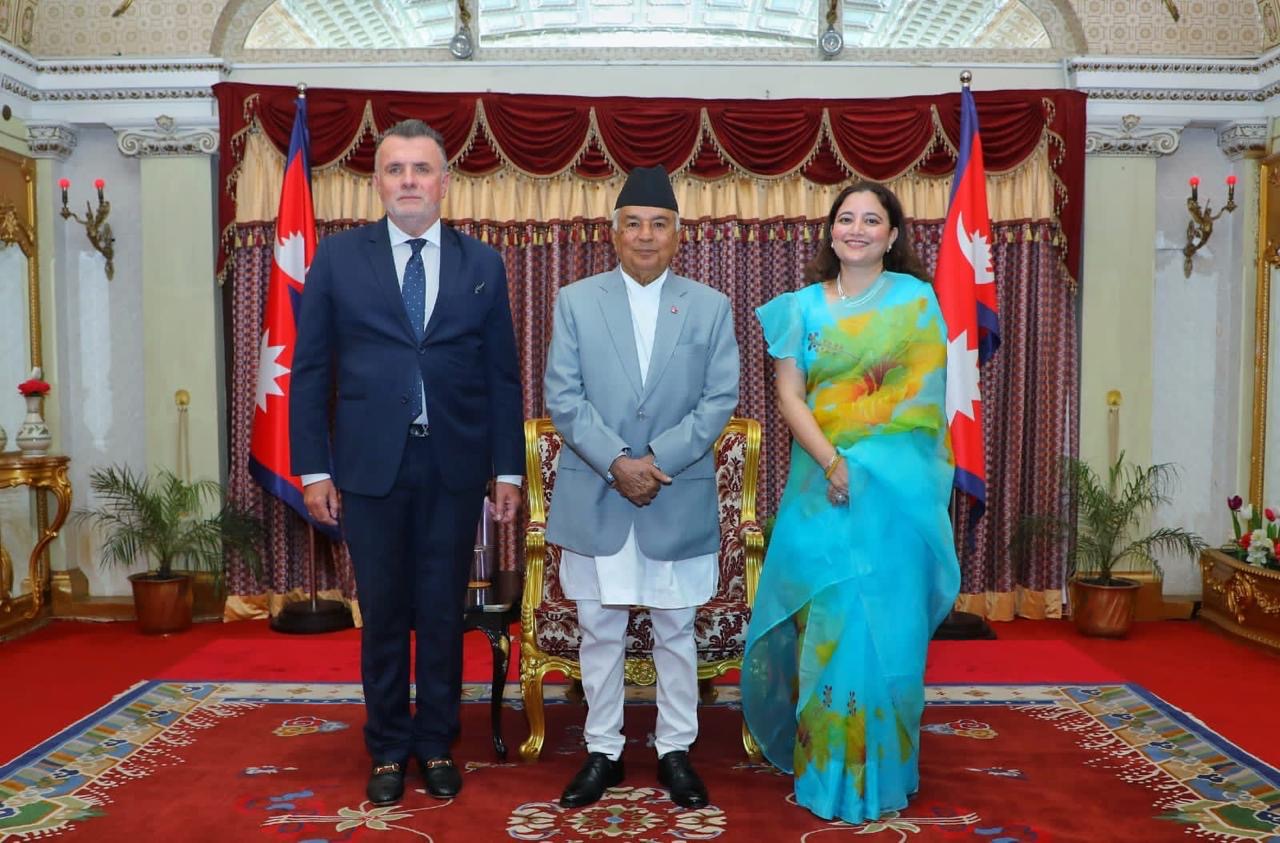
Continuing the legacy, third generation of the Shrestha family, I was appointed as Honorary Consul General of Sweden in 2022 after my father’s retirement. As the Honorary Consul General with a long family legacy, I have actively promoted Swedish companies in Nepal, with a particular focus on sustainable development and innovative solutions. I am also promoting innovative companies like 12iD, Spowdi, Hitachi Energy, Hexagon, Build up Nepal, Volvo CampX to Nepal, fostering commercial ties, innovation and driving economic growth. Key Achievements to date include championing climate cooperation, including supporting the GGGI-facilitated MoU with the Swedish Energy Agency to advance sustainability. Leading to a historical signing ceremony for cooperation under Article 6 of the Paris Agreement between Sweden and Nepal on the sidelines of COP29. We celebrated the proud moment when Sweden Alumni Network Nepal was recognized as “Network of the Year” in 2023 for advancing a fair and sustainable world.
Beyond specific achievements, my family’s legacy is defined by its unwavering commitment to the core values that underpin the Nepal-Sweden relationship: as the Champion of Democracy, Human Rights, Gender Equality, Women Empowerment, Innovative Inventions and Peace Building These values have guided their efforts to promote trade, investment, education, culture, and sustainability, creating a strong foundation for future collaboration. As Honorary Consul General, my vision is to foster deeper partnerships between Sweden and Nepal by promoting sustainable investments, Swedish technologies, and mutual growth through innovation, trade, tourism, education, and cultural exchange.
We extend our deep gratitude to the Swedish Government and all the distinguished Swedish Ambassadors beginning from H.E. Prof. Gunnar Hecksher in 1969 to the incumbent Ambassador H.E. Jan Thesleff and the colleagues in Embassy of Sweden in New Delhi, the supervising authority, for the invaluable support and guidance in discharging the consular duties and responsibilities.
Our family’s three-generation legacy stands as a testament to the power of individual dedication and the importance of long-term commitment in fostering international relations. As Nepal and Sweden continue to navigate a complex and rapidly changing world, our enduring contribution will undoubtedly serve as a guiding light, ensuring that the bond between these two nations remains strong and vibrant for generations to come.