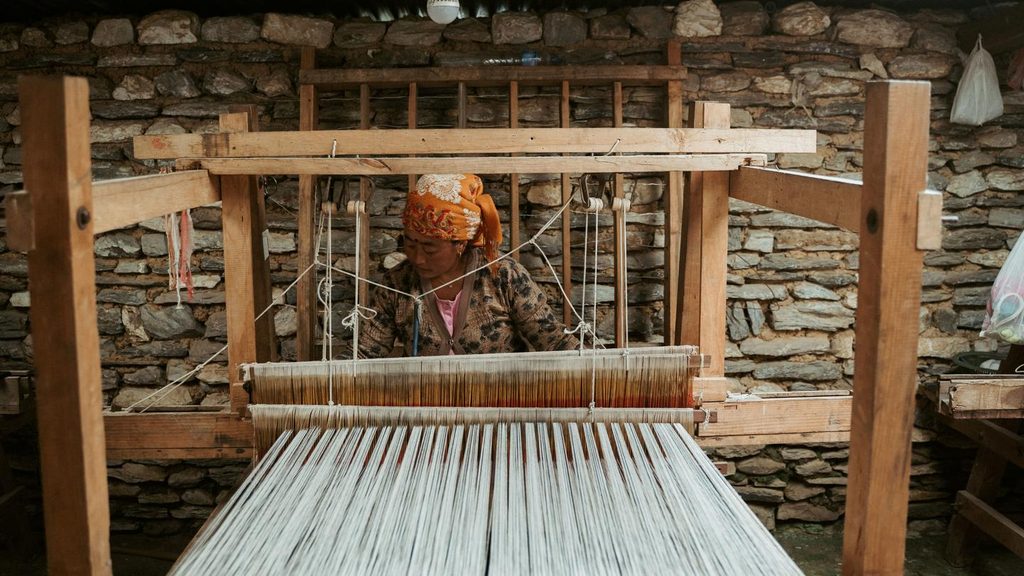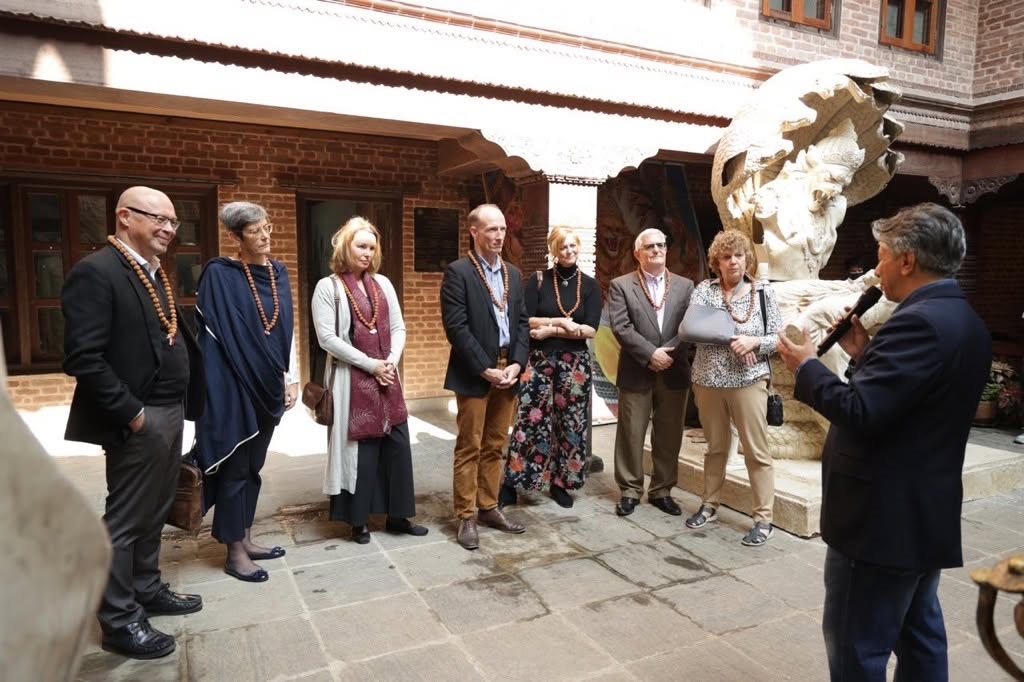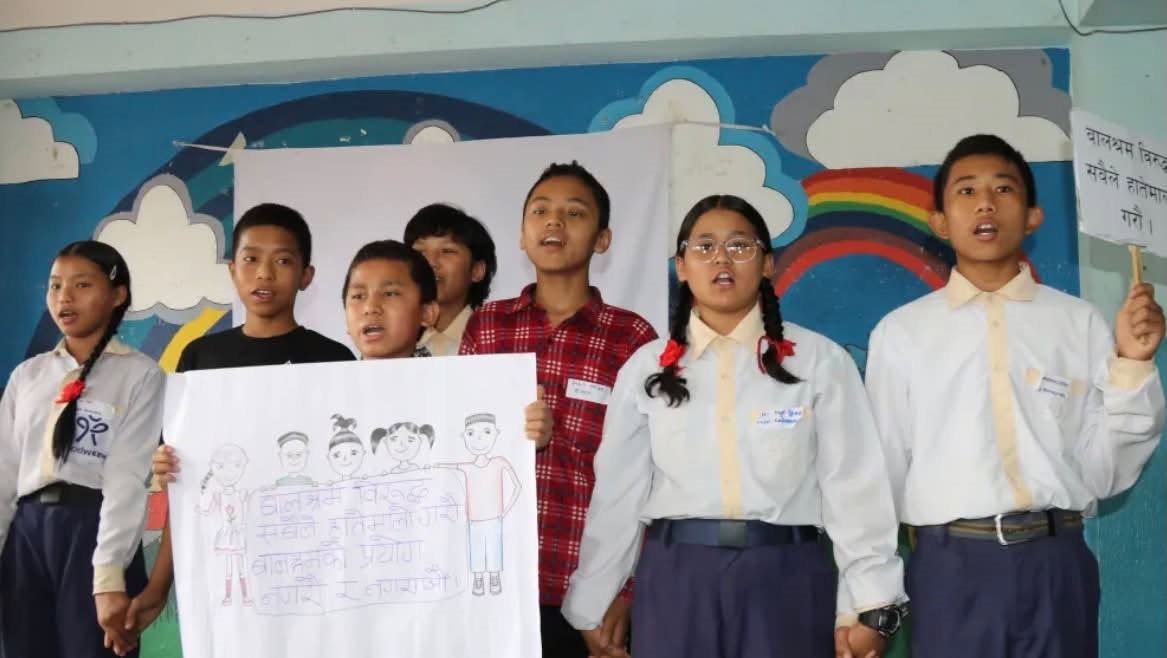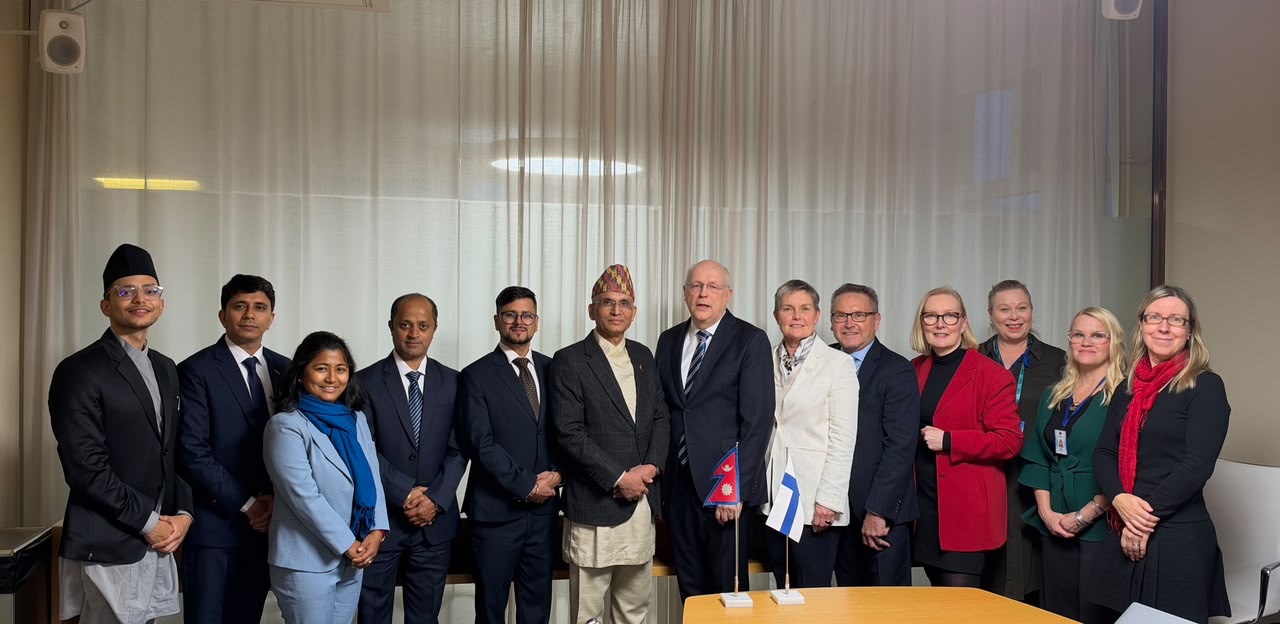

Across the Nepali mountains, economic value is captured through the skilful combing of Chyangra fibre by the Chyangra herders, in the transformation of Allo into thread, in the traditional knowledge of women who spin and weave and the tacit skills that have been handed down from generation to generation. These are not simply production activities involving fibres or textiles. They are expressions of people, place, culture, ecology and identity.
Nepal’s highlands boast distinctive fibres including Chyangra pashmina, yak and sheep wool, and Allo, the Himalayan giant nettle. Each conveys a story shaped by altitude, climatic conditions, breeds of animals, local biodiversity, and traditional knowledge. Yet, the intrinsic value of these fibres remain largely under-recognized in the marketplace. Small-scale herders, collectors, artisans, and cooperatives function in fragmented value chains, with a limited coordination and structure, market intelligence sharing, technology that could be replicated and direct access to major markets or buyers.
This is where geographical indications, or GIs, can become game-changing in rebuilding the identity of Nepal’s fibre products.
A GI identifies a product whose reputation, quality or characteristics are closely associated with its geographical origin. However, the importance of a GI extends far beyond a geographical name or a tag that is proudly displayed. If adequately developed, a GI can connect the cultural identity of the local producers with enormous economic opportunities. A properly managed geographical indication can describe the nuances of the products like what makes the product distinctive, the standards that the producers must meet, and assures buyers of authenticity with a credible story of people and place to the consumers.
Therefore, particularly for mountain communities and herders, a GI should not merely be perceived as an intellectual property exercise but also as a strategic tool of inclusive rural development.
Consumers around the world are concerned about their purchases and are asking specific questions before making purchasing decisions: Where did this product come from? Who produced this? Is it verified and authentic? Was it produced with respect for people, animals or the environment?
In view of rising concern among global consumers, Nepal’s mountain products are well-positioned to address these emerging market needs. Chyangra pashmina, Allo textiles, sheep wool and other natural fibres that combine origin, heritage and craftsmanship can help these products be distinguished in specialized markets. However, the heritage alone doesn’t automatically yield higher production income to the producers. The story of a product’s origin must be depicted and validated by dependable quality, traceability, appropriate processing, credible institutions and reliable commercial relationships.
Geographical indication is one of the most promising tools that helps create trust. A buyer may make one-time sales through appreciation of an inspiring mountain and producer’s story. However, an enduring commercial relationship requires evidence. Buyers for long-term sales need confidence regarding origin, fibre purity, consistency and processing practices. Producers, meanwhile, need systems that are affordable, understandable and suitable for remote mountain conditions.
Traceability of the products like mountain fibres should therefore begin with practical questions on the value-chain aspects of the product: Who produced the fibre? In which location? How was the value-chain process handled (collected, graded, stored and processed)? Which actors handled it before it became a finished product? What is the overall journey of the transformation of the product?
Implementing traceability requires producer records, collective quality standards, batch identification which need not necessarily be an advanced system. The system should be to protect authenticity and promote it without excluding smallholder farmers or processors who are the backbone of the value chain. Therefore, GI promotion of the products helps to create a link between quality improvement, compliance and origin tracking, ultimately ensuring effective market readiness of the fibre products.
An interesting factor in the recognition of Nepali mountain fibres in the global market is the traditional skill involved in processing and producing textiles. Nepal’s traditional fibre skills are valuable but operations are labour-intensive. Combing, spinning, extraction, weaving and dyeing involve considerable time and physical effort, particularly for indigenous women who are mainly engaged in these activities.
The process of fibre extraction should not replace traditional craftsmanship. Instead, it should identify appropriate technologies that reduce drudgery, improve consistency and allow artisans to retain the qualities that make their products unique.
Low-cost tools for cleaning, sorting, fibre extraction, spinning or quality testing could increase productivity and reduce losses ensuring quality and credibility of the GI products. Identification of the appropriate technologies should engage the local people using participatory approaches to ensure the capacity of operation meets the actual scale of production.
The foundational principle should therefore be coherence. It should keep communities that are responsible in advancing their traditions inclusive in technology selection.
To develop a credible GI system of the mountain fibre, the bottom line is to ensure collective management, ownership and governance among producer groups. All the major value-chain actors, herders, fibre collectors, processors, artisans, cooperatives, entrepreneurs are responsible for the delimitation of geography of origin-based products. They must participate in determining the production area, product characteristics, quality requirements, traceability arrangements and governance mechanisms. Producer organizations help aggregate supply, maintain standards, negotiate with buyers and reinvest in common services. A GI is the most powerful promotion tool when it is strengthened through such collective action rather than functioning simply as a logo used by individual enterprises.
To tap into the global market, trade fairs can open doors, but the standalone visibility of the products does not create markets. Producers need to be aware of market-ready products, clear pricing and specifications, strong origin stories, and disciplined follow-up with potential buyers. Likewise, investment forums must connect credible enterprises and GI producer groups with the finance, technology and services they need to grow and remain competitive. Promotion of the products using a GI tag or sign attracts attention. Preparation, trust and follow-through turn that attention into a lasting opportunity for the sustainable development of the mountain fibres in national and international markets.
Nepal’s mountain fibres are more than commodities: They embody distinctive landscapes, inherited knowledge and skilled craftsmanship. Geographical indications can transform these qualities into a trusted market advantage protecting authenticity while supporting rural enterprise, women’s participation and export growth.
The focus of Nepal’s mountain fibre should not be on competing through volume or price unless rapid expansion is done or commercial quantities are available. Its strength lies in origin, diversity and craftsmanship. When a product carries the name of a Nepali place or origin, it should carry a promise of genuine origin, dependable quality through adherence to standards and fairer value for its producers. By turning origin into trust and trust into opportunity, Nepal can take its mountain heritage to the world while keeping the benefits rooted at home.