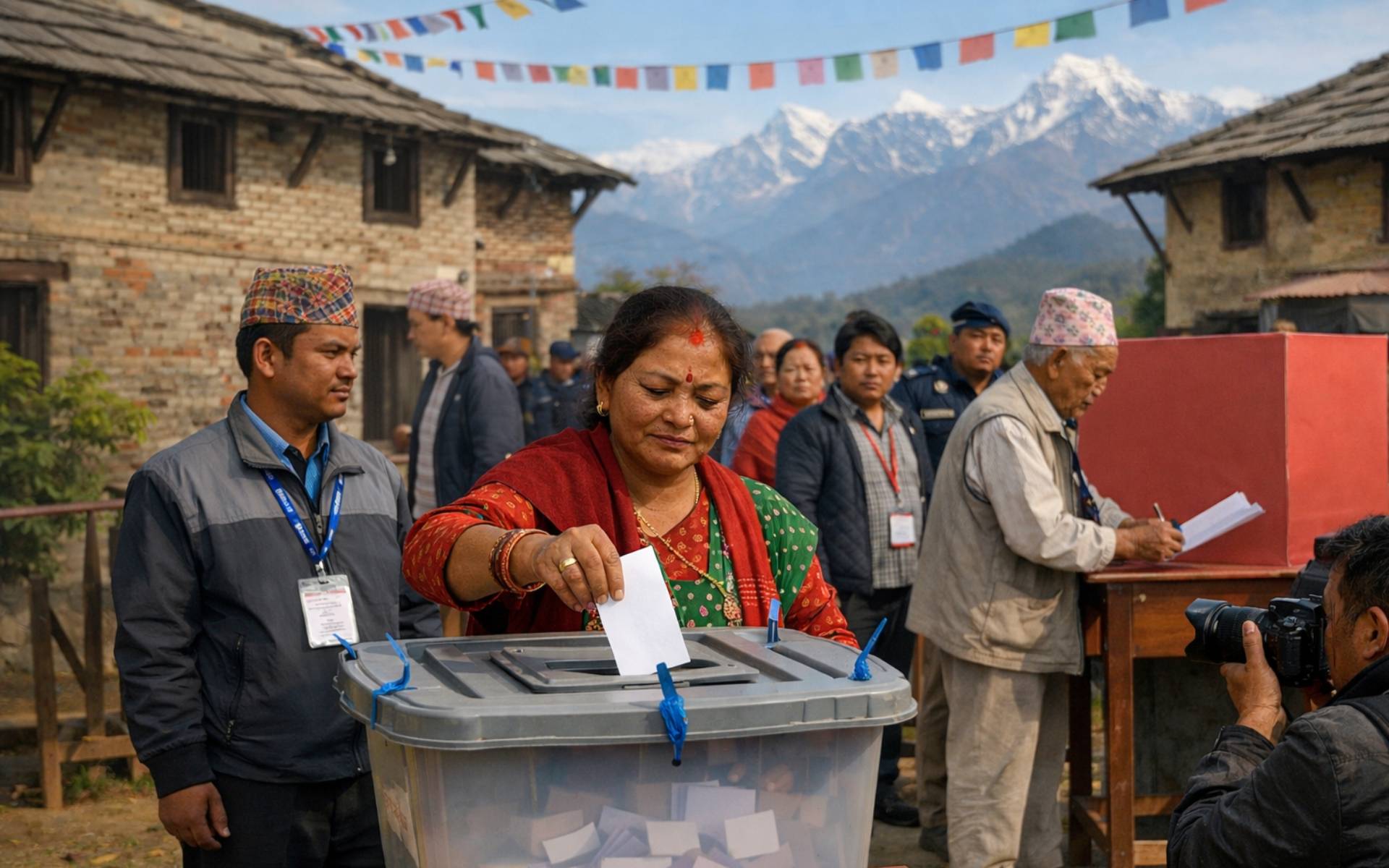
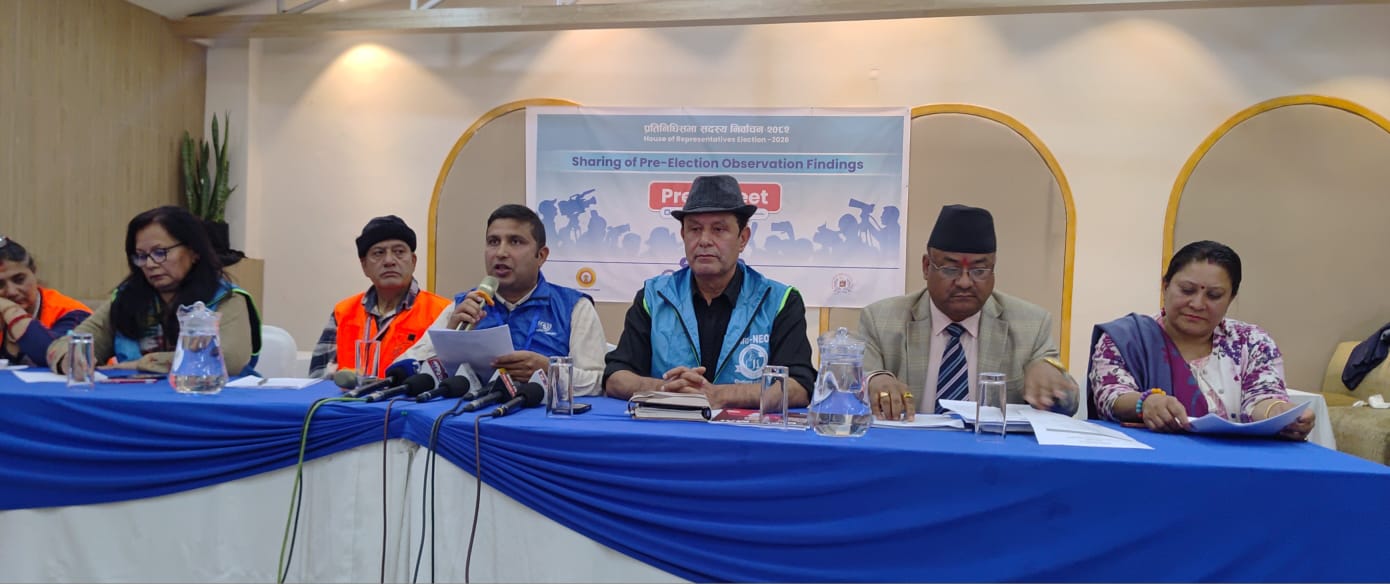
Kathmandu: With the House of Representatives (HoR) Member Election scheduled for March 5, 2026, four major election observer organizations have concluded that overall preparations for the polls have been completed nationwide, though violations of the election code of conduct—particularly through digital platforms—are increasing.
Issuing a joint preliminary observation report at a press conference in Kathmandu, the National Election Observation Committee Nepal, NGO Federation of Nepal, General Election Observation Committee Nepal, and Election Observation Committee Nepal stated that the Election Commission Nepal has completed necessary administrative and logistical arrangements.
Arjun Bhattarai, President of the NGO Federation of Nepal, said more than 4,000 observers from the four organizations have been deployed across the country to monitor the electoral process. He emphasized that their shared goal is to ensure a free, fair, and fraud-free election, adding that findings will be made public both before and after the polls.
A coordinated security mechanism comprising Nepal Police, Armed Police Force, the National Investigation Department, and the Nepali Army has been mobilized, with special arrangements in sensitive areas. Election staff have already been deployed, and essential materials, including ballot papers, have reached all districts. Both national and international observers have also been mobilized.
Despite the largely positive and peaceful environment, the observer groups reported a significant rise in violations of the election code of conduct, particularly through digital means. Unlike previous elections, where physical violations were more common, this time social media platforms have seen a surge in hate speech, defamatory remarks, abusive posts, and the spread of misinformation and disinformation.
The report noted that such activities are not limited to candidates and party workers but also involve voters, influencers, journalists, artists, and social activists. Dr. Gopal Krishna Shivakoti, President of the National Election Observation Committee Nepal, said observers have monitored compliance with election laws, constitutional provisions, voter processes, voter education, and issues related to out-of-country and inter-district voting. He stressed that the presence of observers helps deter irregularities and strengthens public confidence in the electoral process.
Krishnaman Pradhan, General Secretary of the General Election Observation Committee Nepal, said the four organizations are working jointly until the announcement of final results. He expressed concern that the Election Commission has largely limited its response to seeking clarifications and called for stricter enforcement and penalties against violators.
Shreekrishna Subedi, President of the Election Observation Committee Nepal, pointed out irregularities in campaign practices and recommended greater attention to regulating campaign activities and the use of election symbols in future elections.
The report documented multiple violations, including posting posters and pamphlets in public places, exceeding permitted rally sizes, using children and schools for campaign purposes, involving government employees and teachers in campaigning during office hours, misusing state resources, organizing assemblies beyond legal limits, excessive use of loudspeakers, and spreading hate against rival candidates.
Concerns were also raised about certain media outlets allegedly engaging in biased reporting, publishing misleading projections, and disseminating misinformation. Clarifications have reportedly been sought from some media organizations. Limited communication access in rural areas was cited as a challenge to ensuring fair information dissemination.
Voter Roll and Education Gaps
The observers reported that approximately 915,000 new voters have been registered. However, the absence of provisions for out-of-country and inter-district voting may prevent many eligible voters from casting their ballots. Issues such as duplicate voter entries, online system errors, and delays in updating voter rolls were also noted.
Voter education programs were described as largely limited to basic voting procedures and insufficient in rural areas. Targeted outreach to youth, women, senior citizens, and persons with disabilities was found to be inadequate, and mechanisms to measure the effectiveness of voter education were said to be weak.
Security and Campaign Spending
The number of sensitive polling centers has increased, and isolated disputes and clashes between party supporters have been reported. The Election Commission has urged strict compliance with the code of conduct during the silence period beginning midnight of Falgun 18 and imposed restrictions on alcohol sales and vehicle movement during the voting period.