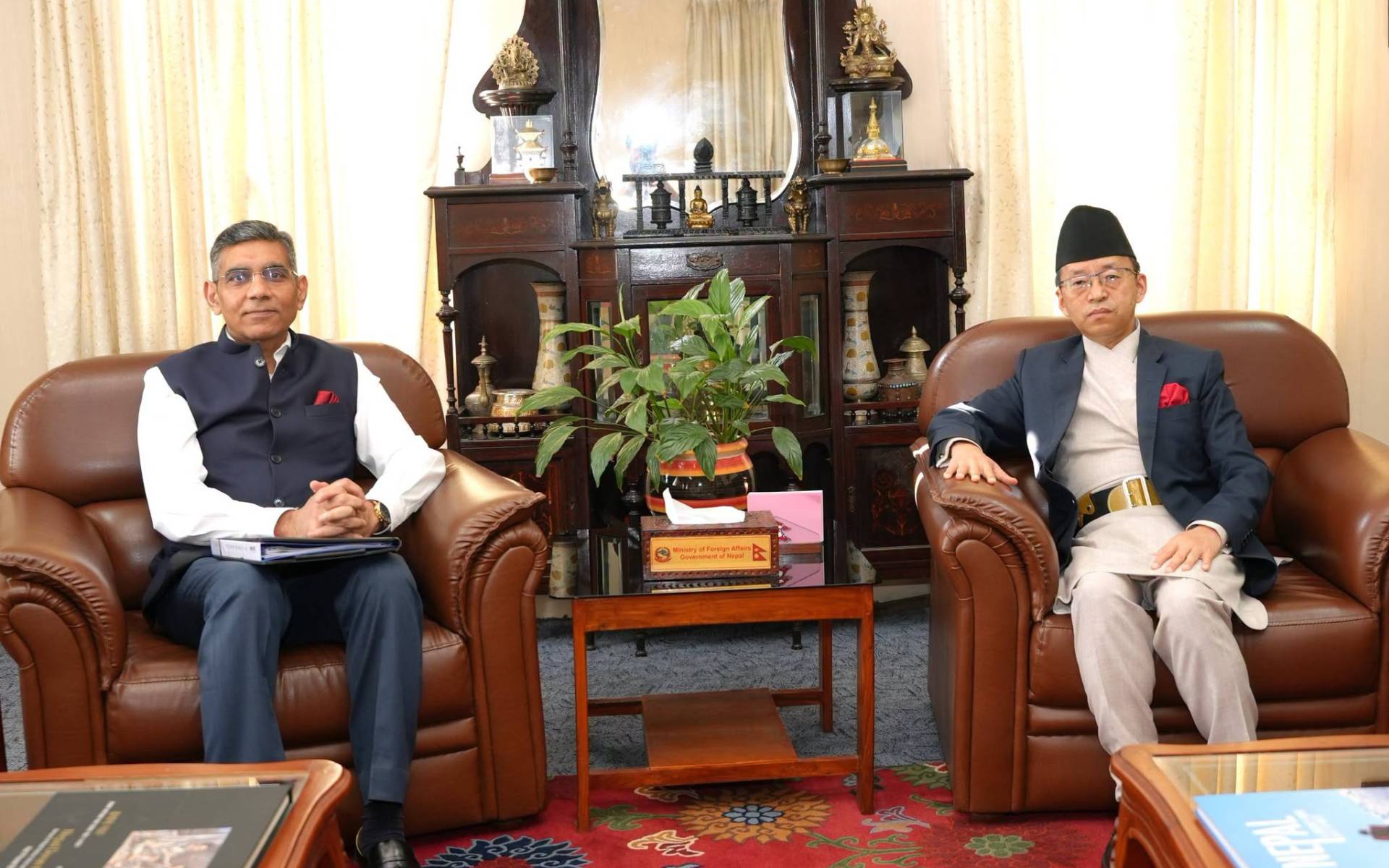
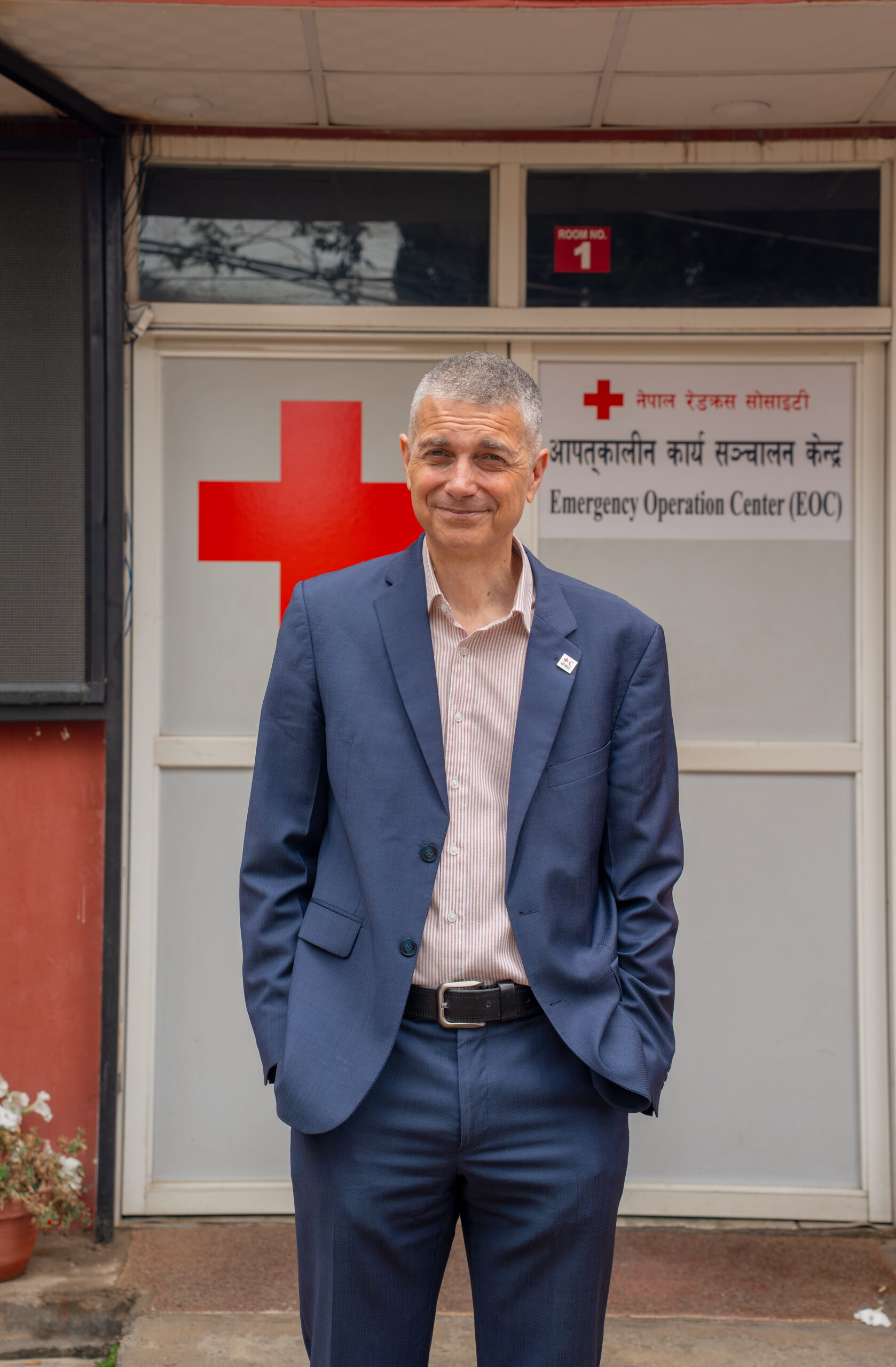
The International Federation of Red Cross and Red Crescent Societies (IFRC) is the world’s largest humanitarian network, which supports local Red Cross and Red Crescent action in more than 191 countries, bringing together more than 17 million volunteers for the good of humanity. Among many other actions, the IFRC and its 191 National Societies respond to, and work to prevent or lessen the impacts of, all types of crises and disasters, for all people, with particular focus on supporting the most vulnerable. Saving lives, reducing suffering and upholding human dignity are among the major priorities of IFRC. In a flagship ‘five questions’ interview with The Diplomat Nepal, Mr. David Fisher, Head of Delegation of IFRC to Nepal, shared his perspectives on various issues.
1. The IFRC is one of the oldest international humanitarian organizations but it is not thebest known. What makes you different from other agencies? Is your model still relevant? What does it mean for Nepal?
As a member-owned network, the International Federation of Red Cross and Red Crescent Societies’ (IFRC) model is to channel the global solidarity of our members and donors tosupport the humanitarian and public health action of each member as needed. This makes us different from international agencies that intervene directly in crises or that pick and choose local partners according to their external priorities. There can be only one National Red Cross or Red Crescent Society in each country and our job is to support it to constantly improve its services according to its own priorities, safeguard its integrity, earn the trust of communities, and to be a partner of choice for the public authorities, to whom it should serve as an “auxiliary in the humanitarian field.”
Our model may be over 100 years old, but we think it is more relevant than ever. It is sustainable, despite the ebb and flow of global financing trends. It is focused on local leadership and strictly guided by the humanitarian principles that the Red Cross and Red Crescent Movement helped to create. It is a powerful way to link global experience and standards with local presence.
In Nepal, the Nepal Red Cross Society has grown to be the nation’s largest humanitarian organization, working through community-level volunteers in over 1,500 offices, present in every district. It is the nation’s largest supplier of blood transfusion services, a major provider of eye care and community-based public health, and a crucial component of the national response structure for disasters and other emergencies.
Over a dozen other IFRC members (we call them “Partner National Societies”) and the IFRC secretariat partner regularly with Nepal Red Cross to raise funds and, when requested, provide expertise to bolster Nepal Red Cross response to major disasters, strengthen resilience and improve the health of Nepalis. To give just a few examples, after the 2015 Gorkha earthquake, our international appeal enabled Nepal Red Cross to reach over 1.7 million Nepalis with relief and recovery aid. Last year, we enabled the Nepal Red Cross to respond to drought and floods in Madhesh, as well as serving as the authorities’ main partner in containing a cholera outbreak, reaching over 500,000 people in support of vaccination. In the Kathmandu valley, we are supporting Nepal Red Cross to pilot one of our network’s first “early action protocols” for humanitarian responses to air pollution. In Kailali, the IFRC network is supporting Nepal Red Cross to partner with WWF to deliver integrated nature-based solutions to disaster risks and environmental stresses in the Mohana River Basin. For its part, the Nepal Red Cross also contributes its know-how, its experts and its experiences with other National Societies through our network. It has been a global innovator in areas such as anticipatory action, early warning and early action and fostering youth climate entrepreneurs.

2. With the Government of Nepal requesting the UN for a three-year postponement of its Least Developed Country (LDC) graduation to November 2029, it is clear that the country’s economic and structural readiness needs more time. How can this additional three-year window be used most effectively to bridge the gap between national policy and community resilience?
In anticipation of letting go of the kinds of international assistance that come with LDC status, the next few years could be used for a deep analysis of national priorities, which will be critical to weather a (hopefully) temporary loss of income pending a rise in investment. It could also be used for rallying civil society and the commercial sector for their support in national priorities related to community resilience. However, the value of this private-public cooperation would be lost if it were to be attempted with a command and control mindset. No one works well or creatively when they are ordered around.
As a foreigner, Nepal’s priorities are not my call to make. When it comes to community resilience, I can just mention the opportunities I see. Nepal has made incredible strides in improving public health indicators in last few decades, but some of the upward trends have reached a plateau and there are still gaps. Most worrying is the lack of full access to clean water, the foundation of good health. This is part of why Nepal still has a very high endemic rate of cholera (on average, over 4,000 cases per year). With concerted action over the next few years, Nepal could completely end this disease at a national level. Likewise, rising air pollution (already considered Nepal’s top killer by the World Bank) and climate-driven heat waves in major cities have the potential to dramatically impact Nepalis’ health, which will drag down its economy.
Nepal is already a global leader when it comes to mountain community resilience. But systems for early warning and early action concerning mountain-origin hazards, such as floods, landslides and “air pollution bowls”, are incomplete. Seismic risk in Nepal is at the top of the global charts, but preparedness in many hilltop communities is still low. All of these issues could be improved with modest investment.
Nepal is playing a pioneering role in the Early Warning for All initiative launched by UN Secretary Antonio Guterres. With leadership from the National Disaster Risk Reduction and Management Authority, Nepal is currently finalizing a national roadmap to ensure effective warning and action systems reaching all Nepalis by 2030, setting a high ambition to save lives. The way to make all of this affordable and sustainable is to further engage communities themselves in running the systems and to further empower local authorities. Stronger links can be made between hilltop and valley municipalities and communities for warning and preparedness, so that they work together to identify risks, raise the alarm and act to protect themselves.
3. The IFRC’s “Strategy 2030” asserts that the greatest vulnerabilities and threats to health resilience over the next decade are going to be as a result of multiplier effects from population movements, epidemics, conflicts, non-communicable diseases, natural and technological disasters, and climate change. How does this inform your work in Nepal?
Climate change, disasters, migration and rapid urbanization are clearly impacting Nepalis’ health, just as they are doing in other countries around the world. For instance, last year’s drought in Madhesh—the first but likely not the last national drought emergency—most probably had a role in sparking the cholera outbreak, as people turned to unclean water sources. As people move to cities, they lead more sedentary lifestyles and eat less nutritious foods, increasing the risk of heart conditions.
The Nepal Red Cross was part of the creation of the IFRC’s Strategy 2030 and has been applying its principles at home through integrating its programming and mobilizing its volunteers. Increasingly, when local chapters run blood drives they also check blood pressure. When the national elections were held in March, Nepal Red Cross first aid volunteers were deployed to polling places all across the country to be ready if needed. Volunteers are providing information to their communities on safe hygiene practices and family planning. Nepal Red Cross is also integrating preparedness to respond to non-communicable diseases in post-disaster settings and supporting the authorities to do the same. Critically, Nepal Red Cross is reaching to youth to play a leading role on public health. For instance, the IFRC is supporting Nepal Red Cross to partner with the National Youth Mobilization Against TB (NYMAT) to empower Red Cross youth groups to share information about TB in their communities, to encourage checkups when symptoms arise and to advocate for the rights of persons with TB.
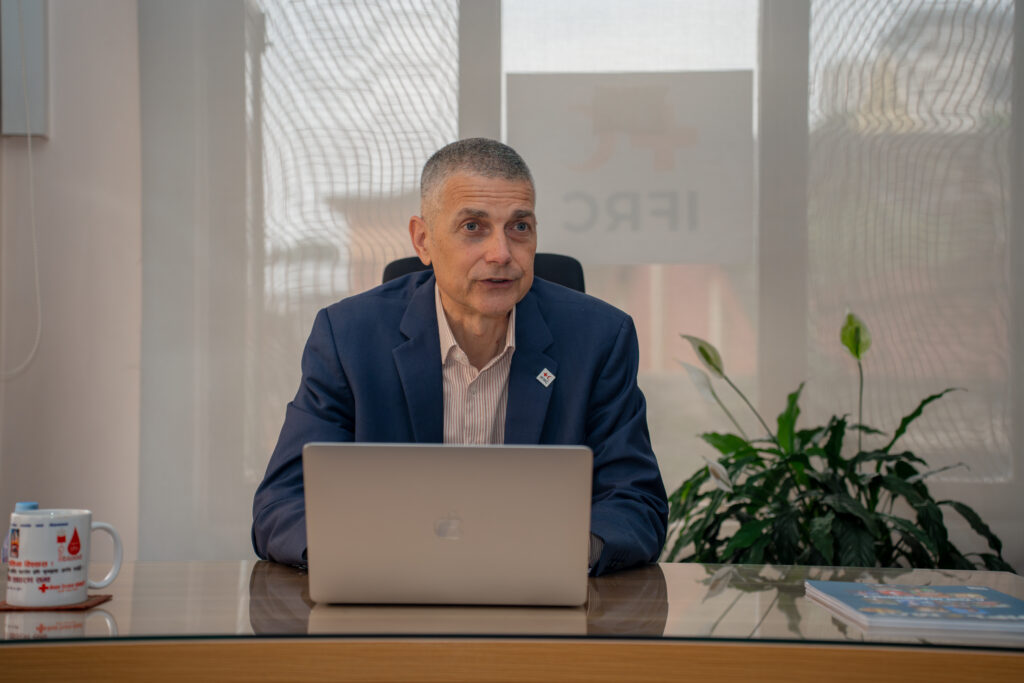
4. Historically, families and communities affected by seasonal disasters have raised concerns regarding the delayed arrival of relief materials and support. What key lessons has the Red Cross network extracted from past monsoon responses in Nepal, and what structural improvements are being implemented this year to accelerate delivery timelines?
Even before we get to relief, it is crucial that early warning messages about impending disasters are delivered in a timely manner, in languages that communities understand, and that the communities are prepared about how to act to take action to protect their families, livestock and moveable property from damage. Strong coordination and agreed protocols among different levels of government and humanitarian partners are critical. In April, on behalf of the partners working with the Government in its work on Early Warning for All, IFRC supported the National Disaster Risk Reduction and Management Authority to organize its first early-warning-focused simulation exercise in preparation for monsoon floods engaging multiple federal ministries, provincial and local governments, emergency operation centers, security forces, Nepal Red Cross Society, humanitarian clusters, UN agencies, private sector (telecom and media), and community representatives. We learned a lot that will help us if we have to face these issues in the coming months. We have also learned that if we prepare well and commit to action immediately after forecasts, we can make a big difference in outcomes. This is called anticipatory action and the Nepal Red Cross has been playing an important role working with the authorities, who have just adopted a “National Roadmap” to move this forward.
When it comes to relief after floods and landslides, access to affected communities is often limited due to damaged roads. With support from the IFRC network, Nepal Red Cross has pre-positioned relief items (such as mattresses, blankets and hygiene kits) in small warehouses in every district, with larger stocks in warehouses at the provincial and national levels to supplement. These are ready for immediate distribution in the case of emergency. However, follow-up work for repairing or reconstructing damaged homes, and the provision cash and training to restore livelihoods and lost property are still often delayed due to the painstaking process that is taken with the authorities to identify beneficiaries. It is important to target well, based on the greatest need, but this is something we hope we can improve moving forward.
5. Given that the Nepal Red Cross relies on an incredible network of volunteers across all 77 districts who are the true first responders during disasters, how is the IFRC shifting both training and resources directly to the grassroots? Specifically, what progress has been made in 2026 to ensure that the local communities participate in the management of humanitarian financing?
The Nepal Red Cross is quite decentralized, enabling its local chapters to play a leading role in the response to disasters in their communities, in close coordination with municipal and district authorities. Since they act through volunteers, this requires frequent refresher training and adequate stockpiles. Support from Nepal Red Cross’ headquarters is supplemented by IFRC and Partners National Societies, working with chapters in areas of the country at particularly high risk.
In addition to this institutional preparedness, the Nepal Red Cross has been strengthening its approach to training community members themselves to take protective steps and in “community engagement and accountability” to ensure that its programming actually responds to the needs as communities see them. It is working toward ambitious goals to increase the proportion of its aid that it provides to affected persons through cash transfers, which are the most efficient and dignified way to enable them to help themselves. In 2025- 26, the Nepal Red Cross has undertaken one of the first global pilots of the IFRC’s new “Community Trust Index” to gauge how successful it has been in listening to community voices. It has also served as a “Community Engagement and Accountability Ambassador” to other National Societies, sharing its experiences and challenges and helping them to strengthen their efforts.