When the aircraft of Himalaya Airlines, a Nepal–China joint venture, landed at Lhasa Gonggar International Airport in the last week of October, the sky was blue and the air crisp. The airport, located about an hour’s drive from Lhasa, the capital of the Tibet Autonomous Region (now officially known as Xizang), instantly feels like any other modern Chinese airport. Once you exit, you are greeted by the green river, colorful autumn trees, and a vast landscape that feels somehow familiar. The geography evokes Mustang, the bordering Himalayan district of Nepal, but the realities across the border differ markedly.
Era of Modernism
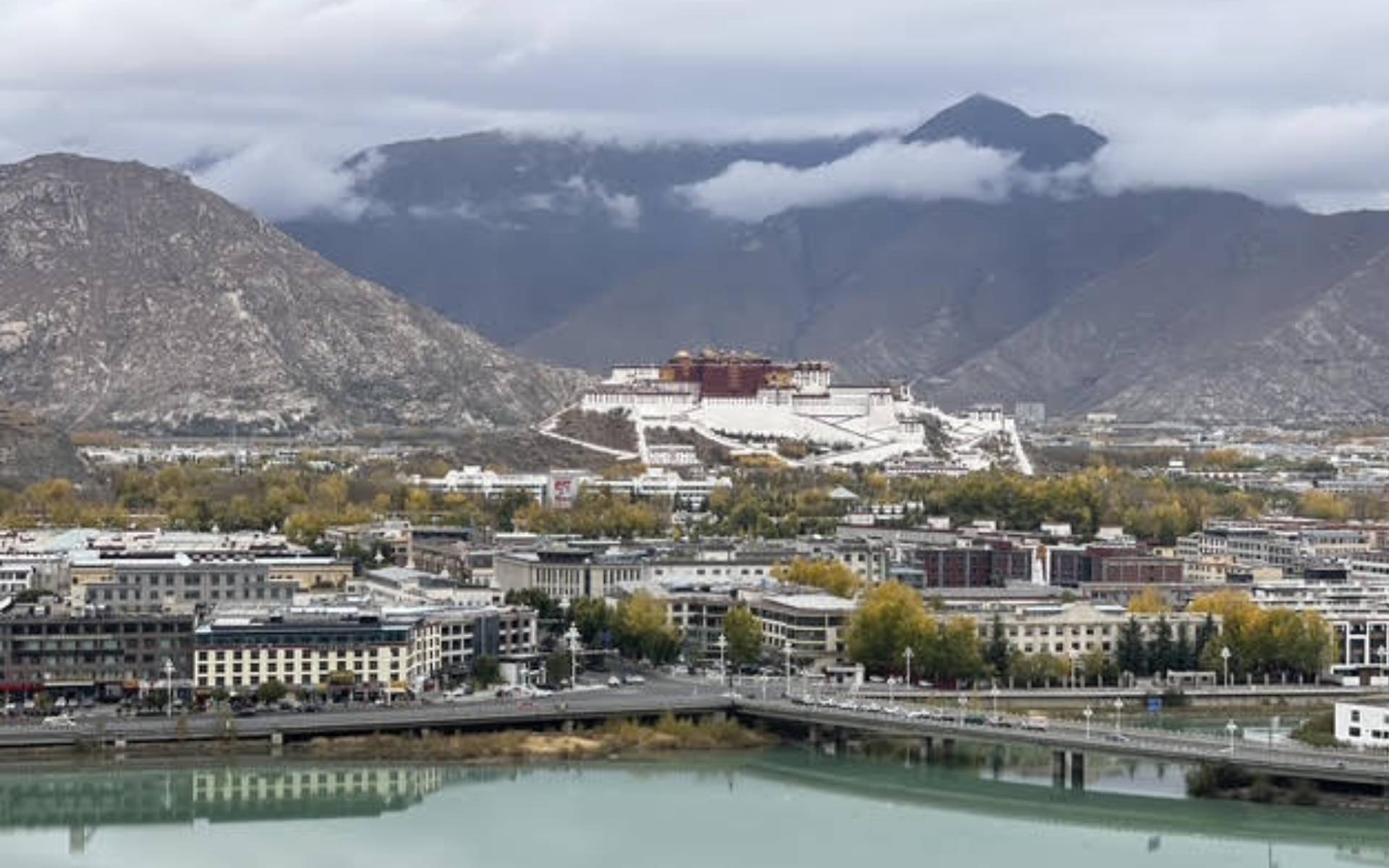
The highway connecting the airport to the city center passes through at least three tunnels, an infrastructure feat even above 3,500 meters. The drive doesn’t feel long, as ongoing construction and newly built structures are visible everywhere, from industrial buildings to apartments, shopping malls to star hotels. Numerous bridges connect the two sides of the Lhasa River, a tributary of the Yarlung (Brahmaputra).
Despite its high, cold plateau location, Lhasa offers remarkable signs of modern development similar to mainland China. Infrastructure such as airports, roads, bridges, and industries has expanded significantly, with the housing sector growing as never before. From shopping chains like Wanda Plaza to the tea brand Chagee, Lhasa not only conveys a modern vibe, but also reflects the lifestyle of today’s generation.
According to official reports, in the first half of 2025 alone, the region’s GDP rose 7.2 percent year-on-year to USD 19.27 billion (138.27 billion Yuan). The GDP is expected to exceed 300 billion Yuan this year.

Spiritual heart of Xizang
The heartbeat of Tibetan civilization, Lhasa was once known as a trade hub on the old Tea Horse Road. It also has ancient trade and connectivity ties with Nepal. Even today, the famous Barkhor Street is filled with Tibetan craftsmen and traders selling various goods, with one red signboard reading “Syamukapu Nepali Shop.” Among many bustling stores, this century-old shop instantly catches the eye of tourists and pedestrians.
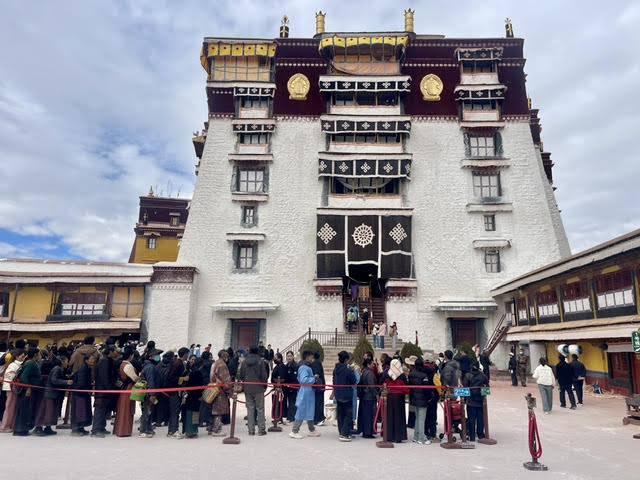
Lhasa is not merely a trading point, but has centuries of spiritual, political, and cultural richness. Today, it is a foremost destination for Tibetan Buddhists seeking enlightenment. The towering Potala Palace is the spiritual heart of Xizang and a symbol of its identity. Rebuilt in the 17th century, the palace has around 1,200 rooms and served as both a seat of political power for the Dalai Lamas and a spiritual sanctuary. After two to three hours exploring the palace, visitors feel a deeper spiritual connection.
Lhasa also offers other landmarks like Jokhang Temple and a rich Buddhist culture. Constructed in the 7th century by Tibetan King Songtsen Gampo, who married the Nepali princess Bhrikuti, the temple once housed a Buddha statue from Nepal, which has since been moved to another temple. Faith in the life-sized, accurate portrait of Shakyamuni Buddha in Jokhang Temple makes it a center of Buddhism. While most temples face toward the mainland, Jokhang uniquely faces west, toward Bhrikuti’s home, Nepal. Nepali elements are also evident in the temple’s architecture. This reflects the deep connection between Lhasa and Nepal over centuries, which has continued to grow in recent years through various forms of cooperation and exchange. Notably, Lhasa has established a sister-city relationship with Nepal’s capital, Kathmandu.
The temple is not just a sacred site, but also the center of daily life for Lhasa’s people. Locals in traditional attire are seen chanting mantras, performing koras, and sunbathing around the site. This makes the area lively and an important part of Tibetan culture.
Green Lhasa
Beyond religious and cultural attractions, Lhasa also offers opportunities to explore nature conservation and ecological protection. It is setting an example with ample urban green spaces, wetland restoration, and community parks, branding itself as “Green Lhasa.” Trees ring the city, unexpected in a place often assumed to be dry and barren, alongside extensive grassland vegetation. According to official data, the city has 40.22 percent green coverage and 12.73 m² of park space per capita.
Lhasa is working to turn its high-altitude reality into a green, thriving, and sustainable city. A Nepali cultural team, Dipak Sarkar, Chairperson of Nepal World Culture Net, and Pradeep Shrestha, Co-Founder of Aarohan Gurukul Theater, who first visited Lhasa in the 1990s, echo this view. “Lhasa has transformed through impressive development, mostly in urban planning and ecological protection,” Sarkar says. Shrestha, visiting the city after 29 years, couldn’t recognize the old lanes. “I vividly remember walking the rough, tiny road in front of Potala Palace; now it’s almost unrecognizable.” Behind the rapid development lies proper urban planning with strong emphasis on ecological protection; useful lessons for Nepal, which shares similar topography.

For years, Lhasa and the whole region were perceived through a narrow Western lens of isolation and restriction. In reality, Xizang is beyond imagination and is pursuing a development path that meets local needs and aspirations. As it advances toward prosperity, neighboring Nepal has ample room to learn and opportunities to deepen centuries-old friendship and cooperation.