
It is often said that the twenty-first century is becoming Asia’s century. Across our continent, millions of people are witnessing unprecedented improvements in connectivity, technology, innovation, and economic opportunity. Asia has become one of the principal engines of global economic growth, accounting for over 60% of global economic growth in recent years. This remarkable transformation offers renewed hope, not only for Asia, but also for a more prosperous and interconnected world.
The continued rise of China and India has been central to this transformation. Together, they are home to nearly 2.9 billion people, representing well over one-third of humanity. They are among the world’s largest economies and increasingly important drivers of global trade, investment, manufacturing, innovation, and technological advancement. For neighboring countries, including Nepal, the continued progress of both India and China creates significant opportunities to expand trade, attract investment, strengthen connectivity, promote tourism, and deepen economic cooperation.
Nepal sincerely welcomes the continued development and prosperity of both our neighbors. We remain committed to further strengthening our longstanding bilateral relations with India and China independently on the basis of sovereign equality, mutual respect, mutual benefit, and sensitivity to each other’s legitimate interests and concerns.
For Nepal, foreign policy is also about improving the lives of our people. It is about creating opportunities for trade and investment, employment and entrepreneurship, tourism and technology, innovation and sustainable development. It is in this spirit that economic diplomacy has become one of the defining priorities of Nepal’s external engagement.
Five reflections
First, Asia’s transformation presents unprecedented opportunities for shared prosperity. Advances in technology, digitalization, artificial intelligence, infrastructure, and logistics are bringing markets and societies closer than ever before. Supply chains are evolving, new centers of innovation are emerging, and economic opportunities are expanding across our region. Our task is to ensure that these opportunities become more inclusive and benefit all our peoples. Economic growth is no longer a zero-sum endeavor. The prosperity of one nation can create opportunities for others through commerce, investment, tourism, innovation, and stronger people-to-people connections.
As Asia continues its remarkable transformation, cooperation will remain the surest pathway to sustainable growth and lasting prosperity.
Second, South Asia possesses enormous promise, but much of its economic potential remains untapped. South Asia is home to nearly one-quarter of humanity and boasts one of the world’s youngest populations, with over 50% of its population under the age of 25, rapidly expanding consumer markets, and immense entrepreneurial potential. Yet, it continues to remain one of the least economically integrated regions in the world. While intra-regional trade accounts for around 60% of total trade within the European Union and more than 20% within ASEAN, it remains only about 5% to 7% in South Asia.
This gap represents not simply a statistic, but an opportunity. Greater connectivity, improved transport and logistics, efficient trade facilitation, stronger investment flows, resilient supply chains, and enhanced business partnerships could unlock substantial economic gains for our region. At the same time, engagement between China and South Asian countries has expanded considerably through trade, investment, infrastructure, education, tourism, and cultural exchanges. These evolving partnerships have created new opportunities for development and prosperity across the region. As the aspirations of our young people continue to rise, regional cooperation must increasingly focus on creating quality employment, fostering innovation, encouraging entrepreneurship, and improving living standards.
Ultimately, the success of our cooperation should be measured not by the number of agreements we sign, but by the opportunities we create for our citizens.
Third, Nepal’s new government has placed economic transformation and prosperity at the center of its national agenda. The Government of Nepal is committed to accelerating economic growth, creating productive employment, and improving the quality of life of our people. Our priorities are clear: Strengthening infrastructure, attracting quality investment, expanding exports, promoting tourism, developing clean energy, accelerating digital transformation, encouraging innovation, modernizing agriculture, and creating an economy driven by entrepreneurship and a vibrant private sector.
Accordingly, economic diplomacy has assumed a central place in our foreign policy. Our diplomatic engagement today extends well beyond traditional political relations. It seeks to mobilize partnerships that support Nepal’s development priorities by promoting trade, investment, technology transfer, tourism, education, and innovation. Nepal welcomes cooperation from all friendly countries for sustainable, inclusive, and resilient development. We also welcome responsible investors who bring not only capital, but also technology, skills, innovation, and access to international markets. Our objective is not simply higher economic growth. It is the growth that is productive, inclusive, resilient, and capable of creating meaningful opportunities for every Nepali citizen.
Fourth, Nepal offers unique strengths and opportunities that complement Asia’s continued rise. Nepal approaches the future with confidence, stemming not only from our location, but also from the immense strengths and opportunities that our country possesses. Situated between two of the world’s largest and fastest-growing economies, we view our geography as an enduring economic opportunity. Our aspiration is to transform Nepal from a landlocked country into a vibrant, dynamic bridge connecting China and South Asia.
By enhancing cross-border transport connectivity, digital highways, trade facilitation, and people-to-people exchanges, we can seamlessly link markets that house nearly 40% of the global population. Connectivity, however, should not be understood merely in terms of roads and physical infrastructure. It is equally about facilitating the seamless movement of goods, services, investment, technology, knowledge, and ideas. It is about building resilient supply chains, improving logistics, simplifying customs procedures, strengthening digital connectivity, and creating an enabling environment for business.
Nepal possesses exceptional comparative advantages. With an estimated economically viable hydropower potential of over 42,000 megawatts, Nepal can become an indispensable contributor to regional clean energy security while supporting the global transition towards renewable energy. Likewise, our rich biodiversity, abundant water resources, fertile agricultural valleys, and growing digital ecosystem present significant opportunities for sustainable investment and innovation.
Crucially, our geopolitical and economic bridging role is deeply underpinned by our profound civilizational assets. Nepal is proud to be the birthplace of Siddhartha Gautam, Lord Buddha, an apostle of peace, compassion, and enlightenment whose teachings illuminate the path for billions across Asia and the world.
Furthermore, through figures like Guru Rinpoche (Padmasambhava), who attained enlightenment in Kathmandu valley, and whose spiritual journey deeply linked the sacred valleys of Nepal with Tibet and the wider Himalayan region, we share an enduring civilizational heritage with both South Asia and China.
These shared spiritual and cultural roots transcend borders, serving as a powerful soft-power bedrock for mutual trust, regional harmony, and people-to-people connectivity.
Nepal is also blessed with extraordinary soft-power assets. As the home of Sagarmatha, the world’s highest peak, UNESCO World Heritage sites, and eight of the world’s fourteen highest mountains, Nepal occupies a unique place on the global tourism map. These are not merely symbols of our identity; they are valuable economic assets capable of generating employment, attracting investment, and promoting sustainable development. Tourism—spanning adventure, pilgrimage, eco-tourism, and wellness—remains one of our greatest strengths, offering vast potential for responsible investment and inclusive growth.
Finally, our shared future depends on building practical partnerships for shared prosperity. The opportunities before us are substantial, and the challenge now is to translate those opportunities into tangible outcomes for our people.
Nepal will continue to strengthen its bilateral partnerships with both India and China, recognizing the immense value of these longstanding relationships founded on friendship, mutual respect, and mutual benefit. At the same time, Nepal remains firmly committed to promoting regional and sub-regional cooperation that advances connectivity, facilitates commerce, expands markets, and contributes to sustainable development.
Together, we succeed
In today’s world, economic resilience increasingly depends upon collaboration. Trade and investment stimulate industrial development and generate productive employment. Energy cooperation improves regional energy security while accelerating the transition to cleaner power. Digital transformation, artificial intelligence, and emerging technologies offer unprecedented opportunities to improve productivity and economic competitiveness. Universities, think tanks, and research institutions can deepen collaboration in science, innovation, public policy, and technological development. Similarly, cooperation in climate adaptation, disaster risk reduction, biodiversity conservation, and mountain research has become more vital than ever. The Himalayas sustain the livelihoods of hundreds of millions of people across Asia, making their protection both an environmental responsibility and an economic imperative.
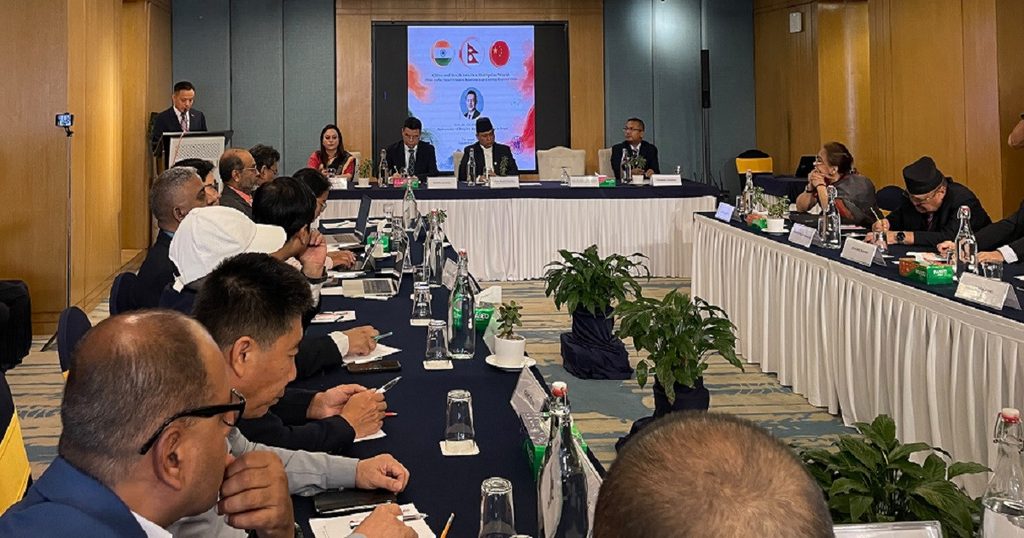
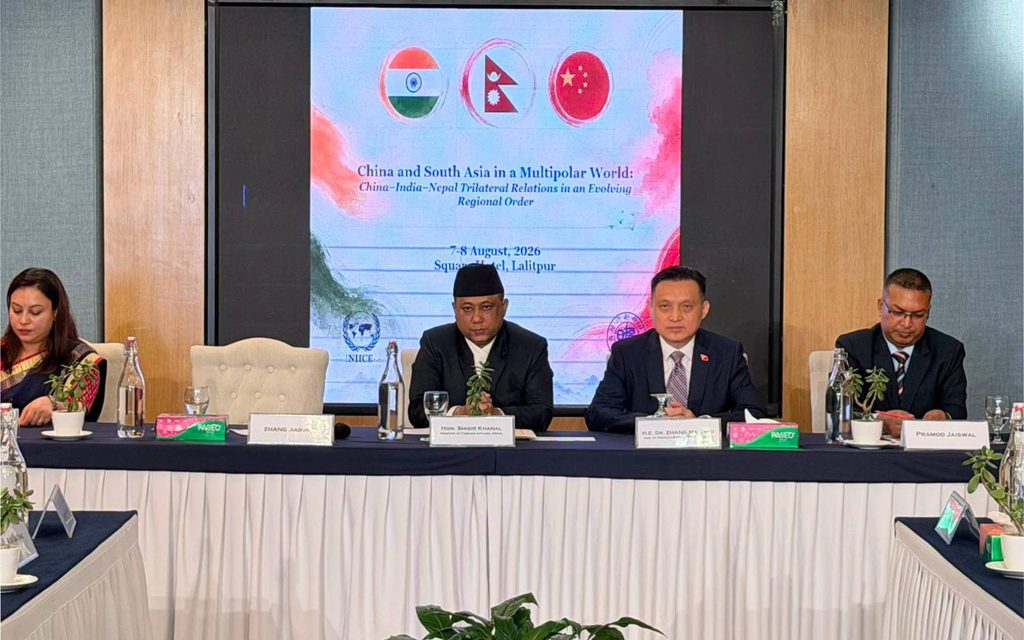
Equally important are the enduring connections among our peoples. Governments create enabling frameworks, but lasting partnerships are built through scholars, entrepreneurs, students, artists, business leaders, tourists, and young people whose exchanges foster trust and understanding across borders. Institutions such as NIICE and the Centre for South Asian Studies of Fudan University make a valuable contribution by encouraging informed dialogue and generating fresh ideas.
As we navigate the complexities of a multipolar world and seek to build a shared future of mutual benefit, we can draw profound inspiration from the teachings and legacy of Guru Rinpoche. In Buddhist traditions, there are concepts like “Pratītyasamutpāda (Dependent Origination) and Bodhicitta. From these profound ideas of our shared heritage, we can posit that no nation or entity exists in isolation—all things are deeply interconnected. True regional prosperity relies on recognizing this shared interdependence and acting with mutual empathy and compassion rather than zero-sum self-interest.
In this light, we take foreign policy not as an end in itself but as a means of creating greater opportunities and a better future for our people. As Asia continues its remarkable transformation, Nepal approaches the future with confidence and optimism.
We will continue to strengthen our bilateral partnerships with all friendly countries, promote regional and multilateral cooperation, expand connectivity, act as a dynamic bridge between major regional economies, attract quality investment, encourage innovation, and create new opportunities for our people. The future of Asia will ultimately be determined not only by the size of our economies or the pace of technological change, but by the quality of the partnerships we build and the trust we cultivate. Let us work together to ensure that this extraordinary regional transformation becomes a true story of shared prosperity, sustainable development, and a tangible reality for all our peoples. Nepal stands ready to play its constructive part to this end.