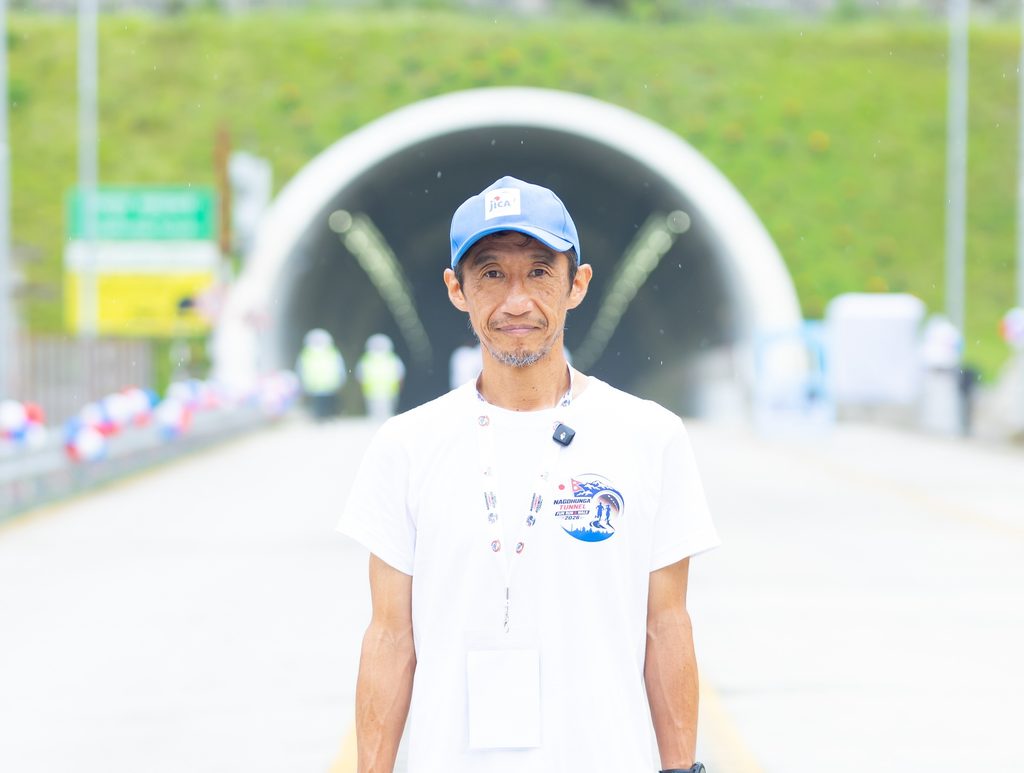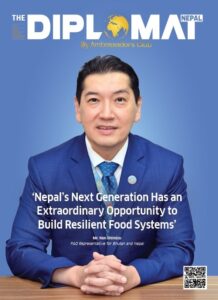
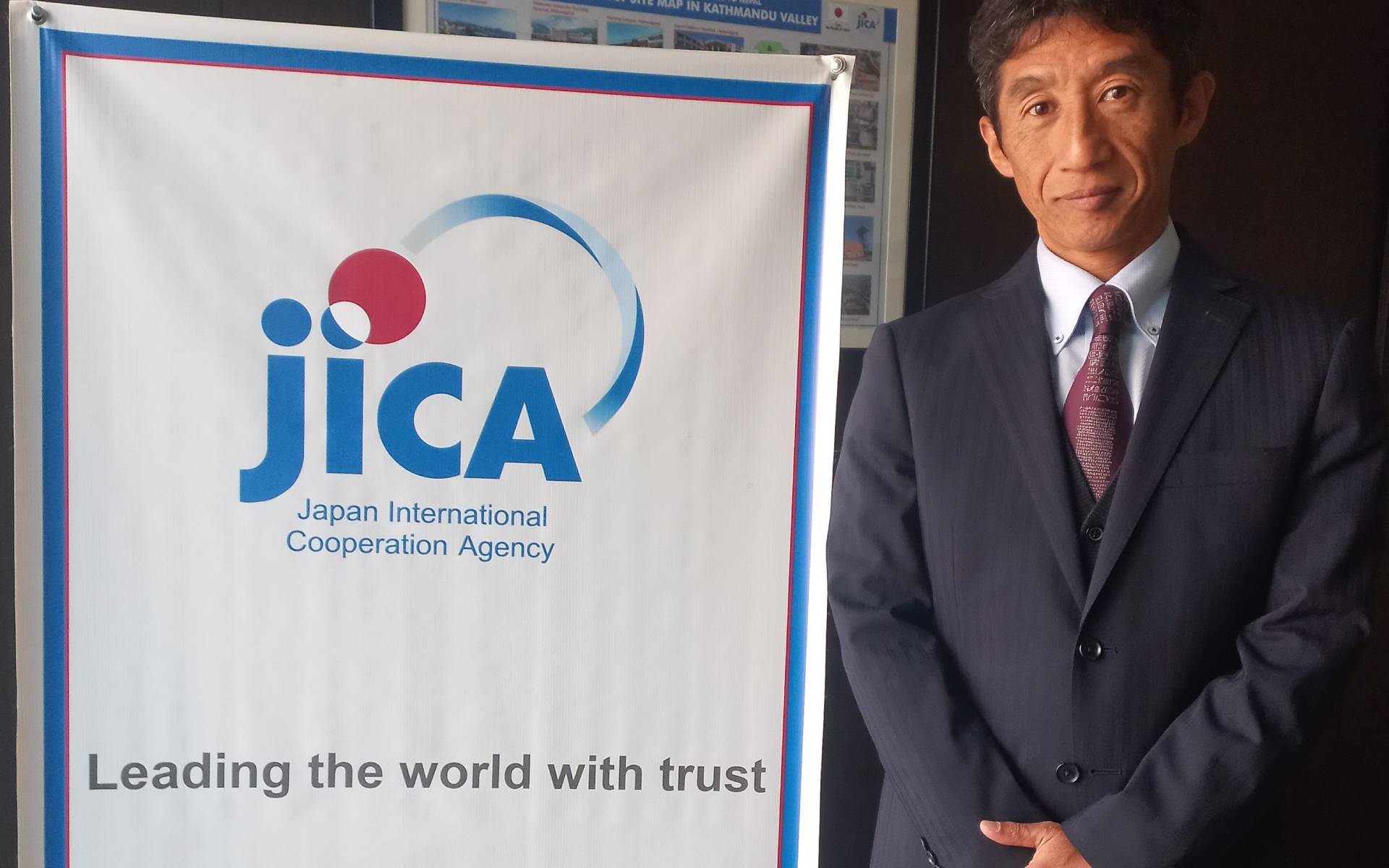
Mr. Mizuki Matsuzaki, Chief Representative of JICA Nepal, is a passionate runner and an ardent admirer and well-wisher of Nepal and its people. With a distinguished career and extensive experience in the development cooperation sector, he currently leads the Japan International Cooperation Agency (JICA) in Nepal, which has long supported the country through a wide range of programmes in infrastructure development, agriculture, rural development, education and health. In this edition of Five Questions, Mr. Matsuzaki shares his reflections on Nepal, its development trajectory and JICA’s continued support for the country.
1. Before joining JICA Nepal office in August 2024 you first visited Nepal nearly 20 years ago and have now returned as the Chief Representative of JICA. When you look at the country today through both your personal memories and your professional lens, what is the most surprising or rewarding change you’ve witnessed in Nepal’s development landscape?
Before answering the question, let me share a little story from my first visit to Nepal nearly 20 years ago. In fact, Nepal was where my wife and I spent our honeymoon. We stayed for about two weeks, and I still remember walking through the streets of Thamel. I believe it was somewhere near New Road, where, during a banda (general strike), I saw people confronting the police with water hoses. Nepal was at a major turning point in its history, moving from the era of the monarchy toward a new chapter. By coincidence, I happened to be there as a traveler, witnessing that historic moment.
Another memory from those days still makes me laugh whenever I recall it. At a souvenir shop, my wife was enthusiastically bargaining over the price of a souvenir. After several rounds of negotiation, the shopkeeper finally threw up his hands and said, “I really can’t give you any more of a discount. Why don’t you borrow some money from your Sherpa waiting at the entrance?” before pointing at me. People in Nepal have often mistaken me for a local. It still happens from time to time, and these days, I actually take it as a compliment.
When I returned to Nepal in 2024 as Chief Representative of the JICA Nepal Office, the country had, of course, changed tremendously. The streets looked different, infrastructure had improved, and people’s lifestyles had evolved significantly. At the same time, there were many things that had not changed: the majestic Himalayas, people praying at Boudhanath, and the tangled web of power lines across Kathmandu. Power outages have decreased dramatically, infrastructure such as roads and telecommunications has improved, goods and services have become more readily available, and I could clearly see that people’s standard of living had improved.
But the change that impressed me most was not simply the increase in physical “things.” It was the way Nepali people themselves discuss their future. Twenty years ago, I felt there was a stronger emphasis on the question, “What support can we receive?” Today, I increasingly hear a different question, particularly from younger generations: “What do we want to achieve?” and “How can we build a better country and society through our own efforts?” I believe this is an extremely important change for development cooperation.
Development, in my view, is not simply about building physical structures such as roads, bridges, hospitals, and schools. What really matters is expanding the possibilities of the people who use them. That is why JICA’s work goes beyond infrastructure. We place great importance on human resource development, strengthening public administration, education, health, community development, and, above all, building relationships between people over the long term. Coming back after nearly 20 years, what I have felt most strongly is that Nepal is steadily moving from being a country that receives support to becoming a partner that is increasingly taking ownership of its own future. I am very proud that JICA has had the opportunity to walk alongside Nepal throughout this journey.
2. We know you are an avid runner and have traveled extensively across the country. Runners see the world at a different pace than tourists or officials in vehicles. How has hitting the trails and running through Nepal’s diverse terrain shaped your understanding of its local communities and their everyday realities?
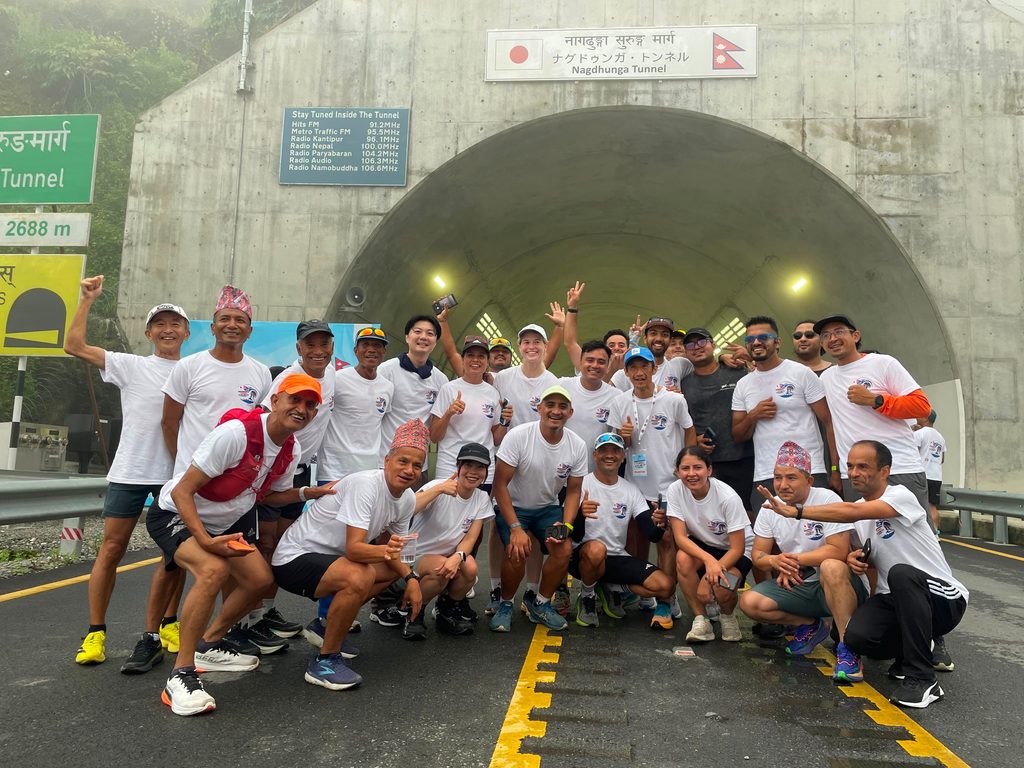
I started running in my mid-40s when I was posted in Cairo, Egypt, and over the past eight years, I have traveled to around 30 countries, mainly in Asia, Africa, and Europe, including countries I visited for JICA-related work. I have covered a total of about 30,000 kilometers running. I have now been in Nepal for just over two years, and roughly one-third of those 30,000 kilometers, about 10,000 kilometers, have been run here in Nepal.
One thing I have learned is that, in Nepal, as anywhere else in the world, you cannot truly understand a place simply by looking at it through a car window. When you run through a place and experience its atmosphere with your own body, the way you see the world changes. By running regularly through Kathmandu, taking part in the Pokhara Marathon, and even running along the Everest trail, I have encountered small villages and places that you simply pass by in a car, or cannot reach by car at all. I have seen people’s everyday lives, children’s expressions, farmers working in the fields, and students walking to school.
Running has another important characteristic: when you run alongside someone, differences in titles and social status tend to disappear. When I walk around as the Chief Representative of JICA, people naturally see me as “the JICA person.” But when I put on my running clothes and go out for a run, I am simply another runner. Simple conversations such as “Where are you going?”, “Where are you from?” and “How far are you running?” sometimes lead to opportunities to learn about people’s lives and their communities.
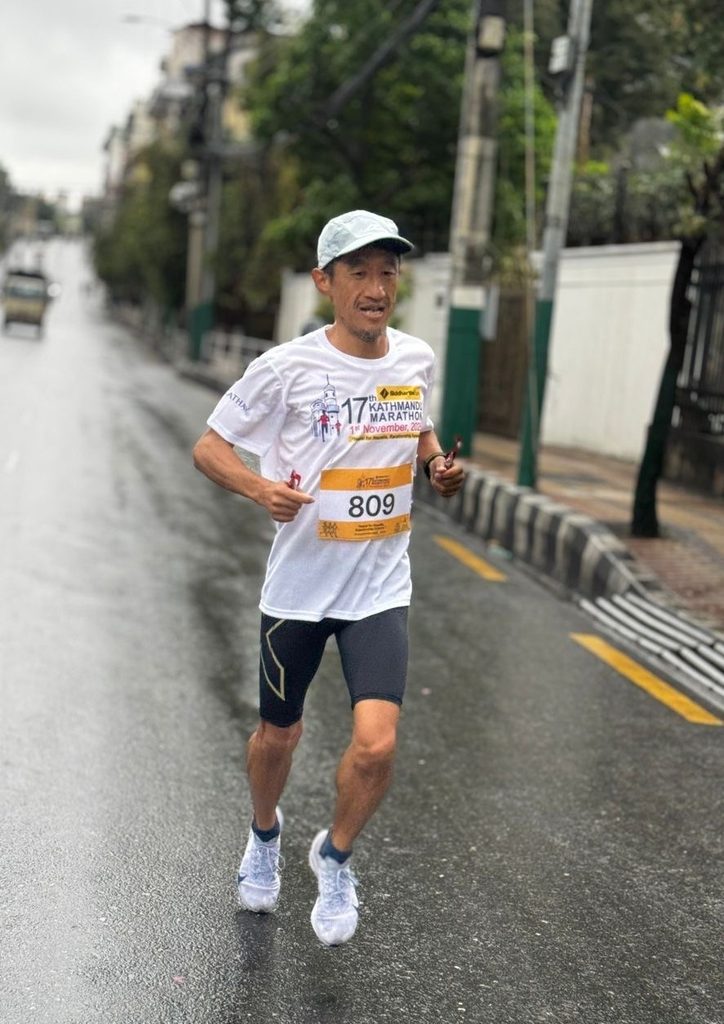
This April, I was fortunate enough to take part in the Boston Marathon, one of the world’s oldest and most prestigious marathons. After turning 50, I achieved one of my personal goals by running a sub-three-hour full marathon, finishing in 2:59:32 on such an iconic international stage. It was an unforgettable experience. Of course, there is something special about running a world-class race like Boston. But running in Nepal offers a completely different kind of joy. Another encouraging change I have noticed over the past two years is the growing running community in Nepal, especially in Kathmandu. More young people are joining running events and training groups, which reflects a growing awareness of health and well-being among the younger generation. Running with people of different generations at Rangashala (National Stadium), waving to fellow runners as we pass each other on the streets of Kathmandu, or running through the beautiful scenery of Pokhara, all these experiences have a value that has little to do with rankings or finishing times.
One of the things I enjoy most about running is the opportunity to experience a place at a slower pace. When I ran in Pokhara, through the Kathmandu Valley, along the Everest trail, and across the Terai plains from Lumbini, the birthplace of Lord Buddha, to the Indian border, each region revealed a different side of Nepal through its landscapes and the people I met along the way. But what they all had in common was the opportunity to glimpse people’s everyday lives while moving at my own pace. For me, running is much more than a way to stay healthy or a sport. It is a way of experiencing a place with my whole body–feeling its nature and understanding its culture, people, and everyday life through my own eyes. I wear a GPS watch every day and monitor my condition while looking at distance, pace, heart rate, and other numbers. But there are things that numbers cannot tell you. There are distances you cannot understand simply by looking at a map, hills whose gradient you cannot appreciate from inside a car, and everyday human stories that statistics can never fully capture. That is perhaps why I love running in Nepal so much. And, of course, there is that wonderful sense of achievement that comes after pushing through the difficult moments and finally completing another distance.
3. JICA is famous for supporting major, transformative infrastructure projects in Nepal (like the Sindhuli Road or Nagdhunga Tunnel). From your travels to remote areas, how do you see Nepal successfully balancing the rapid need for modern connectivity with the preservation of its unique cultural and environmental heritage?
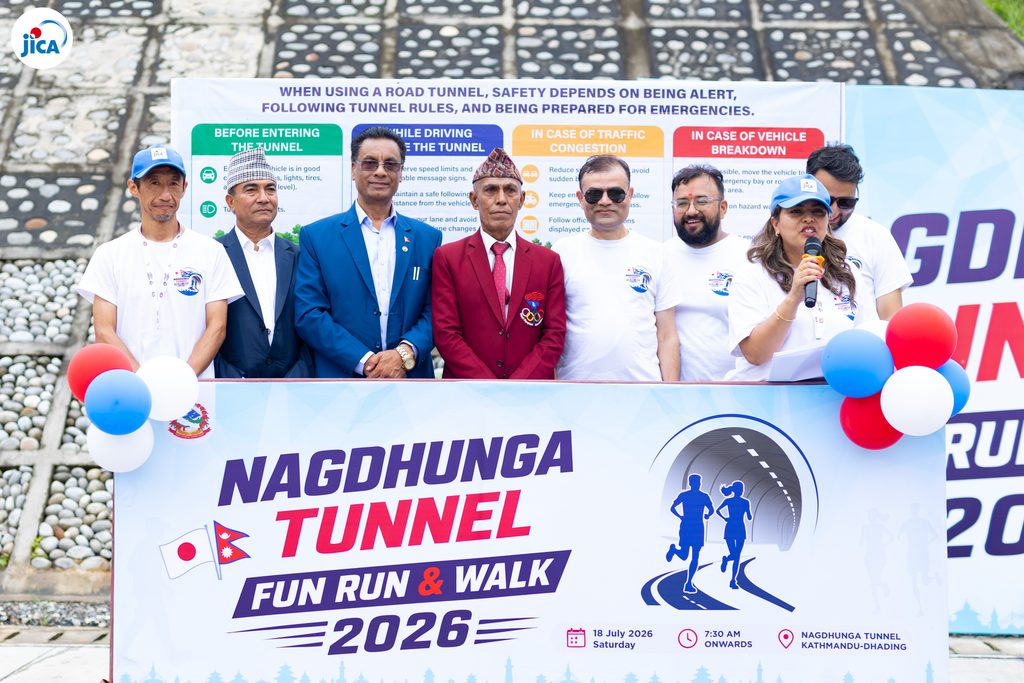
I believe this is one of the most important questions when thinking about Nepal’s development. Nepal needs modern infrastructure, including roads, bridges, flyovers, and tunnels. In the future, Kathmandu may also need large-scale public transportation systems such as a metro or light rail. Projects supported by JICA, such as the Sindhuli Road (B.P. Highway) and the Nagdhunga Tunnel, have the potential to significantly improve people’s mobility, logistics, and economic activity.
However, I do not think we should simply equate “development” with “modernization.” Nepal is home to the Himalayas, one of the world’s greatest natural environments. It also has an extraordinarily rich culture, religion, traditions, and local communities. I was reminded of this very strongly when I ran along the Everest trail and through the Mustang region. These experiences allowed me to appreciate the remarkable diversity of Nepal’s geography, and the transportation challenges people face in their daily lives. A single road, bridge, or public facility is connected to the lives of the people who live there. Building infrastructure is not merely a technical issue. We need to think not only about what we build, but also for whom we build it, how we build it, and what impact it will have on the future of the local community. This perspective is closely linked to the concept of Human Security, which seeks to protect and empower people by ensuring that they have better access to opportunities, services, and a safer and more dignified life. This is also why JICA’s cooperation extends far beyond infrastructure. We work across a wide range of areas including agriculture, irrigation, water and sanitation, energy, education, health, disaster risk reduction, human resource development, and governance. Physical infrastructure is important, but people are always at the center of development.
I believe development and environmental and cultural preservation do not have to be in conflict. They can coexist. To achieve that, we need to listen to local communities, make use of scientific data, and take a long-term perspective. I also believe one of JICA’s strengths is not simply bringing Japanese technology to Nepal and applying it as it is. Japan itself experienced many challenges during its period of rapid economic growth, including environmental problems and regional disparities. There is value in sharing what Japan has learned from those experiences and thinking together with Nepal about how those lessons could apply here. I do not believe in a relationship where “Japan has the answers and brings them to Nepal.” Rather, I believe that Japan and Nepal should work together to find the answers. That spirit of co-creation has always been an important part of Japan’s development cooperation philosophy, and I believe it will become even more important in the years ahead.
4. Both long-distance running and international development require immense resilience, patience, and pacing. Have there been specific moments during your travels or runs in Nepal where the resilience of the Nepali people taught you a lesson that you now apply to your leadership at JICA?
The more I run, the more I have come to appreciate the parallels between running and development cooperation. Both are ultimately about people. Both seek to expand opportunities, strengthen human potential, and improve well-being. While development cooperation provides infrastructure, services, and opportunities, sports and running bring people together, promote healthy lifestyles, and strengthen community bonds.
Long-distance running has taught me another important lesson: running fast and going far are not the same thing. Whether it is a marathon, trail run, or ultramarathon, if we start at full speed, we will eventually run out of energy. What matters is understanding our own capabilities, adjusting our pace according to the situation, and continuing all the way to the finish. I believe development cooperation is very similar.
Working in Nepal, we encounter many issues that cannot be solved quickly. Society, economics, geography, culture, institutions, and many other factors are deeply interconnected. In such situations, what we need is not to rush after short-term results. We need to go into the field, listen to people, build trust, and accumulate small achievements over time. This is something that running and development have in common.
When I interact with people in Nepal, I am constantly impressed by their strength to continue moving forward despite difficult natural conditions and social challenges. When I run through the mountainous areas around the Kathmandu Valley, for example, I sometimes see villagers carrying heavy loads of firewood on their backs. I find myself thinking, “They walk through terrain this difficult, carrying all of this, simply as part of their everyday lives.” Seeing such scenes has changed my own perspective on life.
And I have come to believe that the most important role of a leader is not necessarily to be the person running at the front. Rather, it may be to create an environment in which the team can keep running for a long distance. I think JICA’s work is much the same. Rather than coming in and “doing things for” Nepal in a short period of time, we should work alongside the people and institutions of Nepal, including the government, universities, local governments, and private sector, to create systems that enable them to continue moving forward sustainably through their own efforts.
Eventually, even after JICA has left, those initiatives should continue to be carried forward by Nepali people themselves. They should be able to stand and move forward on their own. It sounds obvious, but achieving it is not easy. I believe that is what development truly means.
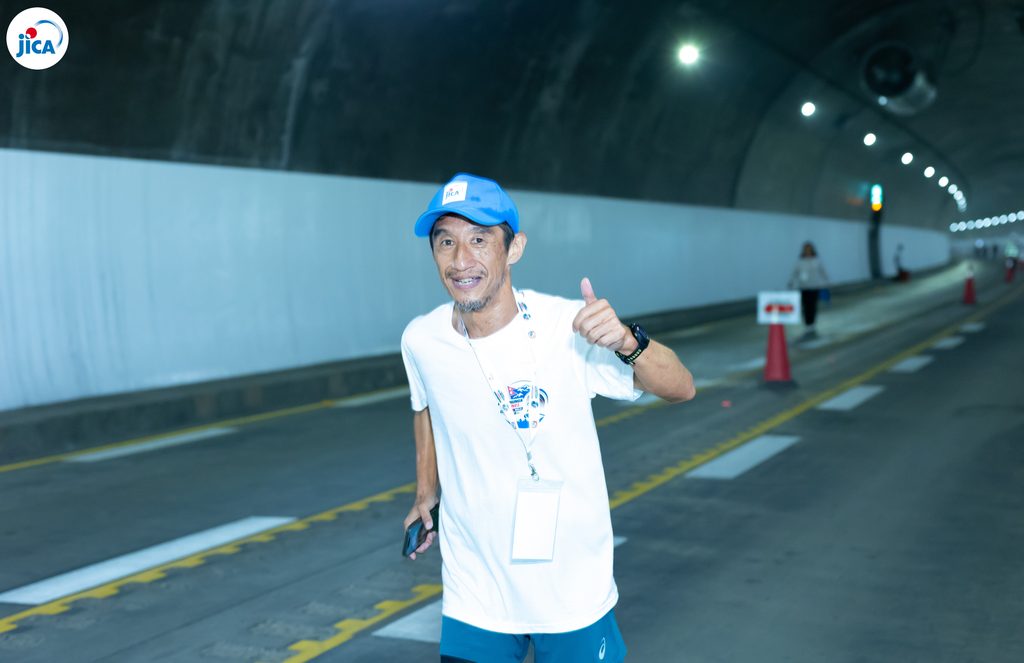
5. If you could fast-forward another 20 years into Nepal’s future, what is the ultimate milestone you hope JICA will have helped Nepal achieve under your tenure, and is there a specific place in Nepal you dream of running through by then?
When I think about Nepal 20 years from now, I do not want to leave behind a list of “what JICA built.” Rather, my ultimate goal is to see a society where the people of Nepal can build their own future through their own efforts, even without JICA. Infrastructure such as roads, tunnels, schools, hospitals, water systems, and electricity will of course remain important. But what I truly hope to foster is a generation of people who can analyze their country’s challenges, develop policies, nurture the next generation, and make their communities better. I also hope to see a society where those people can enjoy fulfilling lives and where the conditions for their well-being are in place.
To achieve this, I believe we will continue to need mechanisms through which people from Japan and Nepal can work together in areas such as human resource development, education, health, public administration, and industrial development. If, 20 years from now, someone could look back and say, “Working with JICA during that period became one of the turning points that helped shape Nepal’s future,” I could not ask for anything more. And if the children and others who took part in the Fun Run event held before the opening of the Nagdhunga Tunnel in July 2026–or those who have encountered JICA’s work or read this article–feel that they have experienced even a small part of that “turning point,” that would also bring me great joy.
Then, there is the other question: Where in Nepal would I like to run 20 years from now? Choosing just one place is very difficult for me. But if I had to choose one, I would like to run the Everest trail again. The landscape may look very different by then. And that is precisely why I would like to experience it with my own feet to feel how much Nepal has changed over those 20 years, and what has remained unchanged. The mountains will probably still be there. And I hope the smiles of the people will be there too. I believe development is not simply about changing things. It is about moving toward a better future while preserving the things that are worth keeping. If, 20 years from now, I can run along the Everest trail and feel both the Nepal that has changed and the Nepal that has remained the same, that would be the perfect finish line for me.
In addition, if I am allowed to be a little ambitious, I would also love to stay healthy enough to take part in a Kathmandu Marathon or Pokhara Marathon that is even better organized and attracts even more runners and cross the finish line together with Nepal’s runners. When I think about how old I will be 20 years from now, it is a little overwhelming. But that is something to look forward to as well.
There are mountains. There are roads to run on. And there are people willing to run alongside you. If Nepal’s future still has all those things, I will be very happy.