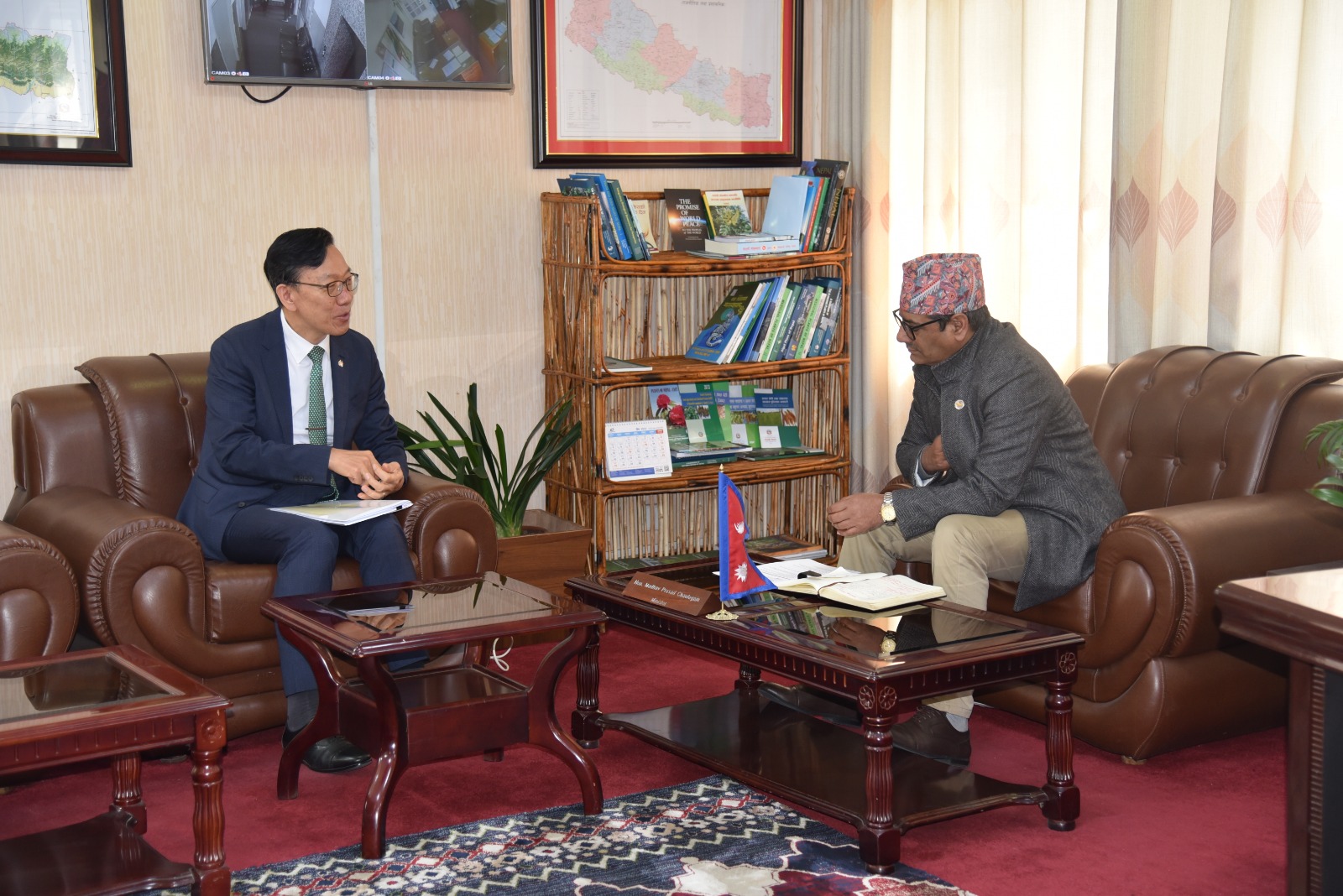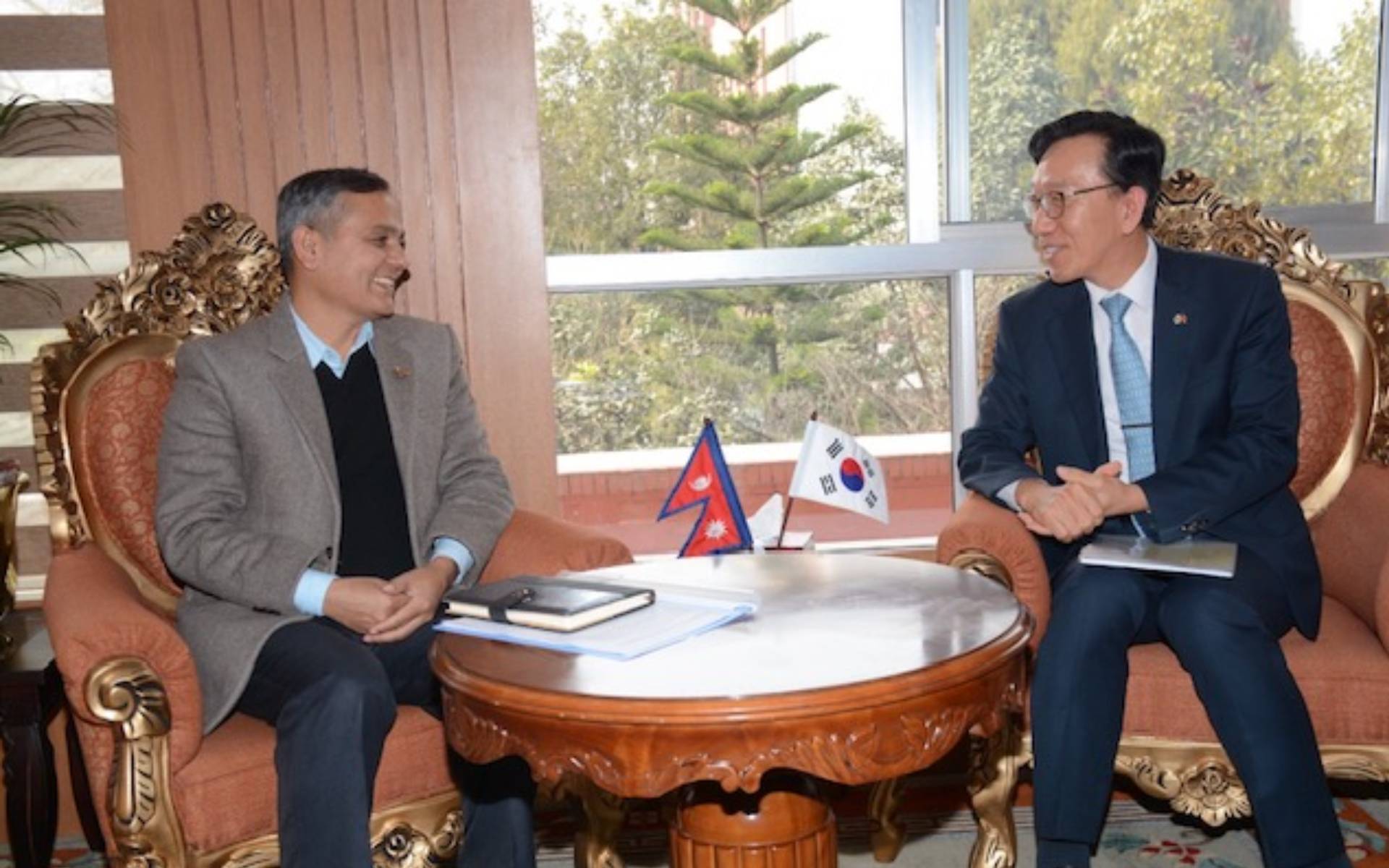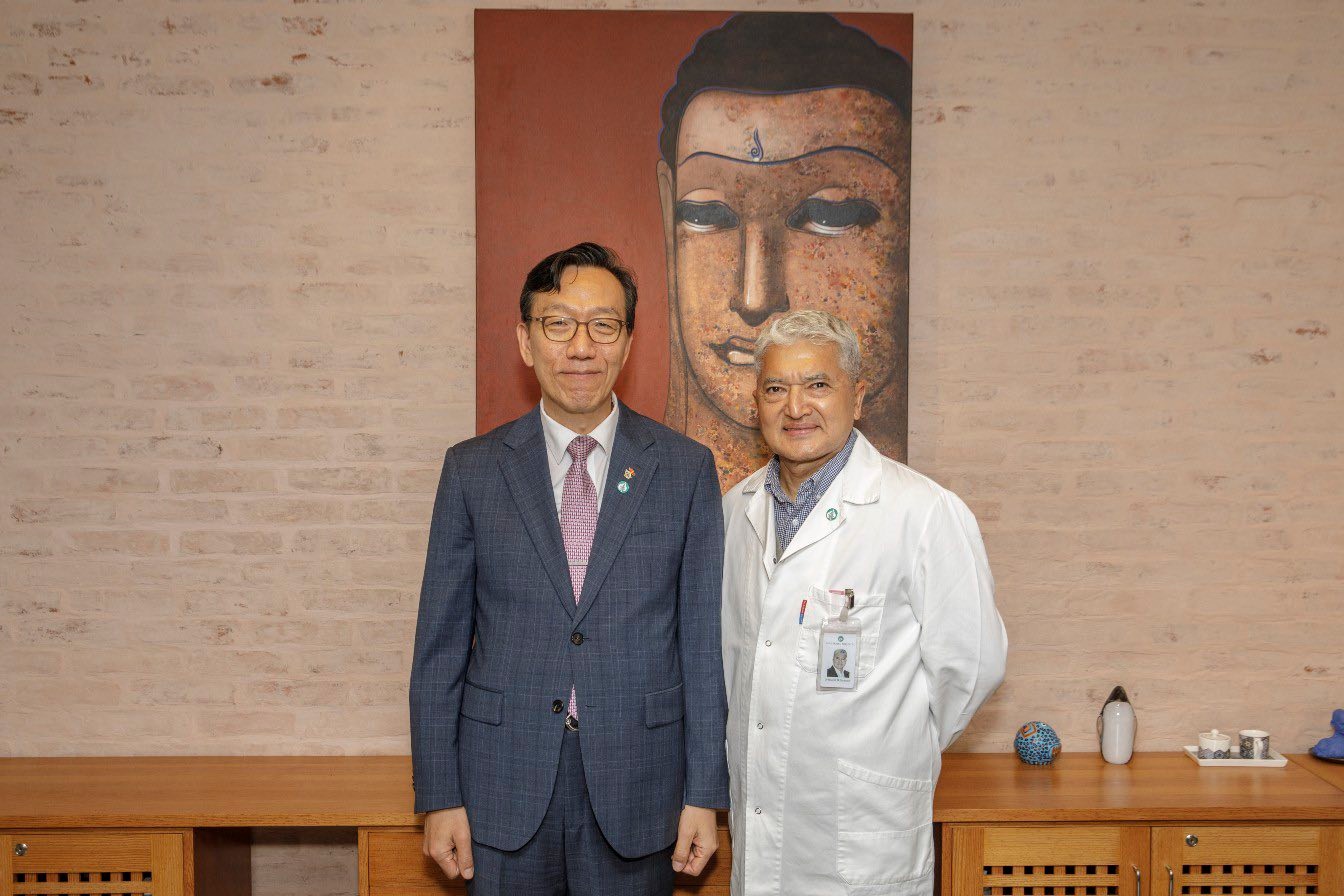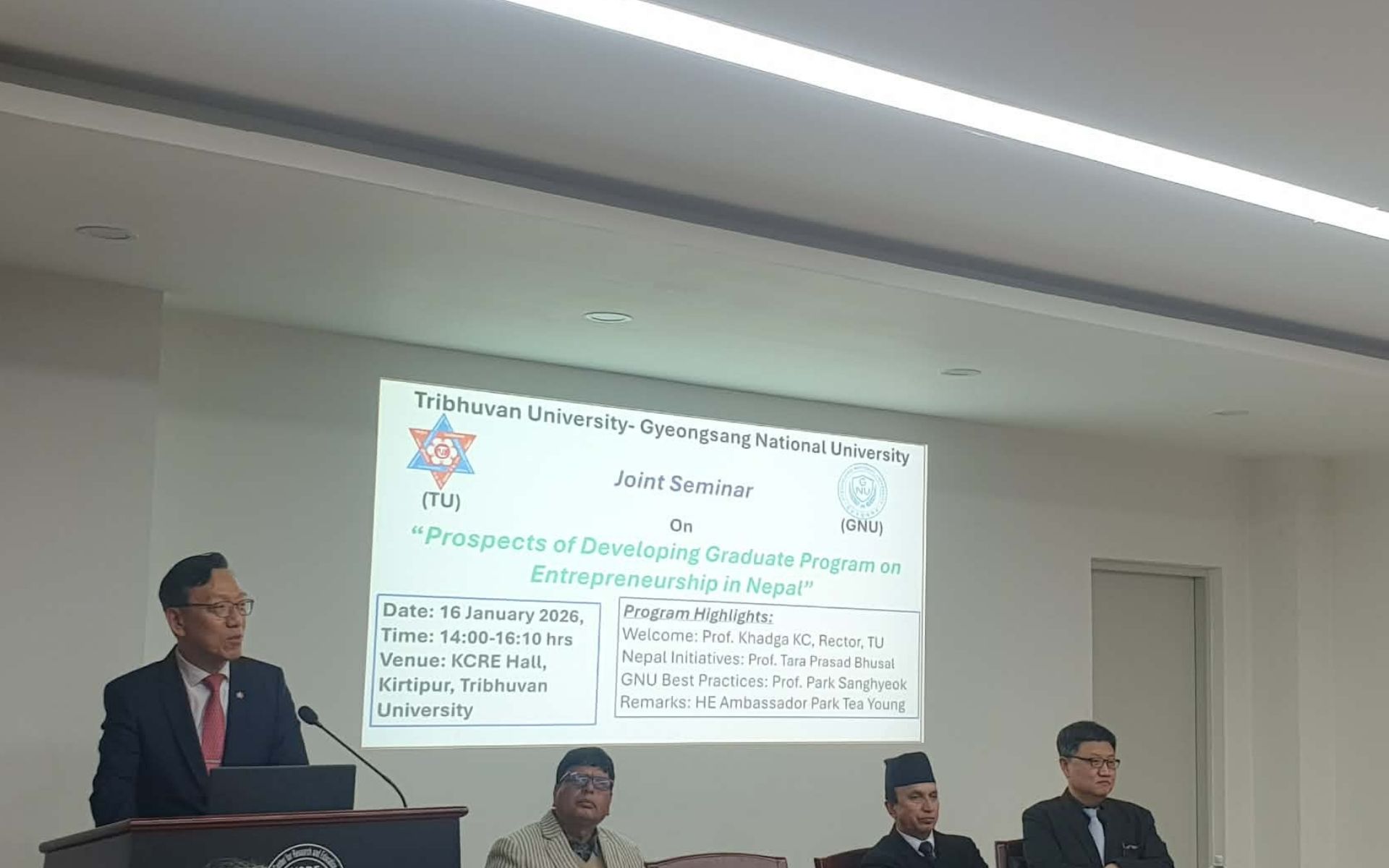
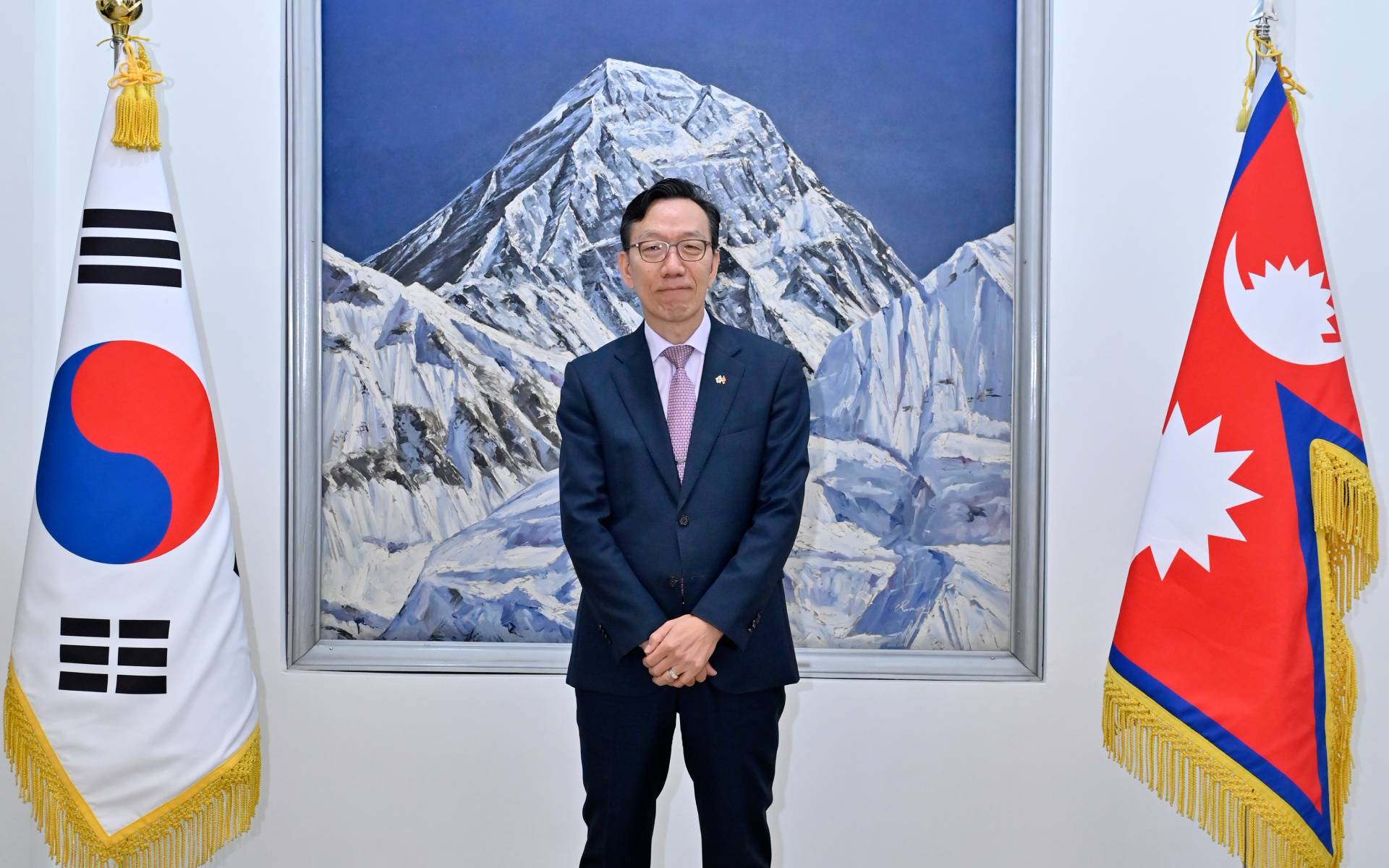
The Republic of Korea and Nepal have enjoyed cordial relations since the establishment of their diplomatic ties more than five decades ago. Over the years, the two countries have strengthened cooperation at all levels, from high-level engagements to robust people to people exchanges. With the aim of further elevating bilateral relations, H.E. Park Tae-Young, Ambassador of the Republic of Korea to Nepal, arrived in Kathmandu in May 2023. In the past two and a half years, he has been actively engaged in advancing various areas of cooperation for the benefit of the people of Nepal and the Republic of Korea. Alongside his diplomatic work, Ambassador Tae-Young has also experienced and appreciated Nepal’s rich cultural heritage and diversity. The Diplomat Nepal magazine interviewed H.E. Park Tae-Young on issues related to Nepal and South Korea relations, his diplomatic initiatives, and his experience in Nepal.
1. Nepal and the Republic of Korea share more than five decades of cordial relations. How do you see the growing relations between the two countries?
We established diplomatic ties in 1974, and two years ago we celebrated the semi-centenary of our diplomatic relations. It is my honour to mark the 50th anniversary of relations between our two countries during my tenure. Over the past five decades, friendship and cooperation between Nepal and the Republic of Korea have grown steadily and rapidly. In particular, people to people exchanges have formed a very strong foundation of our cooperation through the Employment Permit System (EPS), tourism, and education. I firmly believe that people to people exchanges will continue to expand further in the future.
2. You arrived in Nepal in May 2023. After spending two years, how would you describe your experience in Nepal so far?
My experience in Nepal has been truly fascinating. It has been an honour to serve here. I have enjoyed very good cooperation with the Government of Nepal, and I am deeply impressed by Nepal’s rich culture and diversity.
Also, whenever I noticed similarities between Korea and Nepal, I felt very happy and closer to Nepal.
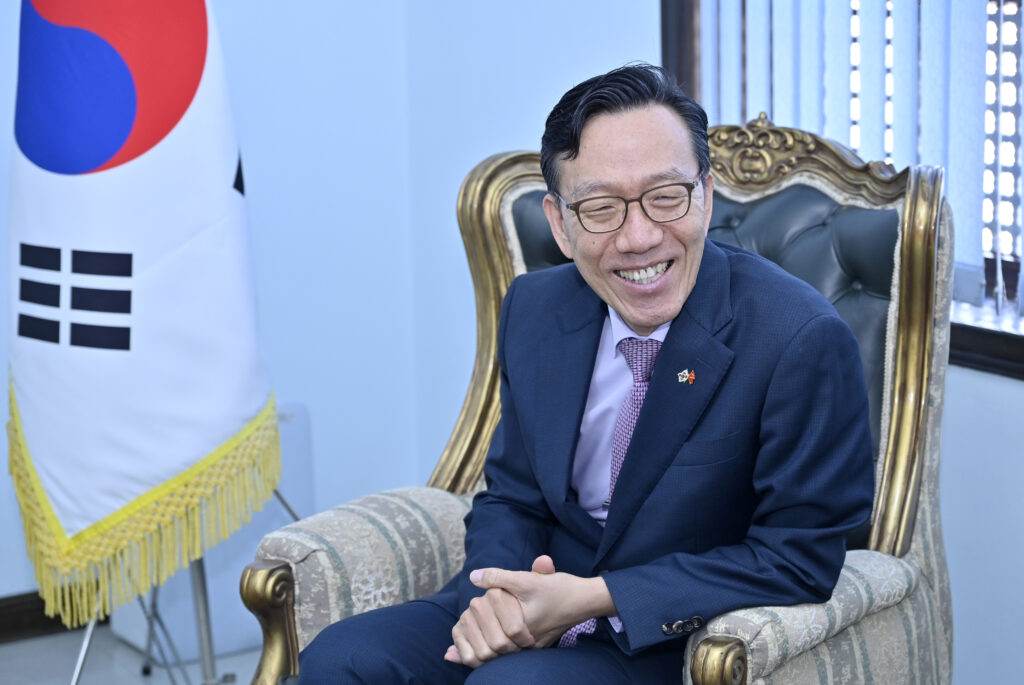
3. You are one of the active ambassadors in Nepal. What is your main goal to achieve here?
Our bilateral cooperation rests on three main pillars: the EPS programme, development cooperation through our KOICA team, and economic cooperation. My job is to enhance our cooperation in three main pillars. I believe there is significant room to expand economic cooperation between our two countries. During my tenure, I have been trying to attract more Korean investment in Nepal and to promote stronger economic partnerships. Nepal has enormous potential. Personally, I often describe Nepal’s strengths using three “H”s. The first is Human resources, which I believe is the most important. The second is Hydropower, and the third is the rich Heritage of culture and nature. Maximising these three “H” potentials through our bilateral cooperation is essential so that the benefits reach the Nepali people.
4. How do you see high-level engagement between the two countries?
High-level engagement between our two countries is very strong. On the occasion of the United Nations General Assembly in New York in 2023, there was a Summit meeting. There have also been many ministerial-level exchanges in both ways.
Our Minister of Agriculture visited Nepal at the end of 2023, and we signed a Memorandum of Understanding on agricultural cooperation. Based on that agreement, we established the Korea Programme on International Agriculture (KOPIA) Nepal, an agricultural technology transfer center in Nepal last year, which I am very pleased about. Additionally, about a year ago, our Special Envoy visited Kathmandu to discuss bilateral relations and explore further areas of cooperation.
5. What are the current priorities of the Republic of Korea for Nepal?
Once again, our cooperation is based on three key pillars: the EPS programme, labour cooperation, and economic cooperation. During my tenure, I am placing greater emphasis on economic cooperation, as it can bring direct and long-term benefits to the Nepali people. Further, the Korean government wants to help returnees from Korea to productively reintegrate into their home country, for instance by their startup journeys. Korea had the same migrant worker history in order to earn hard currency. From our own experience, Nepali returnees are in a good position to contribute to its development and prosperity through their entrepreneurship and skills. Korea has worked together with the Korean returnee association (ANKUR) and the Government of Nepal to promote their entrepreneurship and to support their preparation to start their own business in Nepal. Already, there are many inspiring success startup stories of returnees from Korea. I want to hear more of these kinds of success stories.
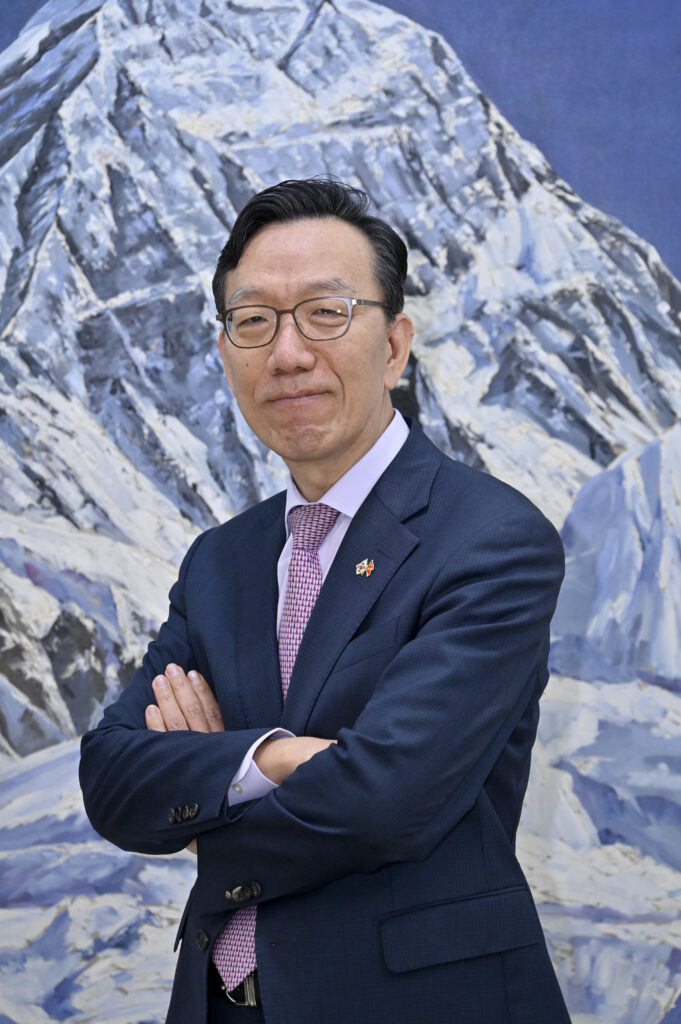
6. There are investments from South Korea in Nepal. Will more investments be coming from your country in the future?
Yes, definitely. Foreign Direct Investment (FDI) is very important in the development process. Korea itself benefited greatly from foreign investment during its development journey, so we fully understand its importance. I am proud to say that Korea is currently the fourth-largest investor in Nepal. Korean private companies are active in various sectors, particularly hydropower. Several Korean energy companies have invested in hydropower projects in Nepal.
Currently, two hydropower projects with Korean investment have been completed, while the construction of the Upper Trishuli-1 (UT-1) Hydropower Project (216 MW) in Rasuwa is underway and expected to begin generating electricity in 2027.
In the manufacturing sector, Samsung Electronics and Hyundai Motor are actively expanding their manufacturing footprint in Nepal, focusing on local assembly to boost the “Made in Nepal” initiative. Samsung inaugurated a cutting-edge television factory in Nawalparasi in 2023, while Hyundai, in partnership with Laxmi Group, established a local assembly plant for vehicles in 2024. Additionally, a medium-sized Korean company, Hi-Mo’s Nepal branch, Mandumo, a wig company with Korean investment, has been producing customized wigs in Nepal for the Korean and Japanese market. The company employs over 800 Nepali women and has more hiring plans to come.
All of their products are exported to Korea and Japan, and the company is planning to expand its investment due to growing demand.
FDI is not only about capital; it also brings technology transfer and job creation. Therefore, it can be a very good source of development for Nepal. As the fourth-largest investor, Korea expects a more favourable and predictable investment environment in Nepal. In fact, some Korean investors are still hesitant to invest in the energy sector, due to difficulties doing business in Nepal as a foreign investor. However, many Korean companies in Nepal’s energy sector have explored the feasibility to invest in Nepal. Nepal and Korea are in the final stage to sign the bilateral cooperation agreement on climate change. After having it, many Korean companies will explore their investment along with the emissions trading system.
7. Since the introduction of the EPS in Nepal in 2007, more than 120,000 Nepali workers have contributed to Korea’s economy. How do you view this development? Is there a plan to increase the number of Nepali workers?
Labour cooperation through the EPS programme is very important and mutually beneficial. Korean companies highly appreciate the contribution of Nepali workers in the manufacturing and the agricultural sector. Korea is one of the most preferred destinations for Nepali migrant workers.
Although there is a significant gap between supply and demand, the aspiration among Nepali workers remains very strong. From Korea’s perspective, among the 17 EPS partner countries in Asia, Nepal has ranked number one in terms of job opportunities since 2023. I would like Nepal to maintain this top position globally within the EPS programme. I will work closely together with the Government of Nepal to expand more national quota of EPS opportunities for Nepal.
Nepali workers are well-regarded in Korea for being hardworking, eager to learn, and cooperative in the workplace. This is why many Korean business owners prefer hiring Nepali workers. We also ensure equal treatment for migrant workers, for instance minimum wage protection, labour rights, human rights, and access to social benefits. The Korean government is really serious about providing a safe and fair working environment for all migrant workers, at the same level as Korean coworkers.
8. How do you see Nepal’s tourism potential and the arrival of Korean tourists?
Tourism is extremely important for Nepal and also plays a vital role in bilateral cooperation. It promotes people to people exchange and strengthens diplomatic relations. Around 30,000 Korean tourists visit Nepal every year, mostly to explore the Himalayas. Many Korean mountaineers and hikers are attracted to the Annapurna and Everest regions. If more trekking safety is guaranteed, more Korean mountain lovers who have Himalaya trekking in their bucket list will visit Nepal. I also believe that Lumbini has great potential for Korean tourists. Due to Korea’s historical and cultural connection with Buddhism, which is the second religion in Korea, many Koreans are interested in visiting Lumbini as well.
9. Nepal is set to graduate from Least Developed Country status in 2026. What will be Korea’s role during this transition?
Nepal’s graduation from LDC status, expected in November 2026, will certainly bring challenges, but it also presents opportunities. Korea understands these challenges and will stand by Nepal during this transition. Our two countries have been under discussion on how to expand our concessional or soft loan programmes, particularly in the energy sector. We will also continue our development cooperation through KOICA to support Nepal’s sustainable development.
10. KOICA has completed 30 years in Nepal. How do you describe its contribution?
KOICA is the main development cooperation arm of our bilateral relationship. In Nepal there are also other development players in the private, academia and civil sectors of Korea. The Korean government established the KOICA office in Nepal in 1995. Over the past three decades, KOICA has contributed more than USD 230 million in grant assistance. This year alone marks a record-high commitment of USD 21 million US dollar to many ongoing development projects.
More than 160 development projects have been implemented, over 2,900 Korean experts were dispatched to share their expertise in Nepal, and more than 2,200 Nepali public-sector officials received training or degree opportunities in Korea through KOICA programmes. These efforts have had a significant positive impact on Nepal’s development in every sector.
Our priority areas are agriculture, health, ICT, and education. Personally, I believe education, especially vocational training, is crucial to Nepal. Korea’s own development success was built on two key “E”s: education and entrepreneurship. In Nepal, we are supporting vocational training centres, across five provinces.
11. Is there any ICT-related programme coming to Nepal?
As I mentioned, ICT is one of our top priorities in development cooperation. Since 2005, KOICA has worked with the Government of Nepal to establish the Government Integrated Data Centre (GIDC) in Singha Durbar and the Disaster Recovery Centre (DRC) in Hetauda. These facilities played a crucial role in protecting public data during difficult times of the Gen Z movement last September.
Cybercrime is a growing global challenge, including in Nepal. To address this, KOICA has supported to establish the cyber bureau in coordination with Nepal Police to fight against increasing cybercrime. This bureau will fully operate within this year. In the field of artificial intelligence, Samsung Electronics is providing AI-related training at Pulchowk Campus. The ICT sector shows great potential in Nepal. I want to explore more partnerships between private firms of Nepal and Korea in this growing sector.
12. How would you describe Nepal personally?
Korea is a homogeneous society with one ethnic group and one language. In contrast, Nepal’s diversity, in ethnicity, language, culture, and festivals, has truly impressed me. I believe this diversity is one of Nepal’s greatest strengths. Also, I feel a strong sense of community in Nepal, which Korea used to have before.
13. How would you describe Nepali people?
I have had many opportunities to meet and interact with Nepali people. They are hearty, warm, welcoming, and hardworking. Korean employers also consistently praise Nepali workers for their strong work ethic.
14. Do you enjoy Nepali cuisine? Which dish do you like the most?
Korea and Nepal share many food cultural similarities, including rice-based meals and soups. I really enjoy Nepali cuisine and find it very comfortable.
My favourite dish is Thakali Khana Set. It is similar to a traditional and regular Korean meal, which includes rice, soup, and several side dishes. I especially like the mutton curry and gundruk achar, which reminds me of Korean kimchi. Of course, Nepali mo-mo is one of my favorite Nepal foods.
15. Have you celebrated any Nepali festivals?
Nepal has many vibrant festivals, which I truly enjoy. I understand that festivals are a very important part of Nepali life. My favourite is Tihar. The illuminated streets at night, Rangoli and Deusi-Bhailo dances create a wonderful atmosphere. Last year, I even joined a traditional dance with a Nepali Bhailo team in Bhaktapur, it was a very joyful experience.
16. Which places have you visited in Nepal, and which is your favourite?
I have tried to visit as many places as possible, including Pokhara, Lumbini, Chitwan, Nawalparasi, Janakpur, Ilam, Phidim, and Sindhuli. Each place reflects Nepal’s diverse flavor.
In my tenure, I love to visit and experience more places in Nepal.
My favourite destination is Pokhara. I have visited it several times and always feel relaxed there. Pokhara is a perfect blend of nature, culture, and adventure, and I believe it is the backbone of Nepal’s tourism industry.
17. How do you see Nepal from an art and culture perspective?
Nepal has rich and diverse art and culture. I am particularly impressed by young artists who are working to preserve their cultural identity. When enjoying their artworks, I appreciated their delicate harmony and combination of Nepali identity and creative twist. I hope there will be more opportunities to showcase Nepali art and culture on the global stage. Especially, Nepali Thangka artifacts and singinging-ball culture are especially popular with Korean people.
18. Lastly, what does Korea expect from Nepal?
Korea wishes to share its development experience with Nepal. Although Korea is now a developed country, our development history has taught us the value of resilience and cooperation. We understand Nepal’s challenges and want to support its development journey.
We hope to further strengthen friendship and cooperation based on people to people exchange. Korea wishes for Nepal’s stability and prosperity, and in this journey, Korea will always remain Ramro Sathi, a good friend to Nepal. Thank you.