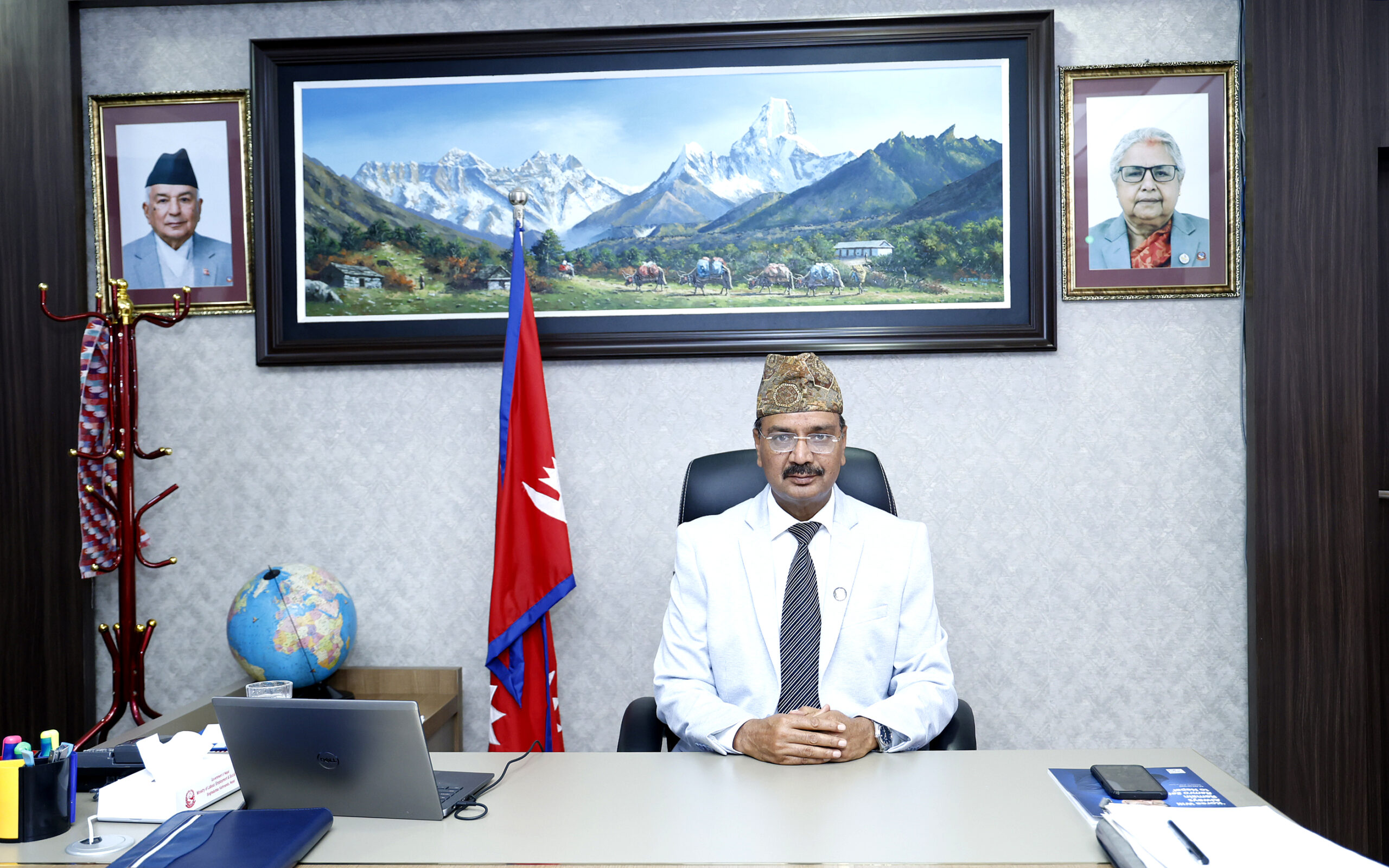
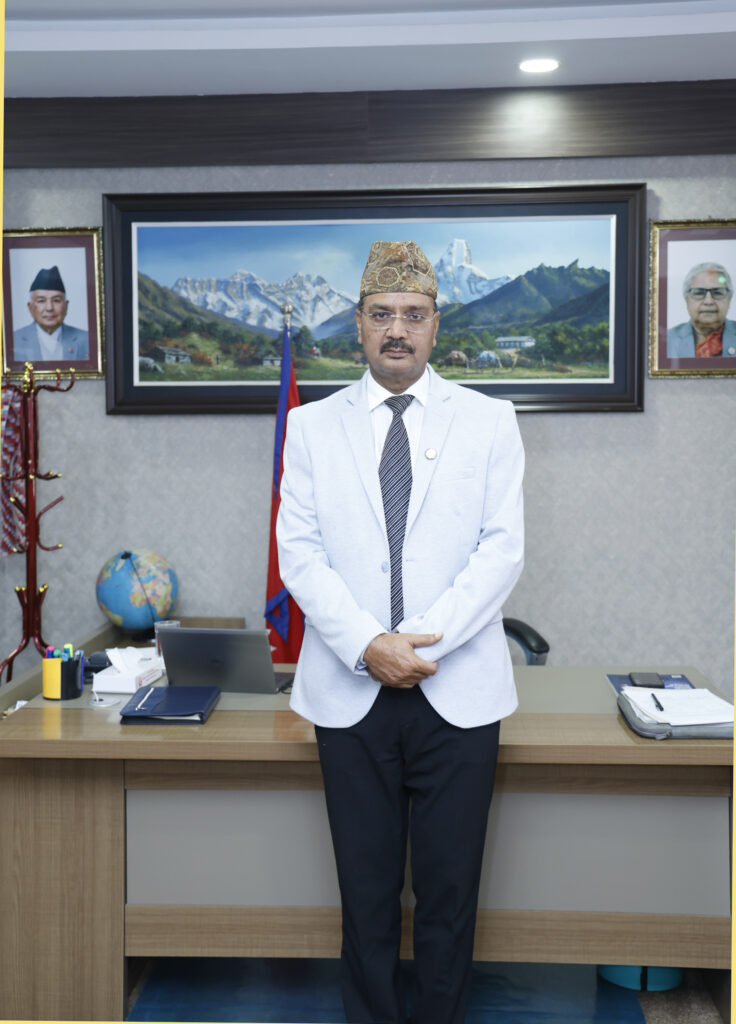
On December 12, 2025, Rajendra Singh Bhandari, a retired AIG, was appointed Labour, Employment, and Social Security Minister in the Sushila Karki-led interim government. Since then, Bhandari has been continuously focusing on labour migration and other issues related to the ministry. During his tenure, Nepal and Saudi Arabia signed the first-ever labour agreement between the two countries in Saudi Arabia’s capital, Riyadh, on January 25. The Diplomat Nepal sat down with Minister Bhandari regarding issues on Nepal’s labour agreement with Saudi Arabia and other countries, including his role as a minister.
Q1. Can you tell us more about the recent labour agreement between Nepal and Saudi Arabia?
The labour agreement between Nepal and Saudi Arabia is primarily focused on protecting the rights and welfare of Nepali migrant workers employed in Saudi Arabia. Saudi Arabia is one of the most important labour destinations for Nepali workers.
In recent years, the country has been undergoing rapid modernization and large-scale development projects and is also preparing to host the 2030 FIFA World Cup. As a result, it has opened its labour market further to international workers. Saudi Arabia has been organizing the Global Labour Market Conference for the past three years, with participation from 37 countries, including Nepal.
Over the last two years alone, more than 1.2 million Nepali workers were employed in Saudi Arabia, and currently, around 500,000 Nepalis are working there. Following this agreement, Nepali migrant workers will have a clearer legal status, better protection of their rights, and improved working conditions. International organizations such as the International Labour Organization (ILO) and other concerned agencies will also closely monitor the status of migrant workers. This agreement is therefore a crucial document for Nepali migrant workers and will also contribute to strengthening diplomatic relations between Nepal and Saudi Arabia. Also, Saudi Arabia is a key country in the Gulf region, and it would not be possible to complete labour agreements with other Gulf countries while excluding Saudi Arabia.
Q2. Why was this labour agreement necessary for Nepal?
This labour agreement was necessary to ensure the protection of Nepali migrant workers and to regulate labour migration in a safe, legal, and dignified manner. Labour agreements provide a clear framework for workers’ rights, wages, working conditions, dispute resolution mechanisms, and employer responsibilities. At the same time, Nepal must also adapt to changing global labour trends. We should not limit ourselves to traditional labour destinations or low-skilled work alone. There is a growing need to focus on skill-based employment, including emerging areas such as artificial intelligence (AI) and technology-related work. Labour agreements help create pathways for such opportunities while safeguarding workers’ rights.
Q3. How many labour agreements have been signed so far, and are there any new bilateral labour agreements proposed with other countries?
At present, Nepal has labour agreements with 13 countries. They are the UAE, South Korea, Bahrain, Japan, Israel, Jordan, Malaysia, Mauritius, the UK, Romania, Germany, Qatar and now, Saudi Arabia. Moreover, Kuwait is in the pipeline. Moreover, Oman is currently in the process of the agreement, and we are also working to renew labour agreements with South Korea, Mauritius and Malaysia. Nepal has already sent labour agreement frameworks proposals to 16 countries through coordination with the Ministry of Foreign Affairs. Those countries are Albania, Austria, Turkey, Malta, Maldives, Serbia, Cyprus, Luxembourg, Brunei, Poland, Bosnia and Herzegovina, Croatia, Belgium, Thailand, Australia, and Vietnam.
Q4. What feedback did you receive from foreign officials regarding our migrant workers?
Nepali migrant workers are well regarded in the international labour market. They are known to be honest, hardworking, and sincere in their duties. However, we must now move beyond sending only unskilled workers and focus more on skilled and semi-skilled labour. During my discussions with the Saudi Minister for Labour and Human Resources and his deputies at Riyadh, I emphasized the safety and security of Nepali workers. I also proposed developing a digital application to track and monitor workers’ movements, jointly managed by the governments of Nepal and Saudi Arabia. There are challenges in Gulf countries, including harsh climatic conditions and hurdles both before departure and at destination countries. Therefore, responsibility must be shared. Recruitment companies must be held accountable, and both the Nepali government and destination-country governments should ensure strong monitoring mechanisms.
Q5. As the Minister for Labour, Employment and Social Security of the interim government, what was your focus in the ministry?
The primary role of the interim cabinet was to manage the country’s political situation and hold an election on time. On the other hand, as a minister of this ministry, my job is to focus on protecting the rights of workers and addressing key labour-related issues. At the beginning, there were several challenges and active problems affecting labour governance, but we worked to overcome them through dialogue, coordination, and timely interventions. Our priority was to ensure that workers—both within Nepal and abroad—received support, protection, and access to justice. Alongside crisis management, we also emphasized improving systems, strengthening accountability, and ensuring continuity of essential labour and employment services.