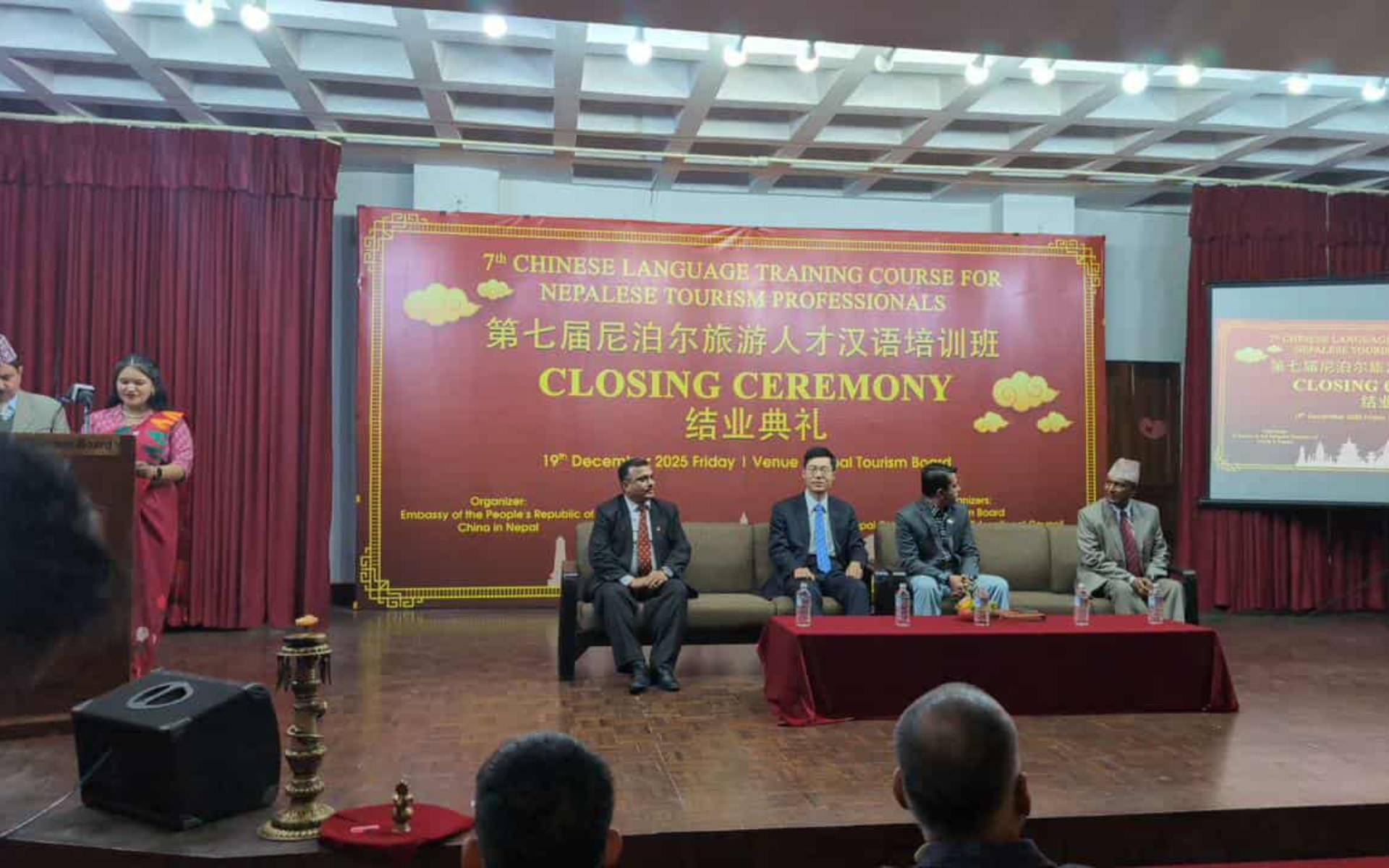
Kathmandu: The 7th Chinese Language Training Program for Nepali tourism professionals concluded today with a closing ceremony at the Nepal Tourism Board (NTB) Auditorium.
The program, supported by the Chinese government, the Embassy of China in Nepal, the Nepal China Cultural Educational Council (NCCEC), and NTB, provides Chinese language training to over 50 tourism professionals each year. It was launched following a bilateral assistance agreement during Prime Minister Prachanda’s visit to China and his meeting with President Xi Jinping.
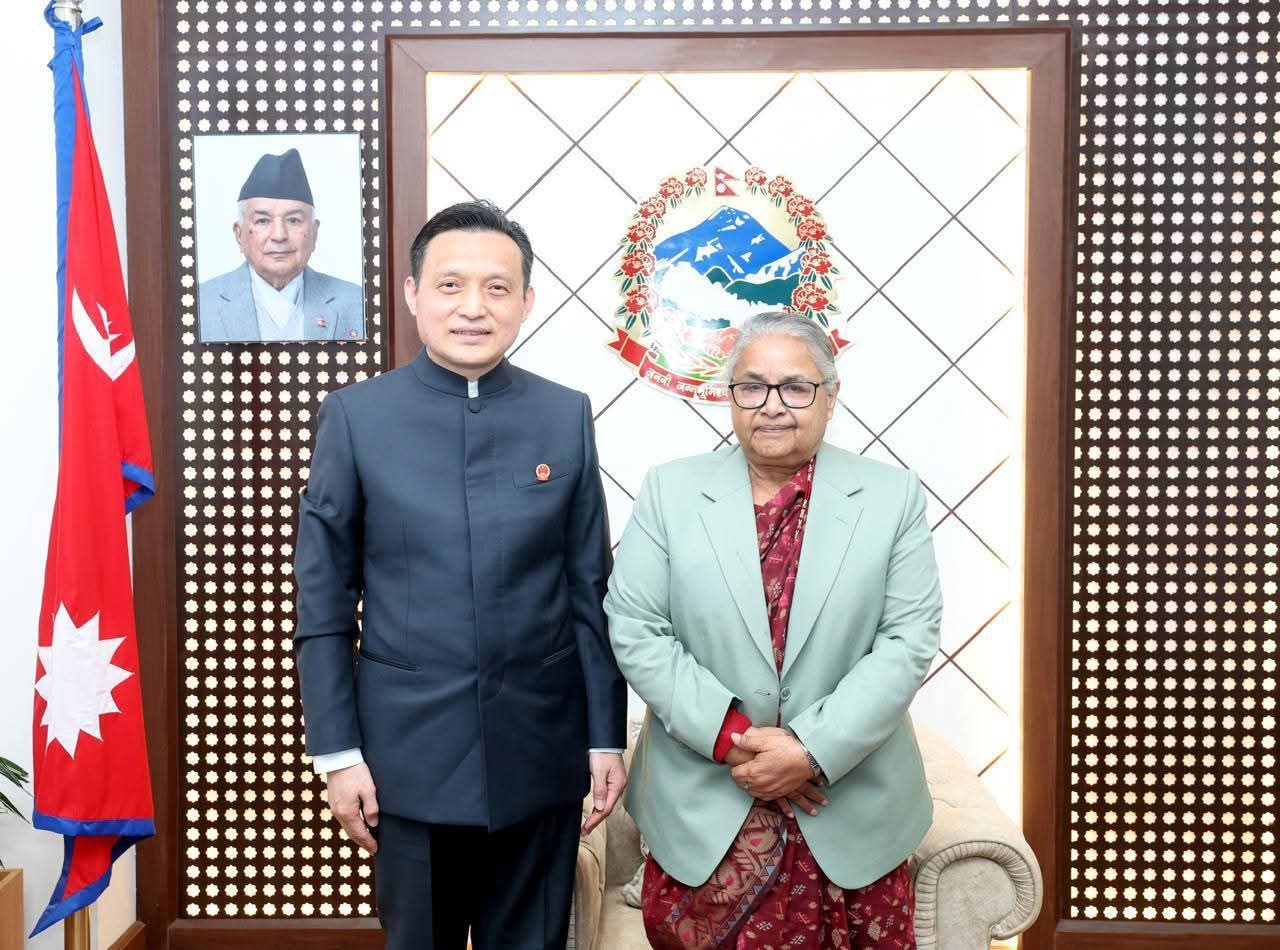
The closing ceremony featured certificate distribution for the graduates of the 7th batch, along with cultural presentations and martial arts demonstrations by the students, showcasing their newly acquired skills. His Excellency Zhou Pan, Deputy Chief of Mission of the Chinese Embassy, expressed his delight at the dedication of Nepali students and emphasized that proficiency in Chinese opens access to the world’s largest tourism market, benefiting Nepal’s tourism sector and economy. Dr. Harish Shah, Chairman of NCCEC, highlighted the global importance of the Chinese language, particularly for international trade and its benefits for Nepal’s tourism industry.
Ram Krishna Lamichhane, Director General of the Department of Tourism, noted the course’s role in promoting Nepal as a prime destination for Chinese tourists and achieving the government’s target of increasing Chinese tourist arrivals. Hikmat Singh Ayer, Officiating CEO of NTB, congratulated the graduates and reaffirmed the program’s continuation, stressing the importance of skilled human resources in Chinese language for tourism and broader economic engagement. Robin Regmi, Senior Officer at NTB, added that the program supports capacity building beyond tourism, fostering stronger trade and people-to-people relations between China and Nepal.
The initiative is expected to strengthen China–Nepal ties, enhance cultural exchange, and support the growth of tourism and economic collaboration between the two countries.