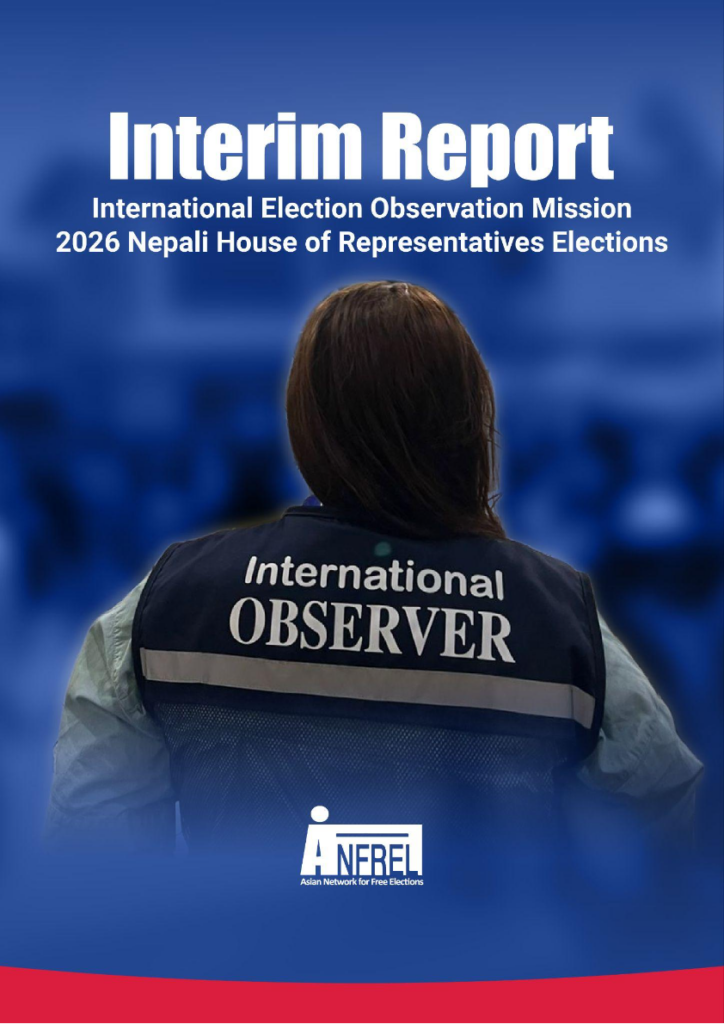
Kathmandu: The Asian Network for Free Elections (ANFREL) has stated that Nepal’s 2026 House of Representatives Election 2026 Nepal was conducted on March 5 in a generally peaceful and orderly manner despite the country’s politically transitional environment following the upheaval of September 2025.
In its International Election Observation Mission (IEOM) executive summary, ANFREL noted that the election demonstrated continued public engagement with democratic processes even amid recent political instability. However, the organization also highlighted several structural and procedural weaknesses that need to be addressed to strengthen Nepal’s democratic system.
According to the report, the Election Commission of Nepal managed the technical preparations for the elections within a compressed timeframe and despite operating with an incomplete membership. Stakeholder confidence in the commission remained relatively high, but observers pointed out gaps in voter education and limited access to election information, particularly in remote areas.
The implementation of the electoral Code of Conduct emerged as a key concern during the campaign period. Although monitoring mechanisms were in place, many stakeholders perceived enforcement to be weak and inconsistent. Violations related to campaign activities and election spending were frequently reported, raising broader concerns about political accountability and the lack of consequences for non-compliance.
ANFREL also identified campaign finance regulation as a structural weakness in Nepal’s electoral system. While legal spending limits and reporting requirements exist, stakeholders reported that many candidates exceeded the prescribed ceilings. Limited public access to campaign finance reports and weak enforcement mechanisms were said to reduce transparency and public scrutiny, creating advantages for wealthier candidates and further hindering women and marginalized groups from competing effectively.
Security personnel were widely deployed across polling stations and were generally credited with maintaining a stable environment on election day. However, the report noted that armed security personnel were present inside several polling centers, sometimes positioned close to voting areas. Although their presence did not appear to directly interfere with voting, ANFREL suggested that clearer guidelines regarding the role and positioning of security forces would strengthen both the perception and practice of a free voting environment.
Accessibility and inclusion also remain areas requiring further improvement. Many polling stations were located in schools or public buildings situated in hilly or uneven terrain, making it difficult for persons with disabilities, elderly voters and individuals with mobility challenges to access polling centers. While assistance from polling staff and family members was commonly provided, structural accessibility measures were uneven.
The report further highlighted persistent challenges related to political representation. Women and marginalized communities continue to be significantly underrepresented among candidates, particularly in first-past-the-post constituencies, despite constitutional commitments to inclusion.
Youth engagement, however, was highly visible throughout the electoral period. ANFREL said this reflects broader public demands for political renewal following the civic mobilization that preceded the elections. Nevertheless, younger citizens still face barriers in entering formal political competition due to party gatekeeping and traditional candidate selection practices.
ANFREL also noted that Nepal’s citizen election observation ecosystem remains active but constrained. Domestic observer organizations continue to play an important role in monitoring elections, though many operate with limited financial and technical capacity. The organization observed that some local authorities and security personnel lacked adequate awareness about the role and mandate of election observers, which resulted in inconsistent observer access at certain locations.
Voter education was identified as another key issue. Although most voters understand the mechanics of casting ballots, broader awareness about Nepal’s mixed electoral system remains limited. Stakeholders also noted that public outreach efforts during this election cycle appeared less visible and inclusive compared to previous elections.
Looking ahead, ANFREL emphasized that the post-election environment will be critical in determining the overall legitimacy of the electoral process. The organization noted that Nepal’s democratic journey has often evolved through periods of political contestation followed by institutional reforms.
In the current context, ANFREL said public demands for accountability, institutional reform and political renewal remain strong, particularly among younger citizens. The organization urged political parties and leaders to respond constructively to these expectations by respecting democratic norms and pursuing meaningful reforms to strengthen public confidence in Nepal’s democratic system.
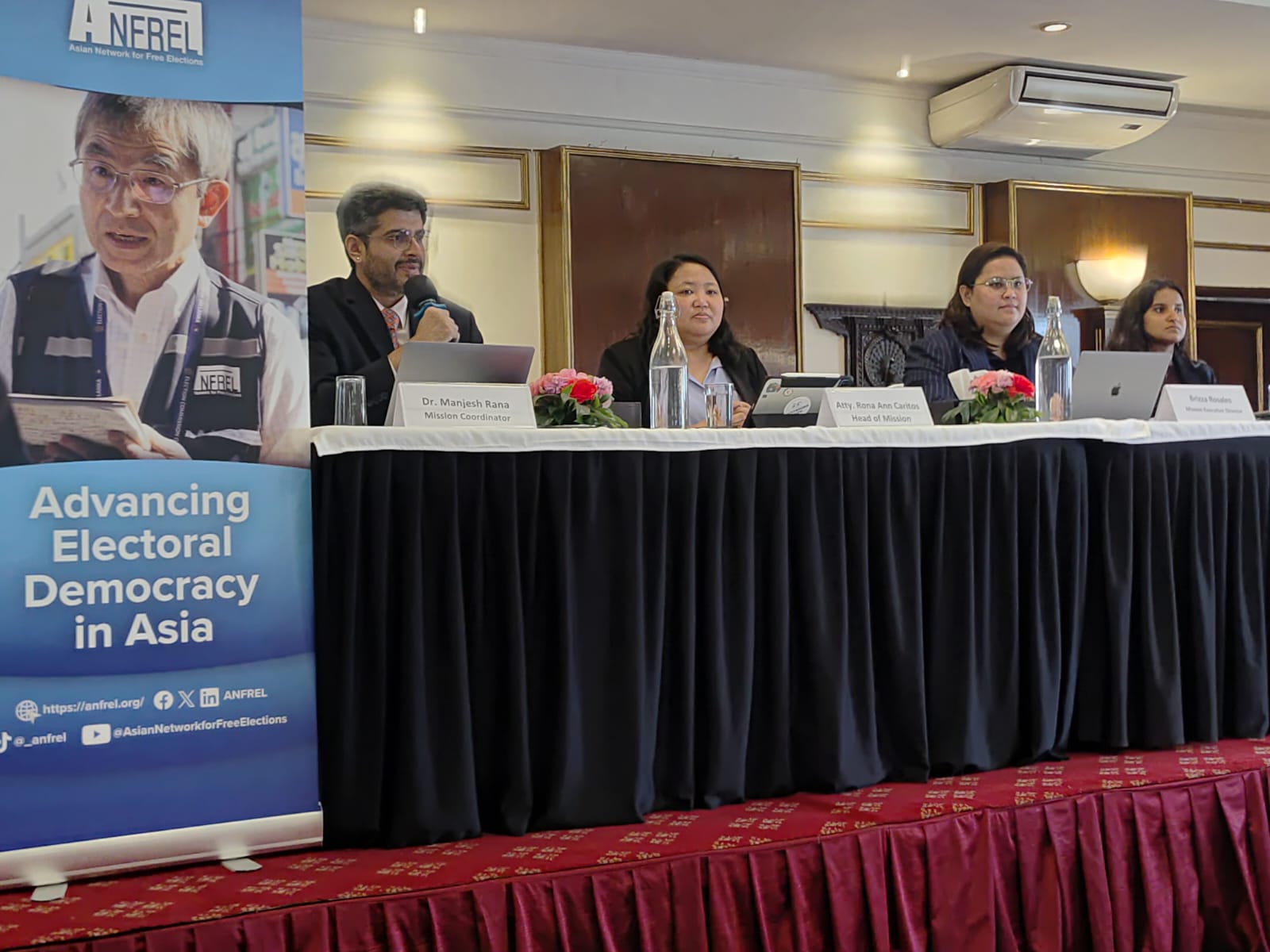
Brizza Rosales, Executive Director of ANFREL, said they will finalize the full report within a month and submit it to the National Election Commission of Nepal. She added that her organization is hopeful about implementing the recommendations mentioned in the report.
Dr. Manjesh Rana, Senior Program Officer and coordinator for Nepal’s election observation, stated that more than 300 polling stations were observed by the 20 election observers from different Asian countries. Moreover, he said they visited 35 districts across seven provinces of Nepal during the election.