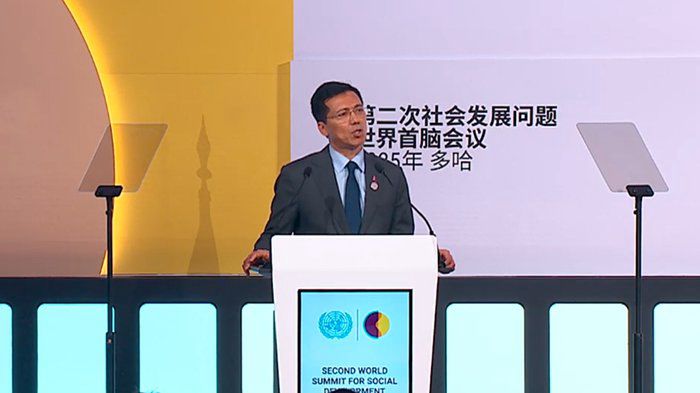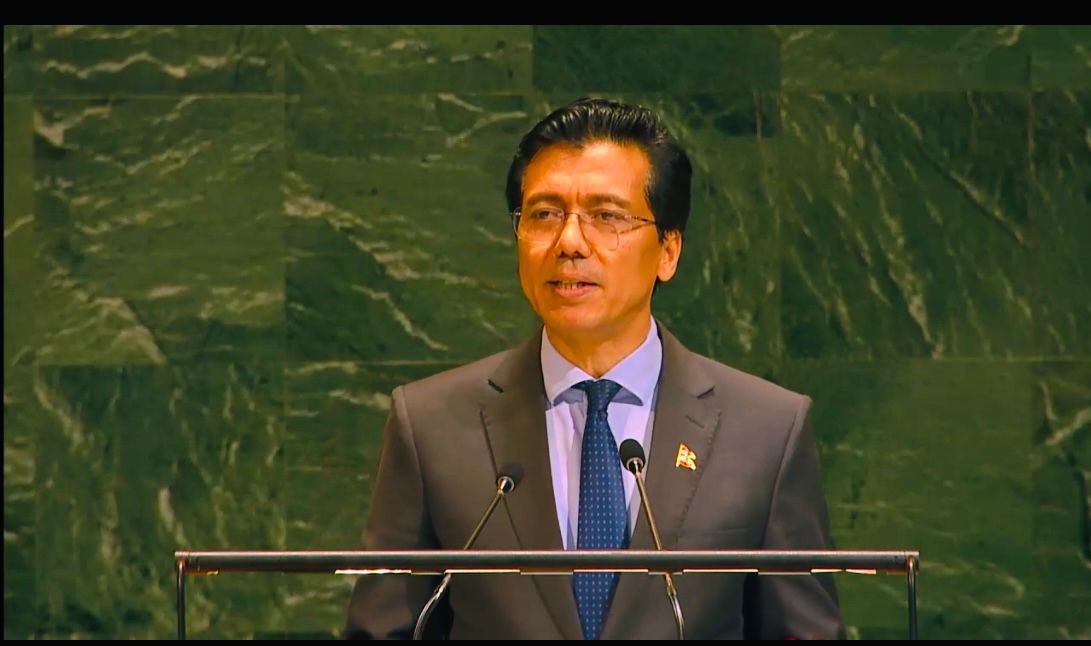
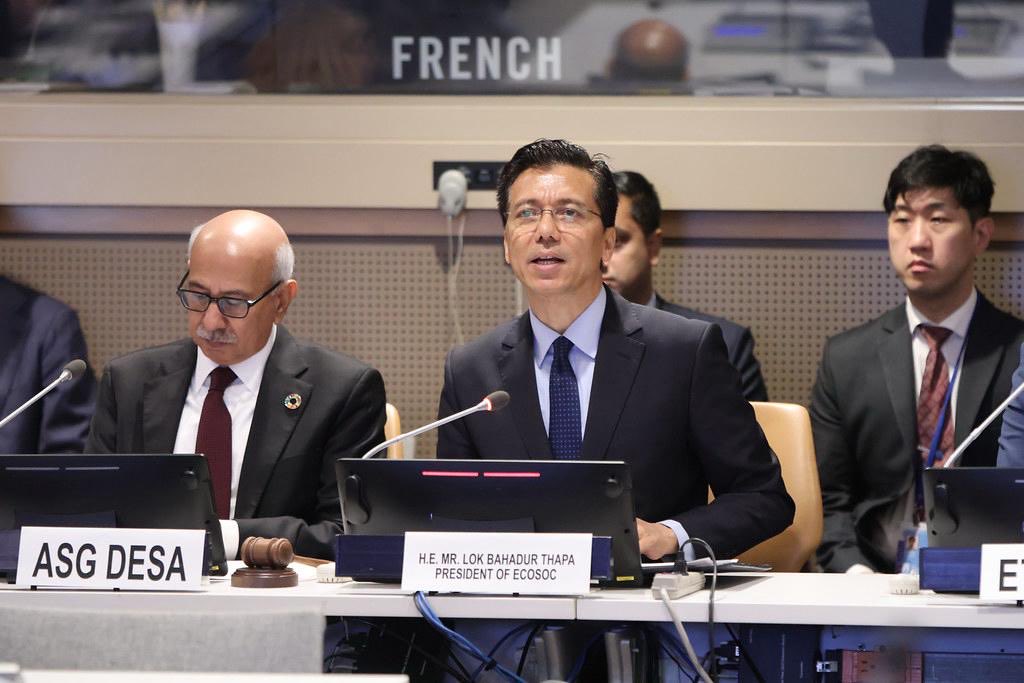
Kathmandu: President of the UN Economic and Social Council (ECOSOC), Ambassador Lok Bahadur Thapa, has called for accelerated global action to ensure universal access to clean, affordable, and sustainable energy, warning that current progress is ‘not fast enough, not fair enough, and not adequately financed.’
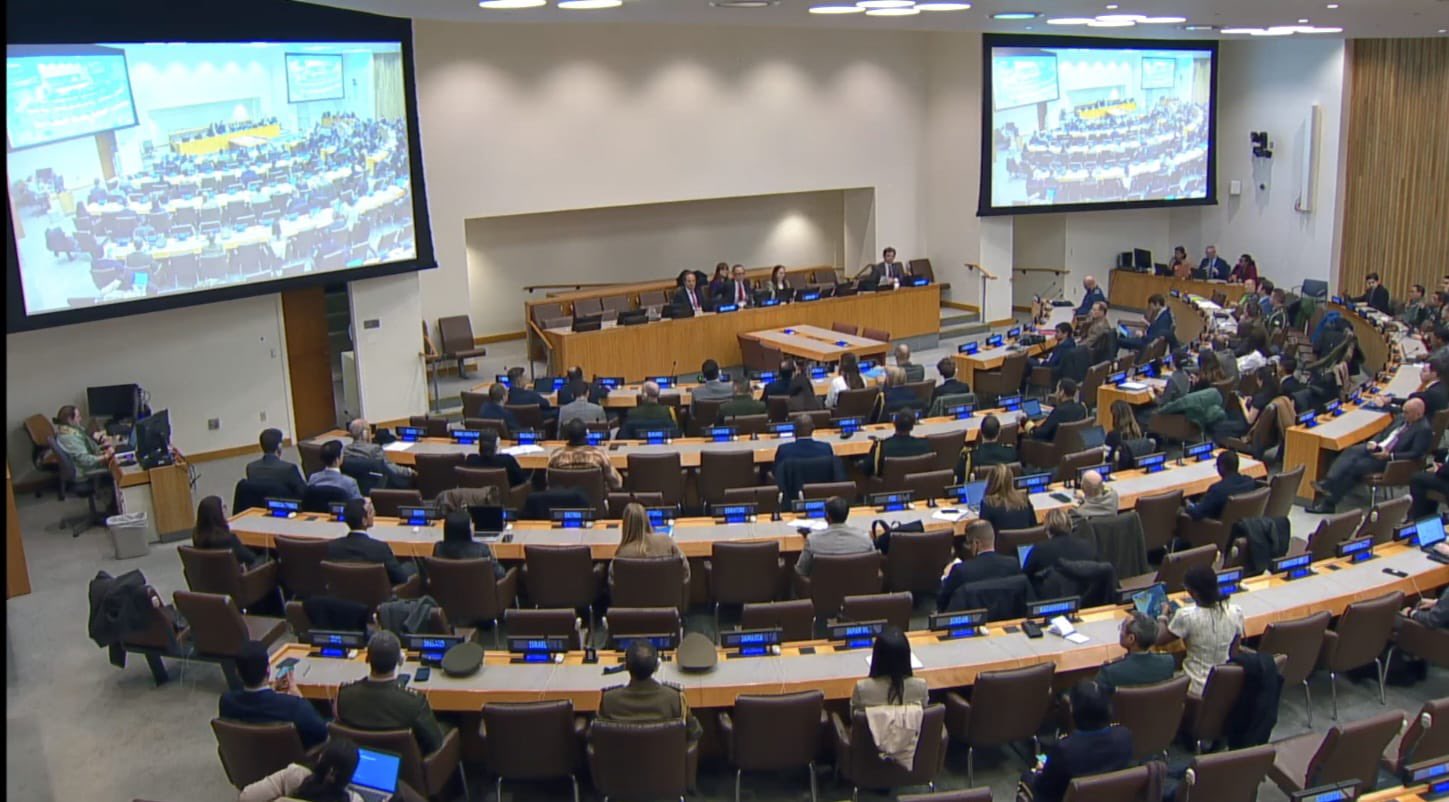
Delivering the keynote address at a special event marking the International Day of Clean Energy at the United Nations Headquarters on January 26, Thapa said energy lies at the center of today’s most pressing global challenges, including geopolitical tensions, widening inequalities, and the escalating climate crisis.
“Clean energy can either deepen vulnerability and division, or become a foundation for resilience, opportunity, and shared prosperity,” he said, stressing that without clean and affordable energy, the promise of sustainable development cannot be fulfilled.
While noting that nearly 92 percent of the world’s population now has access to electricity and that renewable energy has become the lowest-cost option in many regions, Thapa highlighted persistent inequalities. More than 660 million people remain without electricity, and 2.1 billion people still rely on polluting fuels for cooking, with severe impacts on health, livelihoods, and the environment—particularly for women and girls.
He also pointed to stark financing disparities, observing that least developed countries (LDCs) receive only a small share of global clean energy investment. “This gap is not only a development failure, but a deepening climate risk,” he warned.
To align global energy systems with climate and development goals, Thapa emphasized the need to triple renewable energy capacity and double energy efficiency improvements by 2030, while ensuring just, inclusive, and people-centered transitions that leave no one behind.
Welcoming the Global Plan of Action for the Extension of the Decade of Sustainable Energy for All to 2030, recently adopted by the UN General Assembly, Thapa said the plan provides a clear roadmap to accelerate universal energy access, scale up investment, strengthen partnerships, and place gender equality and inclusion at the heart of energy action. He underscored the urgency of increasing investment in LDCs, landlocked developing countries (LLDCs), and small island developing States (SIDS).
Looking ahead to the review of SDG 7 at the High-Level Political Forum in July, Thapa said the process offers a critical opportunity to translate ambition into tangible impact.
“Nepal’s Presidency of ECOSOC is committed to strengthening multilateralism, rebuilding trust, and supporting effective global cooperation at a time when unity and solidarity are needed more than ever,” he said.
Calling on Member States, UN agencies, financial institutions, the private sector, and civil society to work together, Thapa urged collective implementation of the Global Plan of Action to ensure clean energy becomes a driver of dignity, resilience, and opportunity for all.
“Clean energy is the foundation of a just, resilient, and sustainable future,” he said, urging the international community to act with urgency and determination.