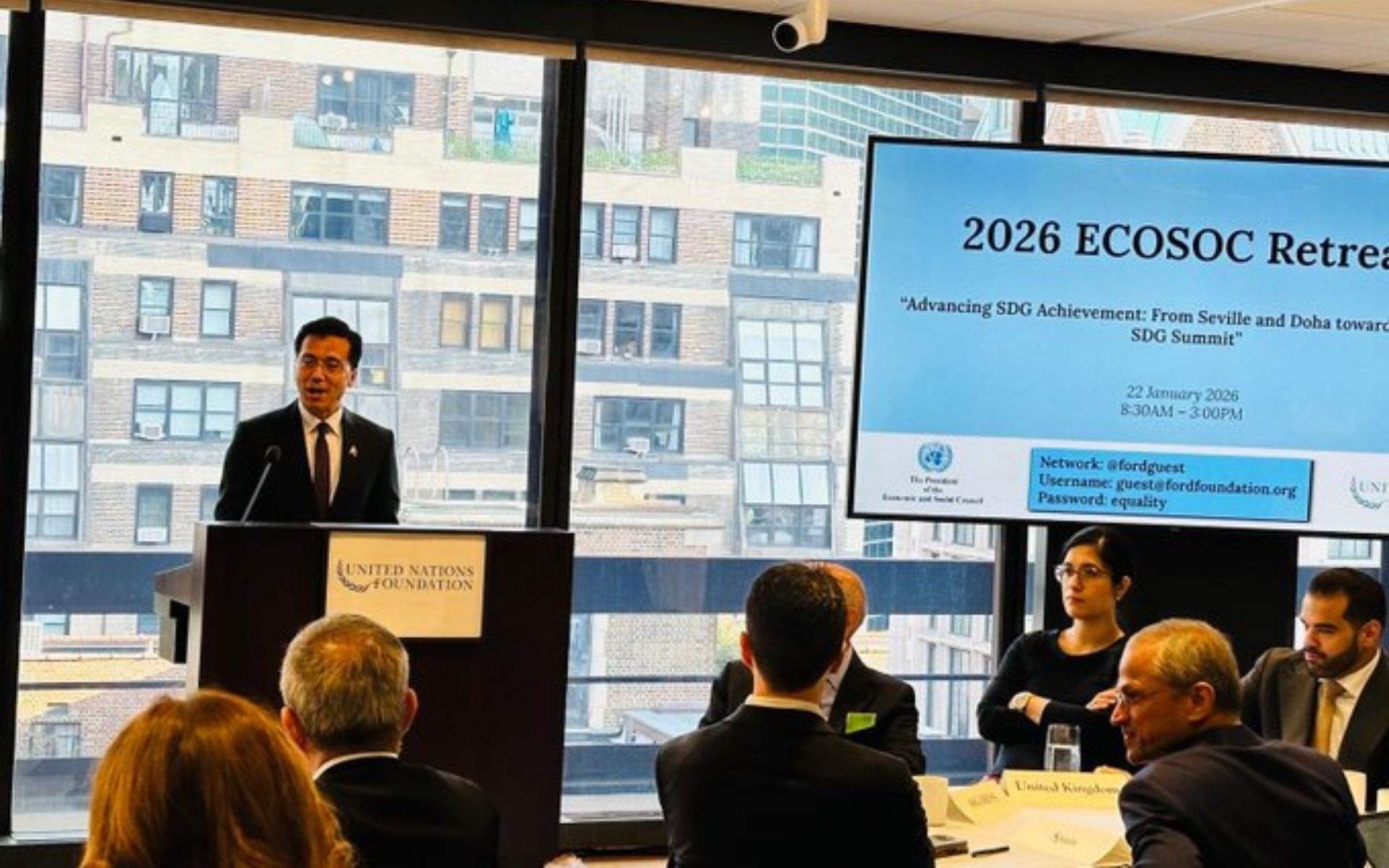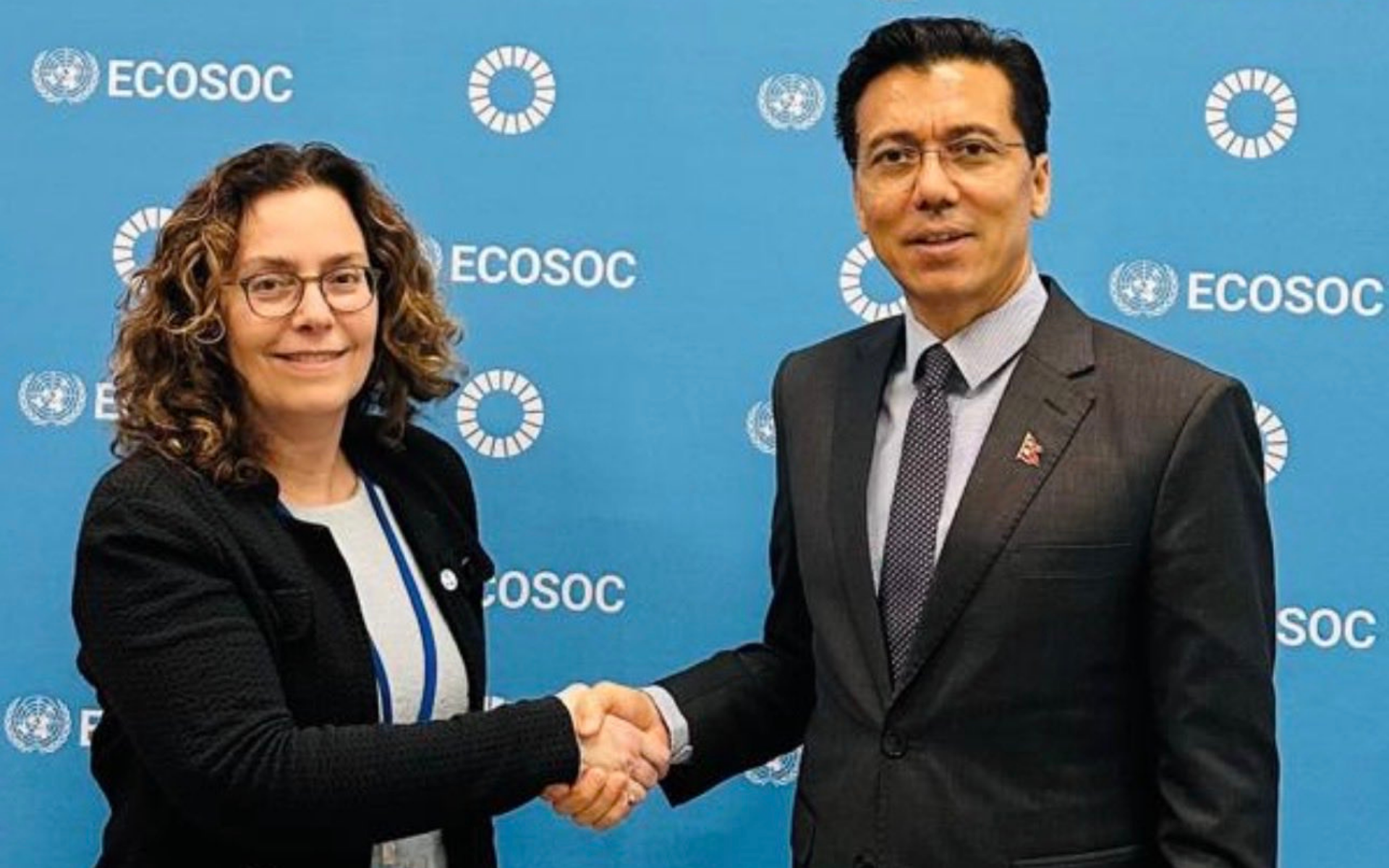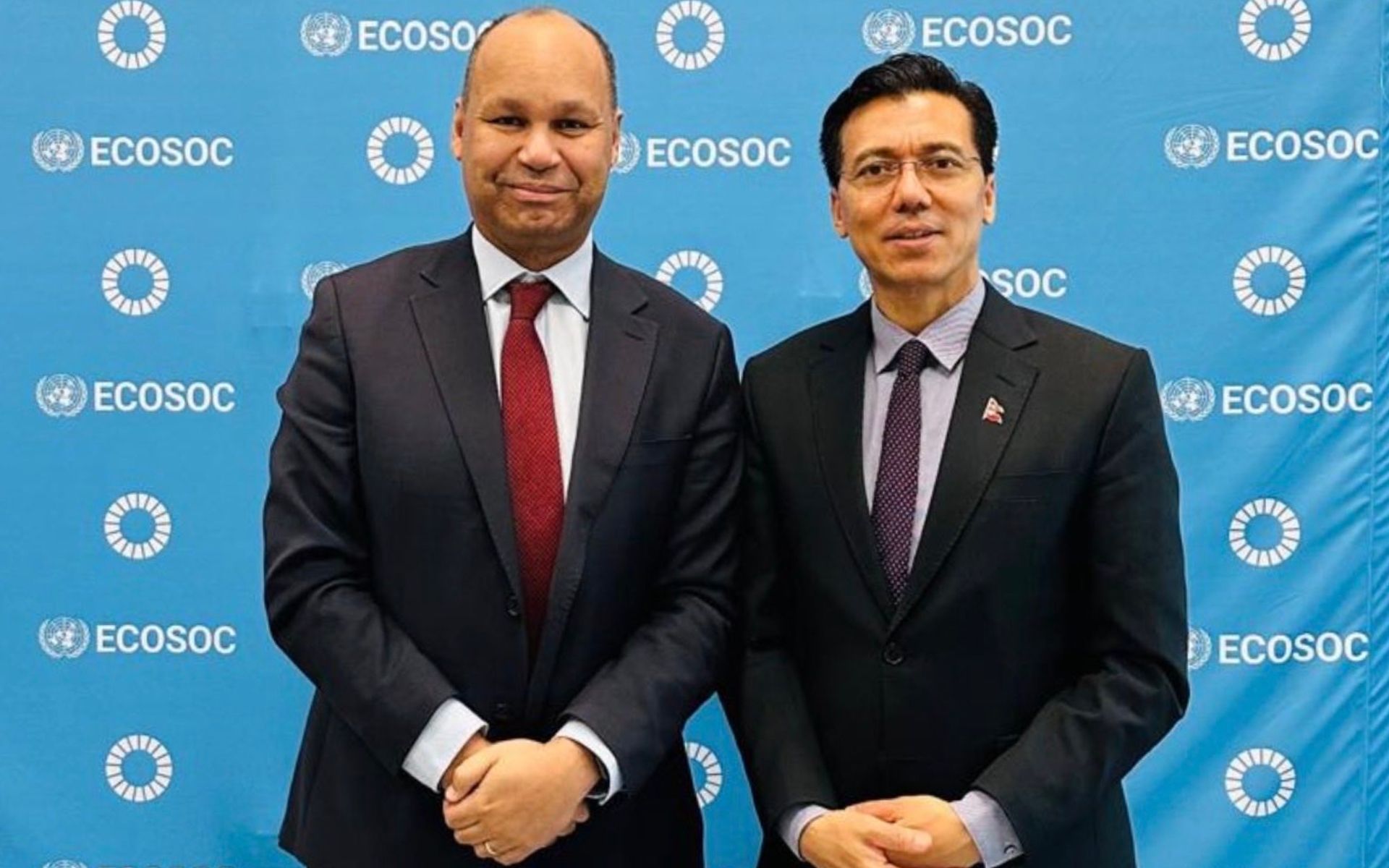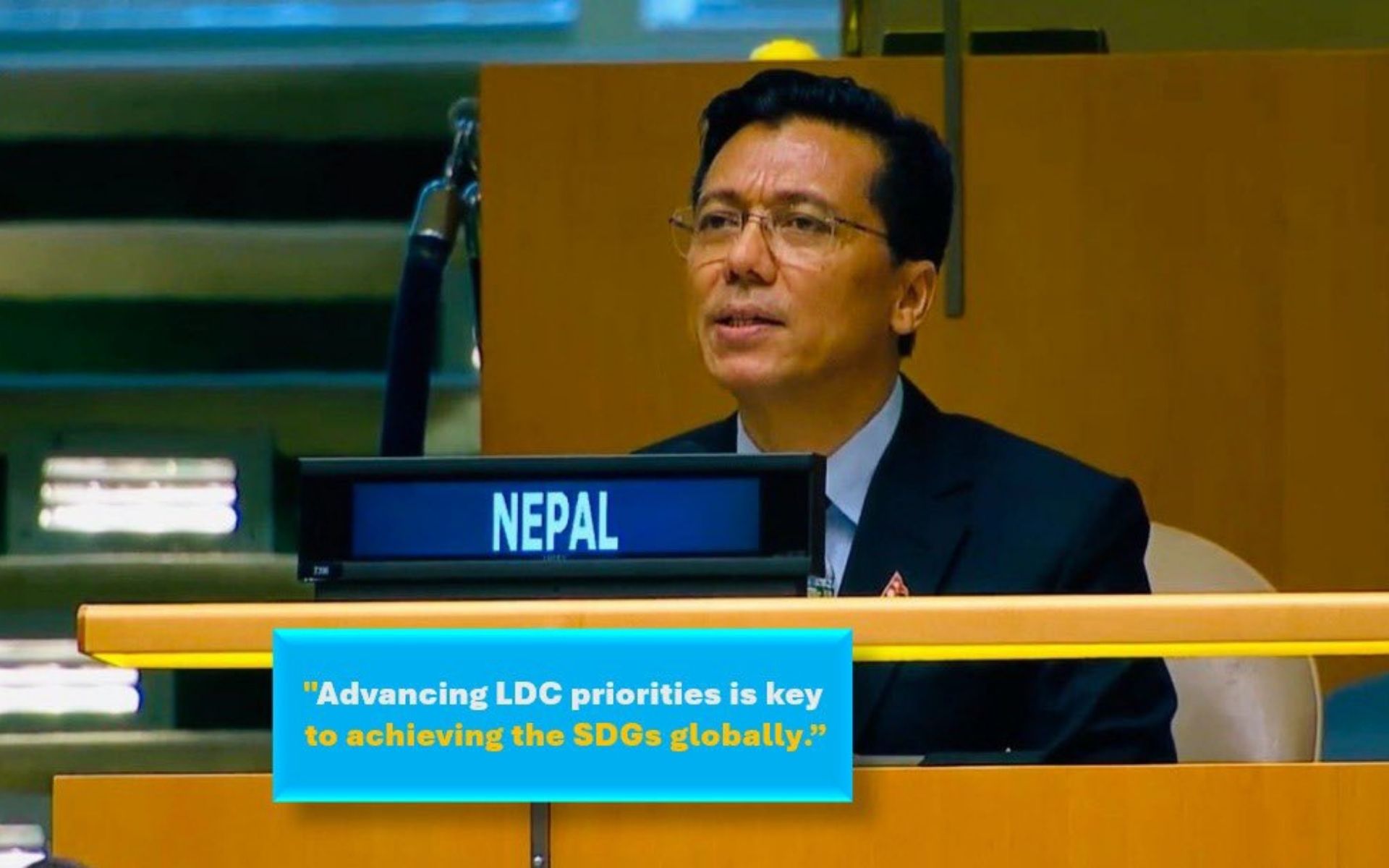
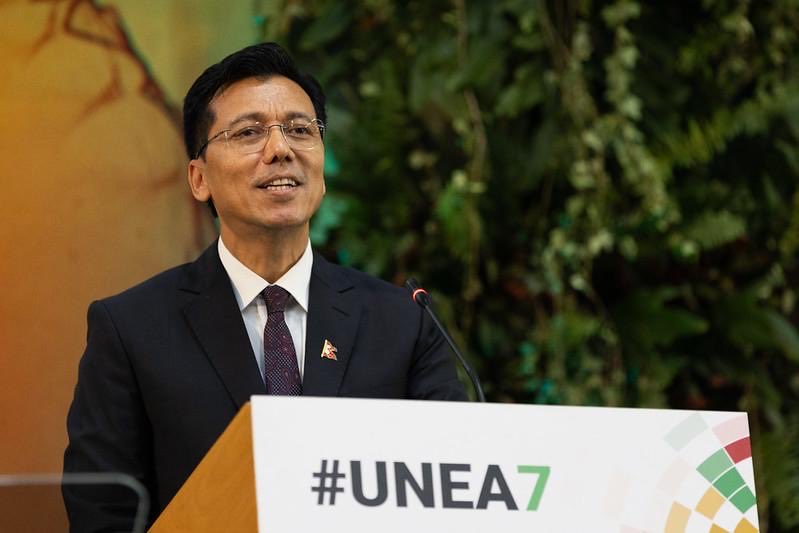
Kathmandu: President of the UN Economic and Social Council (ECOSOC), Lok Bahadur Thapa, delivered a powerful call for unity, ambition, and accelerated action as he addressed the Opening Session of the Seventh United Nations Environment Assembly (UNEA-7) on December 11 in Kenya.
Speaking before ministers, diplomats, and global delegates, Thapa warned that the world is facing “a web of interconnected crises,” including escalating conflicts, deepening geopolitical tensions, and growing economic uncertainty—factors that are weakening global progress on sustainable development.
Only 17 percent of the Sustainable Development Goals (SDGs) are currently on track, he noted, underscoring the widening gap between global commitments and real-world action.
Thapa highlighted the rapid acceleration of the “triple planetary crisis” — climate change, biodiversity loss, and pollution — calling them threats that are “eroding development gains, widening inequalities, and placing the most vulnerable at disproportionate risk.”
Despite the grim outlook, Thapa stressed that progress remains possible. He pointed to the dramatic decline in renewable energy costs, expanding global protected areas, and the landmark agreement on marine biodiversity beyond national jurisdiction as signs of hope.
“These gains show what is achievable with political will, science, and collective action,” he said.
Thapa emphasized the critical role of UNEA as the world’s leading platform for environmental governance and reaffirmed ECOSOC’s commitment to strengthening system-wide coherence, enhancing multilateral environmental agreements, and ensuring better support to countries facing climate and ecological pressures.
He praised UNEP’s leadership for delivering science-based solutions and ensuring environmental priorities are embedded across economic and social decision-making.
Outlining his Presidential vision of “Delivering Better,” Thapa urged delegates at UNEA-7 to advance transformative solutions under the Assembly’s theme: “Advancing Sustainable Solutions for a Resilient Planet.”
He stressed that the outcomes of UNEA-7 will directly contribute to ECOSOC’s 2026 High-Level Political Forum, which will undertake in-depth reviews of SDGs 6, 7, 9, 11, and 17.
Thapa concluded with a resounding call for courage, justice, innovation, and strengthened multilateral cooperation.
“Let us leave this Assembly with a clear message to the world: We choose solutions over inaction; resilience over fragility; ambition over delay,” he said. “Together, we can deliver better.”
UNEA-7 continues throughout the week, focusing on global environmental priorities and pathways to a more resilient, sustainable future.
ECOSOC President Lok Bahadur Thapa Calls for Urgent Global Action at UNEA-7
NAIROBI, Kenya – President of the UN Economic and Social Council (ECOSOC), Lok Bahadur Thapa, delivered a powerful call for unity, ambition, and accelerated action as he addressed the Opening Session of the Seventh United Nations Environment Assembly (UNEA-7) on Monday.
Speaking before ministers, diplomats, and global delegates, Thapa warned that the world is facing “a web of interconnected crises,” including escalating conflicts, deepening geopolitical tensions, and growing economic uncertainty—factors that are weakening global progress on sustainable development.
Only 17 percent of the Sustainable Development Goals (SDGs) are currently on track, he noted, underscoring the widening gap between global commitments and real-world action.
Thapa highlighted the rapid acceleration of the “triple planetary crisis” — climate change, biodiversity loss, and pollution — calling them threats that are “eroding development gains, widening inequalities, and placing the most vulnerable at disproportionate risk.”
Despite the grim outlook, Thapa stressed that progress remains possible. He pointed to the dramatic decline in renewable energy costs, expanding global protected areas, and the landmark agreement on marine biodiversity beyond national jurisdiction as signs of hope.
“These gains show what is achievable with political will, science, and collective action,” he said.
Thapa emphasized the critical role of UNEA as the world’s leading platform for environmental governance and reaffirmed ECOSOC’s commitment to strengthening system-wide coherence, enhancing multilateral environmental agreements, and ensuring better support to countries facing climate and ecological pressures.
He praised UNEP’s leadership for delivering science-based solutions and ensuring environmental priorities are embedded across economic and social decision-making.
Outlining his Presidential vision of “Delivering Better,” Thapa urged delegates at UNEA-7 to advance transformative solutions under the Assembly’s theme: “Advancing Sustainable Solutions for a Resilient Planet.”
He stressed that the outcomes of UNEA-7 will directly contribute to ECOSOC’s 2026 High-Level Political Forum, which will undertake in-depth reviews of SDGs 6, 7, 9, 11, and 17.
Thapa concluded with a resounding call for courage, justice, innovation, and strengthened multilateral cooperation.
“Let us leave this Assembly with a clear message to the world: We choose solutions over inaction; resilience over fragility; ambition over delay,” he said. “Together, we can deliver better.”
UNEA-7 continues throughout the week, focusing on global environmental priorities and pathways to a more resilient, sustainable future.