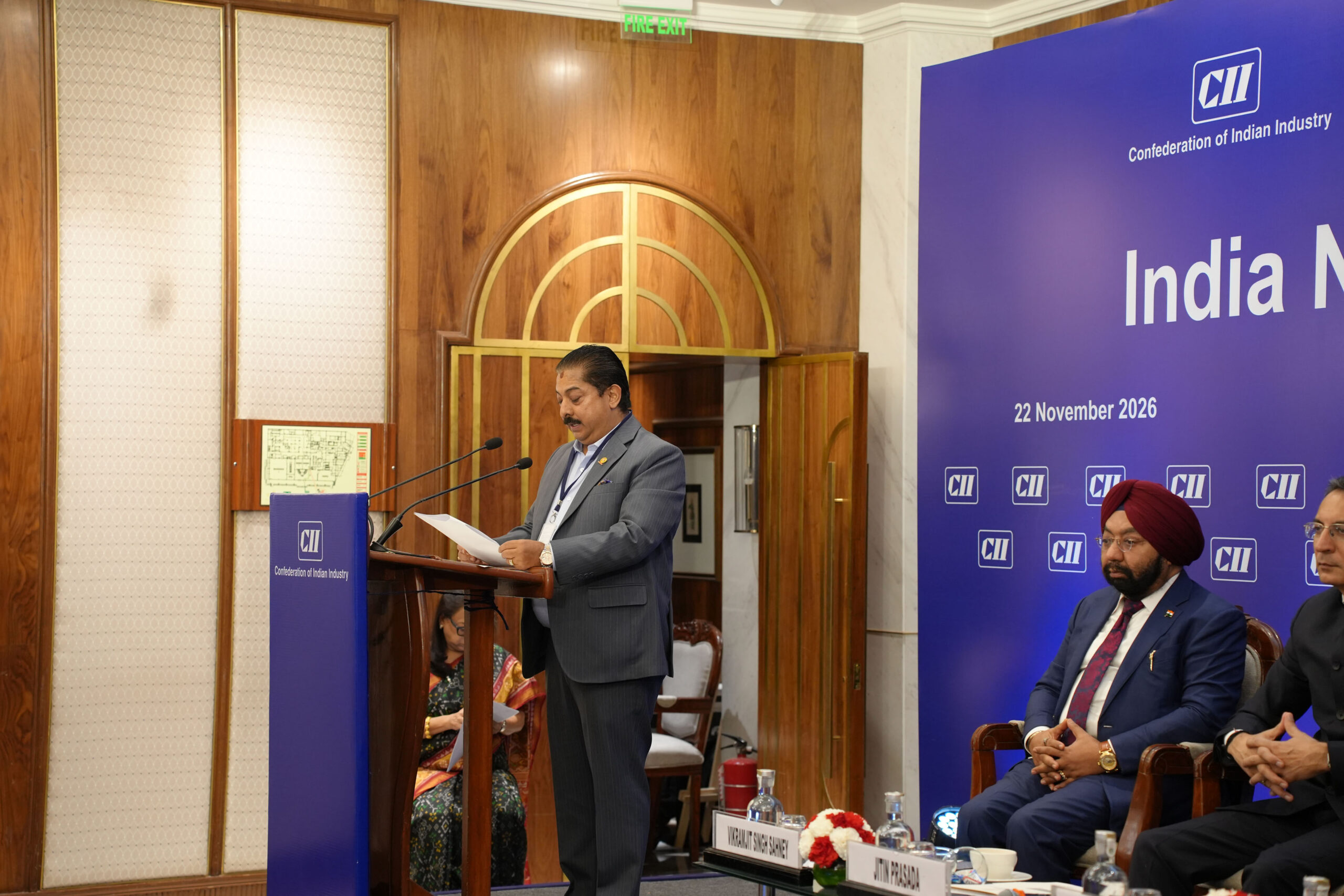
Kathmandu: Federation of Nepalese Chambers of Commerce and Industry (FNCCI) has called on Indian industrialists and businesspeople to seize opportunities for investment, joint ventures, and business collaboration in Nepal and to join the journey toward shared economic prosperity, noting that Nepal remains open to investment.
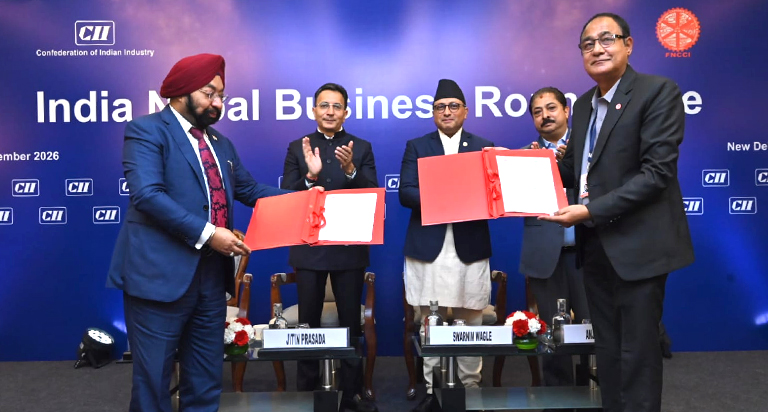
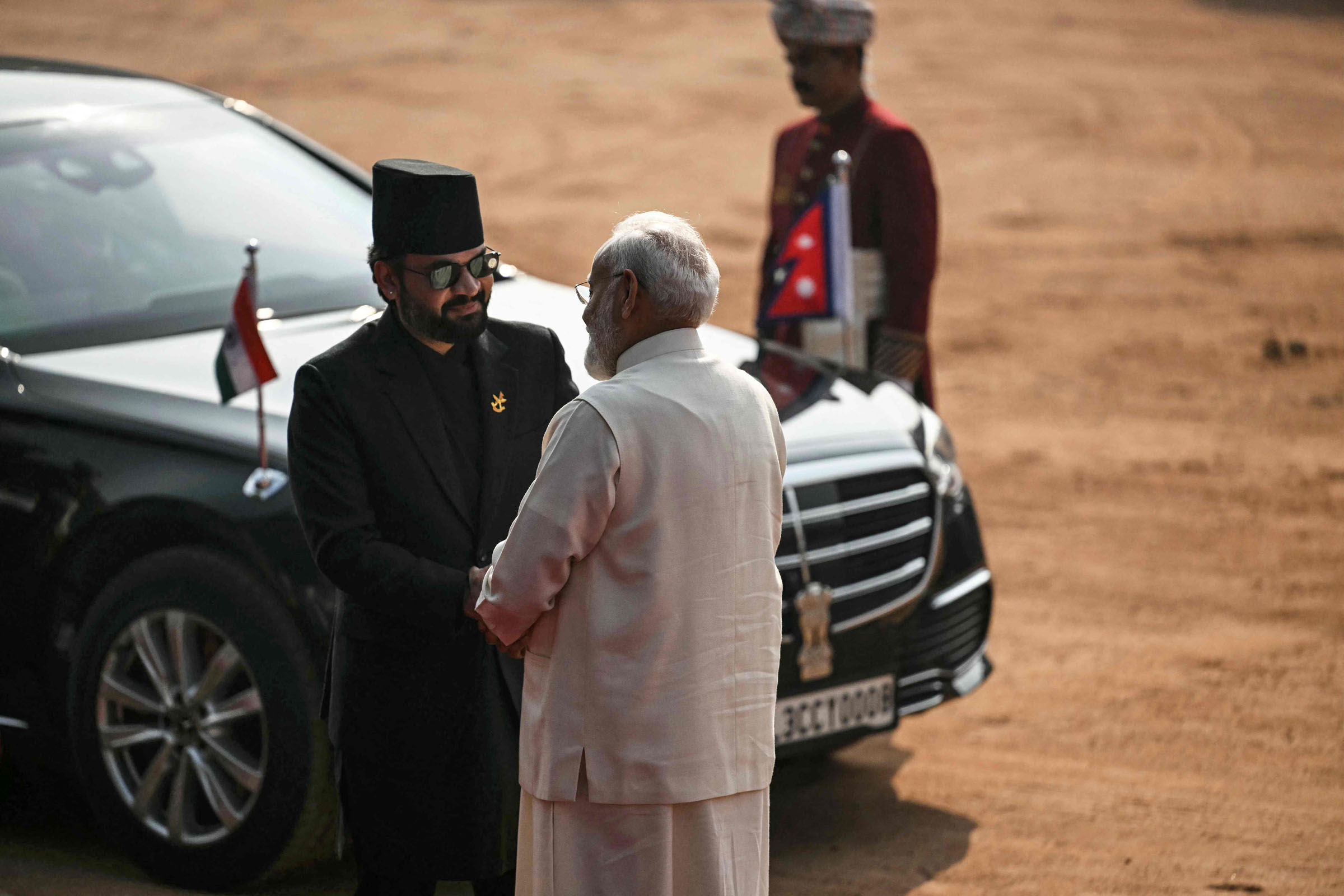
Addressing a Nepal–India Economic and Business Interaction Programme in New Delhi, during Prime Minister Rt. Hon. Balendra Shah’s recent state visit to India, FNCCI President Anjan Shrestha said Nepal–India relations should now be elevated to a new height through trade, investment, and economic cooperation.
The programme was jointly organized by the Federation of Nepalese Chambers of Commerce and Industry (FNCCI) and the Confederation of Indian Industry (CII).
Shrestha urged Indian entrepreneurs to increase private-sector investment in Nepal and to help remove obstacles in bilateral trade.
Noting that India is Nepal’s largest trading partner and a major source of foreign investment, he said trade between the two countries amounted to about USD 940 million last year, more than 80 percent of Nepal’s total exports go to India, and Indian investment accounts for about one-third of Nepal’s total foreign direct investment. Nepal earned NPR 29 billion from electricity sales to India and Bangladesh last year, an increase of 68 percent compared with the previous year, he said.
“Despite such close economic ties, Indian private-sector investment in Nepal has not come as expected. The government has advanced policy and legal reforms to improve the investment climate in Nepal. Automatic approval has been arranged for 102 industries for foreign investment, and a one-stop service center is in operation. Similarly, a process is underway to amend about 500 clauses across 59 laws. Therefore, I call on you to invest here,” he said.
Speaking at the same programme, Finance Minister Hon. Dr. Swarnim Wagle urged Indian investors to invest in Nepal and expressed the government’s commitment to carry out all necessary reforms for investment. Minister Wagle said the government is simplifying legal reforms and making them investment-friendly to boost investment in Nepal, and urged those who have already invested to expand their investments. He said the government is making special efforts to ensure investment security, guaranteed returns, and legal facilitation for profit repatriation.
Indian Minister of State for Industry Hon. Jitin Prasada discussed bilateral relations, trade, and investment, saying India has always been positive about Nepal’s economic development. He noted that there are ample possibilities for Indian investors in various sectors in Nepal.
President Shrestha said cooperation is needed in seven areas—trade, transit, connectivity, infrastructure, energy, investment, and technology—to expand Nepal–India economic partnership.
He suggested expanding access for Nepali products to the Indian market, mutual recognition between the quality certification bodies of both countries, effective use of Indian ports and rail services, and developing Bhairahawa, Nepalgunj, and Dodhara–Chandani as trade and logistics hubs.
He also called for the Ayodhya–Janakpur rail service, rail connectivity to border checkpoints, additional flights to Bhairahawa and Pokhara, and expansion of digital payment systems. He stressed the need to encourage public–private partnerships in the development of expressways, airports, industrial parks, and urban infrastructure.
Noting that Nepal has the potential to generate more than 40,000 megawatts of hydropower, FNCCI President Shrestha said the agreement between Nepal and India to trade 10,000 megawatts of electricity over the next 10 years must be implemented. He urged expanded Indian investment and joint ventures in promising sectors such as tourism, agro-processing, pharmaceuticals, cement, and information technology, along with technology transfer and capacity development of Nepali human resources.
Shrestha said a secure and well-managed border system and guaranteed investment security are essential for expanding Nepal–India trade and investment. Stressing the need to ensure cargo tracking, sealing, and timely customs clearance, he said the Private Investment Protection and Promotion Strategy (NPIMS) advanced by the Nepal government will ensure policy stability and legal and physical security of investment for at least five years.
At the programme, Shrestha also raised problems Nepali industries face in the Indian market regarding jute, steel, and Bureau of Indian Standards (BIS) certification. He said the anti-dumping duty India has been imposing on Nepali jute products and the proposed countervailing duty would affect the employment of thousands of farmers and workers in eastern Nepal. He also said Nepal’s steel exports to India fell by more than 60 percent last fiscal year after India imposed a safeguard duty on Nepali steel.
“I would like to thank India for making the BIS certification process easier. However, delays in certificate renewal and complications related to certification of raw materials remain,” he said. “To resolve these problems, I propose forming a joint task force between FNCCI and CII on trade remedies and quality standards and submitting joint recommendations to both governments.”
Shrestha clarified that since Nepal imports goods from India in large quantities, the development of Nepali industries will also create additional markets for Indian industries. Noting that India has set a target of becoming a developed nation by 2047 and Nepal aims to build a USD 100 billion economy and raise per capita income to USD 3,000 within the next five to seven years, he said cooperation between the private sectors is indispensable to achieving both countries’ economic goals.