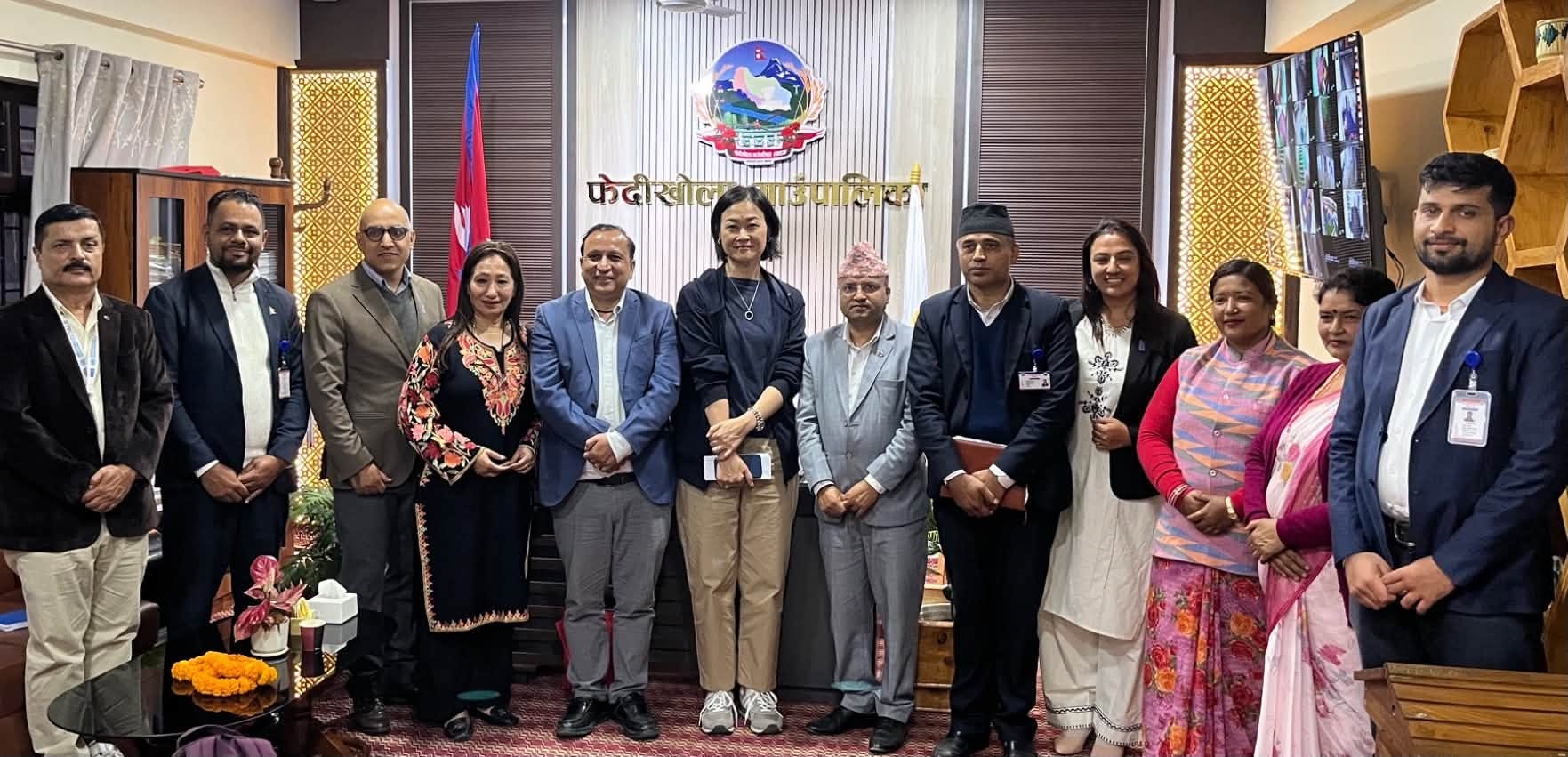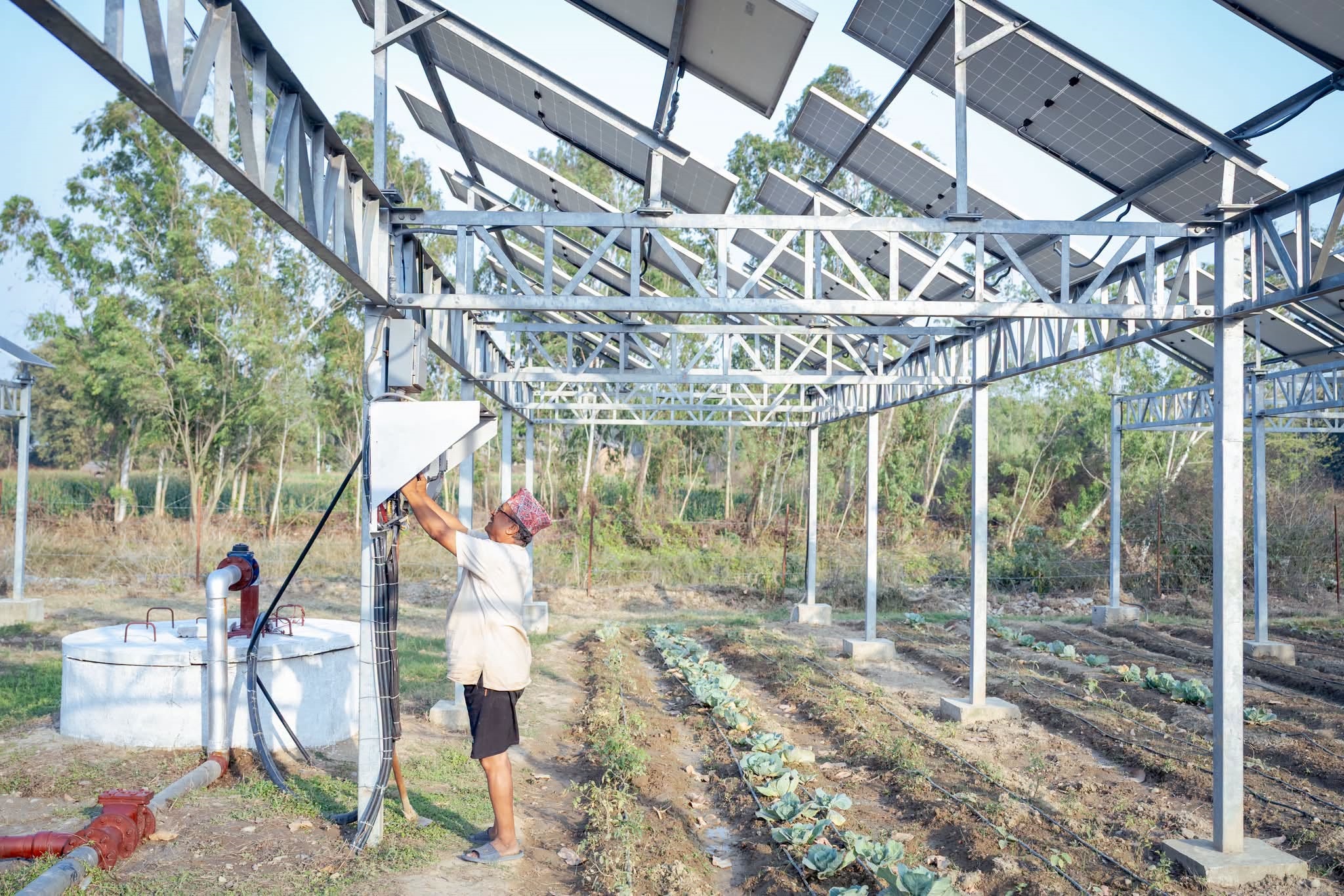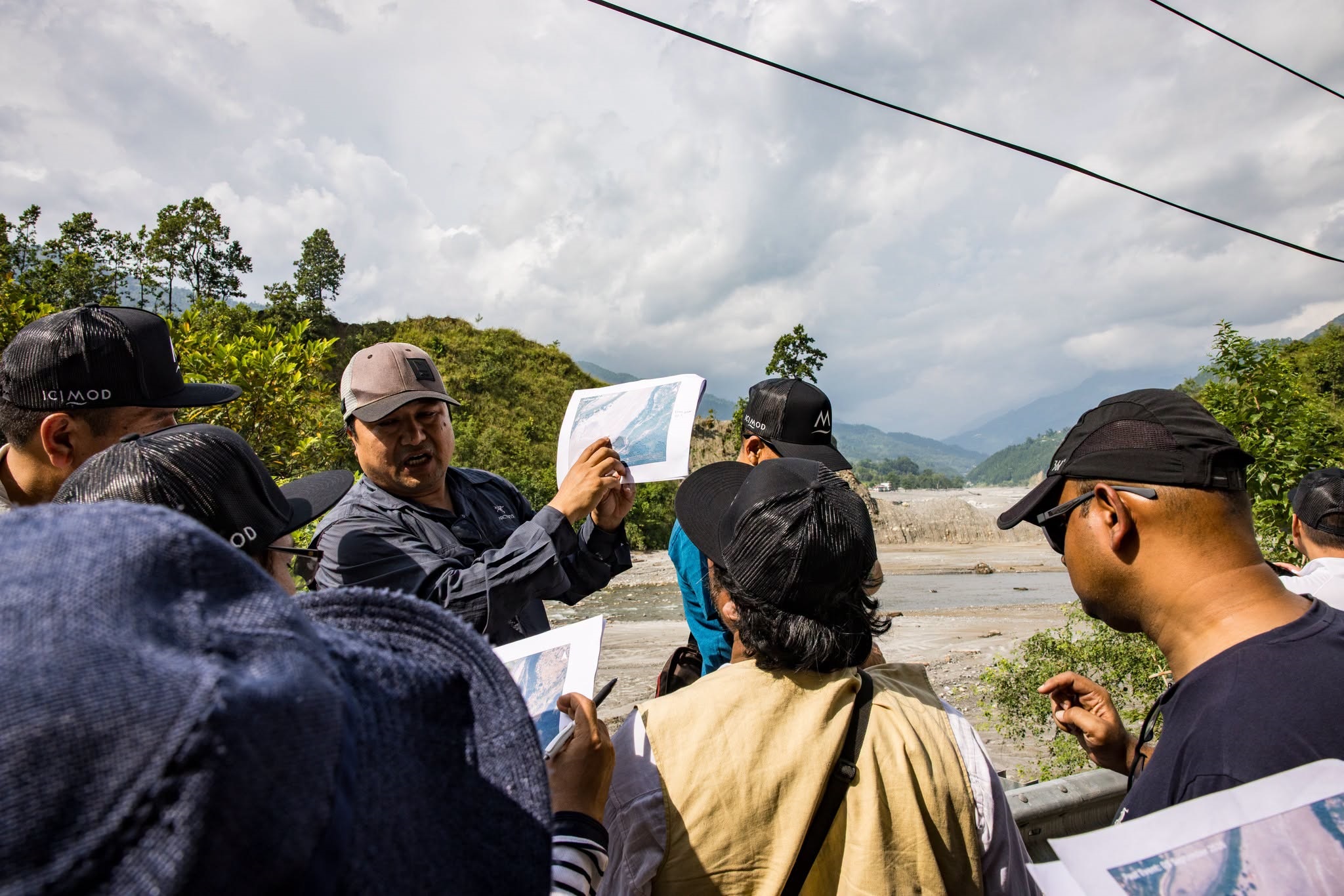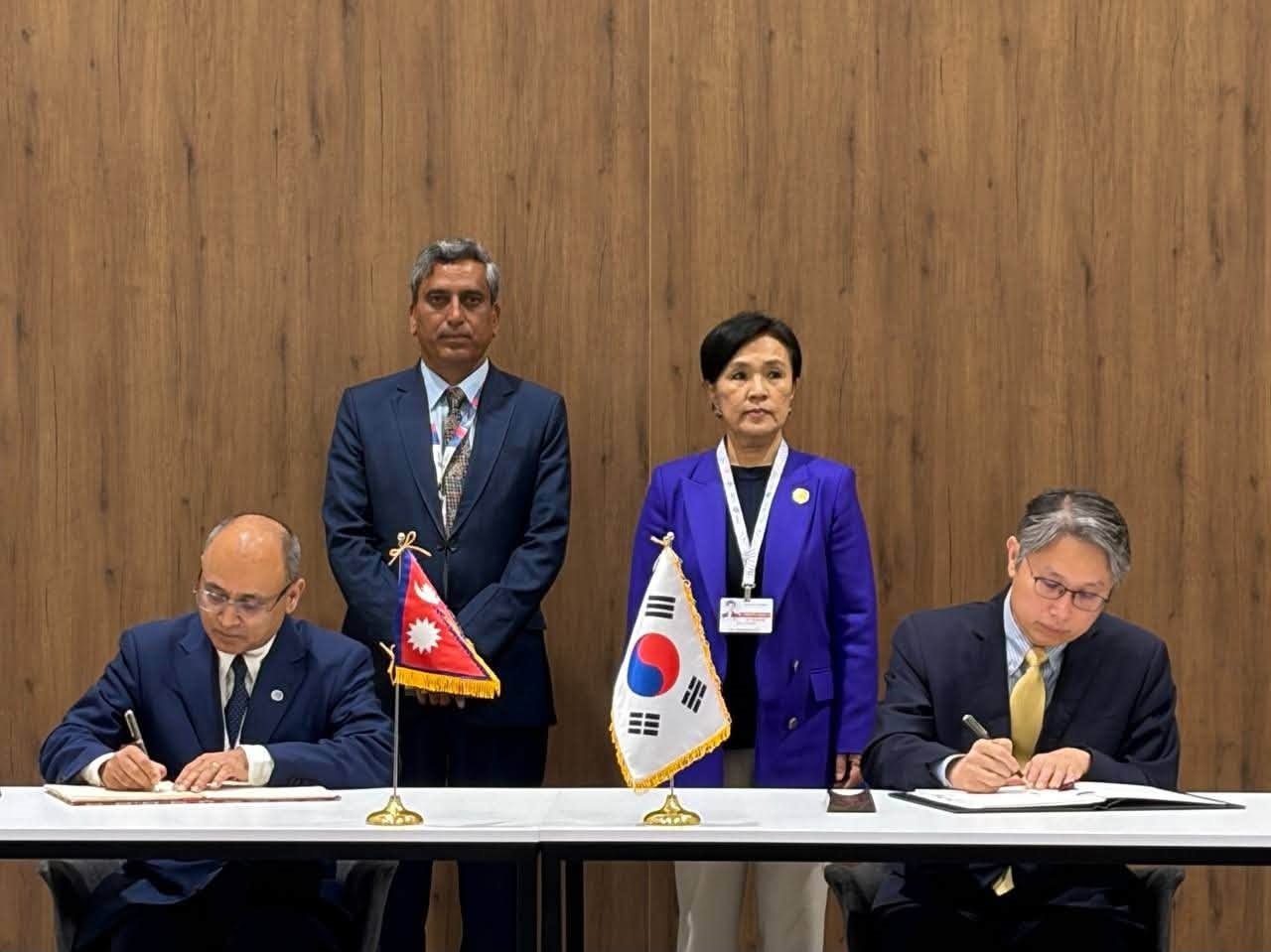
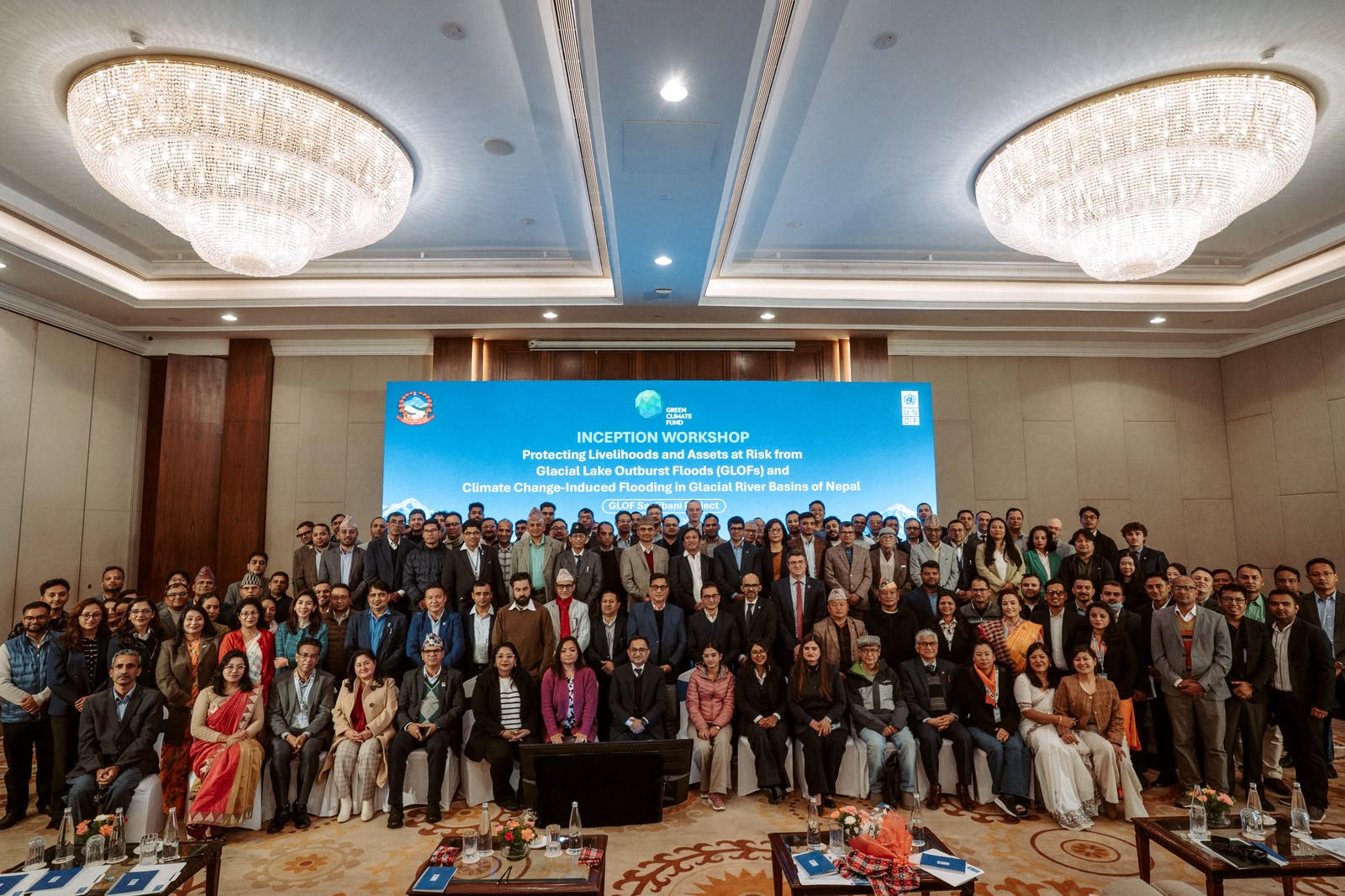
Kathmandu: The government has launched a $49.94 million project to protect vulnerable Himalayan communities from glacial lake outburst floods (GLOFs), including measures to lower water levels in four high-altitude glacial lakes.
The GLOF Sanjivani Project, which will run from 2026 to 2033, will receive $36.16 million in grants from the Green Climate Fund (GCF), $11.32 million in co-financing from the Nepal government, $2.14 million from the United Nations Development Programme (UNDP) and $320,000 from private sector partners.
The project expects to directly benefit more than 385,000 people, 55 percent of them women. Another two million people living in downstream river basins will benefit indirectly from improved flood protection.
Under one of its key interventions, the project will lower the water levels of four glacial lakes in the high Himalayas. It plans to reduce the levels of Dona Lake in Manang, Lumding Tsho in Solukhumbu and Lower Barun Lake in Sankhuwasabha by three metres each and Hongu Two Lake in Solukhumbu by one metre.
The project will also strengthen climate risk information and planning, expand hydrological and meteorological monitoring systems, and establish or improve early warning systems. It will further develop nature-based solutions and protective infrastructure to reduce flood risks in downstream areas.
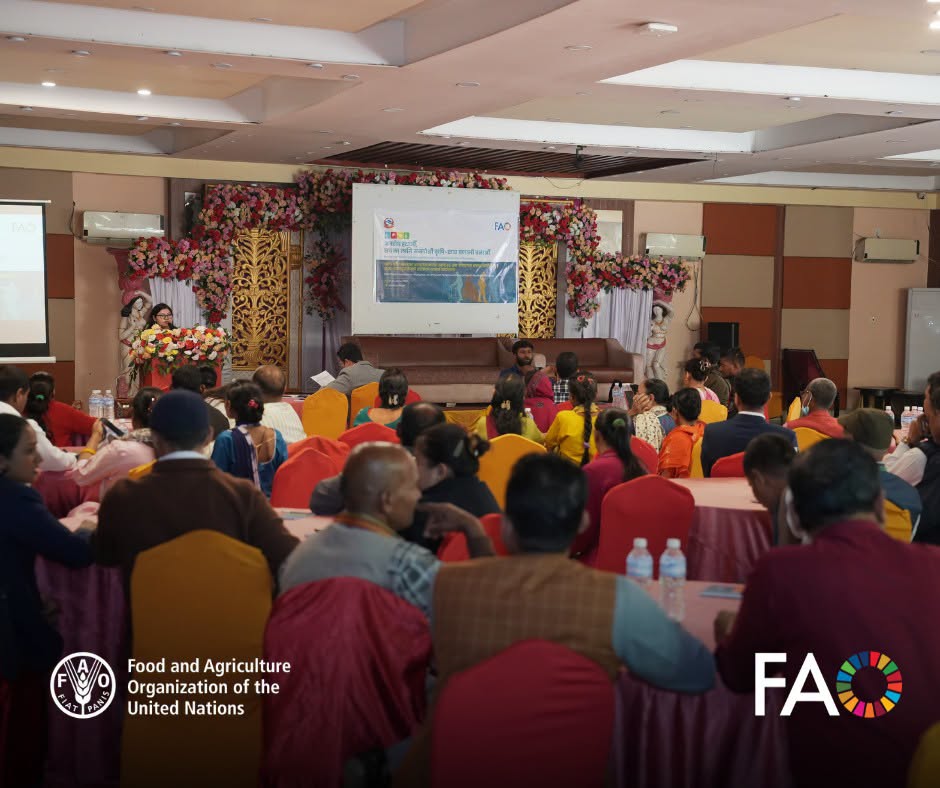
Speaking at the project’s inaugural workshop on Wednesday, November 25, Nabin Raj Singh, secretary at the Water and Energy Commission Secretariat (WECS), said the government would prioritise an integrated and collaborative approach to ensure timely and effective implementation.
Rising temperatures in the Himalayas have accelerated glacier melting and caused high-altitude glacial lakes to expand. These changes underscore the need to move beyond the traditional approach of responding to disasters after they occur and instead take proactive measures to reduce long-term risks.
Although Nepal contributes less than 0.1 percent of global greenhouse gas emissions, it faces severe impacts of climate change, said Amrit Lamsal, joint secretary at the Ministry of Finance. The recent flash flood in the Rasuwa-Bhotekoshi corridor demonstrates the growing threat, he added.
Lamsal said the Ministry of Finance was committed to coordinating GLOF risk reduction efforts with broader national development priorities and accountability frameworks through the joint initiative.
UNDP Resident Representative in Nepal Kyoko Yokosuka said the devastating floods in the Rasuwa-Bhotekoshi and Gandaki river basins two months ago had demonstrated how quickly climate-related extreme events could turn into human and economic disasters.
“We cannot afford to wait for the next disaster,” she said, describing this as the project’s most important strategic value. The initiative would help Nepal shift from responding to disasters to anticipating and reducing risks and protecting development investments before disasters strike, she added.
Bapon Fakhruddin, chief of climate investments at the GCF Secretariat, said the project should be viewed as a scalable initiative that could facilitate broader cross-border cooperation on resilience. He also said it could create wider opportunities in livelihoods, finance, business and partnerships within the national ecosystem.
Dharmaraj Upreti, chief executive of the National Disaster Risk Reduction and Management Authority, said strengthening early warning systems meant delivering science-based risk information to vulnerable communities well in advance so they could take timely action before hazards turned into disasters.
He called for a whole-of-society approach involving the government, development partners, the private sector and local communities to build resilience and make Nepal safer and better prepared for climate change.
Sanjiv Baral, executive director of the Centre for Water and Hydrology Research, described glacial lakes as “ticking time bombs” amid rapid changes in the Himalayan region.
“Even a small dam breach could cause damage worth hundreds of billions of dollars. It is therefore necessary to lower glacial lake water levels immediately while taking appropriate safety precautions and complying with environmental and social safeguards,” he said.
Local governments and municipalities selected for the project will play a key role in its implementation, particularly in helping vulnerable communities respond to early warnings.
Dhan Bahadur Gurung, chairperson of Nasong Rural Municipality, one of the project’s target local governments, welcomed the initiative as an important opportunity to make communities safer and more resilient.
“We are fully committed to contributing to its implementation. Through informed land-use planning, in-depth research and active participation of local communities, the project can help ensure safer settlements, improve livelihoods and create new opportunities for hydropower and tourism development,” he said.
The Centre for Water and Hydrology Research, under the Water and Energy Commission Secretariat, will implement the GLOF Sanjivani Project in collaboration with the Department of Chure and Watershed Conservation, the Department of National Parks and Wildlife Conservation, and the National Disaster Risk Reduction and Management Authority.
The Ministry of Finance, Nepal Tourism Board and Independent Power Producers’ Association, Nepal, are also among its key partners. — RSS