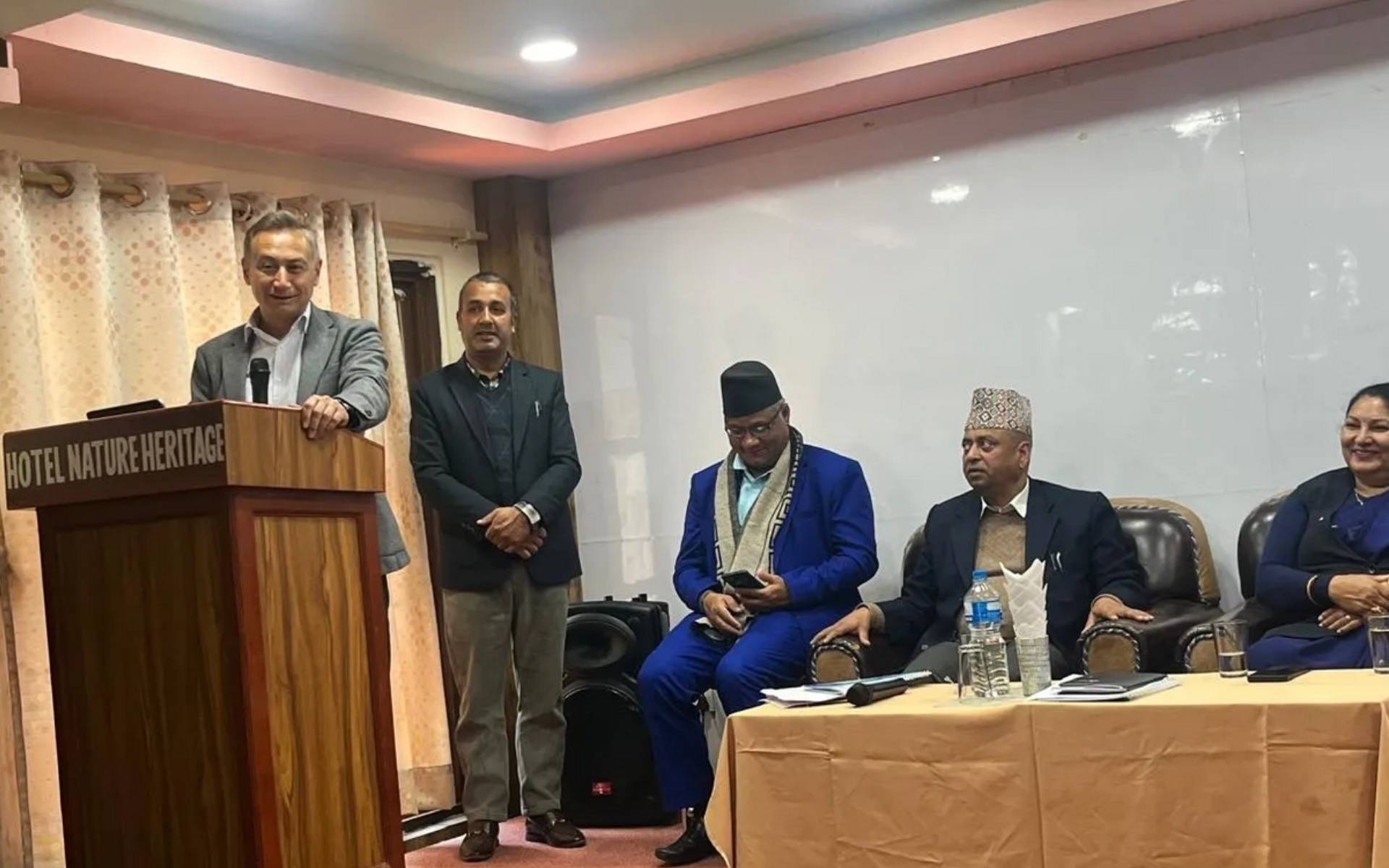
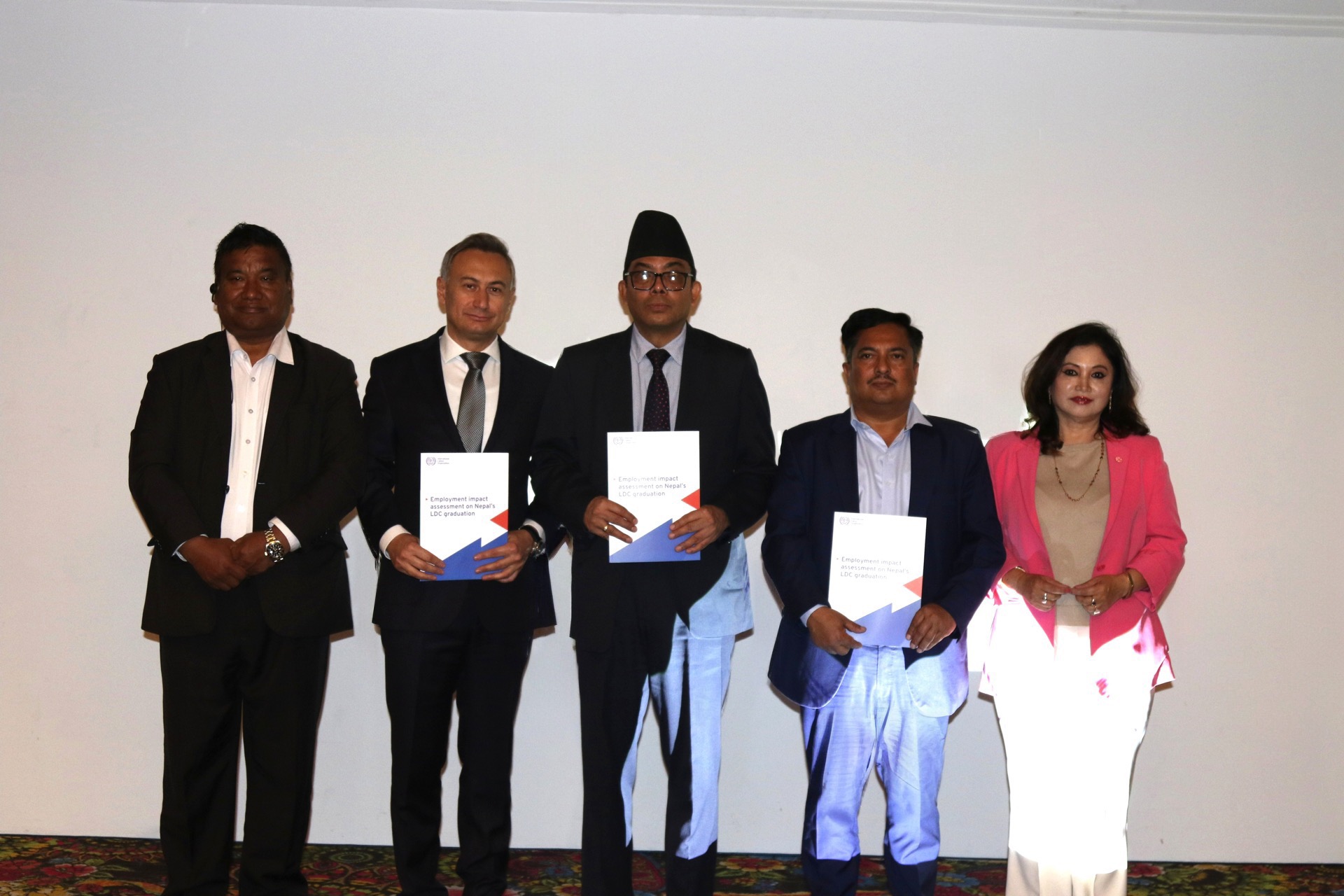
Kathmandu: As Nepal prepares to graduate from Least Developed Country (LDC) status in November 2026, a new report has highlighted both opportunities and potential risks for jobs and the economy.
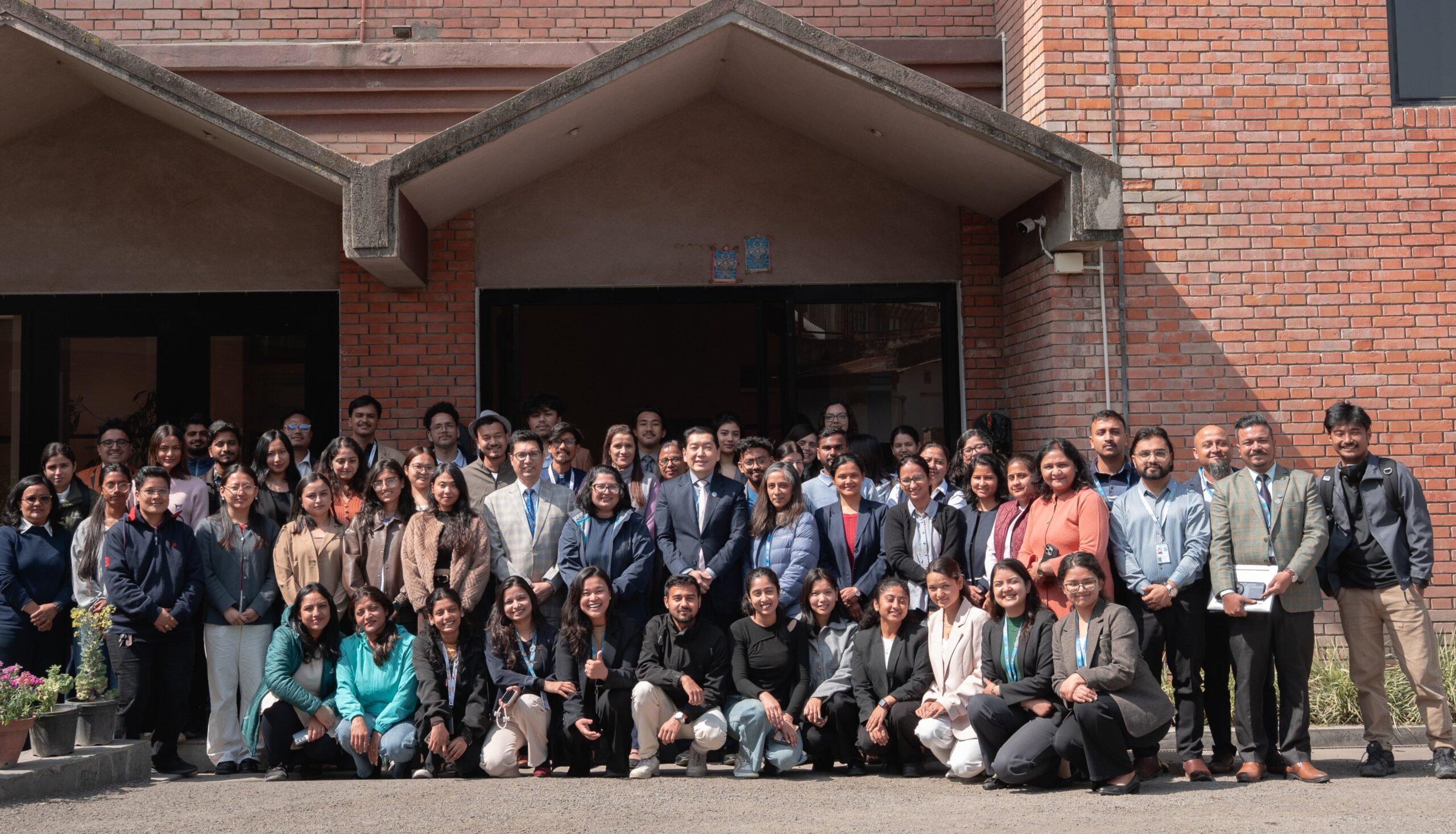
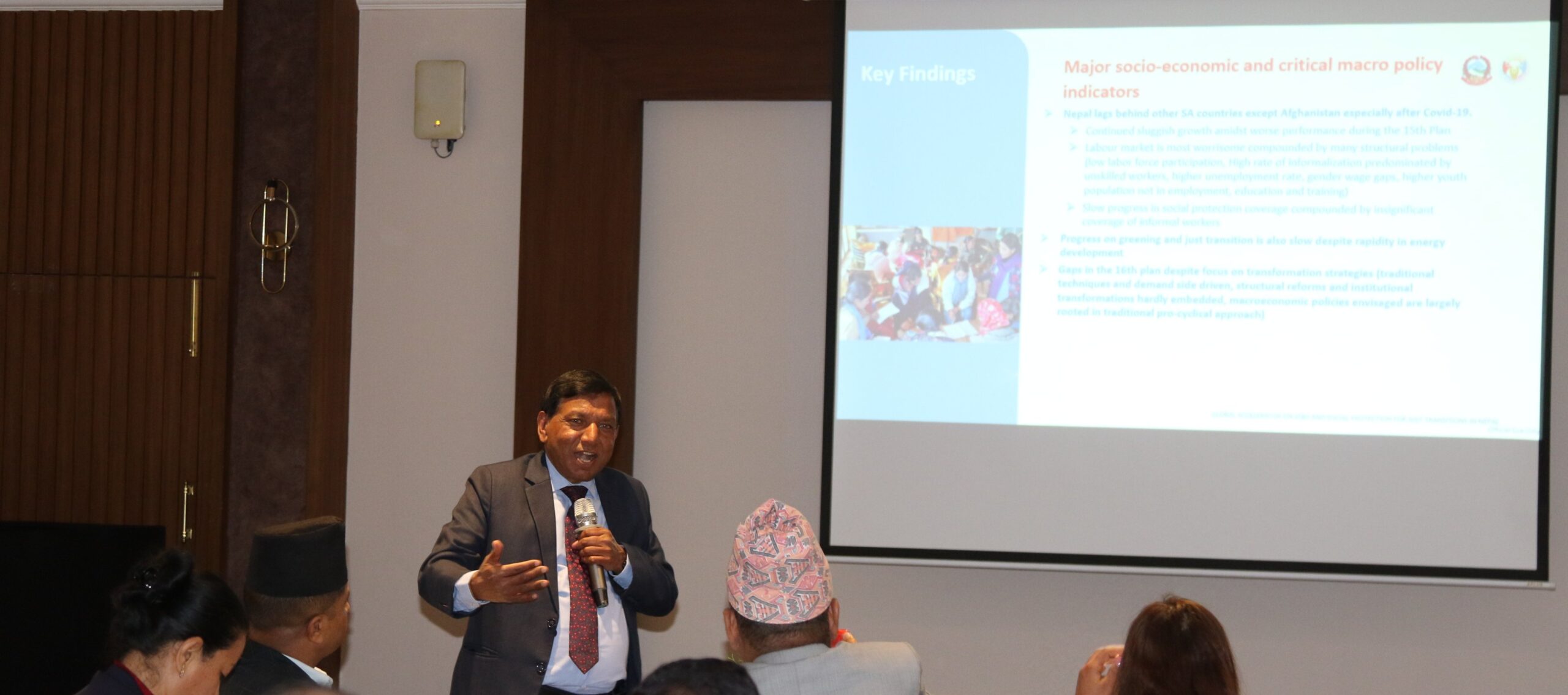
The Employment Impact Assessment on Nepal’s LDC Graduation was jointly launched by the International Labour Organization and the National Planning Commission Nepal. The report analyses how the transition could affect Nepal’s economy and labour market between 2026 and 2030.
According to the study, Nepal may face export losses ranging from 2.5 to 4.3 percent, especially in key sectors such as garments and textiles, due to the gradual loss of trade preferences and higher tariffs after graduation.
The report also warns that women and informal workers could be most affected, as they are heavily concentrated in vulnerable sectors.
However, the assessment notes that LDC graduation also presents opportunities. Improvements in sectors like tourism, trade facilitation and information technology could help offset losses and create new jobs.
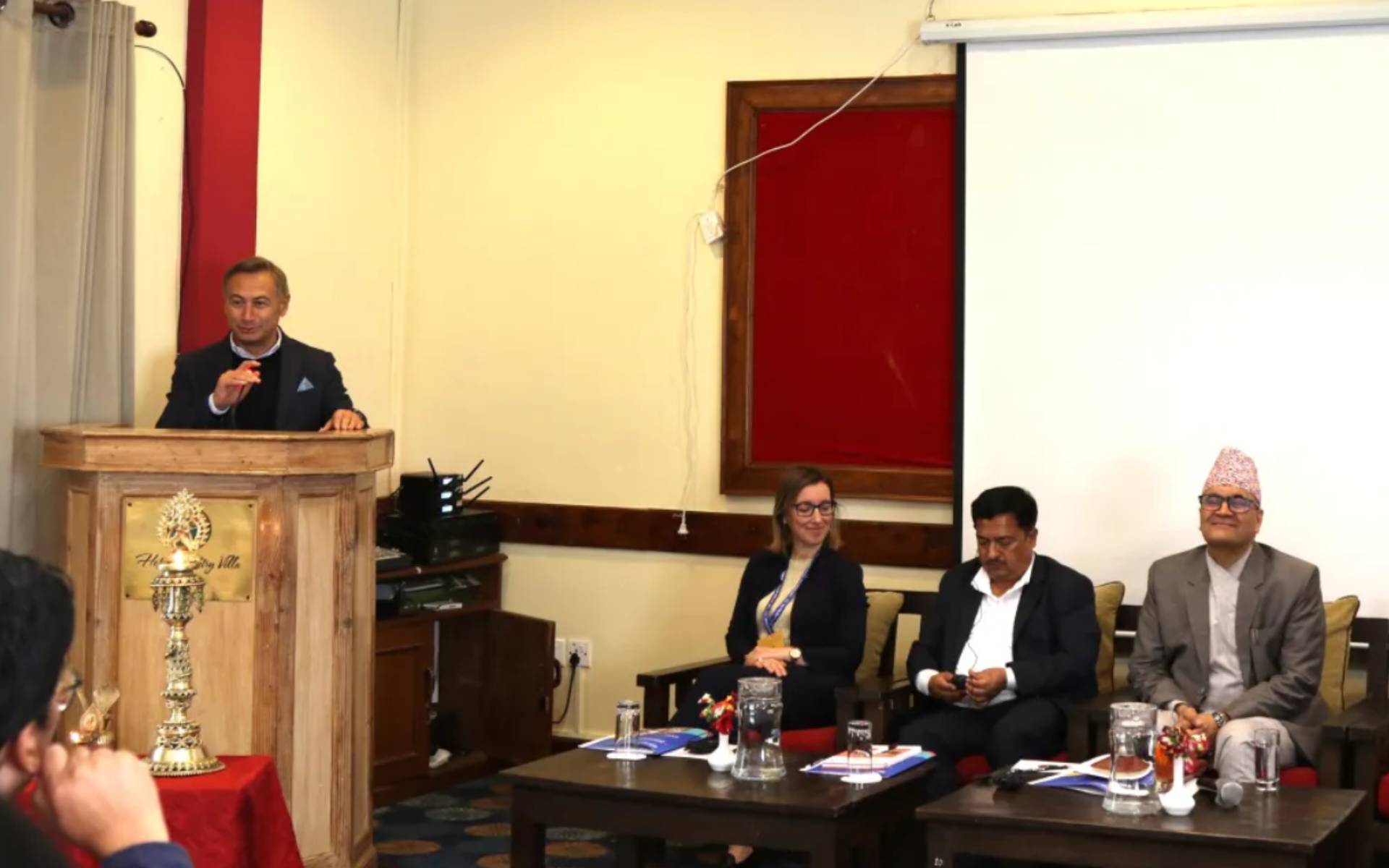
Speaking at the event, Numan Özcan, Country Director of the ILO for Nepal, said the transition requires early preparation to protect jobs and strengthen the economy.
Similarly, Prakash Kumar Shrestha, Vice-Chairperson of the NPC, stressed the need for coordinated efforts among the government, private sector and development partners to ensure a smooth transition.
The report calls for urgent reforms, including improving productivity, upgrading skills, strengthening industries and ensuring better labour protections, to make Nepal’s transition sustainable and inclusive.