Kathmandu: The Fifth International Orchid Symposium concluded in Kathmandu on Friday, November 20, with the adoption of the Kathmandu Declaration, calling for stronger collaboration among researchers, government agencies, conservation organisations, local communities and the private sector to advance orchid research, conservation, sustainable utilisation and commercialisation.
The declaration emphasises the need to strengthen scientific research and technological development while protecting Nepal’s rich orchid biodiversity and promoting sustainable livelihood opportunities and economic development.
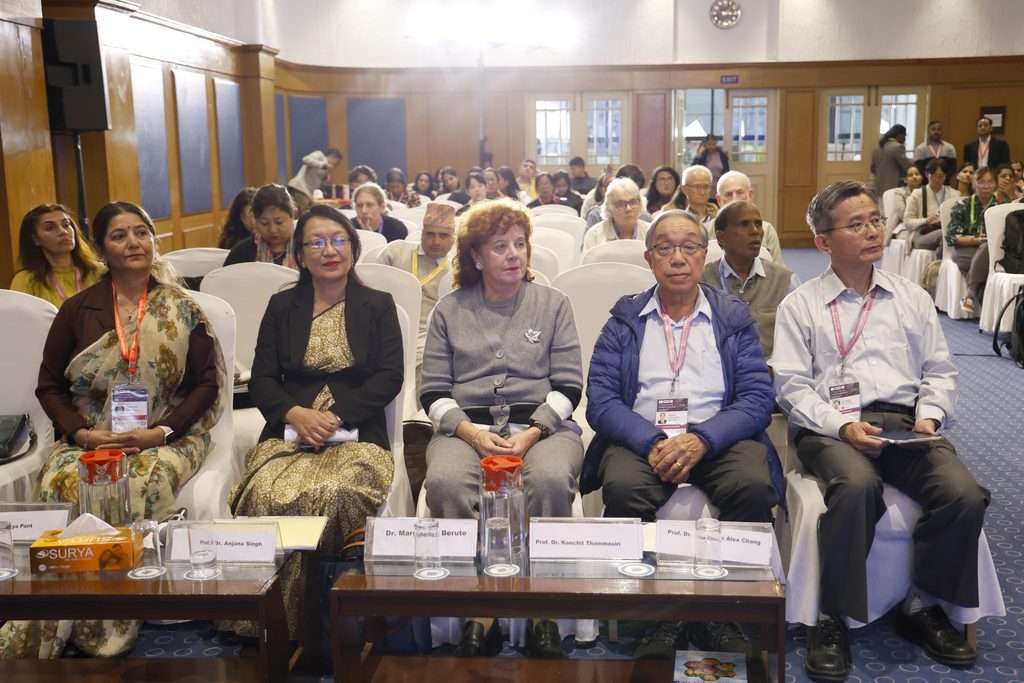
The three-day symposium, themed Orchids for Prosperity, brought together researchers, academicians, conservationists, horticulturists, orchid growers, policymakers and private-sector representatives from 16 countries, the organisers said. More than 60 scientific presentations, including around 40 oral and 20 poster presentations, were delivered during the event.
The scientific programme covered eight thematic sessions addressing orchid production and industry, conservation, micropropagation, biotechnology, phytochemistry, pharmacology, sustainable utilisation and commercialisation.
The final day featured presentations on general biotechnology and orchid ecology and evolution, highlighting the challenges facing wild orchid populations and the potential of scientific interventions to support their conservation.
Presenting research on Dactylorhiza hatagirea, commonly known as Panch Aunle, Reshu Bashyal of Nepal highlighted the limitations of relying solely on legal protection to conserve the endangered Himalayan orchid known for its medicinal value. Despite strict legal safeguards, the species continues to face poaching, partly because of difficulties in enforcing conservation laws in remote areas and the economic pressures faced by local communities.
Harvesters often uproot entire plants before they mature and disperse seeds, driven by the need to meet basic household expenses, including healthcare and children’s education. Her presentation underscored the need to address local livelihood concerns alongside enforcement measures.
Dr Prabin Bhandari presented a case for developing Panchase in central Nepal into an orchid sanctuary, highlighting its exceptional biodiversity and conservation potential. The area, covering around 57 square kilometres, is home to 143 orchid species belonging to 48 genera, including two locally endemic species and eight species endemic to Nepal.
Panchase also contains 46 of Nepal’s 94 known medicinal orchid species. However, road construction, habitat fragmentation, grazing and illegal collection pose significant threats. Community initiatives, including an orchid walking trail and a local biodiversity museum, could be expanded through tissue-culture propagation and orchid-focused ecotourism to support conservation and local livelihoods.
Similarly, Babulal Tiruwa presented findings from a survey of orchid diversity in the Annapurna Conservation Area conducted between 2017 and 2025. The survey documented 226 orchid taxa belonging to 61 genera across the 7,629-square-kilometre conservation area, representing approximately 45 percent of Nepal’s total orchid taxa.
The study identified 99 medicinal and 74 ornamental orchid species while highlighting threats from road construction, hydropower projects, climate change and illegal poaching. It found that 107 species were rare and 10 were listed on the IUCN Red List.
Another presentation by Samjhana Joshi examined the use of DNA barcoding to identify threatened medicinal and edible orchids
Other presentations discussed about ecological modelling to map suitable habitats and the role of agroforestry systems in conserving native orchid species.
The symposium also highlighted the economic potential of orchid cultivation. A representative of the Floriculture Association Nepal presented an overview of the country’s floriculture industry, estimated at Rs 4 billion and supporting around 62,500 livelihoods across 54 districts. The presentation highlighted Cymbidium orchid cultivation as a potential export-oriented enterprise, citing a One Village One Product initiative in Godawari.
Around 40 percent of symposium participants were below 40 years of age, reflecting growing interest among young researchers and professionals in orchid science, conservation, biotechnology and horticulture, the organisers said.
The event also featured Nepal’s first Orchid Expo, an Orchid Art Exhibition and an art workshop to promote public awareness of the country’s orchid diversity and its potential for sustainable horticultural development. A field visit to native orchids on the second day provided participants with an opportunity to observe the species in their natural habitats and understand the importance of in-situ conservation and habitat protection.
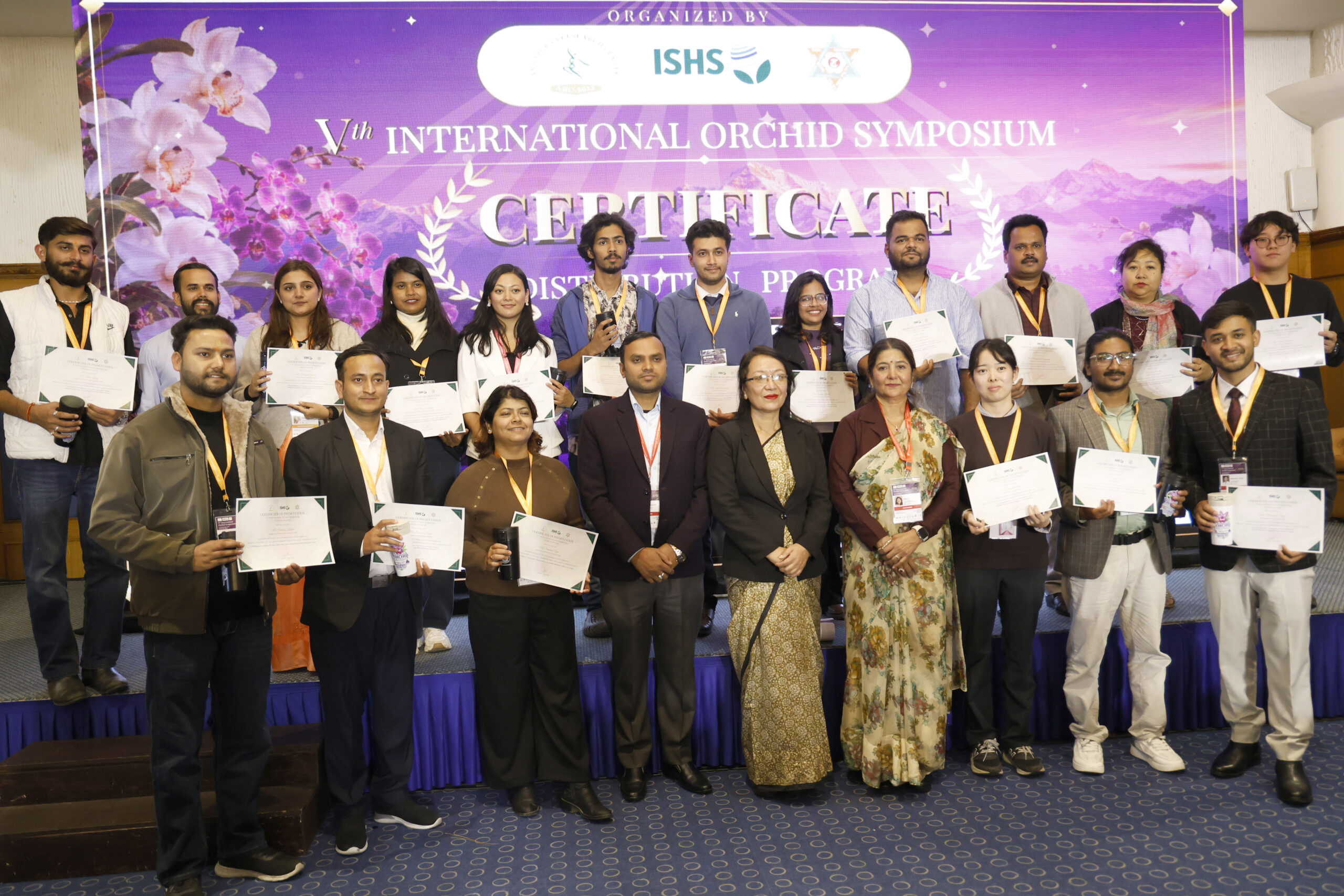
During the closing session, six young researchers received recognition through the International Society for Horticultural Science (ISHS) Young Minds and Best Poster awards. A separate award was also presented for the best contribution to the Orchid Art Exhibition.
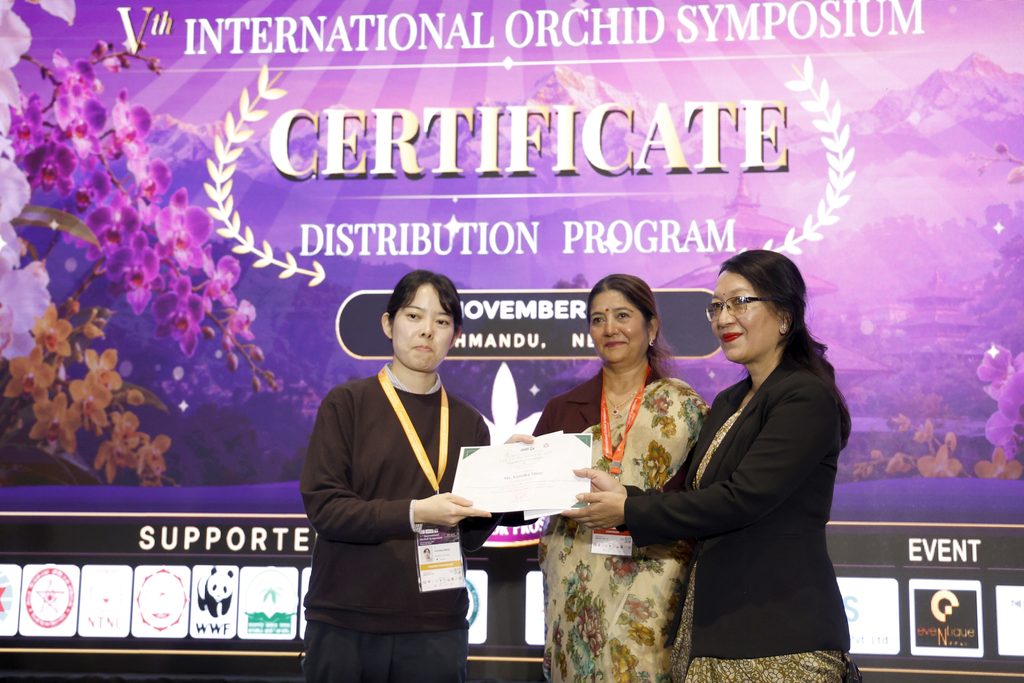
Chief Guest Professor Dr. Anjana Singh and Convener Professor Dr. Bijaya Pant provided certificates to the participants, organizers and supporters and media partners along with the winners of oral presentation and the Poster Session.
The symposium was jointly organised by the the Annapurna Research Centre, the Central Department of Botany at Tribhuvan University, and the International Society for Horticultural Science, with support from government agencies, conservation organisations and other institutions including the National Trust for Nature Conservation (NTNC), University Grants Commission (UGC), Nepal, World Wide Fund for Nature (WWF), Floriculture Association of Nepal (FAN), and Nepal Horticulture Society (NHS).
The event was sponsored by Annapurna Neurological Institute and Allied Sciences (ANIAS), HB Traders, and J.S.S Life Science Pvt. Ltd.