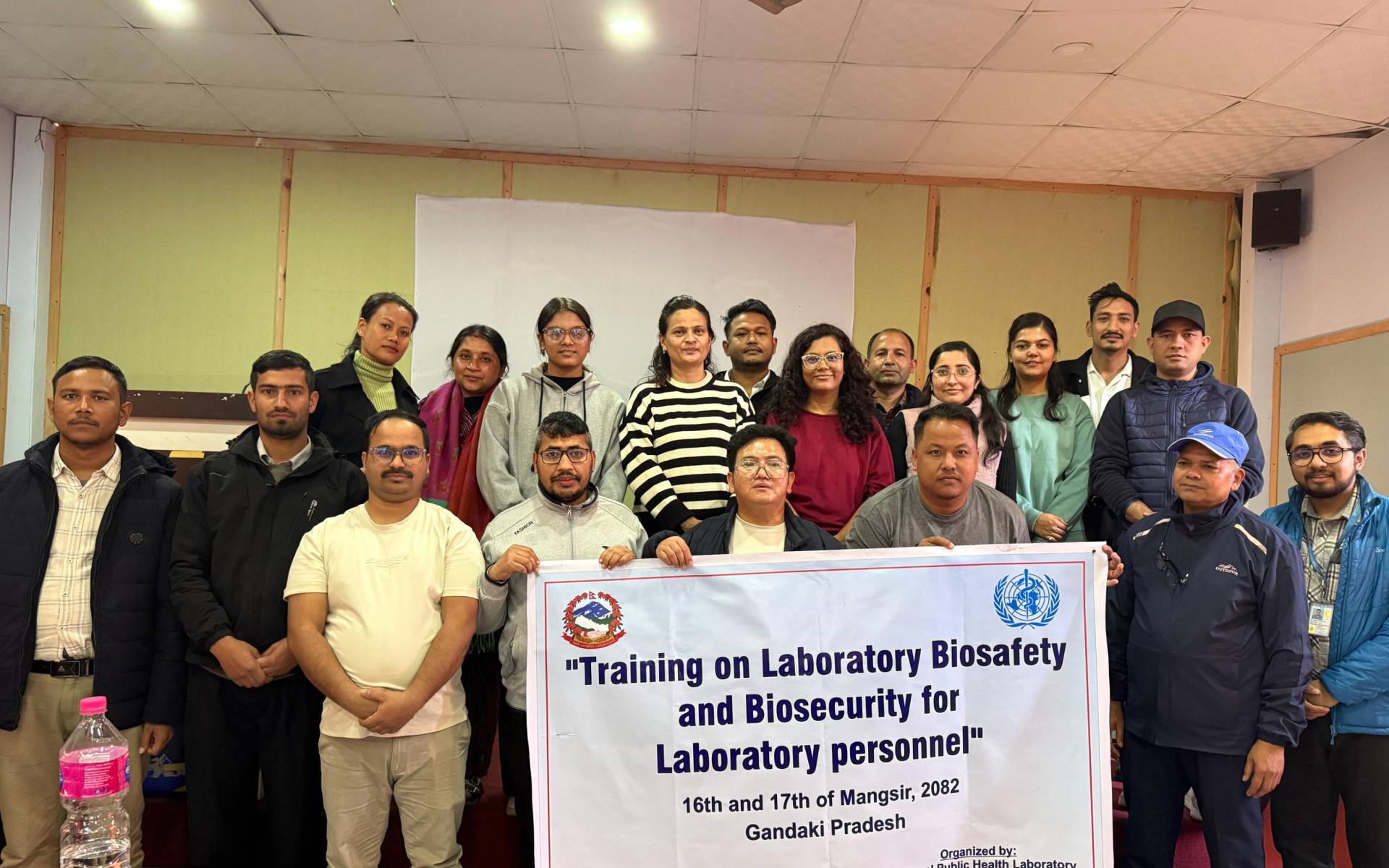
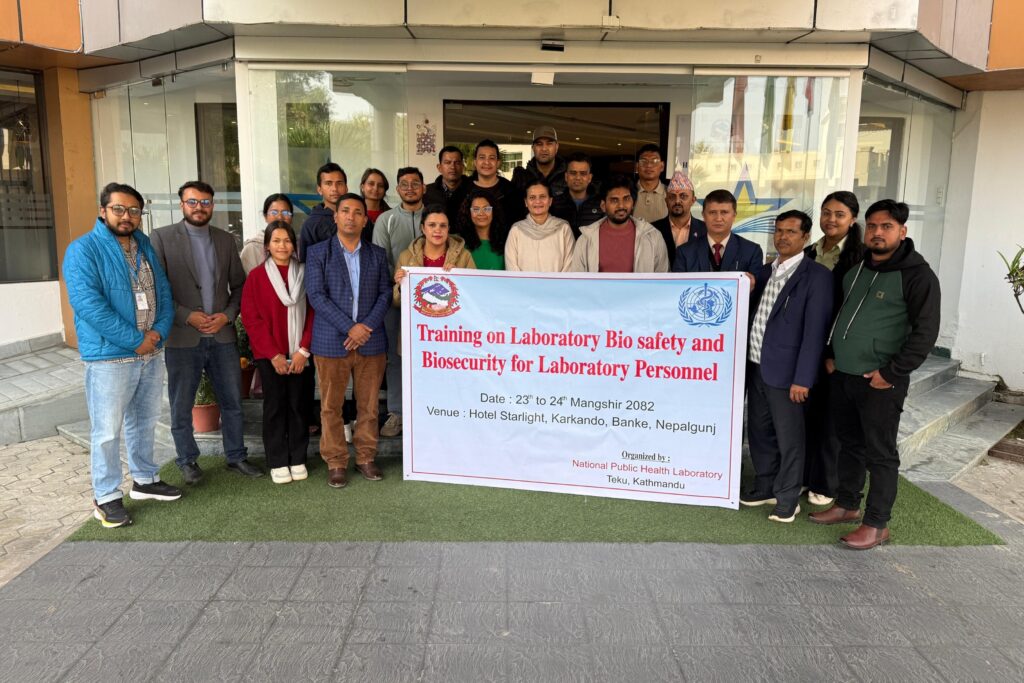
Kathmandu: The Ministry of Health and Population (MoHP), with support from the WHO Country Office for Nepal, conducted two batches of training on laboratory biosafety, biosecurity and bio-risk assessment in Gandaki and Lumbini provinces. The trainings were based on the fourth edition of the WHO Laboratory Biosafety Manual (LBM4).
Implemented by the National Public Health Laboratory under MoHP, the programme trained 16 laboratory personnel in each province from provincial public health laboratories and health-care centres. Participants enhanced their skills in laboratory biosafety risk assessment, correct use of personal protective equipment including N95 fit testing, safe handling and transportation of infectious substances, laboratory waste management, and biological spill management.
The trainings promoted global standards for safe laboratory practices through a risk-based approach that integrates biosafety and biosecurity measures. This approach helps prevent the spread of infections, including those caused by drug-resistant pathogens, strengthens national preparedness, and reduces risks associated with antimicrobial resistance. WHO said it will continue to support similar training programmes in the remaining provinces to ensure uniform laboratory capacity across the country. The trainings were supported by the Pandemic Fund and the WHO Pandemic Influenza Preparedness Partnership Contribution (PIP PC) Fund.