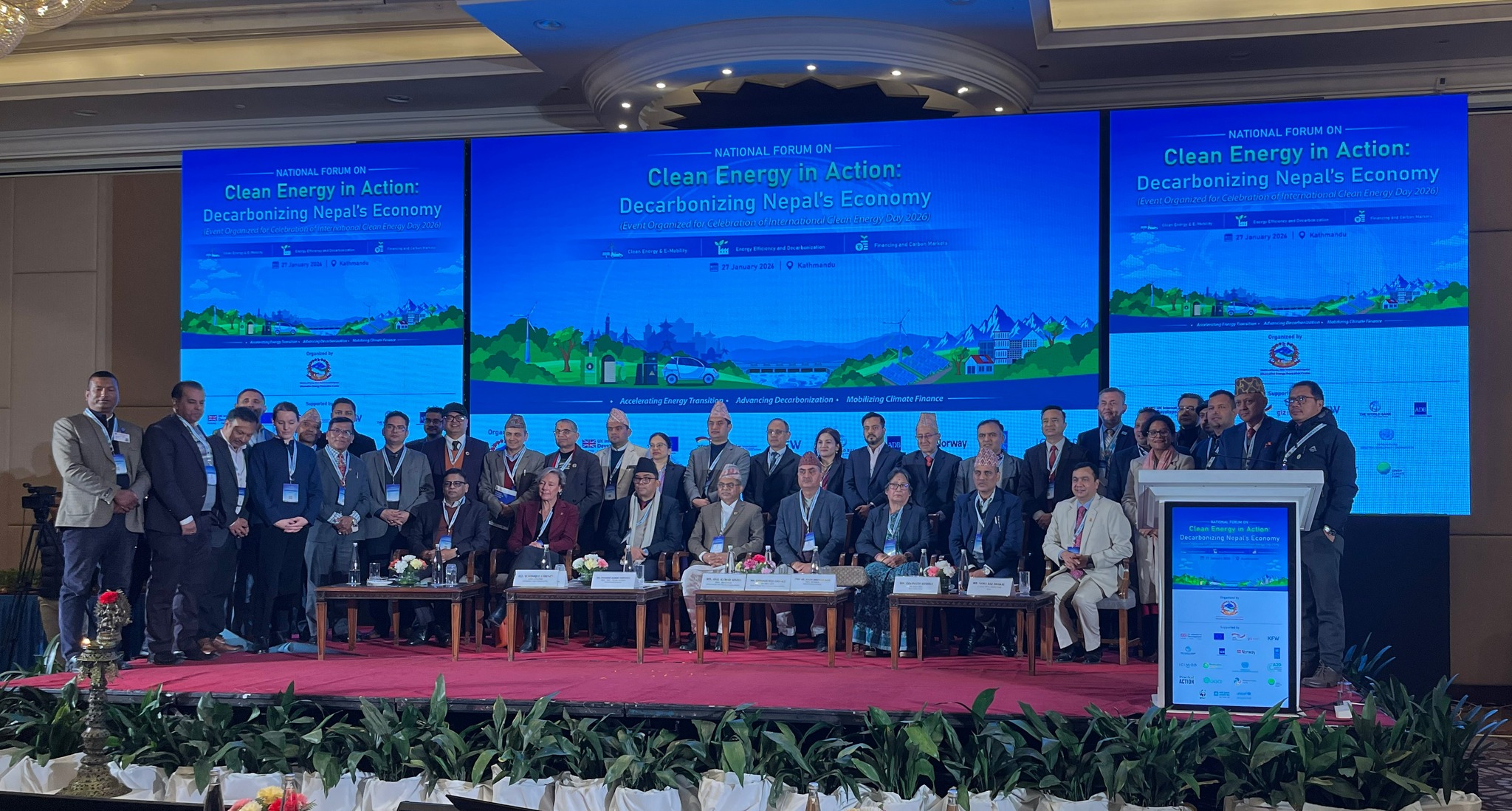
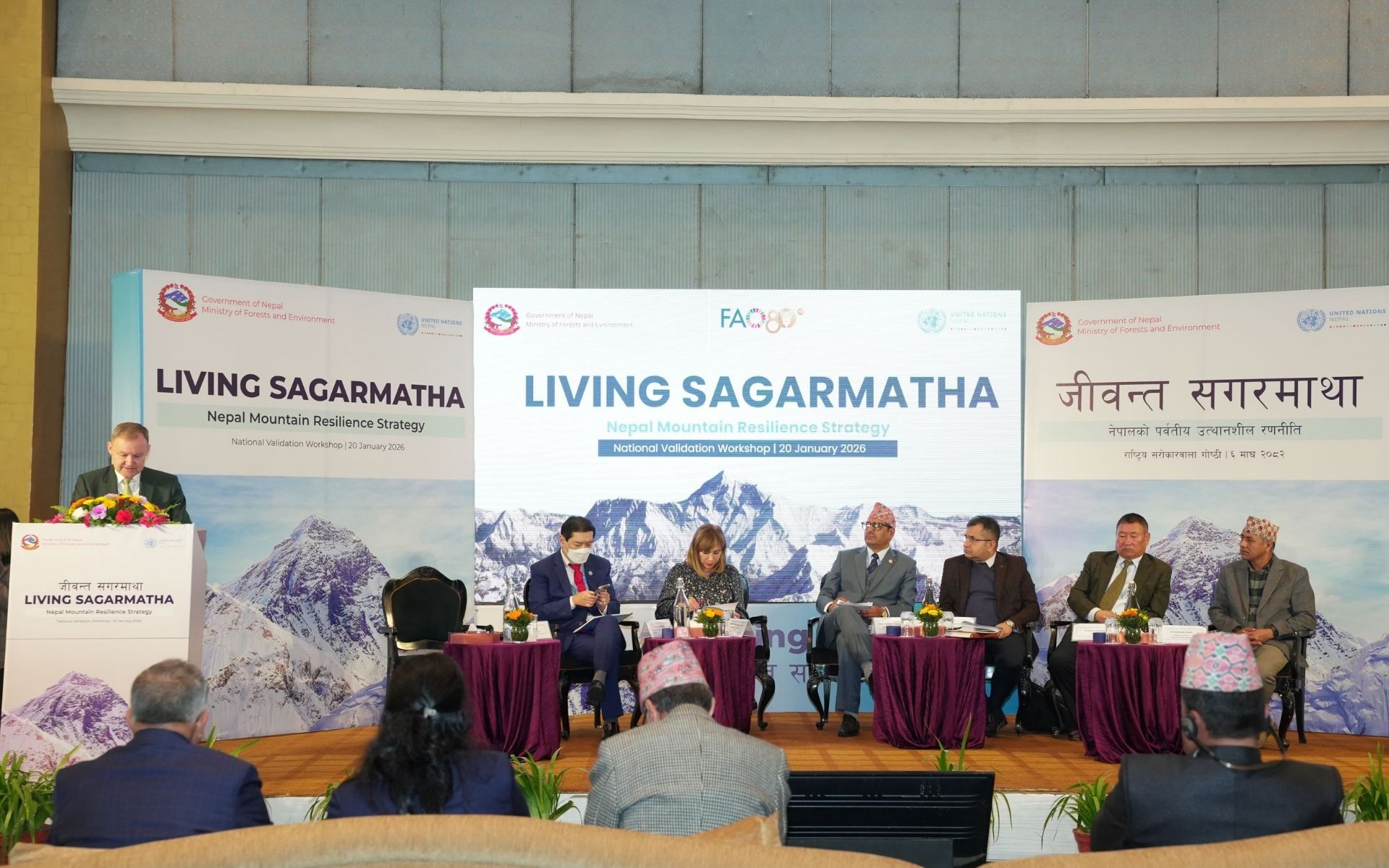
Kathmandu: Nepal marked a significant milestone in advancing the global mountain agenda with the National Validation Workshop of Living Sagarmatha: Nepal Mountain Resilience Strategy, held on January 20.
The strategy is Nepal’s first comprehensive, nationally aligned framework dedicated to strengthening mountain resilience in the face of climate change.
Led by the Government of Nepal through the Ministry of Forests and Environment, with coordination support from the United Nations Resident Coordinator’s Office and technical assistance from FAO and UNEP, the workshop underscored Nepal’s intent to move beyond fragmented, sector-based responses toward a unified, long-term approach to protecting mountain ecosystems and the millions of people who depend on them within Nepal and across downstream regions.
The workshop brought together senior government leaders, diplomatic missions, United Nations agencies, development partners, technical institutions, civil society, and community representatives. Ken Shimizu, FAO Representative for Bhutan and Nepal, highlighted the strategy’s importance for national planning and global mountain advocacy, describing it as a timely document that merits priority and dedicated investment.
Reaffirming FAO’s full support, he emphasized the need to empower mountain communities and connect their local actions to global climate efforts, amid growing scientific concern over reduced snowfall, environmental degradation, and mounting risks to Himalayan livelihoods, underscoring the urgency of channeling climate finance to mountain regions.
Mountains cover more than 80 percent of Nepal’s territory and play a critical role in regional water security, biodiversity, food systems, energy generation, and climate regulation across South Asia. Despite their global importance, mountains have long remained underrepresented in climate finance, policy frameworks, and adaptation planning.
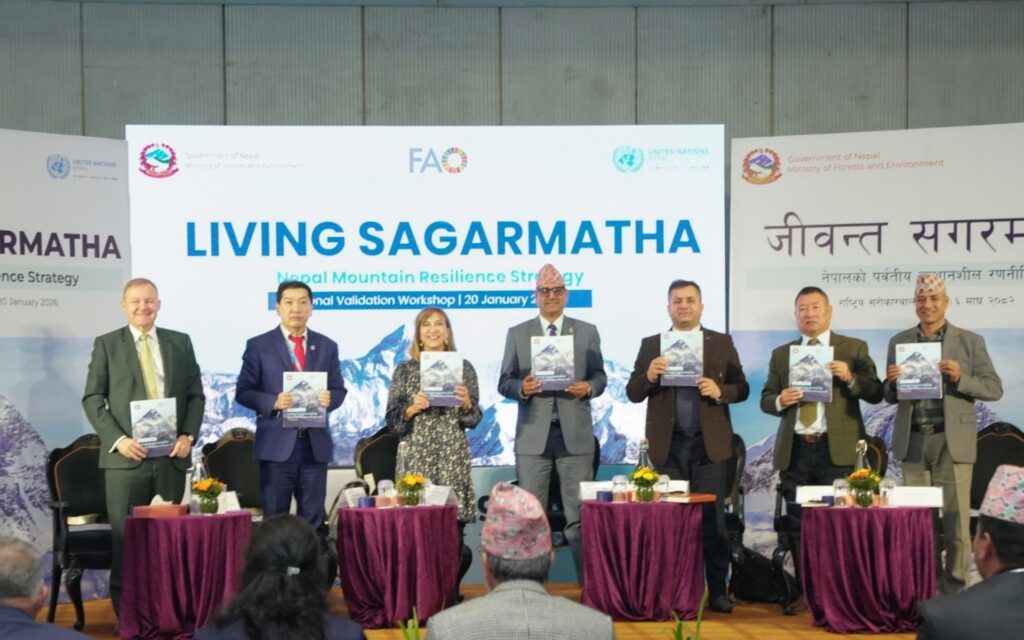
Living Sagarmatha responds to this gap by offering a single national vision and investment framework for mountain resilience over the next decade, aligned with Nepal’s development priorities and global commitments under the Paris Agreement, the Kunming-Montreal Global Biodiversity Framework, and the 2030 Agenda for Sustainable Development.
The strategy outlines a portfolio of 35 priority interventions with an estimated investment requirement of USD 4.08 billion, integrating climate adaptation, disaster risk reduction, ecosystem restoration, resilient livelihoods, and inclusive governance into a coherent national approach.
Speaking at the workshop, the United Nations Resident Coordinator in Nepal highlighted the broader global relevance of the strategy, stating, “We are not merely presenting a document—we are presenting a vision. Sagarmatha is not only Nepal’s asset, but a shared treasure for South Asia and beyond. This vision calls on all of us to demonstrate leadership and responsibility through concrete action.”
The framework emphasizes protection and restoration of mountain biodiversity, strengthened monitoring of glaciers and water systems, improved early warning and risk reduction mechanisms, and the promotion of resilient mountain economies through nature-based tourism, green enterprises, agroforestry, and support for high-altitude livelihoods.
It also places strong emphasis on social inclusion, Indigenous knowledge, youth engagement, institutional coordination, and strengthened regional and global partnerships, recognizing that effective mountain resilience must be people-centered, science-driven, and nationally owned.
Minister Madhav Prasad Chaulagain, Ministry of Forests and Environment, said the strategy reflects Nepal’s national resolve to protect its mountains through strong coordination, clear timelines, and sustained investment. “We are committed to ensuring that Living Sagarmatha becomes a living framework—one that delivers real benefits for mountain communities and future generations,” he added.
The workshop also featured a technical panel session highlighting water as the central lifeline connecting ecosystems, communities, and economies across Nepal, from the mountains through the entire landscape. Panelists underscored the need for sustained, long-term improvements through strengthened integrated resource management policy, strategy, and planning.
The National Validation Workshop marks a critical step toward the formal endorsement of Living Sagarmatha, paving the way for implementation through coordinated programmes, strengthened institutions, and mobilized domestic and international financing.
As global attention turns toward accelerating climate action and adaptation, Nepal’s Living Sagarmatha positions the country as a leading advocate for mountains, demonstrating that mountain resilience is essential to climate stability, sustainable development, and shared regional and global prosperity.