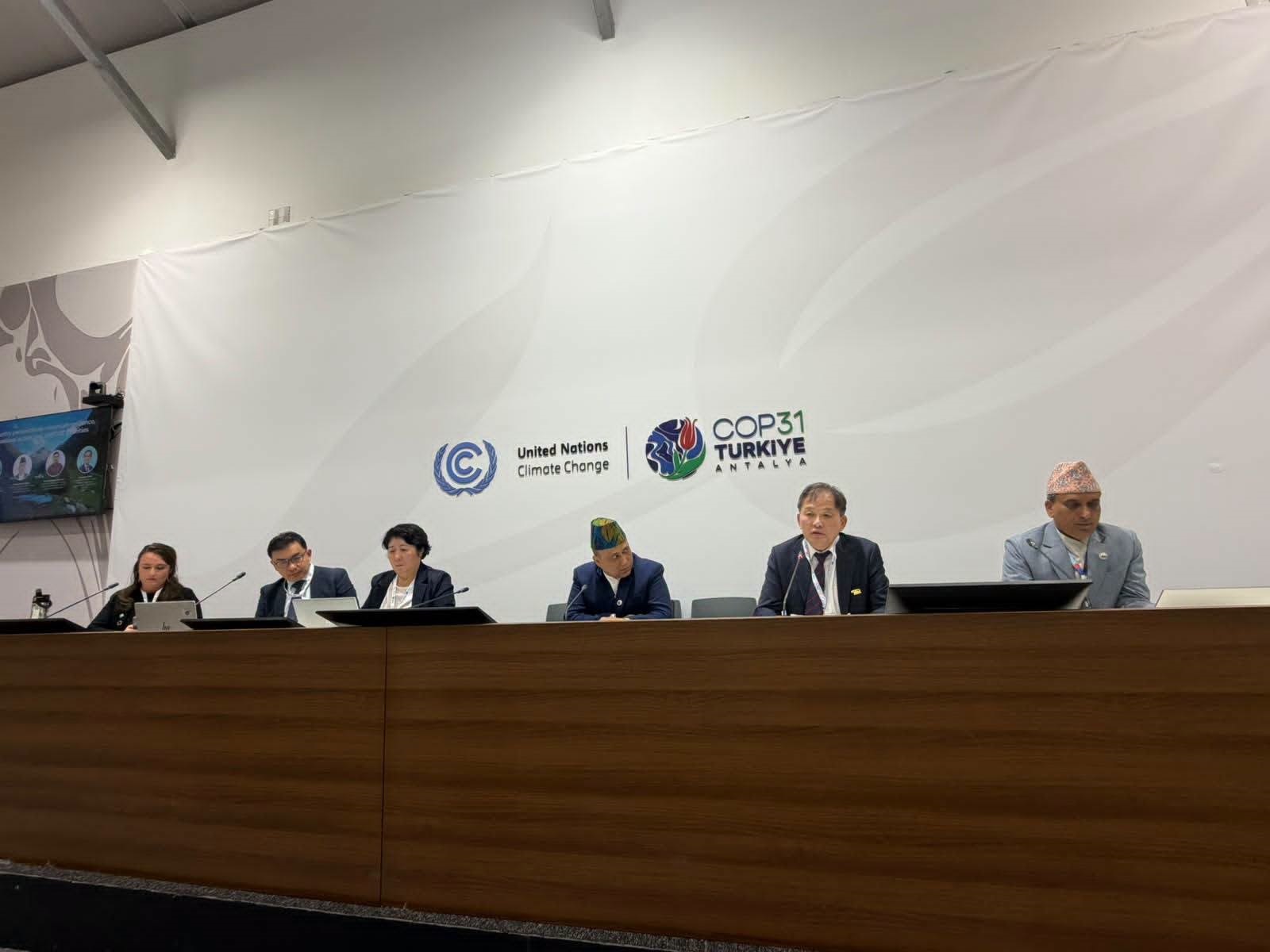
Kathmandu: Nepal’s proposal for a dedicated work programme on mountains and climate change has been incorporated into the draft cover decision of the 31st UN Climate Change Conference (COP31), currently underway in Antalya, Türkiye, the state-run news agency RSS reported.
The proposal was jointly put forward by Nepal, Bhutan and Kyrgyzstan and included in a draft document titled ‘Presidency-led Party-driven Cover Decision’, prepared through consultations under the COP31 presidency and dated November 16.
The draft recognises that mountain regions and communities dependent on glaciers are particularly vulnerable to the adverse impacts of climate change. It proposes establishing a dedicated work programme on mountains and climate change to address their specific challenges.
A cover decision, also known as cover text, is an overarching political document issued at the conclusion of a UN climate conference. It brings together key negotiation outcomes, sets the overall political direction and highlights the conference’s major priorities and areas of agreement.
The joint proposal prioritises strengthening scientific research and understanding of mountain regions, enhancing climate adaptation efforts, building resilience and providing necessary support to glacier-dependent communities.
Paragraph 31 of the draft cover decision proposes establishing a dedicated work programme on mountains and climate change. The programme would aim to strengthen scientific understanding of mountain regions, assess the impacts of climate change and improve adaptation and risk-reduction measures.
The draft also proposes including mountains and climate change as a standing item on the COP agenda. It further calls for a high-level dialogue on the issue at COP32.
Paragraph 32 welcomes plans to hold dialogues on mountains and climate change during the 66th and 68th sessions of the UN climate change subsidiary bodies. It also encourages the continuation of such dialogues and regular high-level discussions under the leadership of future COP presidencies.
Nepal and Bhutan had jointly proposed an initiative titled ‘Impacts of 1.5 Degrees Celsius of Warming on Mountain Regions’ to address the effects of rising temperatures on mountain ecosystems. Kyrgyzstan, meanwhile, proposed institutionalising regular high-level dialogues on mountains and climate change.
Through these proposals, the three countries sought to bring the accelerating retreat of glaciers, risks of glacial lake outburst floods, impacts on water resources, biodiversity loss and growing climate-related disaster risks in mountain regions, including the Himalayas, to the forefront of international climate negotiations.
Although Nepal contributes negligibly to global greenhouse gas emissions, it has consistently sought to draw international attention to the disproportionate impacts of climate change on mountain countries and vulnerable communities.