Kathmandu: Honorable Foreign Minister Shishir Khanal has said that education, technology, innovation and people-to-people ties have further strengthened Nepal-Japan friendship, emphasizing that the next 70 years of bilateral relations should be centered on education, innovation and cooperation.
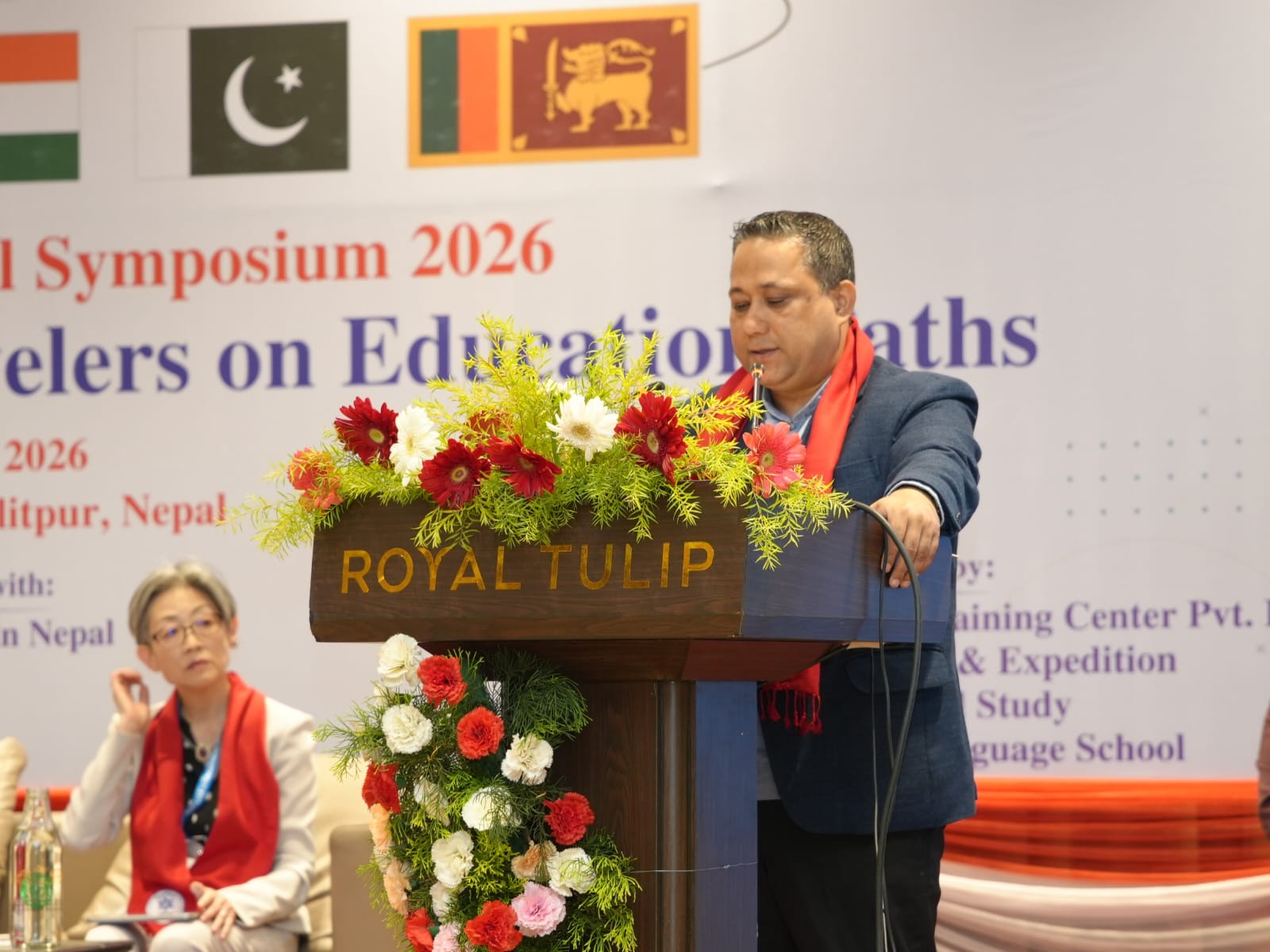
Addressing the inaugural session of the South Asian Federation of the Japanese Universities Alumni Associations (SAFJUAA) Symposium 2026 as chief guest, Khanal said relationships built through education and academic exchange can become the strongest and most enduring bonds between nations.
Referring to the 70th anniversary of diplomatic relations between Nepal and Japan, Khanal said the friendship between the two countries predates formal diplomatic ties. He recalled that Japanese Buddhist monk Ekai Kawaguchi visited Nepal in 1899 in search of Buddhist manuscripts, while eight Nepali students traveled to Japan for higher studies in the early 1900s.
“These early interactions laid the foundation for relations between the peoples of our two countries, which eventually evolved into formal diplomatic relations in 1956,” he said.
Khanal noted that Japan’s economic transformation and technological advancement have long served as an inspiration for Nepal’s development journey. He described Japan as Nepal’s trusted development partner over the past seven decades and praised its contributions in infrastructure, education, health, agriculture, disaster resilience and human resource development.
The minister said more than 300,000 Nepalis are currently living in Japan and that Nepali students constituted the second-largest group of international students in Japan last year. According to him, these growing exchanges have further strengthened educational, cultural, economic and people-to-people ties between the two countries.
He also expressed gratitude for the message of sympathy and solidarity conveyed by Japanese Prime Minister Sanae Takaichi to Prime Minister Balendra Shah following the recent floods in Nepal. Khanal said Japan’s support through emergency relief supplies, forensic expertise and assistance in DNA identification reflected the deep friendship and solidarity between the two nations during times of crisis.
Khanal further highlighted President Ramchandra Paudel’s recent visit to Japan and his meetings with the Japanese Emperor and Prime Minister, saying the engagements had elevated bilateral relations to a new level. He also welcomed the Japanese government’s decision to confer the Order of the Rising Sun, Gold and Silver Star on former Foreign Secretary and Ambassador Madan Kumar Bhattarai in recognition of his contribution to Nepal-Japan relations.
Describing education as a key pillar of Nepal-Japan relations, Khanal said thousands of Nepali graduates, researchers and professionals who studied in Japan have returned home and contributed to Nepal’s institutions, industries and communities.
He also highlighted the Government of Japan’s Project for Human Resource Development Scholarship (JDS) program, which provides opportunities for Nepali government officials to pursue higher education in Japan. The initiative, he said, has helped strengthen Nepal’s institutional capacity in public policy, governance and development administration.
Noting that South Asian countries face common challenges such as climate change, natural disasters, rapid urbanization and the need to create productive opportunities for young people, Khanal said there is significant scope for cooperation with Japan in these areas.
He identified education and human resource development, science and technology, innovation, climate change and disaster resilience as priority areas for collaboration between Nepal, Japan and South Asian countries. He stressed the need to expand joint research, faculty exchanges, career guidance programs and industry-academia partnerships among educational institutions and research centers.
Khanal also pointed to opportunities for collaboration in emerging technologies, including artificial intelligence, renewable energy and advanced engineering.
Stating that both Nepal and Japan are highly vulnerable to natural disasters, he said Japan’s expertise in early warning systems, resilient infrastructure and community preparedness could provide valuable lessons for Nepal.
Calling on the SAFJUAA to establish concrete mechanisms linking universities, policymakers and the private sector, Khanal urged the organization to promote joint research, mentorship programs and institutional partnerships.
“The real success of this symposium will be measured by the partnerships it fosters and the initiatives that emerge from its discussions,” he said.
Marking the 70th anniversary of Nepal-Japan friendship, Khanal stressed the need to make the next seven decades even more ambitious and productive by investing in education, innovation and cooperation.
“Friendships forged through education can become among the strongest and most enduring relationships between nations,” he said.