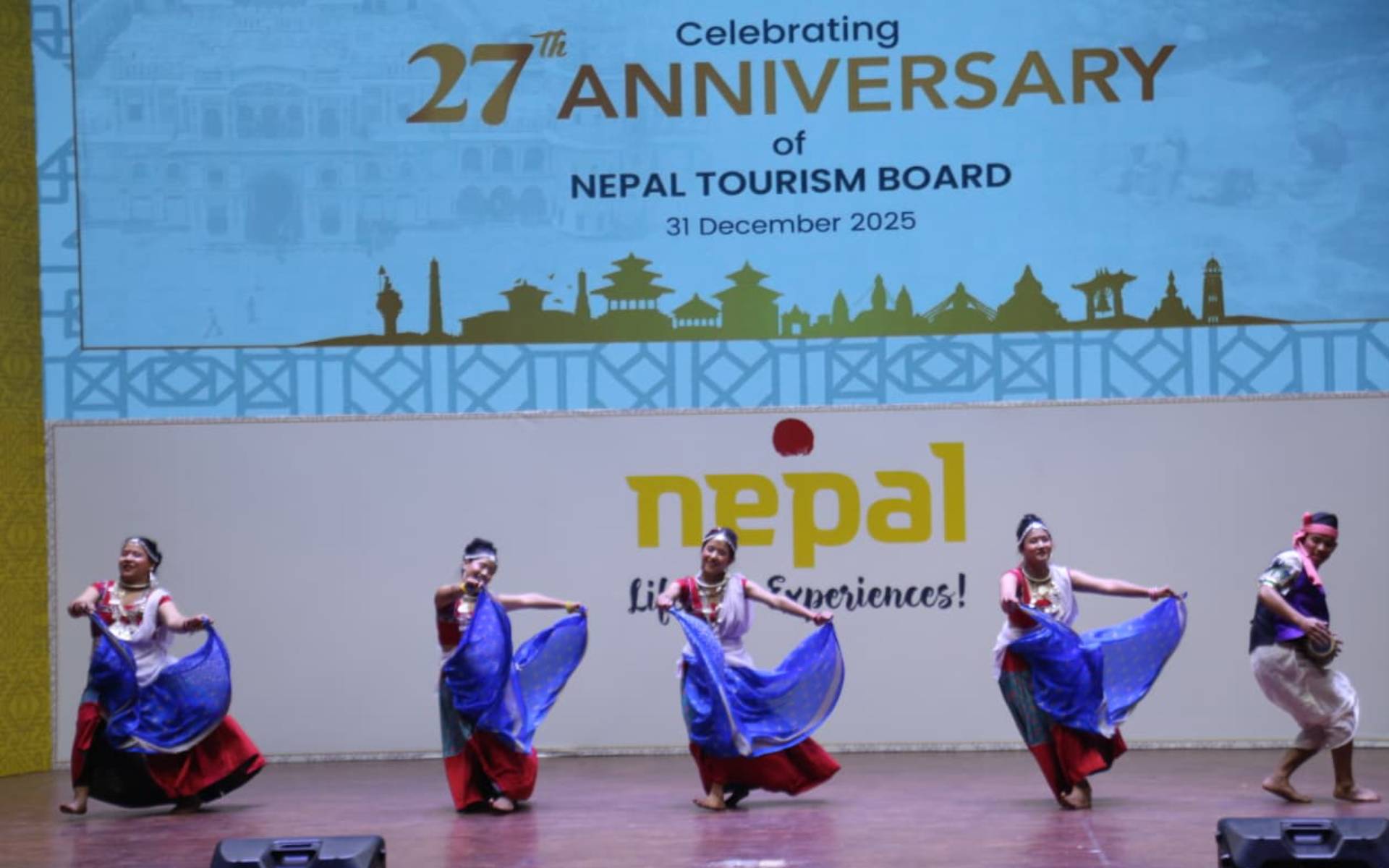
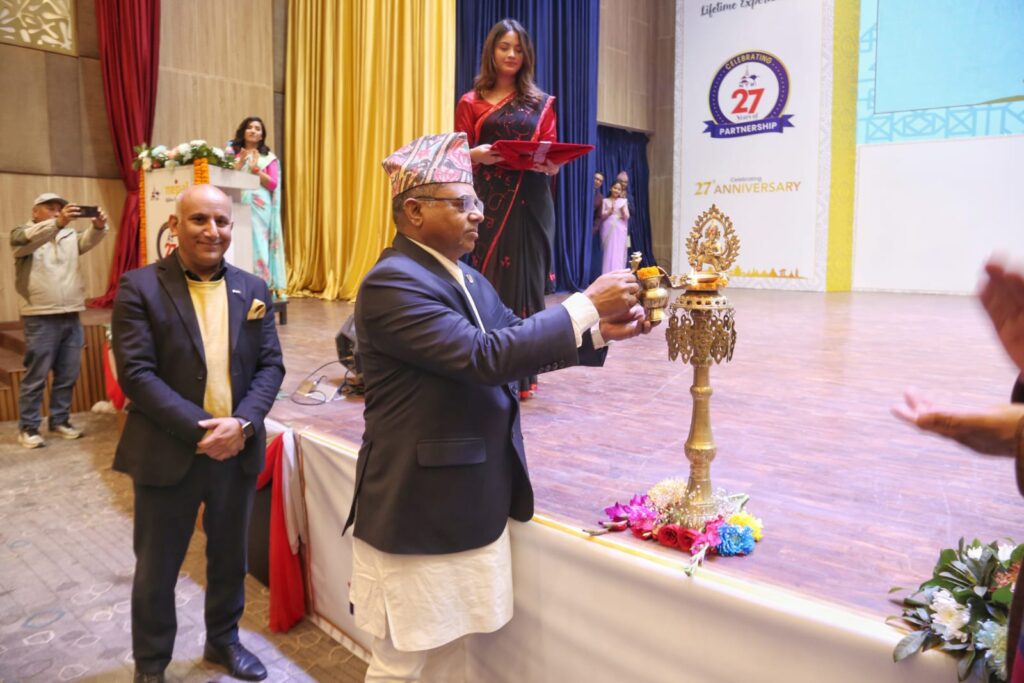
Kathmandu: The Nepal Tourism Board (NTB) has announced the celebration of ‘Nepal–ASEAN Tourism Year 2026’ on the occasion of its 27th foundation day, marking a strategic push to position ASEAN countries as a key tourism market for Nepal.
Speaking at the inaugural ceremony, NTB Chief Executive Officer Deepak Raj Joshi unveiled a special strategy for 2026, highlighting ASEAN as a large and long-term market. He said more than 170,000 tourists from ASEAN countries have visited Nepal so far and outlined plans to promote Nepal through Buddhist and spiritual tourism, nature and adventure tourism, wellness and Ayurveda, and culture- and community-based tourism.
The programme was chaired by Mukunda Niraula, Secretary at the Ministry of Culture, Tourism and Civil Aviation. Minister for Culture, Tourism and Civil Aviation Anil Kumar Sinha attended as chief guest, while Minister for Women, Children and Senior Citizens Shraddha Shrestha was the special guest.
Joshi said Nepal is expected to welcome 1.16 million tourists in 2025, a rise of about three percent from the previous year. He informed that by 2025, NTB has completed 31 tourism marts, 12 branding and corporate activities, and over 20 MICE programmes.
He also noted that tourism promotion efforts included live broadcasts from eight major destinations, publication of travel information in nine languages, implementation of 69 tourism infrastructure projects, and 41 promotional and development activities across the country. In 2025, NTB provided training to 2,600 tourism professionals and is working on sustainable tourism projects along the Kanchenjunga, Manaslu and Api–Saipal trekking routes.
NTB also unveiled seven major travel trends expected to define 2026, including a preference for peace over noise, greater use of Gen-AI in administration, trust over choice, road travel over air, highly personalized experiences, off-grid destinations, and a stronger focus on culture.
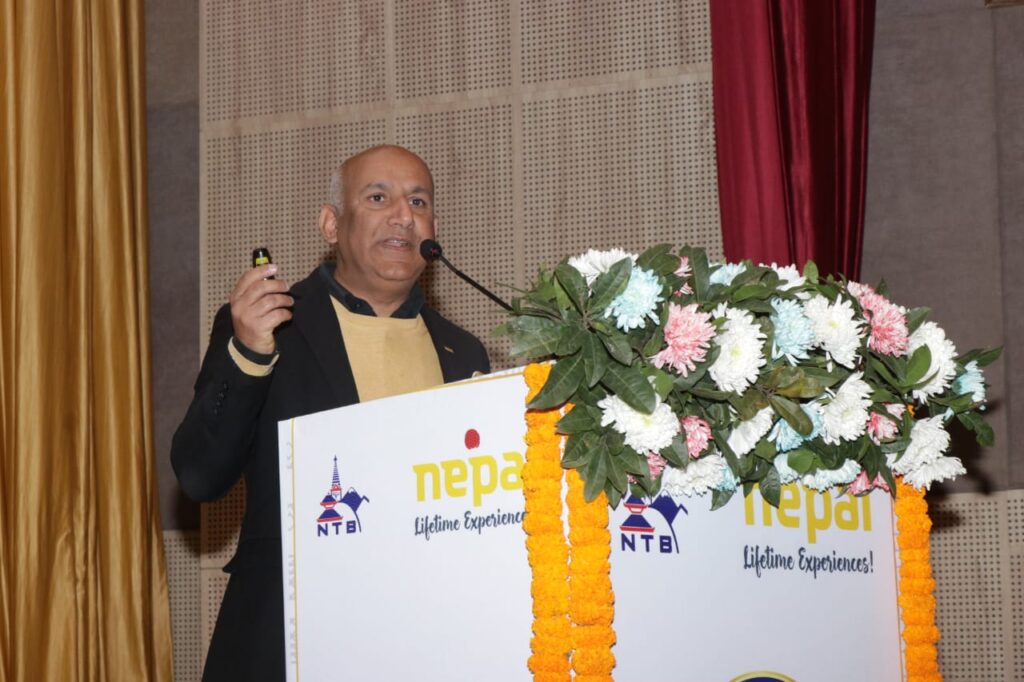
Presenting the future roadmap, Joshi said the 2026–2035 strategic action plan will focus on a participatory approach, digital professionalism, innovative policies, blending local and global experiences, and prioritising high-value tourism.
Vice Chairman Ram Prasad Sapkota said the Board is working closely with the private sector and government to deliver tangible results. Meanwhile, Employees’ Organization Chair Santosh Bikram Thapa stressed the need for career development, financial reform and timely staff recruitment.
Video messages from PATA CEO Nur Ahmed Hamid, the World Tourism Network and UN Tourism were also released during the event. NTB’s annual publication In-Focus was launched on the same occasion.