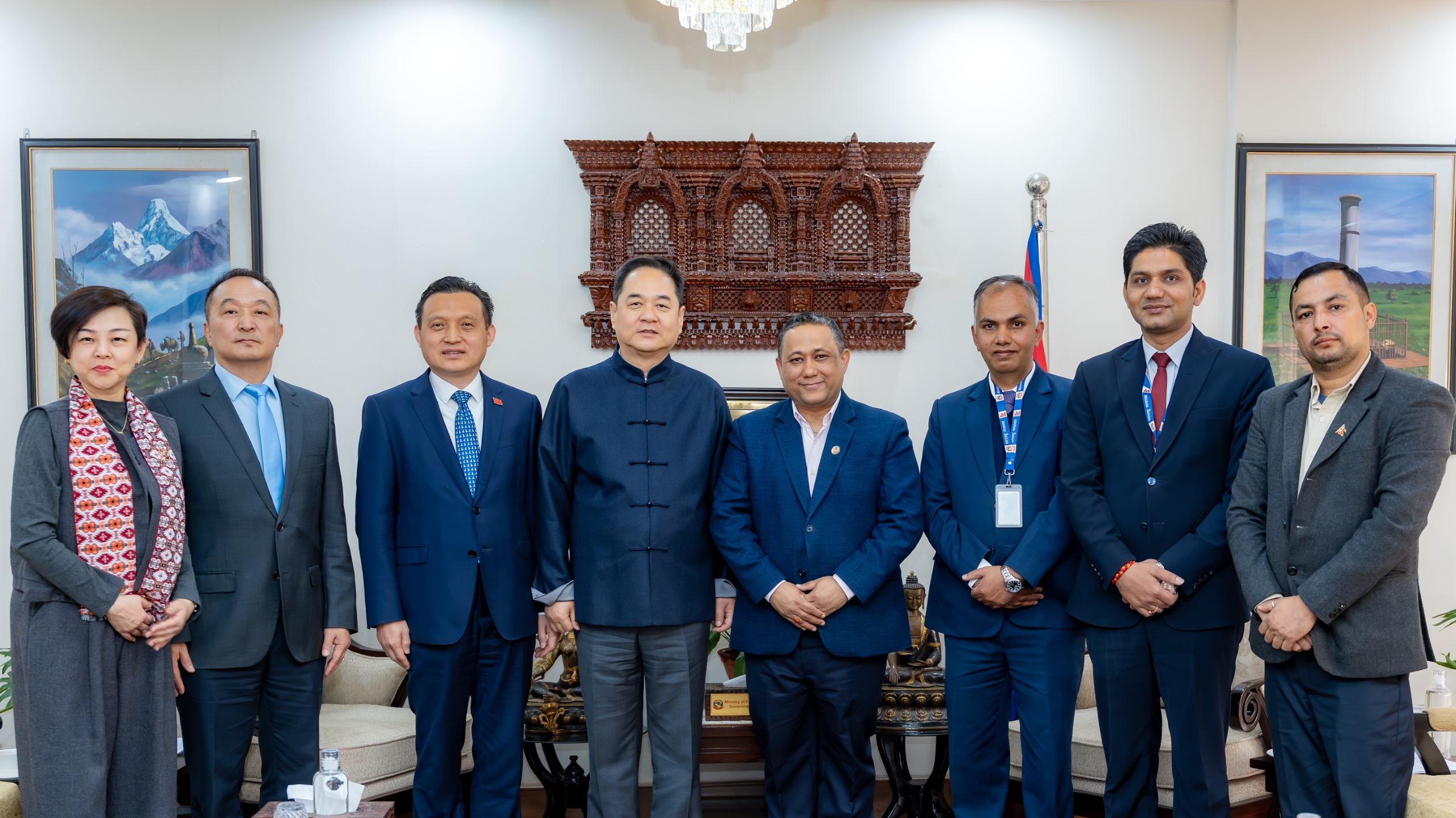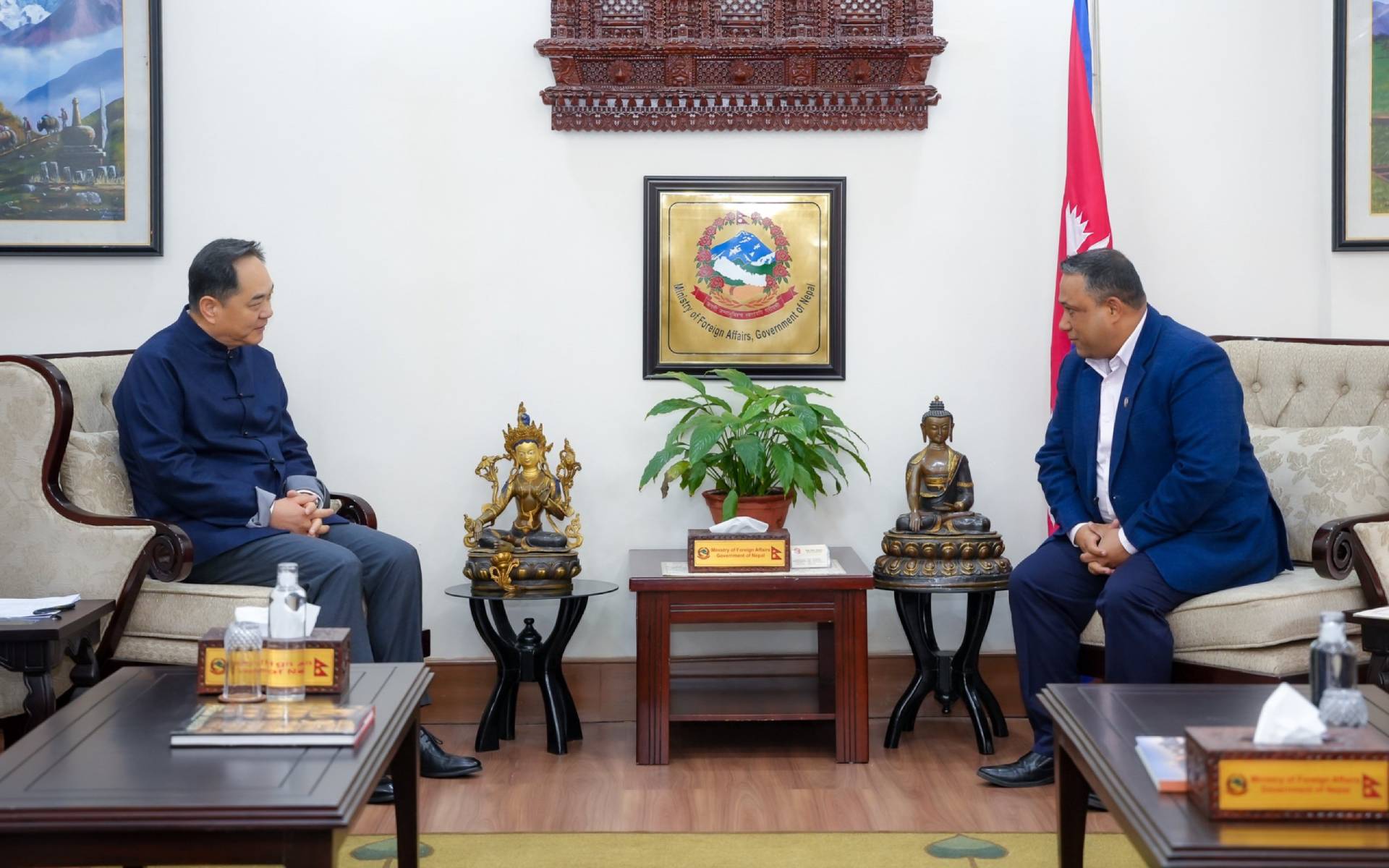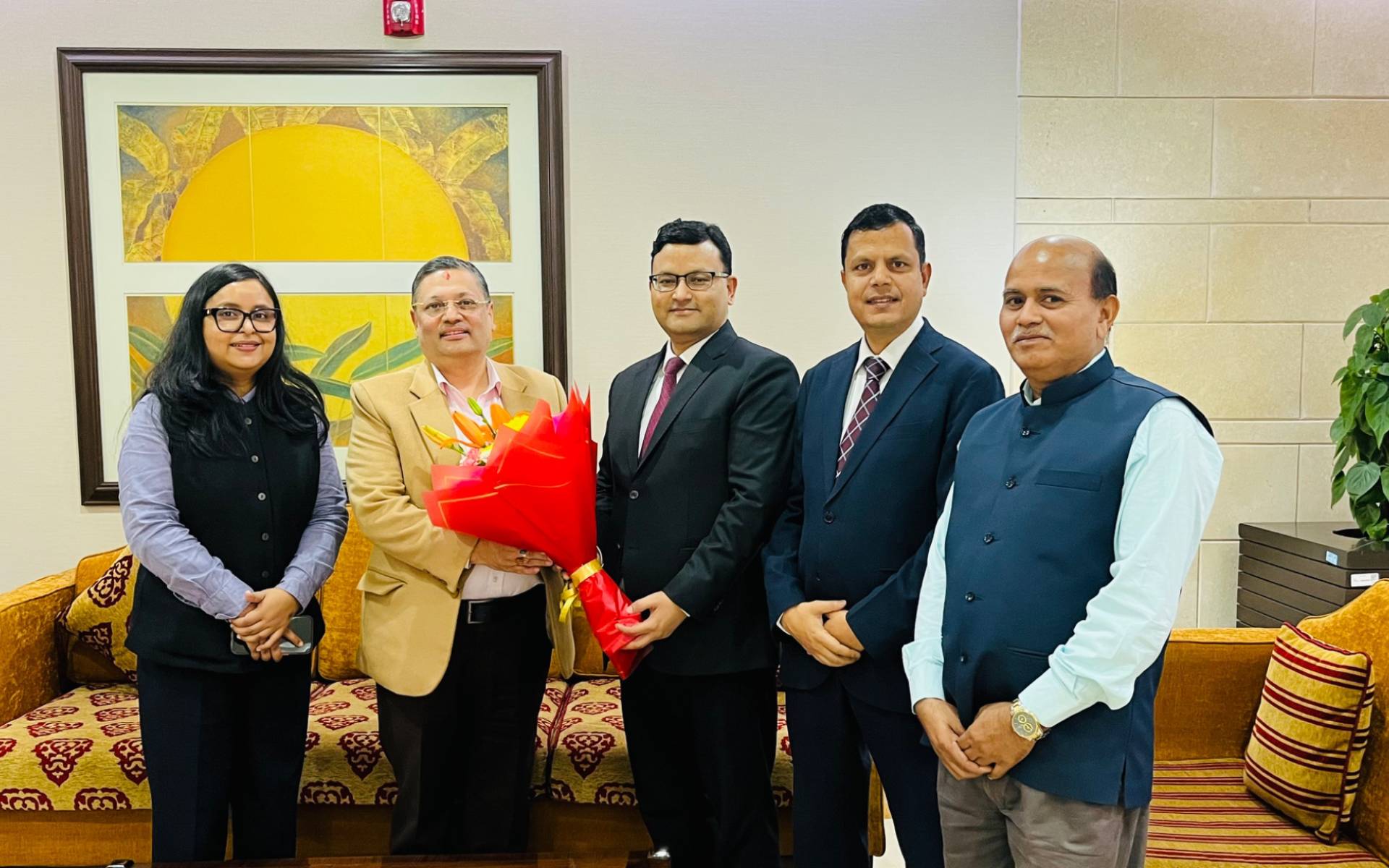
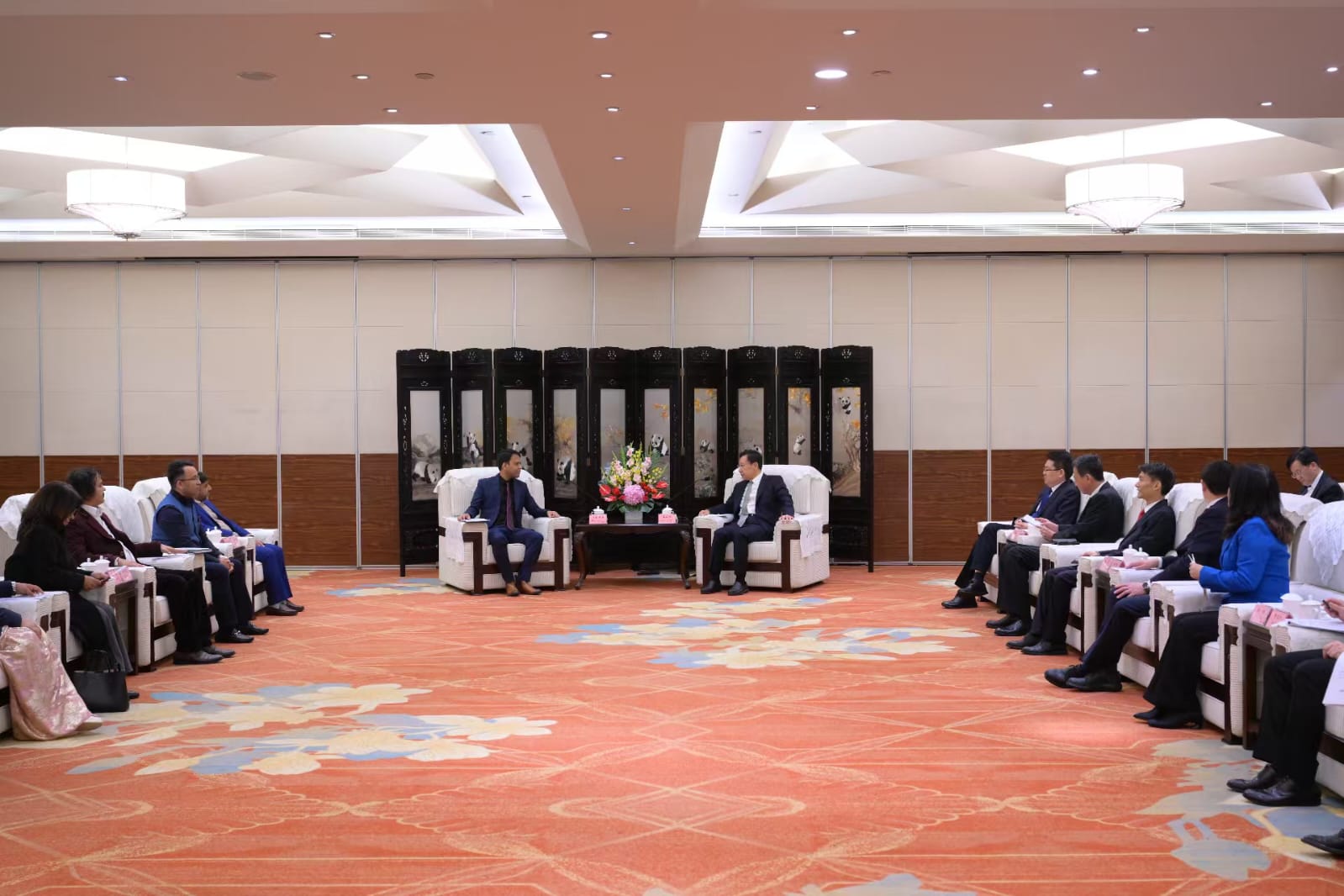
Kathmandu: A high-level delegation of the Rastriya Swatantra Party (RSP), led by General Secretary Bipin Kumar Acharya, held talks with Wang Xiaohui, Secretary of the Communist Party of China (CPC) Sichuan Provincial Committee and Chairman of the Standing Committee of the Sichuan Provincial People’s Congress, in Chengdu on Tuesday, November 17.
The meeting focused on translating the long-standing friendship between Nepal and China into practical cooperation aimed at promoting development and shared prosperity, according to a statement released by the party.
During the discussions, the Nepali delegation proposed enhanced cooperation in disaster risk reduction, infrastructure development, clean energy, modern agriculture, culture and tourism. It identified five priority areas for collaboration: reliable cross-border transport infrastructure, mountain research and disaster resilience, clean energy and green industries, aviation connectivity and trade promotion, and youth and digital innovation.
According to the RSP delegation, the Chinese side responded positively to the proposals.
Welcoming the visiting delegation, Wang briefed the Nepali representatives on Sichuan’s economic and social development and described Nepal and China as good neighbours and partners with centuries-old friendly ties.
Recalling the debris flow and flooding that struck border areas of Rasuwa district in August, Wang noted that the disaster caused loss of life and property on both sides of the border. He also referred to messages of condolence sent by Chinese President Xi Jinping and Premier Li Qiang to Nepal following the tragedy.
Wang said the way the two countries supported each other during the difficult period reflected the strength of their traditional friendship.
Acharya expressed condolences to the families of Chinese citizens who lost their lives in the Bhotekoshi disaster and thanked China for providing emergency assistance to affected communities in Nepal while simultaneously conducting rescue and relief operations on its own territory.
The delegation said it had met RSP Chairman Rabi Lamichhane and Prime Minister Balendra Shah ahead of the visit and reaffirmed Nepal’s commitment to maintaining friendly relations with China.
It stated that bilateral ties have long been guided by the principles of Panchsheel, Nepal’s independent and balanced foreign policy, and mutual respect for sovereignty and territorial integrity.
On foreign policy issues, the delegation reiterated Nepal’s longstanding commitment to the One-China policy and said neither the party nor the government would allow Nepali territory to be used against China’s sovereignty and security interests.
The delegation also stressed that strong political trust is essential for sustaining long-term friendship and described the RSP as a transparent, reliable and principled partner for cooperation with China.
During the meeting, the delegation underscored the importance of politics serving as a facilitator for development and shared prosperity. It said the RSP has been working to establish a new political culture in Nepal since entering national politics four years ago, with a focus on accountability, transparency and citizen-centred governance.
Addressing the gathering, Acharya said that while Nepal and China follow different political systems and ideologies, both share a commitment to serving citizens and improving their welfare and prosperity.
The delegation also expressed interest in learning from the CPC’s long-term organisational and governance experience.
Sichuan Pledges Support for Bilateral Cooperation
Speaking at the meeting, Wang said cooperation under the Belt and Road Initiative between Nepal and China was progressing steadily. He described Sichuan as one of the Chinese provinces maintaining close ties with Nepal and pledged support for implementing important agreements reached by the leaders of the two countries.
He said the visit would provide an opportunity to strengthen relations between political parties and local governments and expand strategic cooperation into new areas.
Acharya praised Sichuan’s economic and social achievements and thanked China for its long-standing support for Nepal’s development. He described Sichuan as a reliable and sustainable partner for Nepal and expressed interest in expanding cooperation in areas of mutual benefit.
Five Priority Areas Identified
The Nepali delegation proposed five key areas for future cooperation.
First, it highlighted the need for reliable and resilient cross-border transport infrastructure, saying recent disasters had demonstrated the importance of all-weather roads, expanded dry ports and modern customs systems. The delegation proposed cooperation to improve the safety and reliability of trans-Himalayan trade and transportation.
Second, it proposed collaboration in mountain science, information sharing and disaster resilience. Given the similarities in the mountainous environments and disaster risks faced by Nepal and Sichuan, the delegation suggested partnerships among universities, research institutions and experts. It also called for greater cooperation in weather forecasting, flood early-warning systems, road safety and disaster preparedness.
Third, the delegation proposed cooperation in clean energy and green industries. It suggested linking Nepal’s hydropower potential with Sichuan’s expertise in energy and industrial development through increased investment and technology transfer. Potential areas of collaboration discussed included green hydrogen, chemical fertilisers, electric vehicles and battery production.
The delegation also emphasized the importance of air connectivity, tourism and trade promotion. It urged exploration of additional direct flights from Chengdu to Kathmandu, Pokhara and Bhairahawa, saying improved connectivity would boost tourism, business travel and people-to-people exchanges.
In trade, the delegation proposed technical and commercial support to expand Nepali exports, including herbal products, tea, fruits and handicrafts, through greater cooperation in processing, storage, quality standards and market access.
Finally, the delegation called for greater cooperation in youth engagement and digital innovation. It proposed linking Nepal’s technology-oriented youth and clean-energy resources with Sichuan’s research capabilities in areas such as artificial intelligence, software engineering, technical training and green data centres.
According to the delegation, joint research programmes and exchange initiatives could help create new opportunities for young people in both countries.