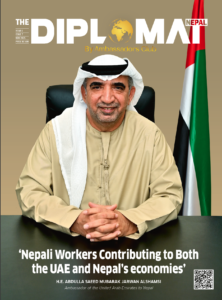
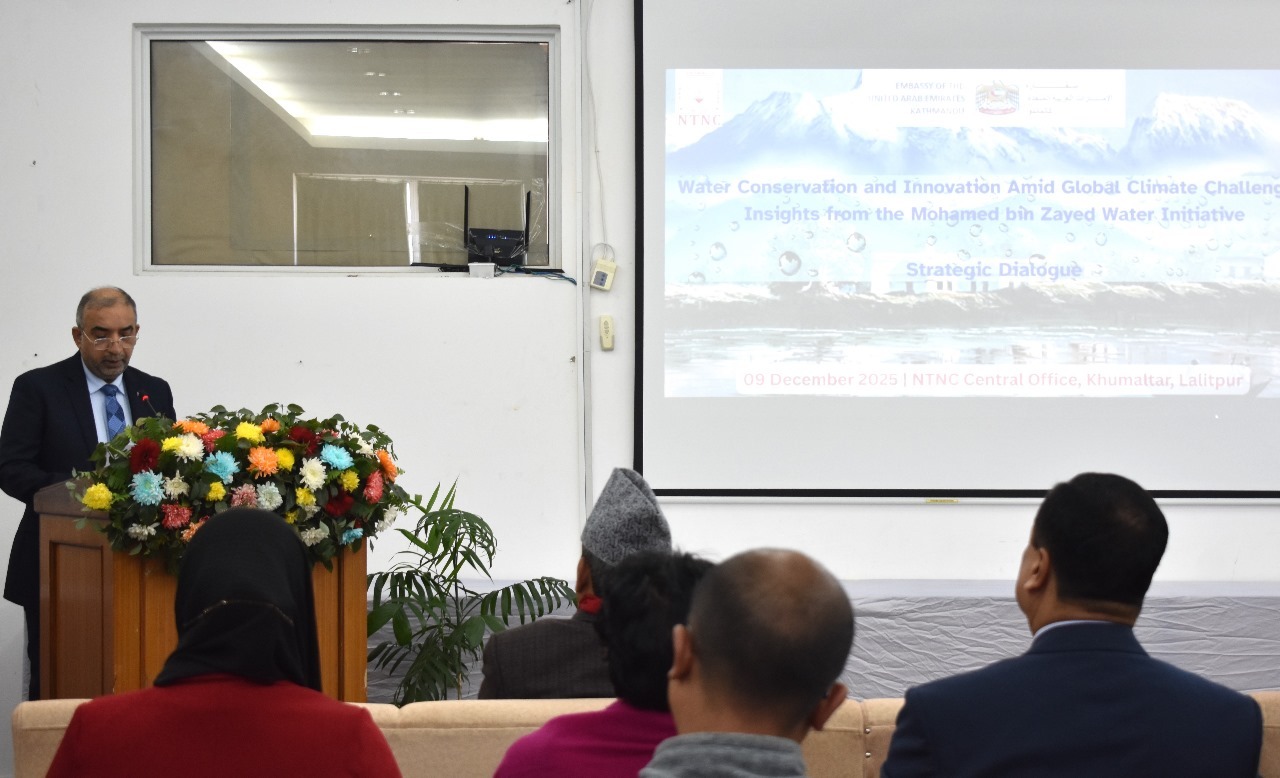
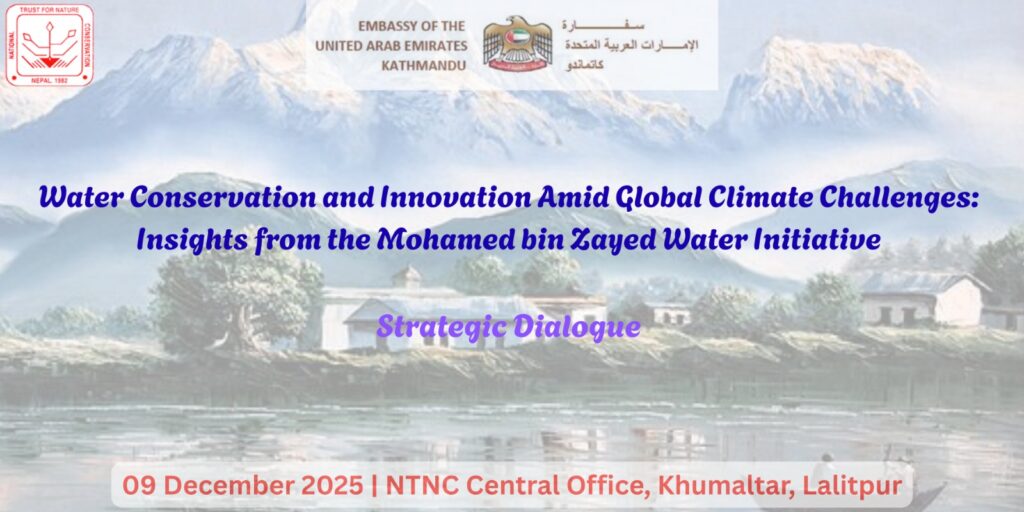
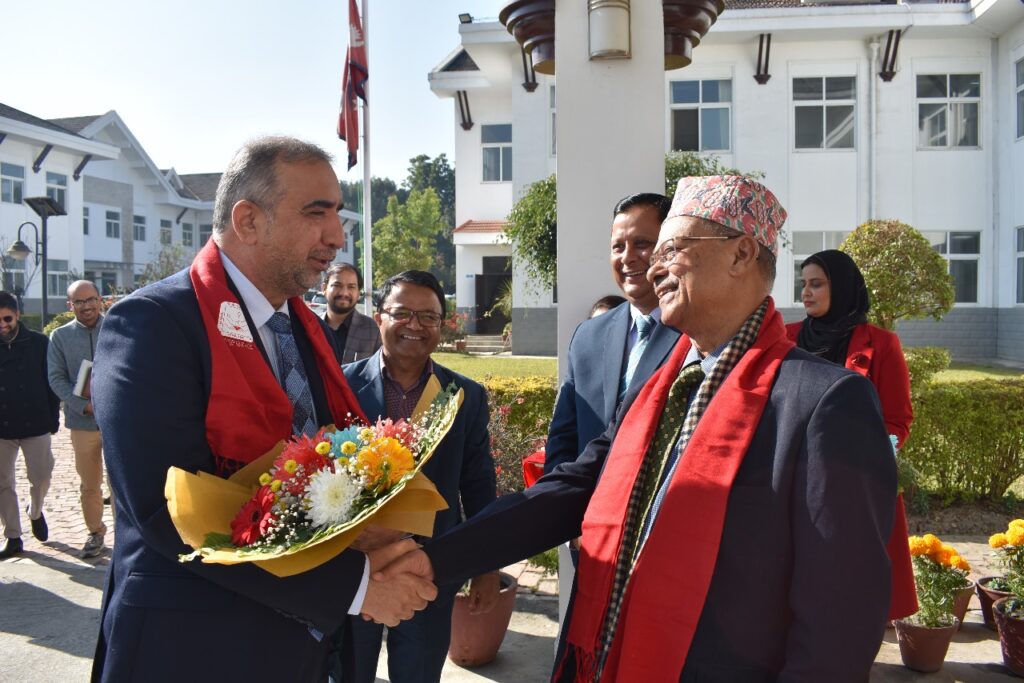
Kathmandu: The Ambassador of the United Arab Emirates to Nepal, Abdulla Jarwan Al Shamsi, emphasized the urgent need for water conservation and global cooperation to tackle escalating water scarcity during an event held in Kathmandu on December 9.
Addressing government officials, political leaders, diplomats, and development partners, Ambassador Al Shamsi described water as a “resource vital to all life” and warned that climate change, pollution, and rising populations are putting unprecedented pressure on global water supplies.
He underscored the importance of water reservation, calling for smarter water management practices such as rainwater harvesting, improved irrigation systems, and protection of rivers and underground aquifers. Failing to act, he said, would jeopardize food security, public health, and community stability.
Highlighting Nepal’s recent challenges, the Ambassador recalled the severe dry spell in the Terai-Madhes region in July 2025, where unusually low rainfall dried up water sources across key agricultural districts, damaging young rice crops and raising the threat of food shortages. He noted that this episode demonstrated the increasing vulnerability of communities to climate-induced water stress.
Ambassador Al Shamsi also spotlighted the Mohamed bin Zayed Water Initiative, launched in 2024 by UAE President His Highness Sheikh Mohamed bin Zayed Al Nahyan. The initiative aims to confront global water scarcity through innovation, investment, and international partnerships, including advancements in desalination technology.
Looking ahead, he reaffirmed the UAE’s commitment to shaping global water governance as it prepares to co-host the 2026 UN Water Conference with Senegal, which will focus on developing concrete solutions for water security and ecosystem protection.
In his concluding remarks, the Ambassador stressed that ensuring water security requires “global solidarity, local action, and a collective sense of responsibility.” He reaffirmed the UAE’s dedication to working closely with Nepal to build resilience and secure a sustainable water future for both nations.