Kathmandu: As global leaders gather in Stockholm, Sweden, for World Water Week 2026, nine local government leaders from three districts in Nepal, together with the Chair of the Municipal Association of Nepal, have endorsed and launched the country’s first sub-national roadmap for springshed management and governance.
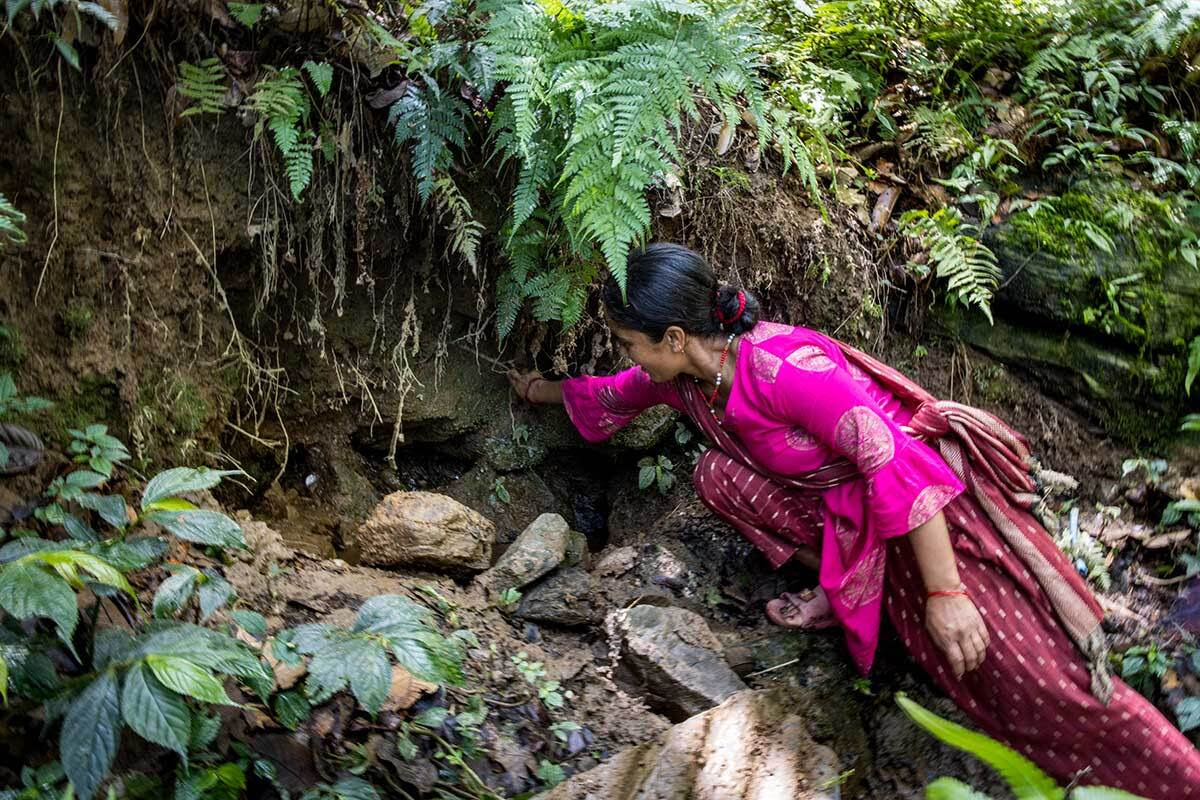
The roadmap is a locally owned plan to revive and protect drying springs that millions of Nepalis rely on for drinking water, household use, livestock rearing, and irrigation.
The initiative comes at a critical time. Springs across Nepal are under increasing pressure from climate and human-induced factors, including land-use change, deforestation, population growth, forest fires, overgrazing, and extreme weather events.
In Kavrepalanchok district alone, citizen science-based mapping of nearly 5,700 water sources across seven municipalities and rural municipalities found that 58% of active springs are showing declining flow, while more than one-quarter have already dried up.
Nationwide, only 16% of Nepal’s population has access to safely managed drinking water services (UN, 2024). For millions of rural families, this means longer walks to fetch water, increased workloads for women and children, and reduced agricultural productivity.
The drying of springs is also a growing concern in other Hindu Kush Himalaya (HKH) countries, including Bhutan, India, and Pakistan.
The roadmap was co-developed with four municipalities and two rural municipalities in Kavrepalanchok district, two municipalities in Dhankuta district, and one municipality in Khotang district. It aims to strengthen local government capacity for springshed management, integrate Gender Equality and Social Inclusion (GESI)-responsive springshed management into local policies, annual plans, and budgets, and provide a model that can be adapted and scaled across Nepal’s hill and mountain municipalities.
Developed through the experiences, challenges, priorities, suggestions, and recommendations of participating local governments, the roadmap reflects a collaborative approach to addressing local water insecurity.
The work is supported by the International Centre for Integrated Mountain Development (ICIMOD) and funded by the UK and Australian governments.