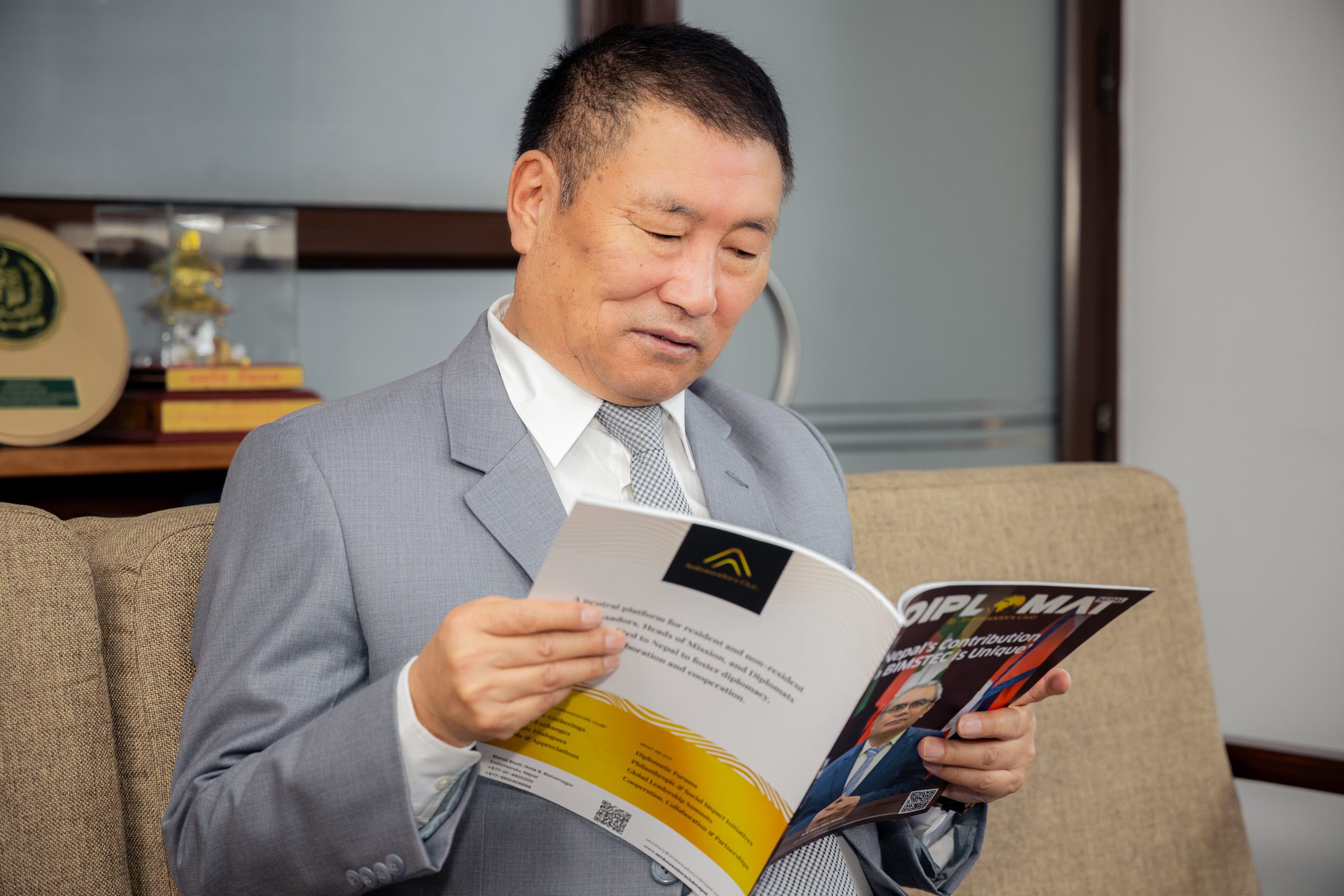
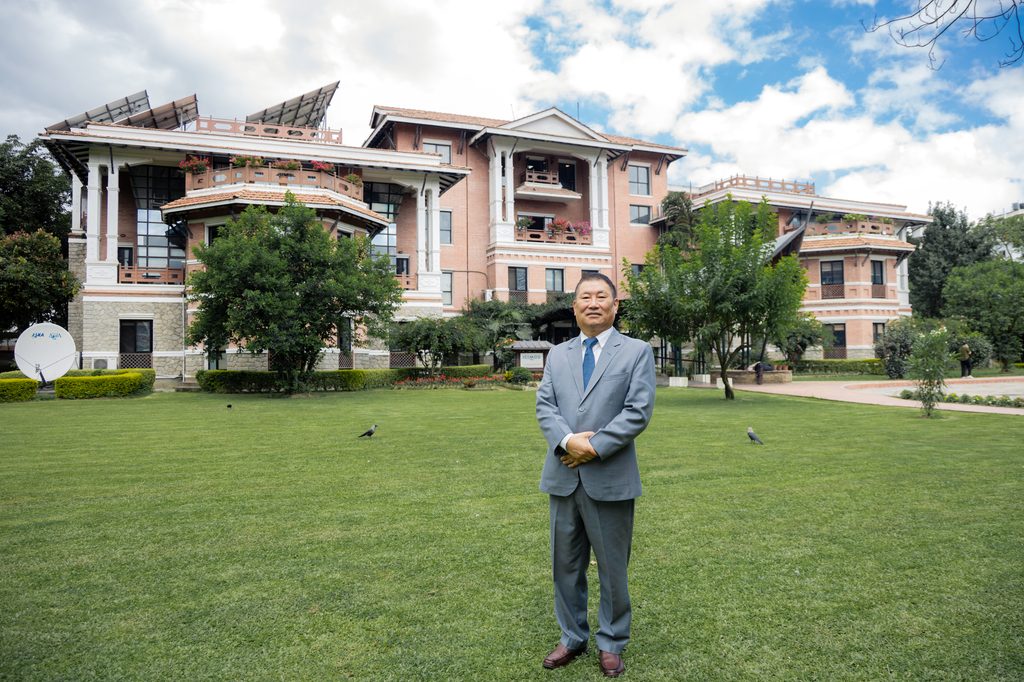
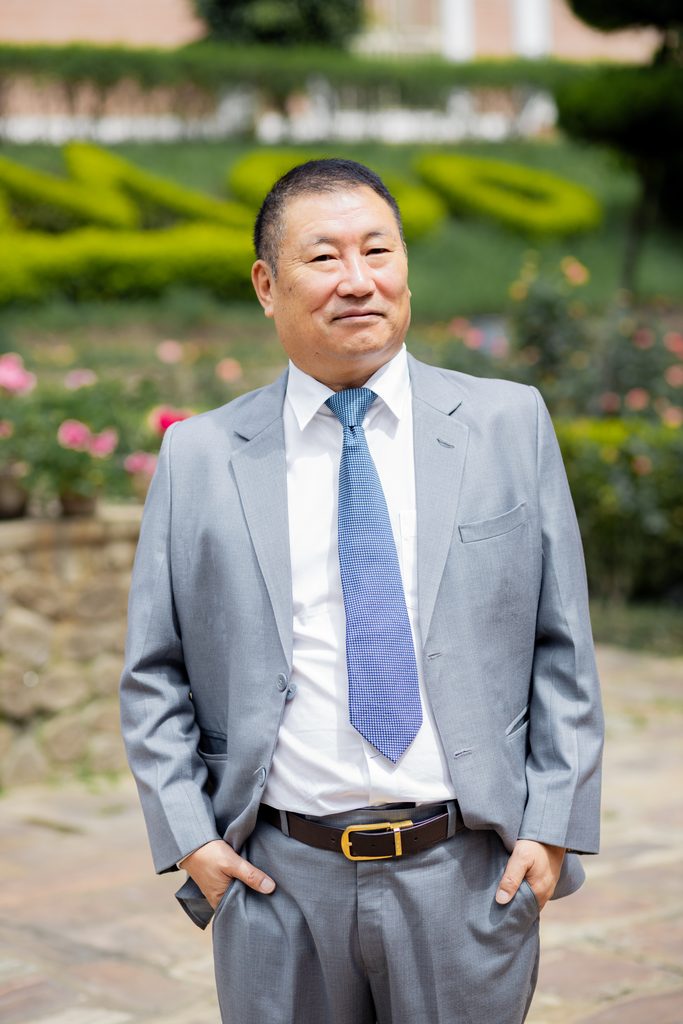
Dr. Pema Gyamtsho is the Director General of the International Centre for Integrated Mountain Development (ICIMOD), an intergovernmental knowledge and learning centre based in Nepal that serves the people of the Hindu Kush Himalaya (HKH) region across its eight regional member countries: Afghanistan, Bangladesh, Bhutan, China, India, Myanmar, Nepal and Pakistan. As someone who worked as Bhutan’s Minister of Agriculture and Forests in the past and served the Royal Government of Bhutan for over three decades, Dr. Gyamtsho has wide-ranging experiences and expertise in areas including natural resources management and planning, rural development, agriculture, forestry, research and extension, climate change and environmental protection, biodiversity conservation, organic farming, among others. In this edition of ‘Five Questions’ in The Diplomat Nepal, Dr. Gyamtsho sheds light on ICIMOD’s functioning, its role in fostering climate diplomacy and many other issues concerning the Hindu Kush Himalaya region.
ICIMOD occupies a unique niche in the global institutional landscape because it is the only intergovernmental knowledge and development organisation dedicated exclusively to the Hindu Kush Himalaya (HKH), a region that spans all or parts of eight countries–Afghanistan, Bangladesh, Bhutan, China, India, Myanmar, Nepal and Pakistan–home to over 270 million people and provides vital ecosystem services to over two billion people, including those living downstream.
Our comparative advantage lies in three interconnected roles.
First, we are a trusted regional convener. The HKH is one of the world’s most geopolitically complex regions, yet climate change, biodiversity loss, disaster risks, and water security do not respect national borders. This is a shared risk environment. ICIMOD provides a neutral platform where our 8 Regional Member Countries (RMCs) can come together to exchange knowledge, share good practices, discuss issues of mutual interest and concern, and pursue practical regional cooperation in addressing shared challenges.
Second, we bridge science, policy, and practice. We do not simply generate scientific data and information. We translate them into actionable policies, investment priorities, and on-the-ground solutions. From glacier and snow monitoring and disaster early warning systems to resilient mountain livelihoods and Nature-based Solutions, our work helps governments make informed decisions while supporting communities to adapt to a rapidly changing environment.
Third, we amplify mountain perspectives in global agendas. Although mountains provide essential ecosystem services far beyond their boundaries, they have historically received limited global attention. With the support of our RMCs and support group, ICIMOD ensures that the voices, knowledge, and priorities of the HKH and mountain regions in general are represented in multilateral processes and global climate, biodiversity, and sustainable development fora.
Unlike broader multilateral institutions with global mandates, ICIMOD’s strength lies in its regional focus, long-term presence, and deep relationships with governments, scientific institutions, local communities, and development partners. This allows us to combine cutting-edge science with regional diplomacy and practical implementation in ways that few organisations can.
ICIMOD can carry out its mandate thanks to the sustained and generous support of our RMCs, our support group consisting of our major core and programme donors–Austria, Norway, Sweden, Switzerland, Australia, Canada, Germany, the United Kingdom, Adaptation Fund, US Department of State, Asian Development Bank, UNEP, and Sasakawa Foundation, Japan.
Ultimately, our strategic positioning is to serve as a trusted and neutral regional platform that transforms knowledge into collective action, helping the countries of the HKH build a more climate-resilient, prosperous, and sustainable mountain future recognising that safeguarding the HKH is not only a regional imperative but a global one.

Science has much more value if it is used and applied to improve people’s lives. At ICIMOD, our goal has always been to transform scientific knowledge into practical action that strengthens both ecosystems and livelihoods across the HKH. Over the past 4 decades, this science-policy-practice approach has created tangible impacts in several ways.
On the climate and environmental front, our research has significantly advanced understanding of glaciers, snow, permafrost, river systems, biodiversity, and mountain ecosystems. This evidence has informed national and regional policies on water resources, climate adaptation, ecosystem restoration, and disaster risk reduction. Our work on glacier monitoring, glacial lake outburst flood (GLOF) risk assessment, and early warning systems has helped countries better anticipate and reduce the impacts of climate-related hazards and extreme events, ultimately protecting lives and infrastructure.
For example, ICIMOD’s community-based flood early warning system (CBFEWS) helps at-risk communities across the HKH turn a window of warning into action. The system combines locally adaptable river-level monitoring with trained community custodians and community-level communication networks. When water rises, the custodians verify alerts and relay warnings through sirens, phones, and community networks. These informal but essential channels also reach downstream settlements across borders.
The system has been scaled across multiple river basins in Afghanistan, Pakistan, India, and Nepal. In Southern Nepal, municipalities living along flood-prone tributaries have united in their effort to keep the system sustainable through the creation of a basket fund. The interest accrued through these basket funds helps maintain and upkeep the systems.
ICIMOD’s intervention on springs focuses on scaling gender equal and socially inclusive springshed management as a Nature-based Solution to improve water security in the HKH, along with biodiversity and climate change adaptation co-benefits. We work through science-based and community-led pilots to generate evidence, support the integration of springshed management into national and subnational policies, strengthen the capacities of institutions and individuals, and foster regional collaboration to advance knowledge exchange, innovation, and the sustainable revival of springs across the HKH region.
On the socio-economic front, we work with governments and communities to promote climate-resilient livelihoods. This includes supporting sustainable mountain agriculture, improving access to renewable energy, strengthening water security, promoting Nature-based Solutions, and creating economic opportunities that reduce vulnerability while conserving natural resources. By demonstrating successful models on the ground, we help governments adopt and scale solutions through national policies and investment programmes.
For example, in Bhutan, our initiatives on prescribed burning to restore shrub- and weed-encroached rangelands, springshed restoration to enhance water security in rangelands, and solar-powered predator-proof corrals have generated practical evidence that is informing national rangeland management policies and guiding investments in rangeland restoration and climate-resilient pastoral systems. We have also supported extensive data collection on rangeland resources, grazing areas, and seasonal livestock mobility, transforming these datasets into interactive dashboards and decision-support platforms that enable governments to strengthen rangeland governance, planning, monitoring, and evidence-based decision-making. We have further facilitated cross-border exchange visits and knowledge-sharing among RMCs, enabling the transfer and adaptation of proven technologies and good practices. These include the introduction of yak artificial insemination technologies from China to other regions to improve breeding and productivity, as well as innovations in yak value chains, including the production of high-value artisanal cheeses and premium yak wool products.
ICIMOD has also strengthened regional value chain development and entrepreneurship as a pathway to climate-resilient livelihoods by building green and inclusive entrepreneurship ecosystems across the HKH. Through partnerships with governments, business support organisations, academia, financial institutions, and the private sector, ICIMOD has supported the development and scaling of nature-based and climate-smart enterprises at each node of the value chain in sustainable agriculture, biodiversity-based products, medicinal and aromatic plants, renewable energy, and circular economy solutions. The organisation has established incubation and mentorship programmes, facilitated access to finance and markets, and strengthened enabling policies. Alongside these activities, we have worked to operationalise access and benefit-sharing mechanisms so that the outcomes are equitable and fair.
To strengthen regional collaboration, ICIMOD established the Green Inclusive Resilient Entrepreneurship Ecosystem (GIREE) Alliance, bringing together partners from Bangladesh, Bhutan, India, Nepal, and Pakistan, and facilitated cross-border learning and exchange visits to strengthen entrepreneurship policy and practice, promote innovative technologies for high-value agriculture and bio-based value chains, and foster regional collaboration in bioeconomy development.
Perhaps one of our greatest contributions is strengthening regional cooperation. Rivers, glaciers, biodiversity, air pollution, and climate risks transcend political boundaries. Through regional knowledge-sharing platforms and scientific collaboration, ICIMOD has helped build trust and foster collective action among our RMCs on issues that no single country can address alone.
For instance, the HKH DRR Hub was launched in 2024 as a voluntary regional platform to accelerate understanding, information-sharing, and action on mountain hazards, while strengthening the science–policy–practice interface. Since its inception, evolving from the Koshi Disaster Risk Reduction Hub (KDKH), founded in 2018, into a broader regional platform, the HKH DRR Hub has convened stakeholders from across the RMCs alongside international partners, United Nations agencies, development banks, civil society, and community organisations.
In 2024, when established, the Hub called on the regional members to understand hazards and improve last-mile early warning for communities. In 2025, the hub asked and identified key questions on risk financing. This year, the hub’s focus will be on locally-led adaptation and understanding how resources can be shifted to better suit community needs.
Recognising the Indo-Gangetic Plain–Himalayan Foothills (IGP–HF) as a shared airshed, ICIMOD adopts a ‘national action with regional alignment’ approach, supporting governments to strengthen air quality management while promoting regional cooperation on transboundary pollution. Its work focuses on developing science-based national strategies built on robust scientific evidence, policy and institutional strengthening, financing, and monitoring, reporting, and evaluation (MRV).
ICIMOD is advancing decision-support tools such as the screening for high emission reduction potentials on air (SHERPA) modelling framework to assess emission reduction scenarios and guide cost-effective policies, while integrating ground monitoring, low-cost sensors, satellite observations, and atmospheric modelling to improve air quality data.
Key initiatives include supporting Nepal’s National Air Quality Management Action Plan (NAQMAP) and Bhutan’s National Clean Air Action Plan (NCAAP), expanding black carbon and air quality monitoring networks, developing Nepal’s Biomass Energy Roadmap, conducting policy assessments in Bangladesh, facilitating regional science–policy–finance dialogue among HKH countries, and helping governments mobilise finance through bankable projects, including support for Bhutan’s proposal to deploy continuous emission monitoring systems (CEMS).
Equally important is our investment in local capacity. We have trained thousands of scientists, practitioners, policymakers, and community leaders, strengthening the region’s ability to generate knowledge, make evidence-based decisions, and respond to emerging challenges. It may come as a surprise that not so long ago, ICIMOD trained scientists and technicians from all the RMCs in geographical information system (GIS) and remote sensing (RS) technologies and their applications for resource mapping and management.
The true legacy of ICIMOD is therefore not measured solely by the research we produce, but by the resilience we help build through healthier mountain ecosystems, safer and more prosperous communities, stronger regional partnerships, and policies grounded in sound science. As climate change accelerates, this integrated science-policy-practice model is more important than ever to ensure that mountain communities are not only protected but empowered to thrive.
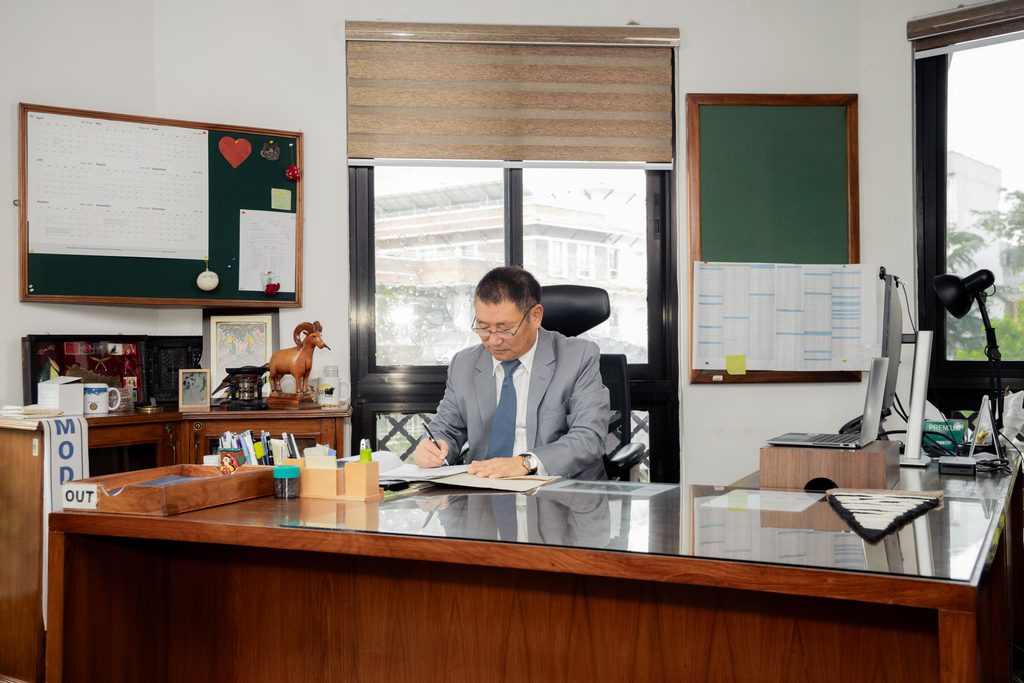
One of the most important lessons I learned as Bhutan’s Minister of Agriculture and Forests is that good policy begins by listening. Mountain communities are not merely beneficiaries of development; they are custodians of centuries of knowledge about managing fragile ecosystems, water, forests, rangelands, and biodiversity. If we want lasting resilience, policy must be informed by both science and the lived experience of people. I look back with satisfaction that I could contribute to several key legislations that brought together local knowledge with scientifically proven good practices, which cover water, forests, food and agriculture, biodiversity and protected areas.
At ICIMOD, we embrace this philosophy through what we call a co-production of knowledge. We bring together indigenous knowledge, local innovation, scientific research, and policy dialogue to design solutions that are both evidence-based and locally relevant. Whether it is managing rangelands, restoring landscapes, strengthening water security, or adapting agriculture to climate change, the most successful interventions are those developed with communities rather than for them.
At the same time, regional resilience requires supportive policies, investments, and cooperation across borders. ICIMOD’s role is to connect these different levels, from communities to national governments and regional platforms, so that local experiences inform policy, and policies create an enabling environment for communities to thrive.
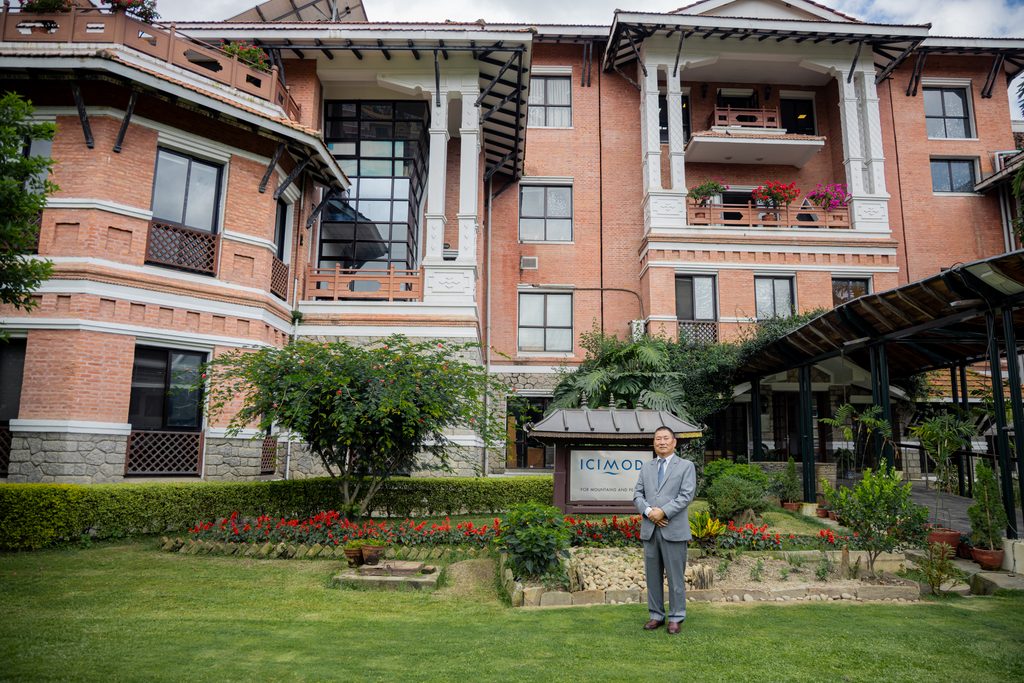
The designation of 2026 as both the International Year of Rangelands and Pastoralists (IYRP) and the International Year of the Woman Farmer is particularly significant for the HKH. Mountain pastoralists are among the region’s most effective stewards of high-altitude ecosystems. Their mobility, traditional grazing practices, and ecological knowledge have sustained fragile landscapes for generations. Likewise, women farmers are the backbone of mountain agriculture, yet they often have the least access to resources, technology, finance, and decision-making.
ICIMOD has strategically aligned its work to ensure these groups receive the recognition, evidence, and policy attention they deserve. We are promoting sustainable rangeland management, strengthening climate-resilient pastoral livelihoods, supporting ecosystem restoration, and integrating gender-responsive approaches across all our programmes, from climate adaptation and food systems to biodiversity conservation and natural resource governance.
A major milestone this year is that ICIMOD hosted the Global Gathering of Pastoralist Women, bringing together pastoralist women leaders, indigenous knowledge holders and youth, from around the world. The gathering was more than a conference. It was a global platform to elevate pastoralist voices, exchange knowledge across regions, showcase successful community-led practices, and strengthen policy commitments for sustainable rangelands and pastoral livelihoods.
We are also planning to launch the Himalayan Yak Herders Network in October 2026 as a regional platform dedicated to strengthening collaboration among yak herding communities. The network will foster knowledge exchange, amplify the voices of pastoral communities, support the conservation of yak-based pastoral systems and cultural heritage, and advocate for policies and investments that enhance the resilience and well-being of yak herders across the region.
For the HKH, this is especially important because pastoralism is not only a livelihood, it is a proven adaptation strategy that contributes to biodiversity conservation, food security, water regulation, and ecosystem resilience. ICIMOD is helping position mountain pastoralists as partners in climate solutions rather than vulnerable populations in need of assistance. This also reinforces the importance of investing in pastoral systems as part of achieving global biodiversity, climate, and sustainable development goals.
Ultimately, resilience is built when science respects traditional knowledge, policies reflect local realities, and development leaves no one behind. That is the approach ICIMOD brings to the region, connecting local wisdom with cutting-edge science, regional cooperation, and global advocacy to build a more resilient and sustainable future for the Hindu Kush Himalaya.
Nepal is an excellent choice for hosting ICIMOD as a secular state that enjoys good relations with all the countries in the region, as well as being home to the world’s highest mountains. Its open-door policy, warm hospitality, breathtaking scenery, and ease of access make it an ideal and attractive destination for meetings and conferences to facilitate learning and sharing and building cooperation. Nepal is thus uniquely positioned to become a global leader in mountain diplomacy.
This leadership is not about speaking only for Nepal; it is about convening, connecting, and championing the interests of mountain regions globally. Nepal can leverage ICIMOD’s presence to position itself as a hub for mountain science, policy innovation, and international dialogue. By hosting high-level global forums, fostering partnerships with UN agencies and development partners, and promoting evidence-based mountain agendas in international negotiations, Nepal can help ensure that mountains receive the attention they deserve in global discussions on climate, biodiversity, water, and sustainable development.
The Sagarmatha Sambaad is an excellent example of this leadership. It has created an important international platform for dialogue on the future of mountains in a changing climate. ICIMOD is proud to support such initiatives by bringing the latest science, regional perspectives, and global partnerships to the table. Together, Nepal and ICIMOD can continue to make the HKH a focal point of international climate diplomacy.
At the same time, one of ICIMOD’s greatest strengths is demonstrating that science can build bridges even where politics presents challenges. Its neutral status as an apolitical organisation dedicated to science and sustainable mountain development gives it this unique convening edge.
The 8 countries of the HKH have different political systems, development priorities, and, at times, complex bilateral relationships. However, glaciers and rivers do not stop at national borders. Wildlife do not carry passports. Air pollution, biodiversity loss, disasters, and climate change are inherently transboundary challenges that require shared understanding and collective responses.
Our role is to provide a neutral, trusted, and evidence-based platform where countries can work together around common interests. We do not engage in political negotiations. Instead, we facilitate scientific collaboration, knowledge sharing, technical dialogue, and capacity building. When countries work together to generate and analyse data, monitor glaciers, improve flood forecasting, or strengthen early warning systems, they build trust through shared evidence.
This is what we mean by science diplomacy: using science as a common language to foster cooperation where it matters most, for the people who need it most.
Our regional river basin networks, cryosphere monitoring initiatives, disaster risk reduction platforms, and transboundary research programmes all demonstrate that collaboration is both possible and beneficial, even in a complex geopolitical landscape. By producing credible science and creating spaces for sustained dialogue, ICIMOD helps countries move from shared challenges to shared solutions.
In a world facing accelerating climate change, no country can protect its mountains or water resources alone. The future of the HKH depends on regional cooperation grounded in trust, science, and mutual benefit. That is the role ICIMOD has played for more than four decades, and it is the role we will continue to strengthen in the years ahead.
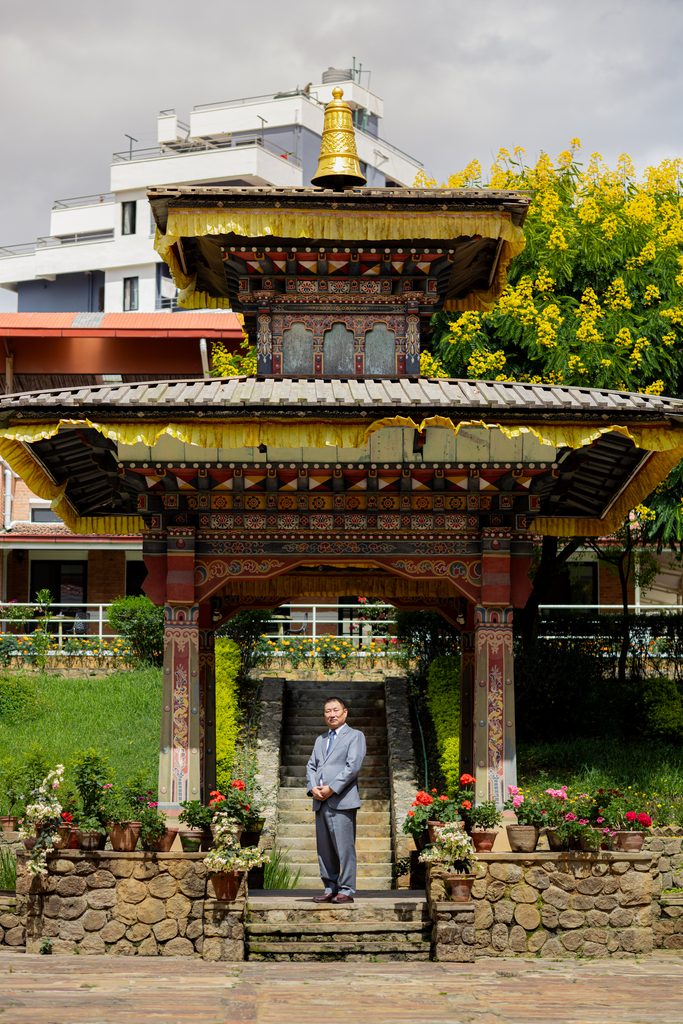
The UNFCCC Bonn Climate Conference (SB64) marked an important milestone for the HKH with the first UNFCCC-mandated Dialogue on Mountains and Climate Change, following a COP30 decision. As a keynote speaker, the Dialogue provided a unique platform for ICIMOD to highlight the region’s climate vulnerability and finance gaps, and to call on Parties and stakeholders to move beyond recognition to action by integrating mountain priorities into key UNFCCC negotiations, implementation, and finance.
Accelerating adaptation and implementation. Adaptation remained the strongest entry point for the HKH. Discussions on the Global Goal on Adaptation (GGA), National Adaptation Plans (NAPs), and the first Global Stocktake reinforced the shift from planning to implementation. This presents an opportunity to integrate mountain-specific indicators into adaptation frameworks, strengthen regional evidence, methodologies, and transparency through the HKH Regional Information Services and Transparency Hub, translate mountain priorities into bankable investments, and embed glacier risk, water security, ecosystem restoration, and community-based adaptation into NAPs and Nationally Determined Contributions (NDCs).
Mobilising finance, transparency, and regional cooperation. Negotiations highlighted the urgent need to scale adaptation finance, strengthen climate transparency, and accelerate implementation. For the HKH, this underscores the importance of expanding regional climate finance pipelines and blended finance, integrating mountain indicators into Enhanced Transparency Framework (ETF) reporting and Biennial Transparency Reports (BTRs), and strengthening regional knowledge platforms, technical support, and South–South cooperation. Collectively, these pathways position ICIMOD to support RMCs in translating mountain science into policy, finance, and implementation, delivering tangible resilience and livelihood benefits for mountain communities.
While progress remained limited, particularly on adaptation finance, SB64 advanced several policy pathways that can be leveraged to strengthen climate resilience and mountain livelihoods ahead of COP.