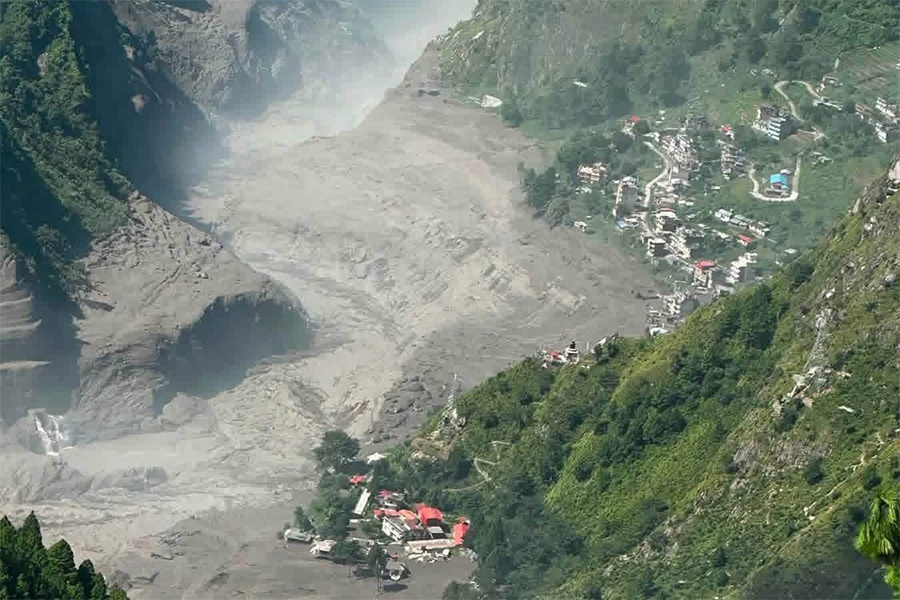
Climate change is no longer a distant environmental issue. It is disrupting education, threatening livelihoods, damaging infrastructure, and widening inequalities that already existed. It does not consider a person’s gender, social standing, economic status, or physical ability before it strikes. Its impacts are never shared equally. The vulnerable pay first and pay the most. According to UNICEF (2022), around half of the people who died or were injured due to climate-related hazards in Nepal over the past five years were mainly children and youth—a group whose high exposure and sensitivity to extreme events makes them disproportionately likely to lose their lives when disaster strikes. That single statistic says more about who this crisis punishes than any policy document I’ve read.
The Youth and Adaptation in Nepal Briefing Paper (2026) adds more numbers to the picture. People aged 16 to 40 make up 46.1 percent of Nepal’s population, and among those aged 15 to 24, 78 percent say climate change has already disrupted their education. Young people are supposed to be the pillars of this nation, the changemakers of tomorrow, yet they are carrying the heaviest burden of a crisis they had almost no hand in creating, and more often than not, they’ still an afterthought in the rooms where decisions actually get made.
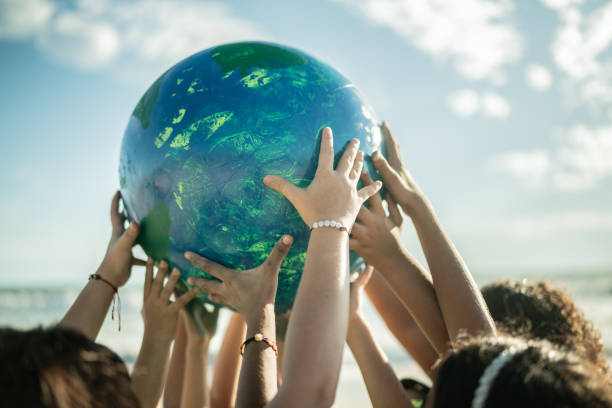
That is part of why August 12 matters to me. Every year, on August 12, the world celebrates International Youth Day, the United Nations designated occasion to celebrate young people’s achievements and amplify their voices. This year’s theme, “Different Contexts, Common Aspirations,” clearly reflects the actual reality: young people living in different realities, across different provinces, united by the same hope for a livable future.
Youth have also carved out an official channel inside the global climate negotiation space itself: YOUNGO, the recognized children and youth constituency of the United Nations Framework Convention on Climate Change (UNFCCC). It is a worldwide network of young activists up to age 35, plus youth-led organizations, working to shape intergovernmental climate policy. Under YOUNGO’s umbrella, countries run their own Local Conference of Youth (LCOY), and Nepal has its own version. This year LCOY Nepal is bringing young people together from across the country to share their experiences and craft a collective declaration for YOUNGO from August 14 to 16. For a lot of participants, this will be the first time their lived experience of climate change gets treated as evidence, not anecdote: a school shut by flooding, a harvest lost to erratic rainfall, a family forced to move because a water source dried up. That shift, from being talked about to being asked to speak, is really what I hope this conference delivers.
The composition of the gathering itself is encouraging. Most participants fall in the 20–29 age group, and youth from all seven provinces are expected, with the highest turnout expected from Bagmati and Gandaki. On gender, the numbers hold up as well: 58.3 percent female, 41.4 percent male, 2.3 percent non-binary and with 22 different ethnic groups represented. It does not feel like tokenism. It feels like an actual effort.
Representation in a conference room is only half the story, though. Before LCOY, other groundwork was already shaping how youth voices entered Nepal’s climate policy starting with a survey that most people outside this space have never heard of. When the Government of Nepal began revising its National Climate Change Policy 2019, Prakriti Resources Centre, Nepalese Youth for Climate Action, and Plan International Nepal jointly ran a survey to capture youth perspectives on the policy. The survey across youth networks nationwide, drawing 179 responses, split almost evenly between 50.8 percent female and 49.2 percent male, from all seven provinces.
What confirmed is something I have felt for a while, watching this policy space from the inside. The existing policy mentions youth in only three places: GESI, awareness raising, and research and technology. That is a glaring gap, given who stands to suffer most from the crisis this policy is meant to address.
Eight major recommendations emerged from the consultation and the survey. I find them sound and genuinely reflective of what youth actually need: Meaningful youth participation in climate governance and decision-making, A dedicated youth focal person within the Climate Change Management Division, Structural climate adaptation and resilient community-building led by youth, Accelerating low-carbon and sustainable development activities that youth can drive, Expanding green jobs for young people, Strengthening climate finance and youth innovation, Protecting mountain ecosystems and building stronger knowledge systems within youth networks, Promoting climate education, accountability, and inclusive implementation from a youth perspective.
However, recommendations on paper do not mean much without a place for youth in decision making spaces—real seats at the table, not consultative ones, but actual decision-making ones. Once youth are in the room where decisions get made, they can advocate for themselves, and it gets a lot easier to make their vulnerability as well as their potential. That is the shift I personally want to see at all local, provincial, and national levels.
None of this has to wait for policy reform either. On a personal level, every young person can start now, through mindfulness and taking responsibility towards the environment small actions can encourage meaningful change: not throwing waste carelessly, cutting back on plastic, backing green energy, and passing on what they know about climate change to the people around them. It may sound small, but awareness and understanding spreads person to person, and I have seen quiet knowledge transfer accomplish more than it is ever credited for.
What I notice most, watching Nepal’s Youth Climate movement, is that the mindset of the younger generation is changing. Young people aren’t asking to be included just as volunteers or symbolic voices anymore. They are asking for a real say. And they are not just raising the alarm, they are the ones showing up with solutions.