
The Armed Police Force, Nepal (APF) stands at a defining historical juncture as it enters its 25th year—its Silver Jubilee. This marks far more than a ceremonial milestone. It is a moment of national reflection on an institution that has evolved from a crisis-driven security necessity into a central pillar of Nepal’s internal security architecture.
APF is also an emerging contributor to international peacekeeping. This occasion carries a solemn duty to honor the APF personnel who made the ultimate sacrifice in safeguarding the nation and its people.
The Silver Jubilee provides an opportunity to assess APF Nepal’s foundational mandate, operational evolution, institutional strengths, and future strategic challenges. Nepal is characterized by the Nepal-India unenclosed border, complex terrain, a complex political landscape, non-traditional security threats, and recurring natural disasters.
APF Nepal has evolved significantly beyond its traditional law-and-order role. It has become an indispensable component of comprehensive national security. This evolution is further reflected in APF’s growing international engagement.
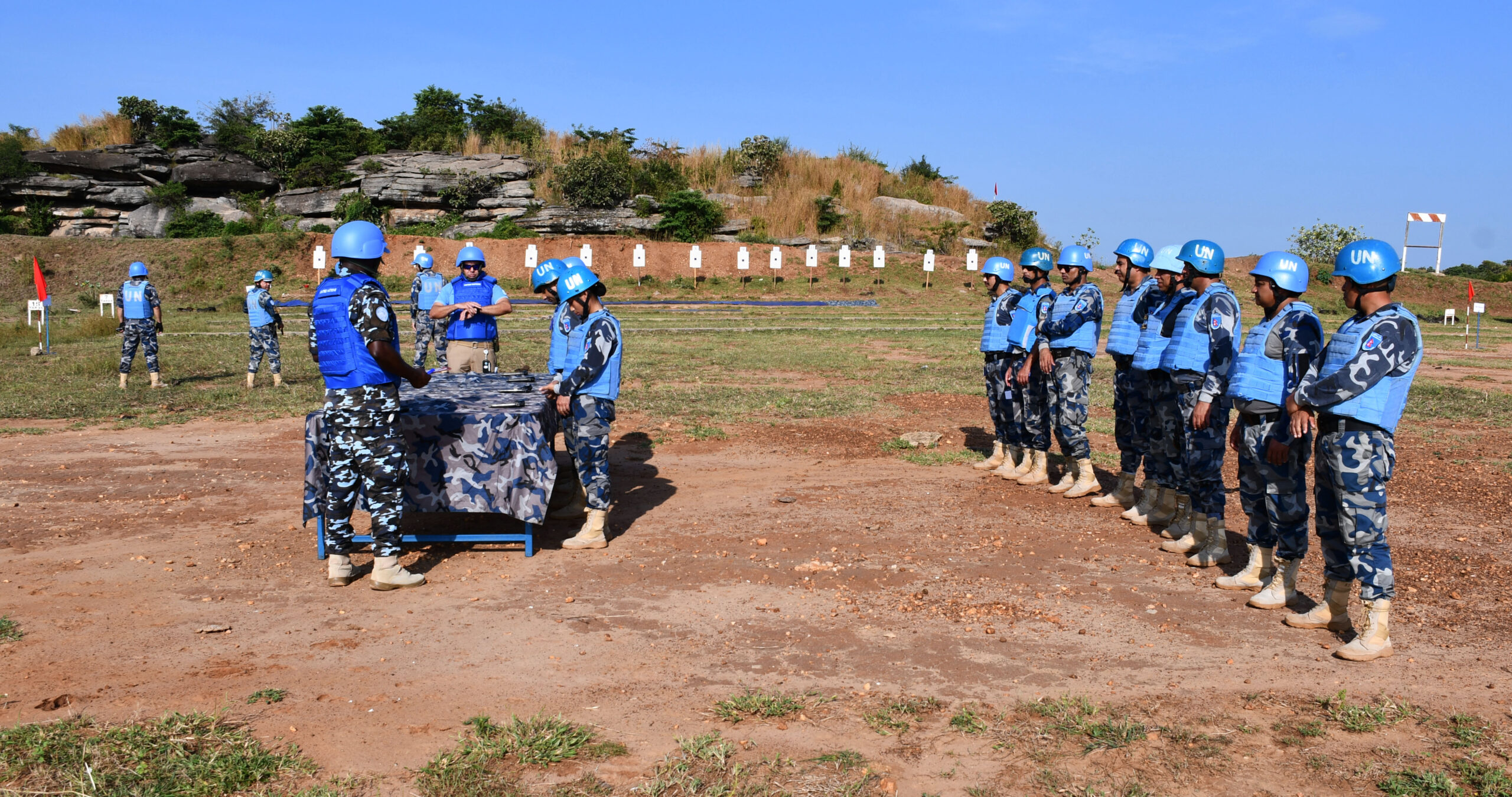
The force has contributed to United Nations peacekeeping missions since its first deployment in October 2002, spanning volatile regions such as Iraq, Kosovo, Liberia, Sudan, Haiti, Somalia, Darfur, and East Timor.
By 2024, APF had deployed over 8,084 personnel in Formed Police Units, 885 Individual Police Officers, and specialized professionals serving as advisors, instructors, and monitors. These deployments have enhanced public order, protected UN assets, and supported post-conflict stabilization.
This expanding global role complements Nepal’s standing as one of the world’s leading troop-contributing countries. It underscores APF Nepal’s paramilitary professionalism, adaptability, and commitment to peace at both national and international levels.
Establishment Background, Mandate, and Paramilitary Character
The Armed Police Force, Nepal, was established against the backdrop of armed conflict, political instability, and serious internal security challenges. In particular, the armed insurgency launched by the Maoists in 1996 plunged Nepal’s internal security situation into a profound crisis. As insurgent activities intensified, incidents of killing, abduction, looting, and attacks on state institutions increased, making the deployment of the Nepal Police—especially in remote and mountainous districts—extremely risky.
Although the situation was gradually moving beyond the effective control of the police, the direct deployment of the then Royal Nepal Army (Now Nepal Army) was constitutionally and legally complex at the time. In this context, the need was felt for a capable paramilitary security force to bridge the “security gap” between the police and the army.
Consequently, with the promulgation of the Armed Police Force Act, 2001, the Armed Police Force was established with a mandate encompassing border security, control of insurgent and terrorist activities, riot management, disaster response, and functioning as a supporting force to the Nepal Army during national crises.
During the Maoist conflict, the force played an effective role and clearly demonstrated its operational relevance and legitimacy.
In the global context, there is no single agreed-upon “first” example of a paramilitary force. Institutions such as France’s Gendarmerie, Italy’s Carabinieri, and India’s Assam Rifles are often cited as modern paramilitary models.
Today, many countries in South Asia and beyond prioritize such forces for internal security, border management, and counter-insurgency operations. Legally, a “paramilitary force” refers to a state-established and state-regulated security institution, generally operating under the Ministry of Home Affairs and tasked with internal and border security. Because such forces combine the legal authority of civilian policing with the discipline and capabilities of the military, they function as a “middle ground force” between the police and the army.
In this sense, the Armed Police Force is neither a fully military force nor merely a civilian police organization. It is a law-based paramilitary security pillar with the distinct capacity to conduct balanced, professional, and effective security operations against the “mid-level security challenges” faced by modern states—such as border security threats, terrorism, insurgency, and large-scale crowd and riot situations.
Institutional Development, Structural Expansion, and Border Security
Over the past 25 years, the Armed Police Force has grown from a modest, resource-constrained unit into a nationwide, well-structured organization deployed across the Himalayan, Hill, and Terai regions through a headquarters–brigade–battalion–company/platoon framework. Through border security offices, border outposts (BOPs), specialized units, and disaster management training centers in border districts, APF has become a key pillar of Nepal’s national security system.
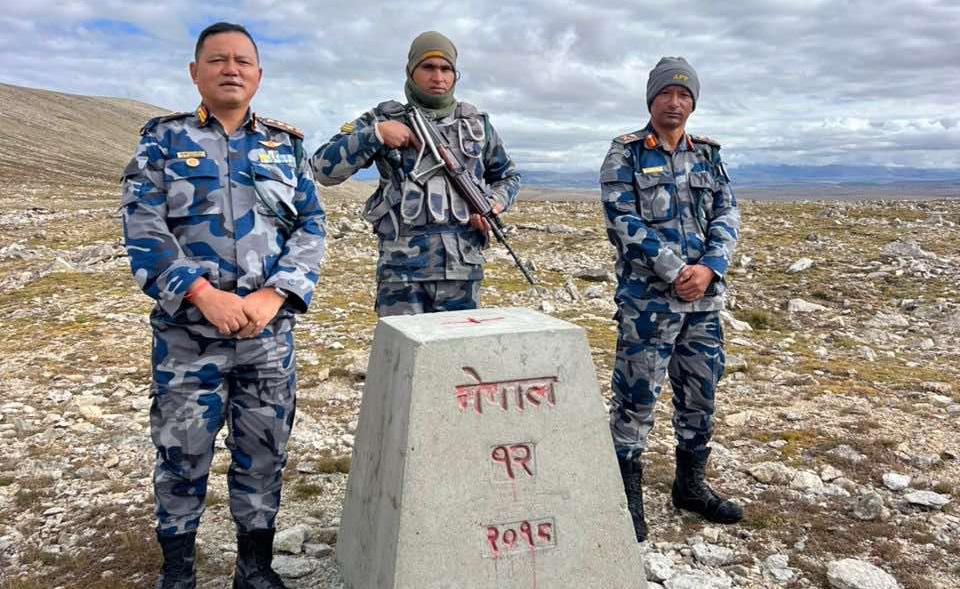
APF bears primary responsibility for border security in 27 districts along the India–Nepal border and 15 districts along the Nepal–China border. It plays a frontline role in controlling cross-border crimes such as human trafficking, drug smuggling, and forest and wildlife offenses arising from open borders. The vigilant presence of APF at sensitive border points has significantly contributed to safeguarding national sovereignty and territorial integrity, with BOPs currently operational across these border districts.
Disaster management and rescue operations constitute another vital responsibility of the Armed Police Force. Specially trained teams are rapidly deployed during earthquakes, floods, landslides, avalanches, and fires, earning strong public trust. APF’s role has evolved from reactive response to include preparedness, risk reduction, and coordinated disaster response, with the force consistently serving as a leading “first responder,” notably during the 2015 earthquake and in remote Himalayan emergencies.
The force has also strengthened leadership and professionalism through postgraduate education focused on security and disaster management. In addition, APF’s Command & Staff College serves a high-level national security policy course. Within Nepal’s democratic setting, APF remains actively engaged in crowd management, riot control, and the protection of critical infrastructure in both urban and rural areas. Collectively, these functions underscore APF Nepal’s three-tier role in national security—as a law-enforcement support agency, a paramilitary deterrent force, and a specialized support force to the army during national crises.
Expectations, Challenges, and the Road Ahead
As the Armed Police Force, Nepal marks its 25th year—its Silver Jubilee—there is no doubt about its significant contribution to national security. Over the past quarter-century, APF has played an indispensable role in border security, internal peace and order, crowd and riot control, revenue leakage control, disaster management, protection of critical infrastructure, and humanitarian rescue, establishing itself as a backbone of national stability. Despite these achievements, evolving security dynamics highlight the need to further strengthen the force to remain agile, capable, and future-oriented.
Public and state expectations of APF continue to rise. Key priorities include clearer integration with national security policy, greater use of technology in border security, expanded expertise in disaster management, strengthening citizen-friendly security practices, and developing specialized capabilities to address terrorism, hybrid threats, and potential non-state armed groups. At the same time, maintaining professionalism, discipline, human rights compliance, and accountability remains essential.
APF also faces persistent challenges. Shortages of resources and infrastructure are acute, particularly along border areas where the number of Border Outposts (BOPs) remains insufficient compared to neighboring countries. Harsh terrain and weather conditions in the Himalayan regions demand technologically advanced facilities that are still lacking. Legal and policy ambiguities regarding deployment and authority, along with undue political interference in postings and operations, continue to undermine institutional effectiveness. Rising cross-border crime, smuggling, cybercrime, terrorism, and revenue leakage further complicate the security environment.
Personnel welfare presents another concern. Inadequate and non-competitive pay, allowances, and facilities have increased psychological and social pressure on serving personnel, affecting morale and long-term performance. Declining recruitment interest, rising resignations, and the growing attraction of foreign employment pose potential risks to future manpower balance and institutional capacity.
Looking ahead, APF Nepal must transform itself into a modern, capable, and accountable paramilitary force. This requires technology-enabled border surveillance (such as CCTV, drones, and digital mapping), data-driven risk analysis, border-focused intelligence networks, specialized counter-terrorism and cyber units, and human-rights-centered training. Equally important are rule-based deployment, public engagement, personnel welfare, mental health support, and meritocracy. If these challenges are approached as opportunities, the Silver Jubilee can serve not only as a celebration of past achievements but as a foundation for building a professional, technology-driven, and citizen-responsive force capable of addressing Nepal’s evolving security needs.