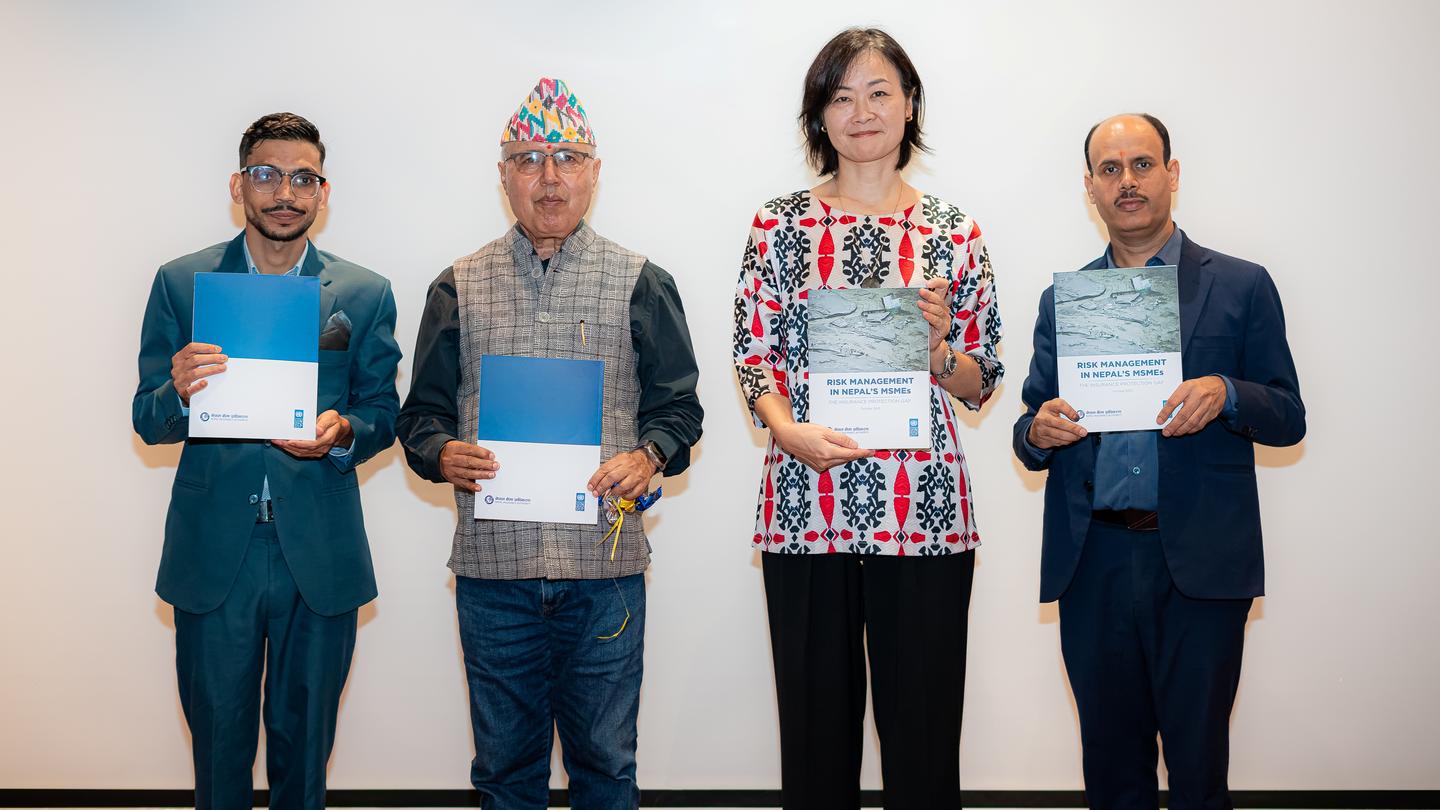
Kathmandu: UNDP Nepal, in partnership with the Nepal Insurance Authority (NIA), launched the comprehensive study report, “Risk Management in Nepal’s MSMEs: The Insurance Protection Gap” on August 3. Following the official book launch, a high-level policy dialogue was convened in collaboration with the Society of Economic Journalists – Nepal (SEJON) to translate the report’s findings into actionable strategies for expanding insurance coverage and strengthening the financial resilience of micro, small, and medium enterprises (MSMEs).
Undertaken by the Institute for Integrated Development Studies (IIDS), with the support from UNDP’s Insurance and Risk Finance Facility (IRFF), UNDP stated that the newly launched study provides a comprehensive assessment of the current state of MSME insurance in Nepal. It examines the key risks faced by small businesses, identifies structural barriers limiting their access to insurance, and presents evidence-based recommendations to improve insurance penetration, affordability, and accessibility.
They further emphasized that the MSMEs are the backbone of Nepal’s economy, generating employment, supporting local livelihoods, and contributing significantly to economic growth. However, they remain highly vulnerable to natural disasters, climate-induced hazards, and business interruptions. The study underscores that insurance must be viewed not merely as a financial product, but as an essential tool for business continuity, disaster risk management, and overall economic resilience.
To bridge the gap between these research findings and practical market solutions, SEJON facilitated a robust policy dialogue during the second half of the event. Bringing together senior government officials, policymakers, regulators, insurance industry leaders, financial institutions, and MSME associations, SEJON played a critical role in steering the economic discourse. The dialogue explored opportunities to strengthen Nepal’s insurance ecosystem through improved regulatory frameworks, greater product innovation, and enhanced public-private partnerships. SEJON’s active involvement highlighted the vital role of economic journalism in bridging the information gap—ensuring that evidence-based policy reforms are communicated effectively to raise consumer awareness and drive market adoption.
Participants emphasized the importance of integrating insurance and disaster risk financing into broader national strategies on private sector development, coordination among the key stakeholders including the financial institutions, climate resilience, and sustainable financing.
Kyoko Yokosuka, Resident Representative of UNDP Nepal, highlighted the report’s significance, stating “Micro, small, and medium enterprises are the backbone of Nepal’s economy, yet they remain highly vulnerable to disasters, climate shocks, and other risks that can erase years of hard-earned progress. Closing the insurance protection gap is essential to protecting businesses, jobs, and building a more resilient economy. Insurance is not just a financial product—it is a powerful tool for resilience and sustainable growth. Through UNDP’s Insurance and Risk Finance Facility, we remain committed to working with the Government of Nepal, the Nepal Insurance Authority, the private sector, and development partners to strengthen financial resilience and expand access to inclusive insurance solutions for Nepal’s MSMEs.”
Sushil Dev Subedi, CEO of the Nepal Insurance Authority, remarked, “This study shows that insurance is not just a financial product, but a strategic investment in resilience and sustainable growth. Its evidence-based recommendations provide a roadmap for strengthening insurance protection for MSMEs and informing future policy and regulatory reforms. I encourage all stakeholders to work together to turn these recommendations into action and strengthen the resilience of Nepal’s MSMEs.”
Speaking at the event, Rameshwor Khanal, Former Finance Minister, said “MSMEs are vital to Nepal’s economic growth, and addressing the risks they face is essential for strengthening the economy. The Deposit and Credit Guarantee Fund and the Nepal Insurance Authority have important roles in expanding insurance solutions for MSMEs, supported by stronger evidence, effective regulation, and continued government commitment. Building on existing insurance premium support, these efforts should be strengthened to improve the resilience and sustainable growth of MSMEs.”
Bhagwat Bhattarai, President of SEJON, added, “Today, we have not only launched a report but also advanced an important policy dialogue. Its recommendations offer a roadmap for future policy and regulatory reforms, laying the foundation for a safer, more inclusive, and more resilient business environment for Nepal’s millions of micro, small, and medium entrepreneurs.”
The event concluded with a shared commitment among stakeholders to translate the study’s recommendations into concrete actions and narrow the insurance protection gap. UNDP reaffirmed its commitment to supporting the Government of Nepal in strengthening financial resilience through IRFF, its flagship global initiative that supports countries in developing innovative insurance and risk financing solutions against increasing climate and disaster risks.