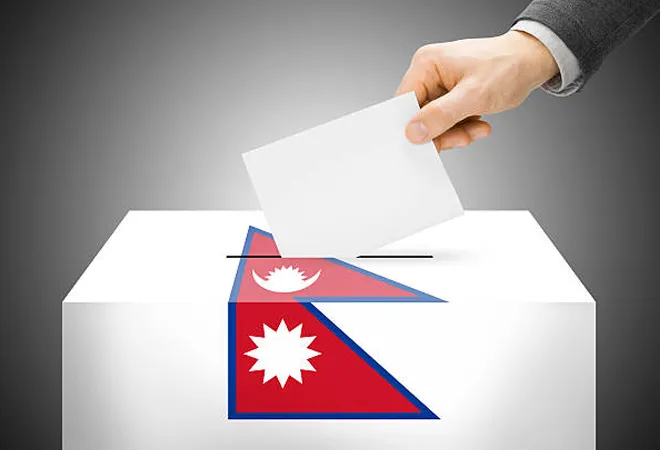
Nepal’s March 5, 2026, House of Representatives election marks a profound national turning point. Beyond validating Nepal’s internal democratic capacity, this poll will serve as a high-stakes mirror, illuminating the complex dynamic between the deep strategic interest of powerful nations and the concrete support, or lack thereof, they are willing to provide.
Against the backdrop of the federal parliament dissolved by the Gen Z movement in September 2025, the election preparations under the leadership of interim government Prime Minister Sushila Karki are expected to give the country a new direction.
However, how decisive will the role of neighboring and friendly nations be in this process? Expectations for logistical support from neighbors like India and China are rising, while economic and technical assistance from the United States, the European Union (EU), the United Kingdom, Japan, and Australia is declining. This scenario tests not only Nepal’s independence but also signals the geopolitical balance among global powers.
The fundamental question still remains: Will international support act as a bridge to strengthen Nepal’s democracy, or will it only serve as a means to expand strategic influence? In previous elections, including the constitutional assemblies (2008 & 2013) and general elections (2017 & 2022), foreign assistance played a key role in bolstering the legitimacy and transparency of the polls. This question is clear, fair, and crucial for an independent election.
However, this time, the sudden announcement of the election, the reduced support from the United States and Western countries, and the Nepali government’s ‘self-reliance’ mindset have complicated the landscape of assistance. In this opinion piece, I analyze this change and discuss how Nepal can ensure balanced support.
In recent months, the shadow of the election is clearly visible in Kathmandu’s diplomatic circles. Ambassadors from India, China, the United States, the United Kingdom, Australia, Japan, and the EU in Nepal have prioritized election preparations in meetings with Prime Minister Karki, ministers, and high-level government officials. This diplomatic activity shows that the international community’s interest in Nepal remains intact. However, this interest is clearly tied not only to support but also to their own strategic benefits.
India’s activity is a clear example of this. On December 7, 2025, India’s Additional Secretary of the Ministry of External Affairs, Munu Mahawar, arrived in Kathmandu. India described this visit as ‘to understand the election atmosphere and express support.’ He met with the Prime Minister, the Finance Minister, the Home Minister, and the Energy Minister, and the Communications Minister.
This high-level meeting reflects India’s political interest. In the past, India has provided logistical support to Nepal’s elections, supplying hundreds of vehicles during the 2022 election. This time too, the source said that the Election Commission has requested several vehicles and other materials from India. Such support provides India with an opportunity to intervene in Nepal’s political stability, thereby testing Nepal’s ‘neighborhood first’ policy.
Similarly, China’s role is noteworthy. Chinese Ambassador Chen Song, in a discussion with journalists on December 12, 2025, expressed China’s commitment to provide ‘every possible support’ for Nepal’s election.
There is also diplomatic support from the United States, the United Kingdom, and the EU. The US ambassador has expressed commitment to assist the interim government in election preparations, but the lack of technical and financial support makes this interest seem limited.
Japan and Australia have also shown interest in election observation as development partners. Prime Minister Karki, on October 17, 2025, discussed with heads of foreign diplomatic missions in Kathmandu, stating that the election is the top priority. These meetings highlight the importance of international support, but cannot hide the reality of declining assistance volumes.
More than 120 parties have been provided with election symbols, completing the registration process. 837,000 new young voters have been added through new registrations, with significant participation from the Gen Z generation. The government has reduced more than one billion rupees from the development budget, signaling self-reliance, including in the election.
However, international support remains indispensable in these preparations. In past elections, international observers ensured transparency. This time, the Commission has called for applications from international observer organizations, where the experience of institutions like the Carter Center and the EU could be useful.
Traditionally, development partners’ support has been crucial in Nepal’s elections. However, this time, such support is likely to decrease. There are three main reasons.
First, the sudden election announcement (following the dissolution of parliament on September 12, 2025) did not give donor agencies enough time. Second, US aid cuts have affected overall donor funds. Third, the Nepal government appears to be in the mood to reduce foreign dependence in elections.
The change is most evident in US assistance. In past elections, USAID contributed significantly to voter education, observation, and capacity building on the institutional, organizational, and individual levels. However, since January 2025, in Donald Trump’s second term, USAID’s foreign aid has been frozen. The USAID shutdown has impacted civil society, health, and education sectors. This directly harms governance and democracy, specifically in election observation, capacity building, and voter education.
Multilateral support has also declined. Australia, Switzerland, Norway, and the UK are not providing support through UNDP this time. The EU and Japan have expressed only limited support. This shortfall makes Nepal’s election reliant on internal resources, which is positive but challenging.
Hope for support from India and China remains alive. India is preparing to provide logistical materials and vehicles. Requests have reportedly been sent to India through diplomatic channels. China has also committed to providing logistical support similar to that provided in previous elections. Ambassador Chen Song mentioned special provisions for Nepal in China’s five-year plan. However, there are risks in this support. Both India and China may attempt to increase their influence.
When foreign assistance decreases, four main aspects of the election are affected. First, in the past, hundreds of international observers attended; this time, the numbers may be lower, and funding shortages will likely limit its ability to do so.
Second, the domestic observation heavily depended on donor funding, so the capacity of donor-dependent domestic observation institutions will decline, raising questions about the election’s fairness.
Third, it will directly impact voter education. In 2022, the invalid vote rate was 5.06 percent. This time, education campaigns for Gen Z voters are crucial, but funding shortages could increase participation issues and lead to invalid votes.
Fourth, the Election Commission will face deficiencies in both human and technical capacity, encompassing institutional, organizational, and individual readiness.
These impacts weaken the election’s legitimacy. Despite international interest, the lack of support risks isolating Nepal.
In the upcoming election, international interest is high, but support has decreased. This situation presents Nepal with an opportunity for self-reliance, but the government must intensify its internal efforts to minimize the impact on observation and education. When taking support from friendly nations, Nepal must maintain its autonomy.
For the Gen Z mandate to truly succeed, the Karki government must leverage the opportunity for self-reliance by establishing a firewall: demanding transparent support for the democratic process while firmly rejecting strategic influence, the only path to maintaining autonomy in a complex geopolitical triangle.