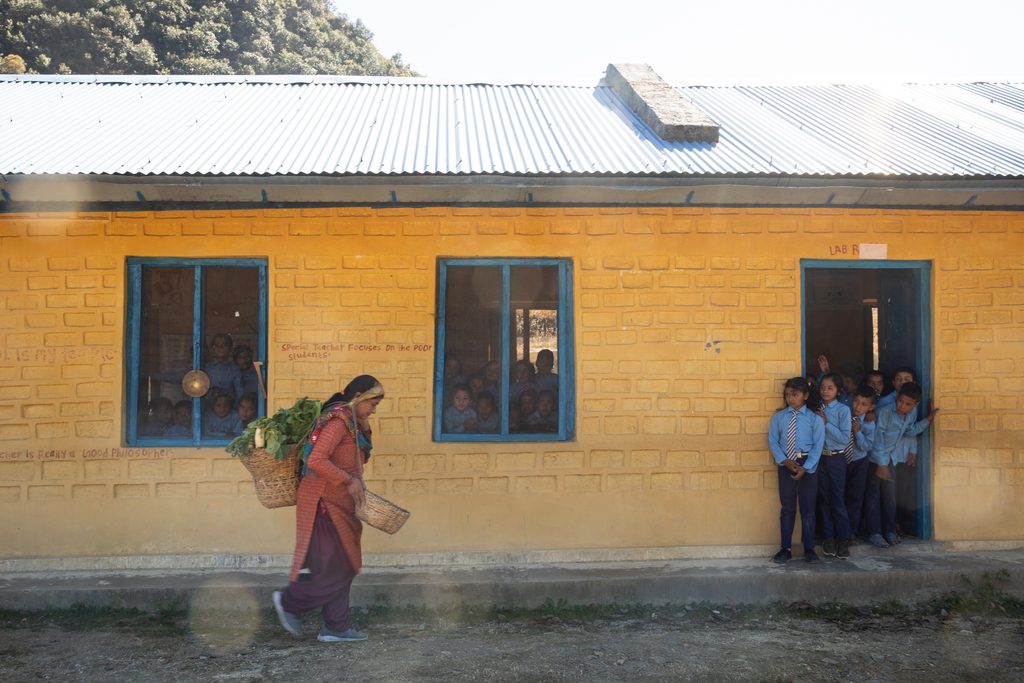
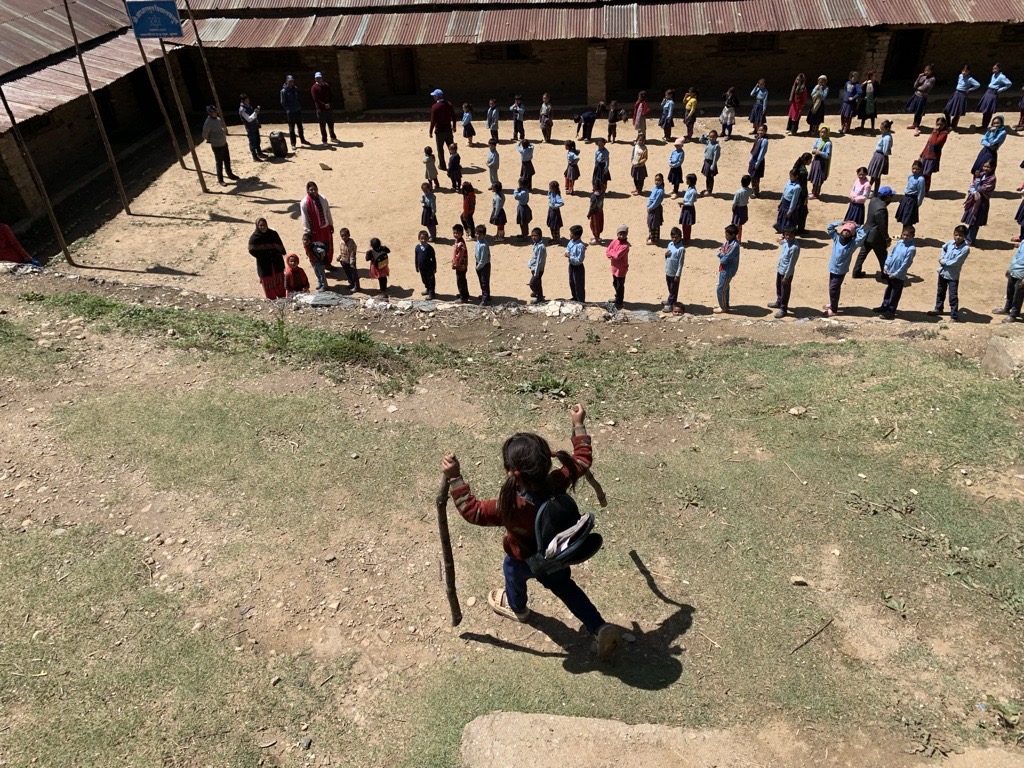
For decades, school meals have been recognized as one of the world’s most effective investments in human capital. Every nutritious meal served at school improves children’s health, enhances learning, and increases school attendance. The World Food Programme (WFP) introduced the Home-Grown School Feeding (HGSF) model, which, in addition to doing all the above, creates demand for locally produced food. Today, WFP supports governments in reaching millions of children through school feeding programmes that are increasingly linked to local agricultural production. By sourcing food locally, these programmes support farmers, strengthen local economies, shorten supply chains, and improve children’s nutrition, education and well-being.
Yet one critical ingredient of successful school meals remains largely overlooked: Energy!
Across many remote and rural communities, school kitchens continue to depend on firewood, charcoal or unreliable diesel generators. Limited access to electricity constrains food storage, refrigeration and water supply, while inefficient cooking technologies increase costs, contribute to deforestation and expose cooks, mostly women, to harmful air pollution. This approach poses a double impact on the environment—by cutting down trees and burning the wood. As climate change intensifies pressures on both food systems and natural resources, the question is no longer only what we feed children, but also how we prepare those meals.
Integrating energy, including renewable energy, and energy-efficient technologies into school feeding programmes offers an opportunity to transform school meals into a platform for environmentally friendly sustainable rural development.
Food system and energy
The food system is commonly understood through three interconnected dimensions: production, transformation, and consumption. Reliable energy underpins each of these.
Energy powers irrigation systems that increase food production. It enables cold storage that preserves fruits, vegetables and dairy products—foods that are often missing from plates at schools. It provides clean water for cooking and sanitation, supports food processing, and reduces post-harvest losses. Without dependable energy, nutritious food often becomes more expensive, less diverse and less accessible, including for the school meal programme.
This relationship is particularly evident in remote communities, where unreliable infrastructure can undermine otherwise successful food security programmes. Schools may receive food commodities but lack the means to store perishable ingredients safely or prepare diversified, nutritious meals consistently.
Recognizing energy as an integral component of food systems is, therefore, essential for achieving lasting food security.
In Nepal, WFP is supporting schools to move away from traditional biomass cooking (firewood, agricultural residues, dung) toward cleaner and more efficient technologies, including electric induction stoves, improved cookstoves and better kitchen ventilation and safety systems.
This aims to reduce indoor air pollution, deforestation, and the burden on school cooks, mostly women. WFP’s approach goes beyond cooking technology. Through the Home-Grown School Feeding (HGSF) model, schools procure food from local farmers and cooperatives while clean energy is used to prepare meals. Under the Renewable Energy for Resilient Agri-Food Systems (RERAS) partnership with UNDP and support from Norway and Finland, clean energy solutions are being integrated into school feeding programmes.
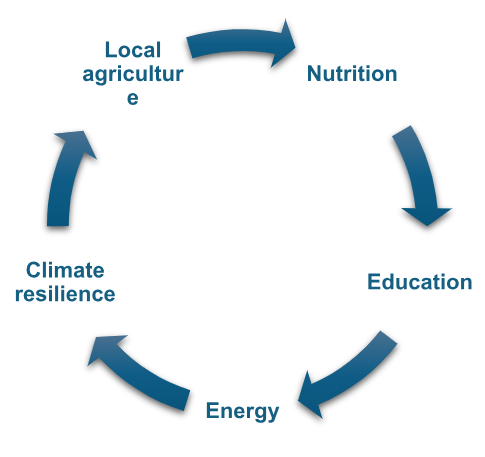
This creates a nexus among various factors as illustrated in Figure-1.
The initiative helps ensure that nutritious meals are prepared sustainably while creating markets for climate-resilient agricultural production.
WFP-supported schools are already showing results. For example, in Sindhupalchowk and Bajura, solar photovoltaic systems and induction stoves were installed, enabling meals to be prepared without firewood. The system generates sufficient energy to meet the power requirements for meal preparation, whereas the surplus solar energy powers classrooms and computer labs, creating broader educational benefits for students. It also supports pumping water into storage tanks, supplying water to school toilets, and greenhouse gardens. As a result, investment not only promotes clean cooking but also enhances the overall learning environment, water access, at minimal cost of maintenance and management of energy systems.
Why it matters
For WFP, the school meals programme has become a platform for multiple development objectives that include better nutrition and learning outcomes for children, enhanced knowledge of the cooks and the farmers, particularly, of nutritious food, improved health and working conditions for cooks, often women, improved school kitchen infrastructure for food storage and meal preparation, stronger local food systems through procurement from farmers and greater climate resilience and environmental sustainability through reduced reliance on firewood and lower carbon emissions.
Nepal illustrates why this integrated approach is particularly timely. The country’s mountainous terrain makes transporting fuel and food to remote schools both difficult and expensive. Climate change is increasing the frequency of floods, landslides, and droughts, placing additional stress on food systems and rural infrastructure.
At the same time, Nepal possesses significant renewable energy potential. Expanding hydropower, growing investments in decentralized solar systems, and increasing national commitment to climate resilience provide a strong foundation for innovation.
Integrating energy into home-grown school feeding programme reduces operational costs, improves the quality and diversity of meals, strengthens local procurement from smallholder farmers and reduces pressure on fragile mountain forests. Schools become demonstration sites where clean energy, nutrition, education and climate resilience reinforce one another. Strengthening institutional capacities to manage the HGSF-Energy nexus will contribute to more resilient, climate-smart and inclusive food systems that support long-term food security and nutrition outcomes in Nepal.
Energy-smart home-grown school feeding can also stimulate the adoption of climate-smart agriculture among local farmers. As schools create predictable demand for nutritious foods such as vegetables, fruits, legumes and dairy products, farmers have greater incentives to invest in energy-efficient irrigation, solar-powered water pumping, cold storage and value addition technologies. This can improve agricultural productivity, reduce post-harvest losses and increase farmer incomes while supplying schools with more diverse and nutritious food baskets.
Such investments would align closely with Nepal’s ambitions to achieve sustainable development while building resilience to climate change.

Home-grown approach
As the government of Nepal seeks integrated solutions to today’s interconnected challenges, it is time to broaden how we think about school feeding.
The future lies in what might be called Energy-Smart Home-Grown School Feeding—the programmes that deliberately combine nutritious food with clean cooking, renewable electricity, efficient water systems and resilient local supply chains.
This approach recognizes that ending food insecurity requires more than delivering food. It requires building infrastructure that enables healthy diets to be produced, prepared, and delivered locally.
School feeding should no longer be viewed solely as a social protection or education intervention. It is increasingly a strategic investment in resilient local food systems, renewable energy access, water security, rural livelihoods, and climate adaptation. By adopting an Energy-Smart Home-Grown School Feeding approach, Nepal has an opportunity to demonstrate how integrated investments across food, water and energy systems can simultaneously advance Zero Hunger, Quality Education, Clean Energy, Gender Equality and Climate Action. In this vision, every school meal becomes more than nutrition for a child. It becomes an investment in a healthier, greener, and more resilient future for communities and the nation.
The role of the private sector is pivotal. Suppliers, manufacturers, and technology innovation centers should work together to establish a reliable supply chain that offers a variety of energy-efficient cookstoves with cookware, and ensure the availability of qualified technicians for installation, repair, and maintenance services.
As the government and development partners invest in the next generation of school feeding programmes, clean energy should no longer be viewed as an optional addition to school kitchens, but rather as an essential ingredient of the food system.