Kathmandu: The devastating flash floods that swept through Nepal’s Bhotekoshi-Trishuli river on 26 August has taken a heavy toll on communities, killing over 1000 people and forcing many to flee their homes and causing extensive damage to agriculture and rural livelihoods.
According to FAO, preliminary assessments indicate that around 1,800 hectares of crops—mostly paddy—were damaged, while thousands of livestock were killed. Farmland, fisheries, food stocks and agricultural infrastructure were also affected, threatening the food security and incomes of farming families well beyond the immediate emergency.
FAO is supporting the Government of Nepal’s response, including through emergency veterinary support and assessment of damage to agriculture and rural livelihoods.
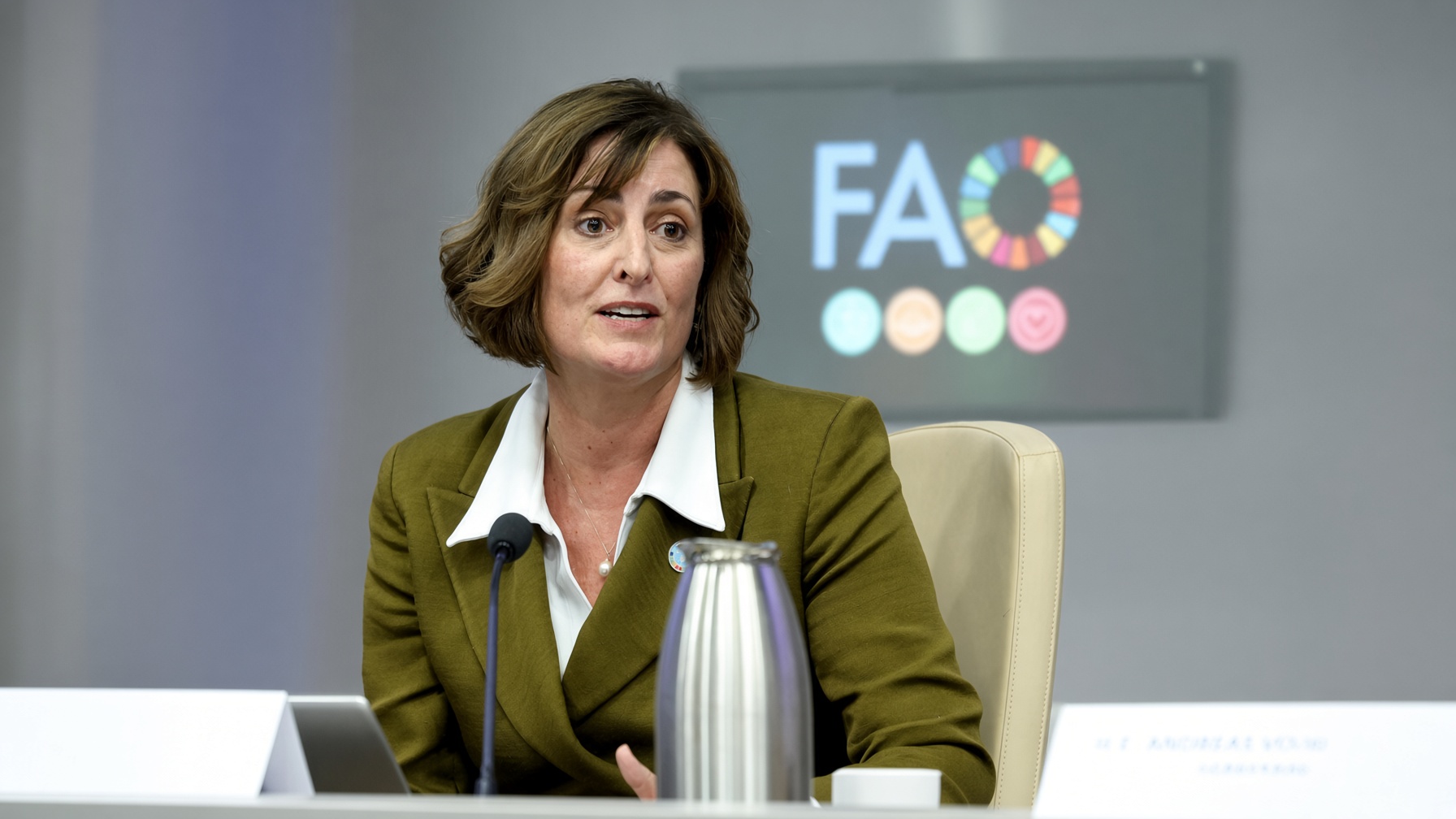
In an interview, Beth Bechdol, FAO Deputy Director-General, discussed the impact of the floods on farmers and livestock producers, the most urgent agricultural needs and why restoring production ahead of the next planting season will be critical to recovery.
Impact of the floods on people’s livelihoods
FAO Director-General Bechdol stated that the human toll of the recent floods have been devastating with more than 1,000 people having lost their lives and thousands more remaining unaccounted for. Furthermore, the disaster has also washed away the means by which many families feed themselves and earn an income.
She said, “Crops have been buried under mud and sediment. Fishponds have been swept away, and roads, bridges and markets have been damaged, disrupting the movement of food, animal feed, milk and other agricultural inputs.”
FAO’s preliminary assessment indicates that around 1,800 hectares of crops have been damaged, most paddy fields, with production losses approaching 7,700 tonnes.
Director-General Bechdol stated for farming families, these losses are about much more than the current harvest as losing a crop can mean losing next season’s production and next month’s income.
Floods affects on livestock and poultry
Director-General Bechdol emphasized that the areas affected are also an important livestock-producing area. “Across 11 affected municipalities, there were more than 350,000 head of cattle, buffalo, sheep and goats, as well as 1.6 million poultry. Thousands of animals have now been reported lost, and we estimate that 5 to 10 percent of the livestock and poultry population in these communities may have been completely lost,” she said.
She further stressed that for a farming family, losing an animal is not only about losing food but it can also mean losing an important source of income and further production.
She said, “That is why agricultural recovery needs to be considered as part of the response, and it has to begin early.”
Urgent needs for farmers and livestock producer
Some of the urgent needs for farmers according to Director-General Bechdol are seeds and for livestock, feed and veterinary care is needed.
She also stated that there is also an increased risk of animal disease following flooding like this. So vaccination, treatment, and disease surveillance will also be important.
“At the same time, we are working with the Government to understand the full extent of the damage to crops, livestock, fisheries, farmland and agricultural infrastructure,” she mentioned, “We are using field assessments, as well as satellite and remote-sensing technology. We need to know not only where the flood went, but what it took with it—and what farmers need to produce again.”
The importance of the next planting season
Director-General Bechdol stated that there are two clocks running at the same time.
The first is the immediate emergency: providing safe water, food, shelter and sanitation, and reaching communities that have been cut off from one another. Forty-one bridges have reportedly been destroyed, and damaged roads continue to impede access and constrain the delivery of humanitarian services.
But the second clock is agriculture. Planting season does not wait for a recovery plan. We also have a significant challenge with the land itself. Our satellite imagery shows cropland buried under mud and sediment, along with erosion and major sediment build-up. This will mean bigger challenges for long-term agricultural recovery.
She specified that recovery is not simply about replacing seeds. There is a need to determine which fields can be brought back into production, restore soils where needed, repair drainage and irrigation systems, and help farmers prepare for the next crop.
She warned, “If farmers miss the next planting season, the impact of this flood will last far longer.”
FAO’s support to agricultural recovery in Nepal
Within about 24 hours, FAO had deployed emergency teams, including veterinarians, to affected areas. They have provided veterinary medicines to treat injured animals, and they are doing their best to assess the risks of animal disease and the urgent need for feed. At the same time, FAO is leading the agricultural loss-and-damage assessment requested by the Government, so that it can build an informed and targeted recovery plan.
Bechdol stated that these immediate actions feed directly into FAO’s longer-term recovery work.
This could mean restoring damaged irrigation systems or getting seeds and tools to a family before the planting window closes. It could mean providing feed and veterinary services so that a surviving animal stays alive and productive. Or it might mean helping restore fisheries and local markets.
FAO Director-General Bechdol concluded, “For us, the goal is not simply to replace or fix what was lost. It is to restore the ability of families to produce food and earn an income. When a farmer can produce again, a family begins to recover—and a community becomes less dependent on emergency assistance.”