Kathmandu: Film festivals have always been a space for filmmakers, cinephiles, and other casual film enjoyers to come together and watch films of a variety of genres from different parts of the world. It is an opportunity to showcase various types of unique films.
‘Something Like a Film Festival’ (SLFF) is an event that provides such an opportunity.
Presented by Docskool since 2010, SLFF is a film festival which lasts for four days. This year, the film festival started on June 26 and ended on June 29.
SLFF has helped young filmmakers create avenues to find preliminary support in their professional journeys. The filmmakers who presented their films at SLFF elevated the status of their films. Filmmaker Min Bham presented his films at Venice & Berlinate, Abu Shaheed Emon at Busan, and most recently, award-winning director Abhinadh Bikram Shah at Cannes.
Within SLFF, the festival showcased Queer’26 which is the screening of 25 short queer cinema from all over the world. This part of the festival was co-programmed by LGBT Film Festival Ljubljana and Queer Film Festival Kathmandu. The event took place on June 28 at Airavat Picture House, Thapathali.
The Queer’26 was meant to showcase various short films, video essays, and video art to show the essence of what it truly feels like to be queer. They were able to convey various emotions such as love, grief, anger, happiness, etc. Here are seven of those films which were screened during the SLFF event.
“Remembering the Nights in Safe Haven” by Iztok Klancar, Nizozemska (Slovenia)
“Remembering the Nights in Safe Haven” is an experimental short film in three parts by Iztok Klancar and Nizozemska from Slovenia. “The starting point of this project is the sudden loss of nightlife due to the Covid-19 pandemic and its detrimental effect on the social fabric of queer people,” reads the description.
The visuals of the film are quite bold and in your face. The film does not follow the linear storytelling method rather it showcases more as a video art. Although quite shocking, it truly portrays the loss of the nightlife and the emotions attached to it. As a viewer, you watch a series of portrayals of frustrations, grief, and loss felt by queer people due to the loss of the night life during the pandemic. The beauty of this film is how unapologetic and open it is regarding the subject of nudity and sex. It is open and raw about the story they are telling and the message they are delivering.
“Split Ends” by Hannah Koselj Marusic (Slovenia)
“Spilt Ends,” a fictional film by Hannah Koselj Marusic from Slovenia, is about Spela (26) who has undergone chemotherapy due to lymphatic cancer, and her friend Hannah (26) who is casually socializing in Spela’s college dormitory room. Through their conversation, we become aware of our own fragility and insecurities, even when it comes to the most mundane matters, such as visual appearance.
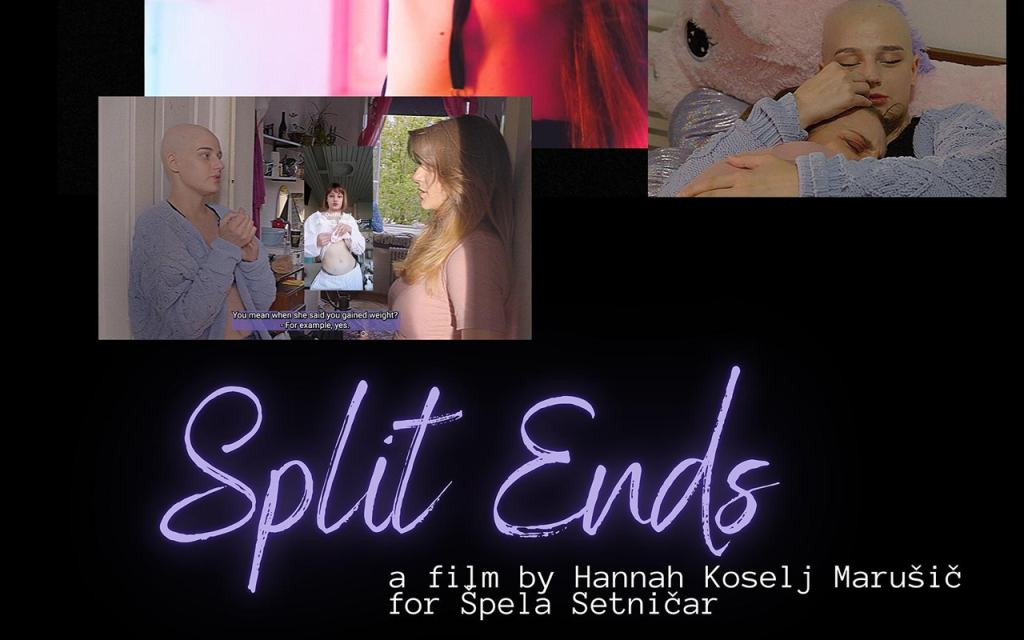
The film is dialogue-heavy and requires focus on two main characters’ conversation. The film starts with an interesting dialogue where Hannah talks about wanting to get her hair cut because of its damaged ends while Spela has no hair due to chemotherapy. The film almost makes us painfully conscious about the things we say to our loved ones that can seemingly affect them. The film takes us through the two girls’ relationship and focuses more on Spela’s journey with cancer and her hair. It also includes heartwarming scenes between the two as it showcases their love for one another despite everything.

“A Worldly Woman of Indomitable Spirit” by Huiqiun Wang, Andrej Kamnik (Slovenia)
“A Worldly Woman of Indomitable Spirit” is an animated film by Huiquin Wang and Andrej Kamnik from Slovenia. It is about Alma Karlin (1889-1950), a unique artist and writer, a multilingual cosmopolitan and world traveller. The film talks about her youth, her stay in Japan and her work and life there. The film summarizes her personality and is part of Alma Karlin’s journey around the world.
This beautifully animated film depicts Alma Karlin’s life very well. As the audience you are able to feel as though you knew Alma Karlin. Even if you can’t relate to her, she at least feels like a personal friend. When it comes to portraying Alma’s queerness, the film also does a good job in showing her need for connection while rebelling against the norms women were put through in her time.
“Bulls are also Mammals” by Kasra Qanbari (Iran)
“Bulls are also Mammals” is a documentary film by Kasra Qanbari from Iran and it is about Mansour who believes that due to his mother’s excessive use of plastic containers during her pregnancy, he gradually lost his masculinity.
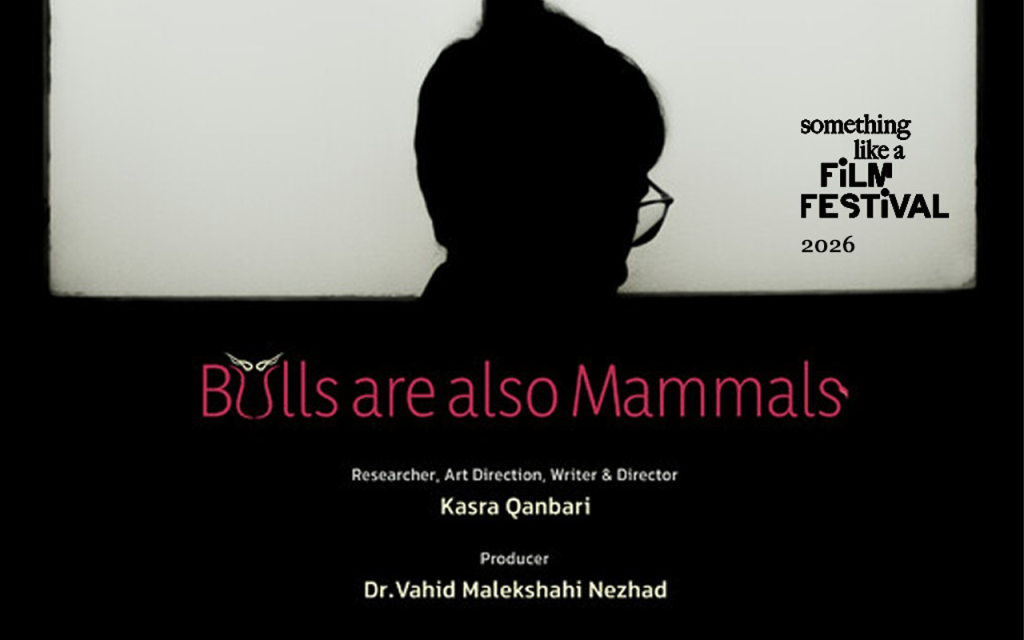
The documentary makes a very interesting commentary on gender roles, masculinity, and femininity. We get to look into Mansour and his feelings towards his own masculinity and why he feels the need to explain and find reasoning due to the lack of it. It gives a glimpse into his life and how this aspect has transformed him as a person while also affecting his more “traditional” lifestyle.
“All American Ruins” by Angel Gates Fonseca (USA)
“All American Ruins,” a documentary film by Angel Gates Fonseca from the USA, follows a multidisciplinary artist Blake Pfeil as he recounts the bittersweet end of a relationship while exploring the abandoned Universal Atlas Cement Plant that overlooks the banks of the Hudson River.

Rather than commentary, this film feels more like spoken words with visuals. The artist, Blake, gives a beautiful narration about his relationship during the relationship and after its end. It plays through the story of his relationship quite well and the narration provides many deep cut emotions. However, even though the narration is one it strengthens, it is also something that falls short as it overexplains each scene rather than letting the audience visualize the scenes.
“Pink Glasses” by Sinem Vardar and Besire Paralik (Cyprus, Germany)
“Pink Glasses” is a fictional film by Sinem Vardar and Besire Paralik from Cyprus and Germany. It follows a 26 year old queer woman named Elif from Turkey living in Berlin who goes to a psychiatry session through which she confronts her jealousy and the accompanying brutal inner voice directed at herself –a force so overwhelming it makes her fear she might be losing her mind. As reality, dream, and imagination begin to blur, she lingers on the edge of perception, caught between destruction and transformation.
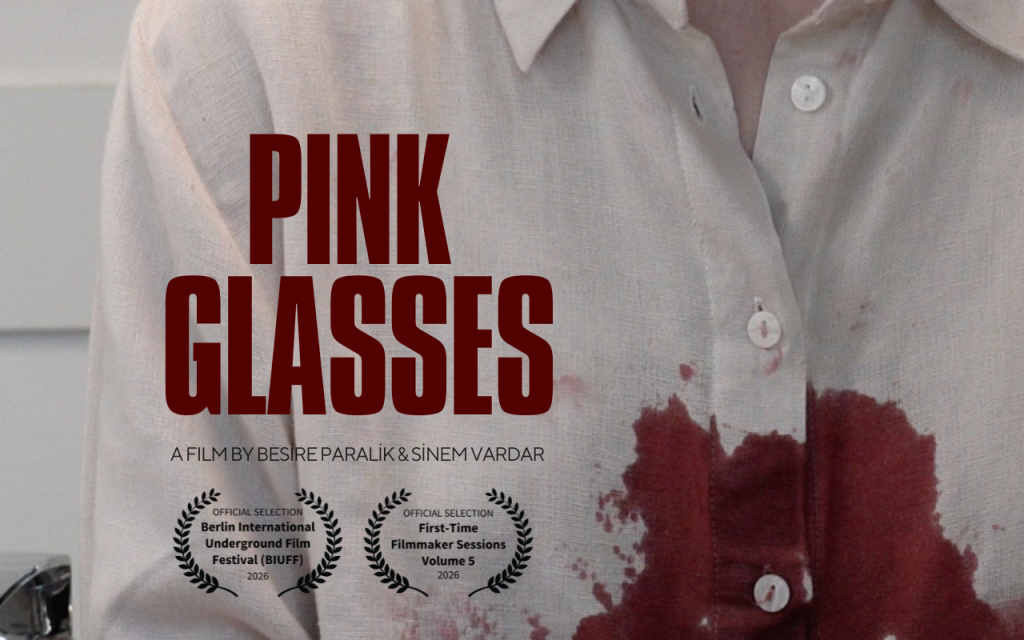
Throughout the film, the audiences are left wondering whether what Elif is experiencing is still her dream or if she’s experiencing it in reality and simply reliving her dreams. The film falls short on its messaging and one may not know what the film is trying to communicate until one reads its synopsis.
“Not Enough for the Love Inside” by Marcelo Matos de Oliveira, Wallace Nogueira (Brazil)
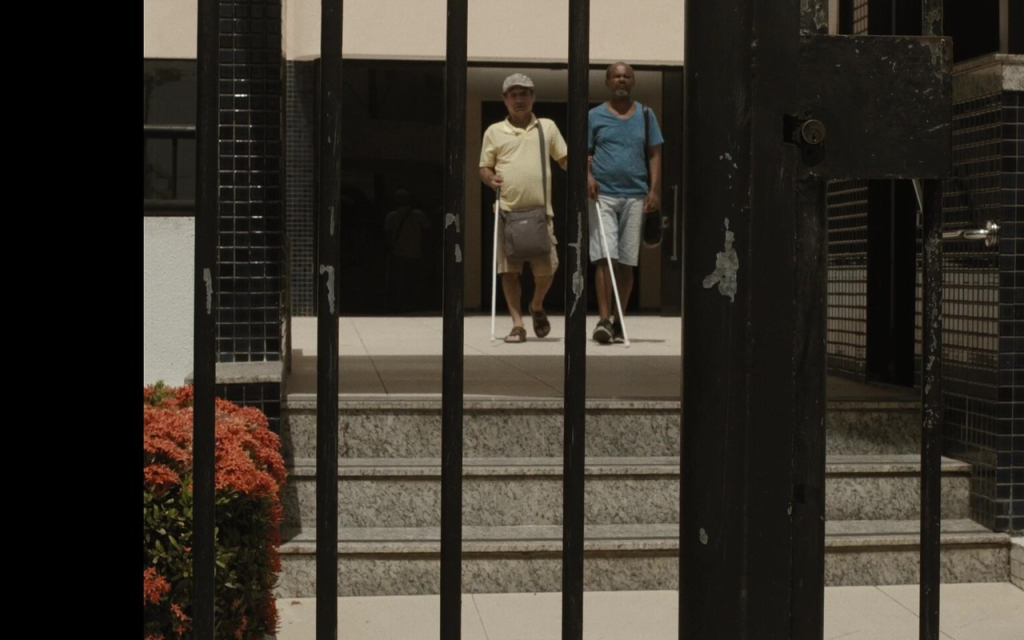
“Not Enough for the Love Inside,” a fictional film by Marcelo Matos De Oliveira and Wallace Nogueira from Brazil, is about two boys named Cassio and Otto who are in love with each other but the challenge of losing their sight is also a challenge to stay together.
This film is heartbreaking as we follow through Cassio and Otto’s relationship and the evident end of the same. The film does a wonderful job of showcasing the intimacy that is felt within the relationship and the end is as gut-wrenching as we feel that the characters truly love each other but their circumstances of losing their sight make it difficult for them to stay together.
Shifting trends
Previously, the main focus in queer cinemas seemed to be about queer love and acceptance. However, the queer cinema now seems to have shifted towards self-expression and self-acceptance. Cinema in general has become more experimental and focuses more on conveying a message. It doesn’t always follow the linear traditional story-telling method where there is a beginning, a climax, and an end. Rather, it portrays a main message and leaves a lot for audience interpretation. Modern cinema is leaning towards different elements of filmmaking and releasing more interpretative films that leave space for the audience to ask questions and wonder.