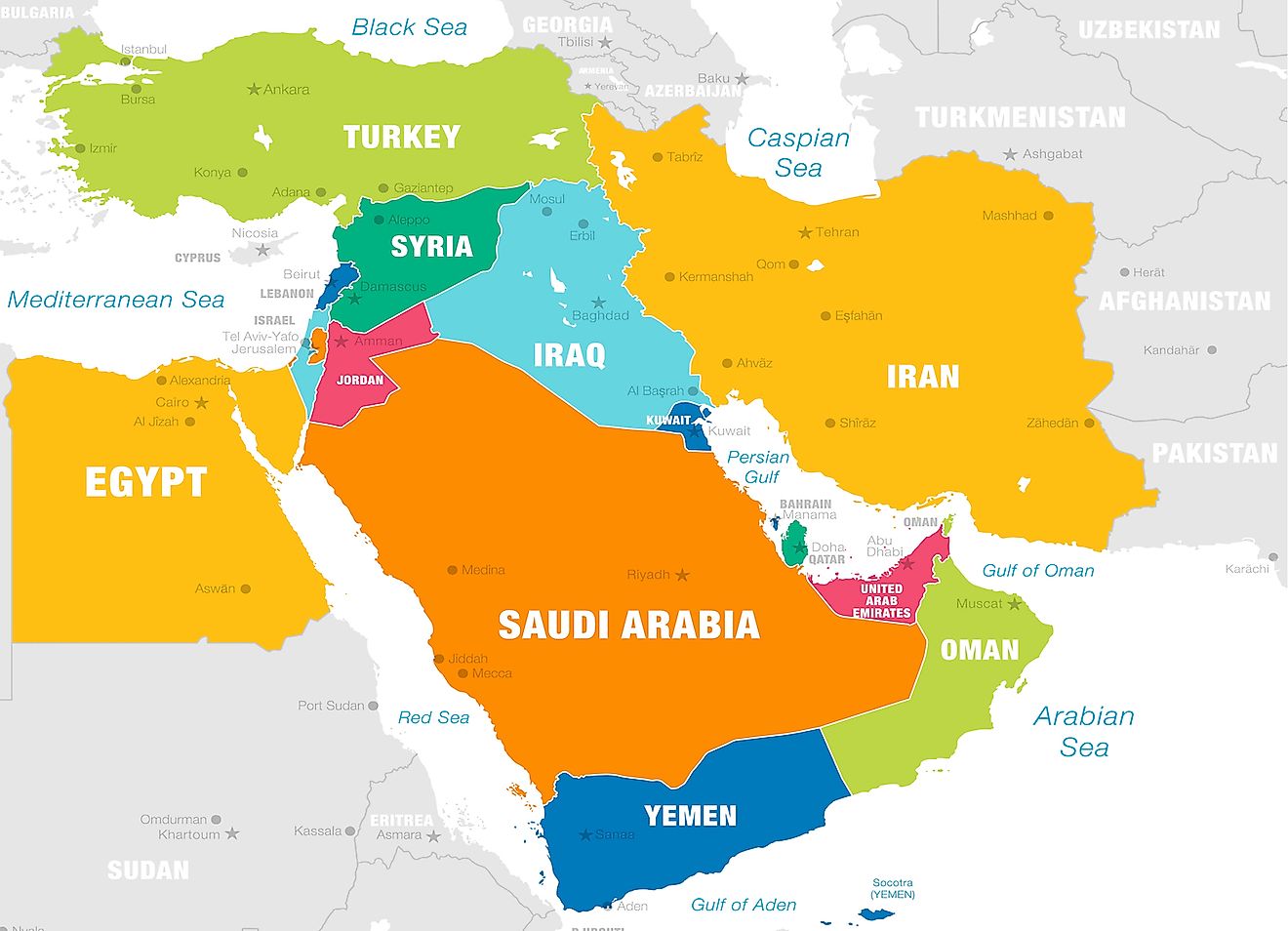
The ongoing US-Israel conflict involving Iran has drawn global attention. This has created turbulence in the world economy. Iran’s retaliation toward neighboring Gulf states, has also triggered concern in Nepal. It is largely because millions of Nepali migrant workers in the Middle East form the backbone of Nepal’s economy. When this lifeline is disrupted by geopolitical conflict, the consequences are significant for Nepal.
The Middle East holds some of the world’s largest reserves of crude oil and controls vital supply routes such as the Strait of Hormuz. Oil is not merely a commodity but also the foundational input for multiple sectors. Oil and its by-products support energy, agriculture (fertilizer), construction (bitumen), and advanced technological production. Through oil production and exports, Gulf countries have accumulated substantial wealth fueled by the Western investment and technology. This has resulted in the region becoming a major center of global economic activity. Therefore, any instability in the region has far-reaching consequences and it is particularly for migrant-dependent economies like Nepal.
Nepali Migrant Workers at Risk
At least 6,000 Nepalis working in Gulf countries have applied to return home amid the recent escalation as per the Nepal’s Ministry of Foreign Affairs. When discussing the labor migration to the Gulf, it has long been a double-edged sword for Nepal. On one hand, it provides employment opportunities and generates remittances. On the other, it exposes workers to significant vulnerabilities.
Nepal’s migration system has led to a remittance-dependent economy. While remittances have supported short-term economic stability but also created long-term structural risks. These risks become even more pronounced during crises such as wars and regional conflicts. The current escalation and reported strikes on military and oil infrastructure have heightened fear and uncertainty among migrant communities. Migrant workers are not isolated individuals. They have been embedded in transnational social and economic networks. The disruption affects not only the workers themselves but also their families and communities back home in equal manner. Thus, the impact of conflict is simultaneously felt in both host and home countries.
Nepal received approximately Rs 1.261 trillion in remittances in the first seven months of the current fiscal year. The significant portion of this has been originated from the Gulf region. It highlights the scale of dependence. Any disruption in remittance flows could severely affect Nepal’s economic stability by potentially reducing a substantial share of total inflows.
Understanding Structural Vulnerabilities
The limited domestic opportunities in Nepal pushes its workers to abroad. In return, Gulf economies rely heavily on this low-cost migrant labor. This creates an unequal system in which workers possess limited bargaining power.
The Kafala system further reinforces this imbalance by tying workers’ legal status to their employers. This results to the restriction of mobility and increasing dependency. At the same time, weak governance in Nepal revealed in high recruitment costs and inadequate regulation. This often places workers in debt even before they leave the country. In host countries, insufficient labor protections mechanism exposes them to possible exploitation.
Way Forward: A Policy Response
Nepal’s foreign policy must prioritize citizen-centric diplomacy through a proactive and structured response.
First, Nepali embassies should ensure comprehensive registration of all citizens in affected regions. A digital tracking system could help monitor their location and status in real time. Second, diplomatic coordination with host governments and international organizations is needed. This will help to strengthened for ensuring timely information sharing and protection measures. Third, evacuation planning must be prepared in advance. This includes arranging charter flights or military transport for securing safe land and air transit corridors. Fourth, temporary shelters should be established in safer neighboring countries for providing essential services (such as food, medical care, including documentation) support.
At last, when migrant workers return home, they must be supported through reintegration programs. Such reintegration programs are employment opportunities, financial assistance, and psychosocial counseling.