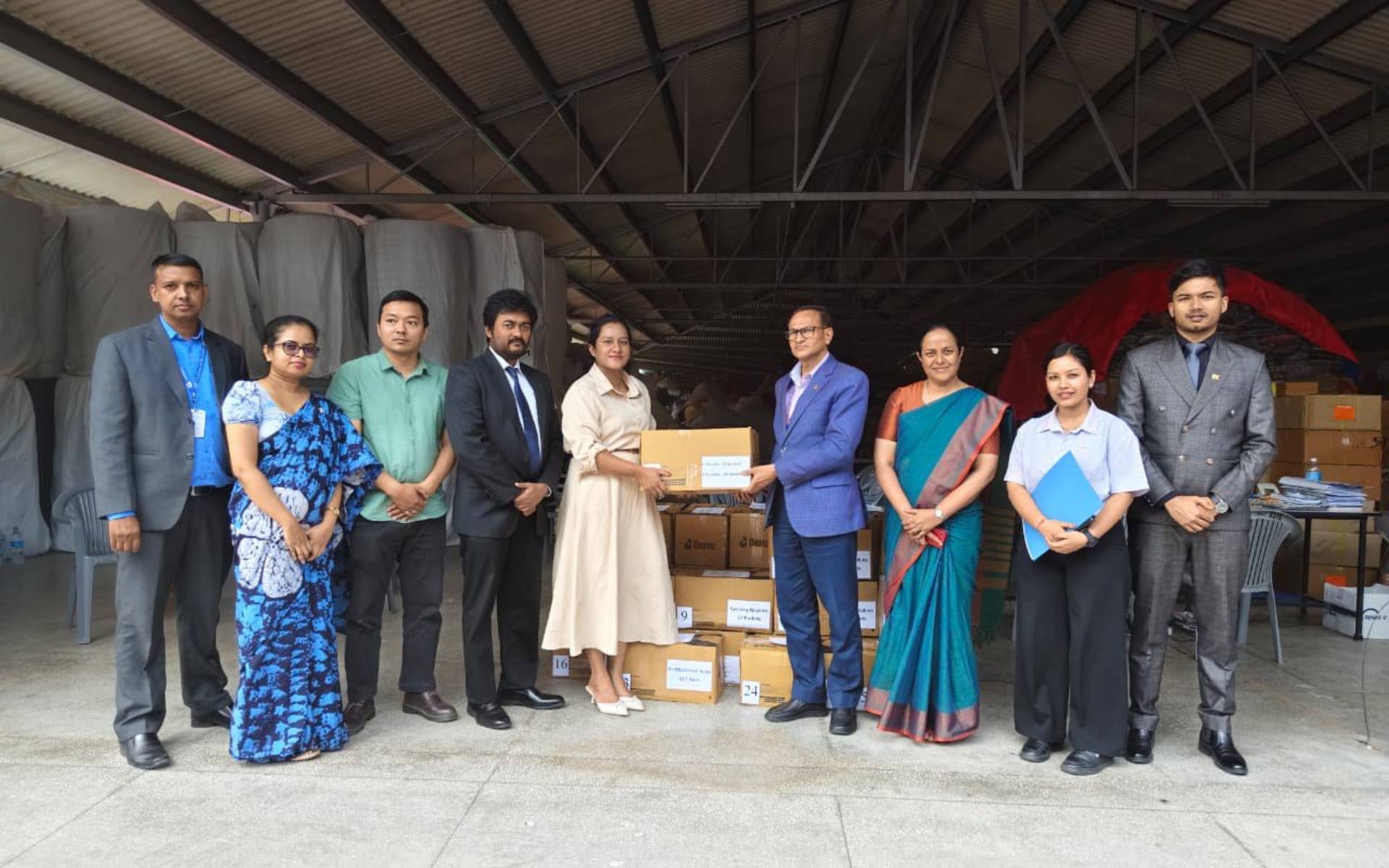
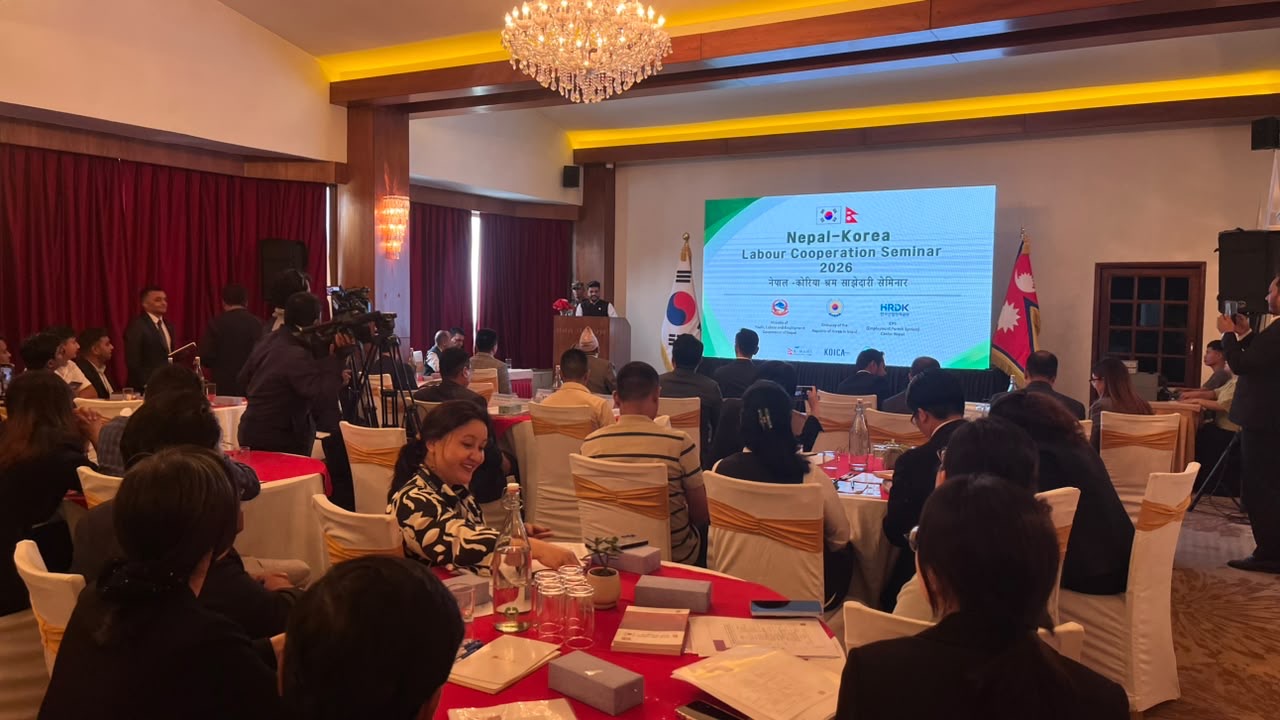
Kathmandu: The Embassy of South Korea and the Ministry of Youth, Labour, and Employment jointly organized a seminar on enhancing labour cooperation and key positive impacts in Nepali society in Kathmandu on July 16.
The South Korean Embassy stated that the Employment Permit System (EPS) has significantly uplifted Nepali families and the national economy. By facilitating low-cost, government-to-government recruitment, this program ensures transparent migration that sends substantial foreign exchange directly into Nepal, easing trade deficits and fortifying foreign currency reserves.
Speaking at the Nepal-Korea Labour Cooperation Seminar, Hon. Minister for Youth, Labour and Employment Ramee Yadav said that the Nepal government is implementing a dual policy to enhance domestic employment and ensure safer foreign employment options. Minister Yadav has outlined a strategic vision to prioritize domestic job creation and secure the rights of migrant workers.
Minister Yadav commitment to build an inclusive and resilient labour market meeting the aspirations of Nepali youth. He highlighted efforts made by Nepal in digitizing the migration ecosystem. He also urged all stakeholders to work together to shape the future of work, promote decent jobs and make migration safe. Minister Yadav has emphasized that the government is working towards creating skilled, respectable and attractive employment opportunities in the labor market. Similarly, he said the government has adopted a policy to make foreign employment safe and productive along with promoting domestic employment.
Speaking at the Seminar, South Korean Ambassador to Nepal H.E.Park Taeyoung, mentioned that the Korean government is playing an active role in establishing and creating employment for workers who have returned from South Korea through entrepreneurship in Nepal. Similarly, Ambassador Park mentioned that the Korean government has been identifying necessary areas for Nepal’s economic prosperity and has been partnering in the fields of education, health, agriculture, IT, etc.
Six speakers on the Labour Cooperation Seminar focus on key positive impacts, including economic growth, poverty reduction, and skills transfer, tailored to both sending and receiving countries. Remittances from South Korea are driving significant socio-economic progress in Nepal, directly funding land acquisition, housing, and quality education for families. Korea returnees are successfully transforming into entrepreneurs, utilizing Korea’s modern technology and work ethic to launch productive enterprises across Nepal’s agriculture, tourism, and construction sectors. Their capital and acquired expertise are directly boosting community living standards and stimulating enterprise growth across the country.
The Embassy further stated that the EPS has emerged as a secure and transparent employment model for Nepali youth. It has successfully provided opportunities for 125,021 Nepalis from 2008 through July 10, 2026, comprising 115,982 male and 9,039 female workers. Currently, around 70,000 Nepalis are working in South Korea, with roughly 55,000 having successfully returned home after their employment tenures. Nepali workers are employed across multiple industries, primarily in manufacturing, agriculture and shipbuilding in South Korea.
A significant number are successfully transitioning from foreign laborers into entrepreneurs and major employers. By channeling their skills and capital into manufacturing, agriculture and service sectors driving domestic growth and creating thousands of Job in Nepal. The Korea International Cooperation Agency (KOICA), K-HaMi partnered with the Agricultural Development Bank Limited (ADBL) to provide subsidized loans to eligible Korea returnees to fund their businesses.
The EPS successfully transitions Nepali workers from job seekers to employers by providing a legal pathway to work in South Korea. Workers gain foreign capital, learn advanced skills, and return to Nepal to establish their own businesses, creating internal jobs in Nepal.
The Seminar was attended by 150 participants including government officials, diplomatic mission representatives, media personnel, and members of Korea returnee organizations ANKUR and NKBEA, K-HaMi, embassy officials as well.