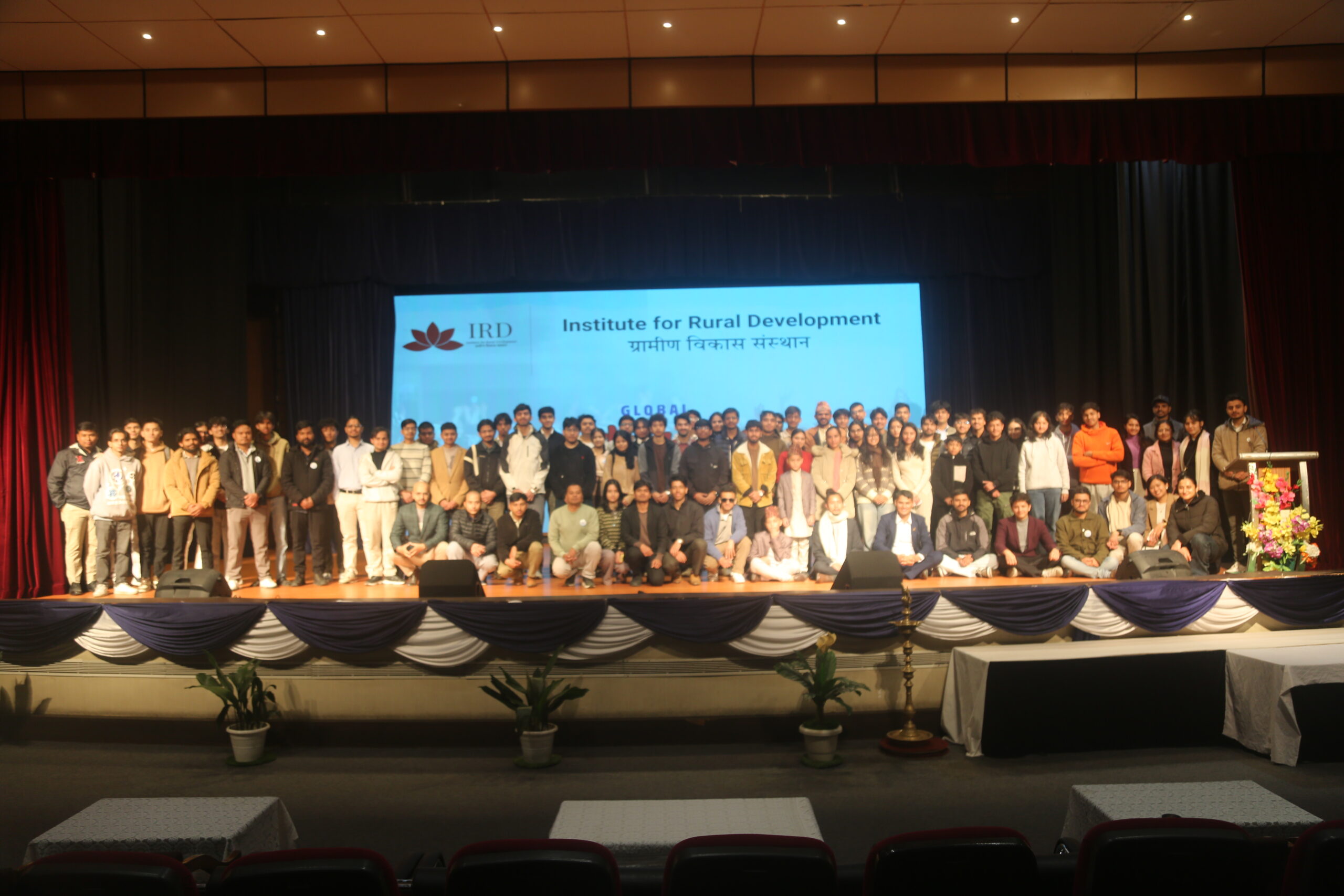
Kathmandu: The Global Youth Summit 2025, organized by the Institute for Rural Development (IRD), brought together a rare gathering of Nepal’s academically accomplished and civically engaged young leaders, underscoring the growing importance of globally trained youth in the country’s nation-building efforts.
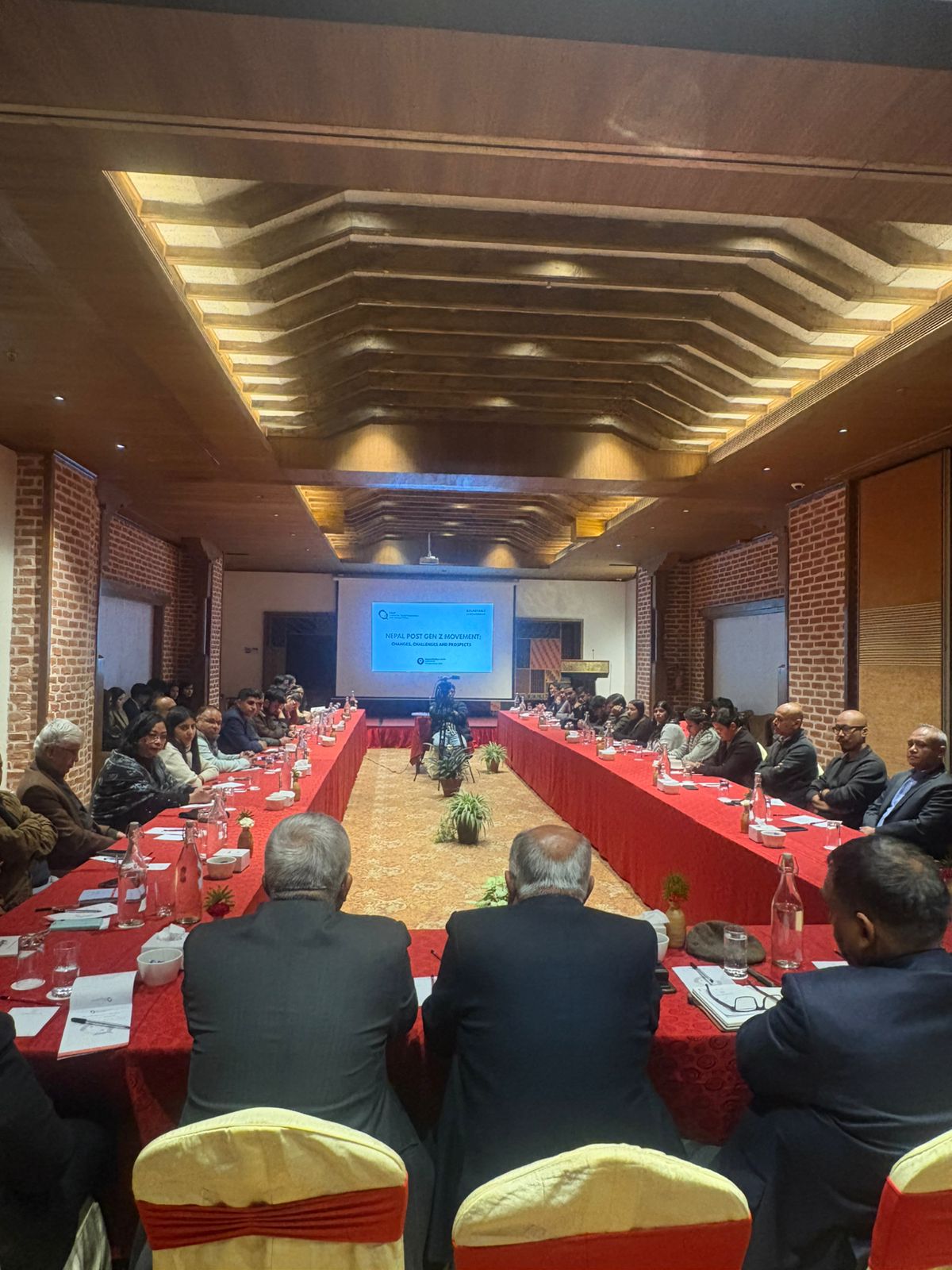
Held at DAV College, Lalitpur, on December 20, the Summit convened students, researchers, entrepreneurs, and development practitioners at a time when Nepal continues to face persistent development vulnerabilities alongside rising youth participation in public and institutional life. The event highlighted how effectively connecting Nepal’s global talent pool with local realities can play a transformative role in shaping the country’s future.
Participants and speakers included Nepali youth from leading global institutions such as the California Institute of Technology (Caltech), University of Oxford, Dartmouth College, Massachusetts Institute of Technology (MIT), Princeton University, Columbia University, Johns Hopkins University, Stanford University, and Tsinghua University, among others. Many participants noted that it was rare to see such a concentration of globally exposed Nepali youth engaging collectively with Nepal-focused challenges rather than individual career trajectories.
The Summit brought together Glocal Teen Heroes, International and National Olympiad Medalists, Opportunity Funds grantees, Schwarzman Scholars, IRD Global Fellows, and other nationally and globally recognized young scholars working across science, law, policy, education, diplomacy, entrepreneurship, climate research, and the arts. The diversity of disciplines and lived experiences fostered conversations that moved beyond theory toward grounded, practical insights.
In his keynote address, Laxman Bista, Co-founder of IRD and a Schwarzman Scholar at Tsinghua University, reflected on IRD’s journey and impact throughout 2025, highlighting key initiatives and milestones achieved over the year. He expressed gratitude to IRD’s project leads, members, volunteers, advisors, and donors whose collective efforts have sustained the organization’s work across Nepal. Bista also emphasized the importance of IRD’s growing diaspora network, noting the continued support of Nepali youth and families abroad who remain invested in Nepal’s long-term development. Drawing on his background in physics, neuroscience, and global affairs, he underscored the need to translate global learning into ethical, research-driven leadership rooted in public service.
Building on this institutional vision, Asmod Khakurel, Co-founder of IRD, delivered a session on people-to-people diplomacy and Nepal’s expanding global engagement. Reflecting on his academic and professional journey across the United States and the United Kingdom, his engagement with the Oxford Diplomatic Society, hosting an academic delegation from Oxford in Nepal, and his recent participation in a high-level diplomatic visit to Oman, Khakurel emphasized that diplomacy begins not at negotiating tables but with people, exposure, and trust. He highlighted how informal diplomacy, academic exchange, and youth-led global networks can meaningfully complement formal foreign policy, particularly in a post–Gen Z protest context where young Nepalis are increasingly asserting civic responsibility and leadership.
Throughout the day, speakers addressed critical national challenges including education reform, rural and urban development, climate change, youth participation in governance, diplomacy, and innovation. Political engagement featured prominently in a session by Sagar Dhakal, an engineer by training and an Oxford University graduate, who spoke on youth-led political leadership, lessons from the iVoting campaign, and sustained dialogue with Nepal’s Gen Z. He emphasized the importance of translating civic energy into long-term institutional participation.
Discussions on democratic governance were further advanced by Advocate Arnab Chaudhary, a young lawyer and prominent leader in Nepal’s Gen Z movement, who addressed electoral reform, youth leadership, and the role of legal advocacy in strengthening democratic institutions. Drawing from his work in public interest litigation and grassroots mobilization, he stressed accountability, inclusion, and sustained civic engagement.
Research presentations by Rahul Aryal and Yadav Singh Dhami on rural and urban development under climate stress drew particular attention. Highlighting vulnerabilities in regions such as Sudurpaschim and Kathmandu’s informal settlements, they emphasized that development initiatives often fail when designed without updated, field-driven data. Participants noted that these sessions reinforced the urgency of evidence-based policymaking grounded in local realities.
The program also highlighted the role of analytical and scientific thinking in addressing complex social and governance challenges, as illustrated by Rohan Bhattarai, a Caltech Scholar, who demonstrated how disciplined reasoning and research methodologies can inform decision-making beyond academia. Cultural performances, including singing and dance, were interwoven throughout the Summit, reflecting the diverse talents within the IRD community and adding cultural and emotional depth alongside intellectual discourse.