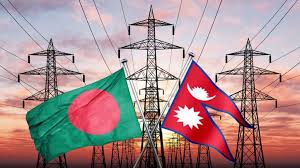
Since 2024, Bangladesh has been importing 40 megawatts (MW) of hydropower from Nepal. Under the agreement, Nepal will supply electricity each year from 15 June to 15 November for five years.
The two countries decided to import an additional 20 MW of electricity from Nepal to Bangladesh in late 2025, increasing the total supply from the current 40 MW to 60 MW. That will start in June 2026 through the existing India-Nepal-Bangladesh transmission corridor for power trade.
The latest agreement set an ideal example of win-win trade as it helps Nepal to reduce its surplus electricity in the monsoon season, while Bangladesh found the deal as a relief, facing the rising power demand amid the scorching summer.
More such cross-border energy trade deals could help the nations in mitigating the electricity crisis and taking the bilateral partnership to a new height.
Energy trade between Bangladesh and Nepal could be a potential option to fulfill the net zero targets the countries envisioned. Because of resource limitations, no country is able to reach its net zero target alone but can do so with regional cooperation.
Despite being connected with a single basin (Ganges), Bangladesh, Bhutan, India and Nepal, also known as BBIN countries, have varying patterns of energy sources and energy demand. If one country’s energy generation resources are dominated by coal, the other ones are rich with natural gas or renewable resources, such as hydropower and solar.
The diversity of primary energy sources led to variability in production; for example, when Bangladesh faces the highest demand of electricity, Nepal struggles with its surplus generation capacity. These nations can benefit from mutual cross-border energy trade for the best use of their regional resources. Bangladesh can import the excess power of Nepal to meet the peak season’s demand and also export to the Himalayan nation when demand falls in the winter season.
At present, Bangladesh’s electricity demand is around 11.5GW in the peak hours, while this demand goes up to 18 GW from April to September. Generally, because of the high temperature in summers, Bangladesh faces a greater demand for electricity to use for air conditioners and commercial facilities.
But the nation faces massive overcapacity, hovering between 50% and 60%, which costs Bangladesh roughly $1.5 billion a year. On the other hand, when Bangladesh struggles with its surplus generation capacity, Nepal faces shortages of electricity because of low water levels in the rivers that obstruct it from producing hydropower. Similarly, Nepal produces surplus electricity during summer and monsoon periods that lasts from April to September, when power demand in Bangladesh surges.
But Nepal can minimize this waste of capacity in the winter season by exporting the surplus electricity to Bangladesh through an active cross-border energy trade initiative. Bilateral relations demand fair trade. At present, Bangladesh’s cross-border energy trade with neighbouring countries is one-sided: the current model permits only imports, allowing others to export electricity to Bangladesh, but does not allow Bangladesh to export its surplus electricity to its counterparts.
Apart from the latest 40 MW contract and an additional 20 MW, Bangladesh also had a plan to sign a power purchase agreement (PPA) with Nepal to import 500 MW from the proposed 900 MW run-of-the-river hydroelectric power plant, Upper Karnali Hydropower Project, which is supposed to be developed by India’s GMR Group. Additionally, both the nations had an initiative to build up a 683 MW Sunkoshi-3 hydropower project through joint ventures investment from Bangladesh and Nepal.
But the projects have been delayed since the fall of Sheikh Hasina’s government on 5 August, 2024. The future of these projects seem uncertain until a political government comes in power and takes the initiatives forward. Apart from Nepal, Bangladesh imports 2,560 MW of power from India through the Baharampur-Bheramara and Tripura-Cumilla cross-border grid lines.
In all these cases, Bangladesh remains the importer while India and Nepal act as exporters, which does not constitute balanced or fair trade. Therefore, energy economists and experts suggest trade from either country for the sustainability of cooperation and friendship. Bangladesh should also be given the provision of exporting its surplus electricity to Nepal and India in the winter season.