The idea of a space program in Nepal might seem like a dream when many are still awaiting basic paracetamol to heal. Nepal is grappling with immediate socio economic challenges and satellite technology often feels beyond the limit. Yet the reality of the 21st century is that space is no longer a luxury. It is a vital frontier for national development, disaster resilience and economic sovereignty.
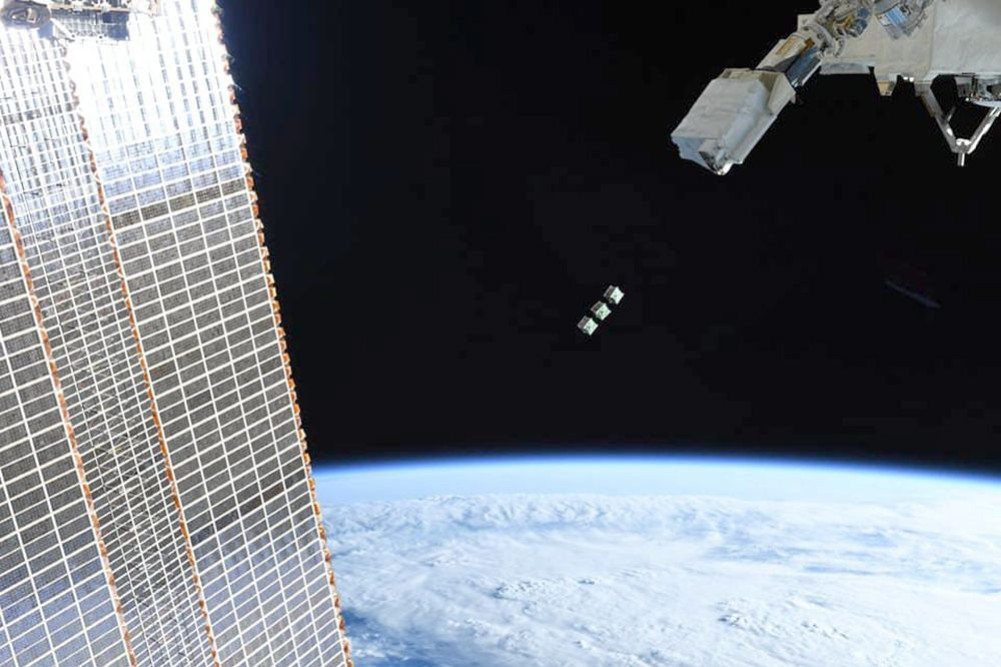
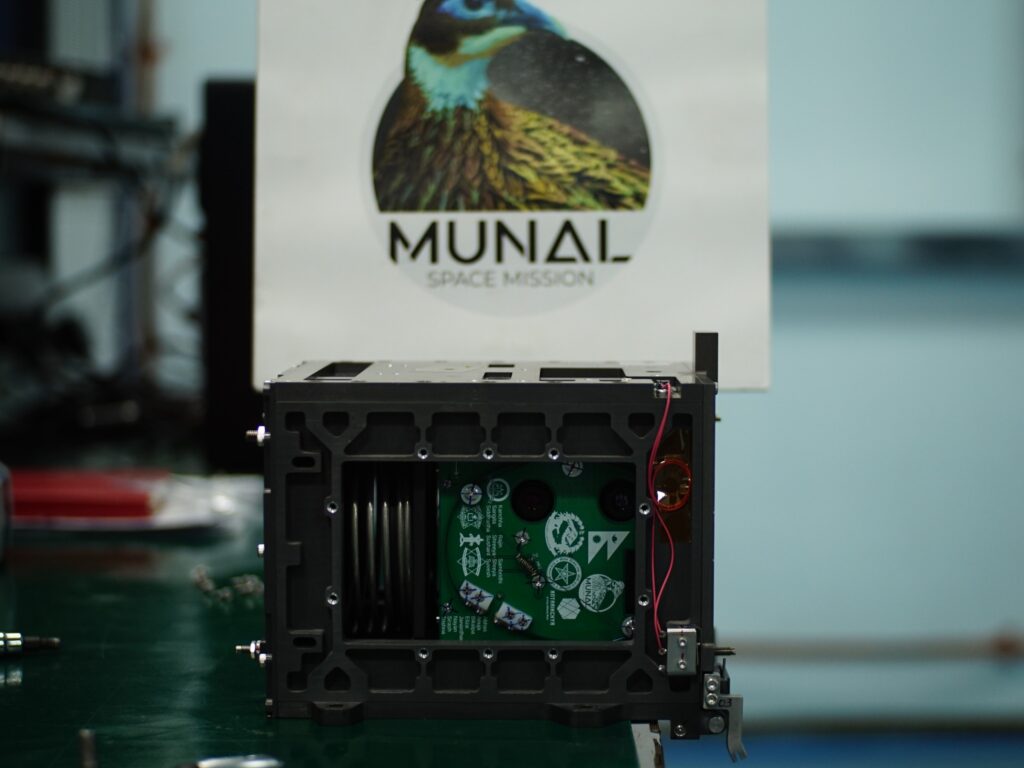
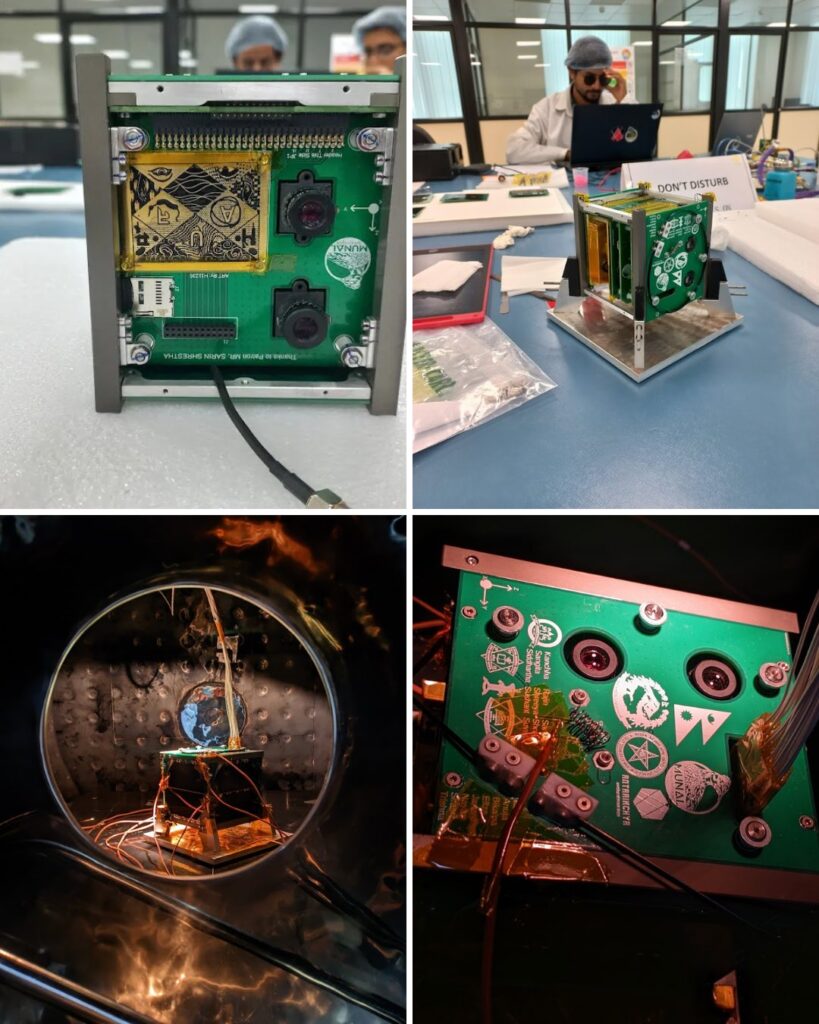
Over the past few years, Nepal has quietly but successfully launched three nano satellites: NepaliSat-1, Slipper2Sat and Munal. These satellites were made for the purpose of study, design, experiment and research.
With the launch of NepaliSat-1 in 2019 Nepal officially entered into space. NepaliSat-1 is a 1U model CubeSat designed by Nepali engineers Dr. Abhas Maskey and Er. Hari Ram Shrestha in Japan as a part of their study program. The CubeSat was designed, assembled and tested in Japan before its launch from the United States. The launch of CubeSat created an opportunity and showcased our capacity and opened new avenues of cooperation stretching from Japan and the US to our immediate neighbors: India and China.
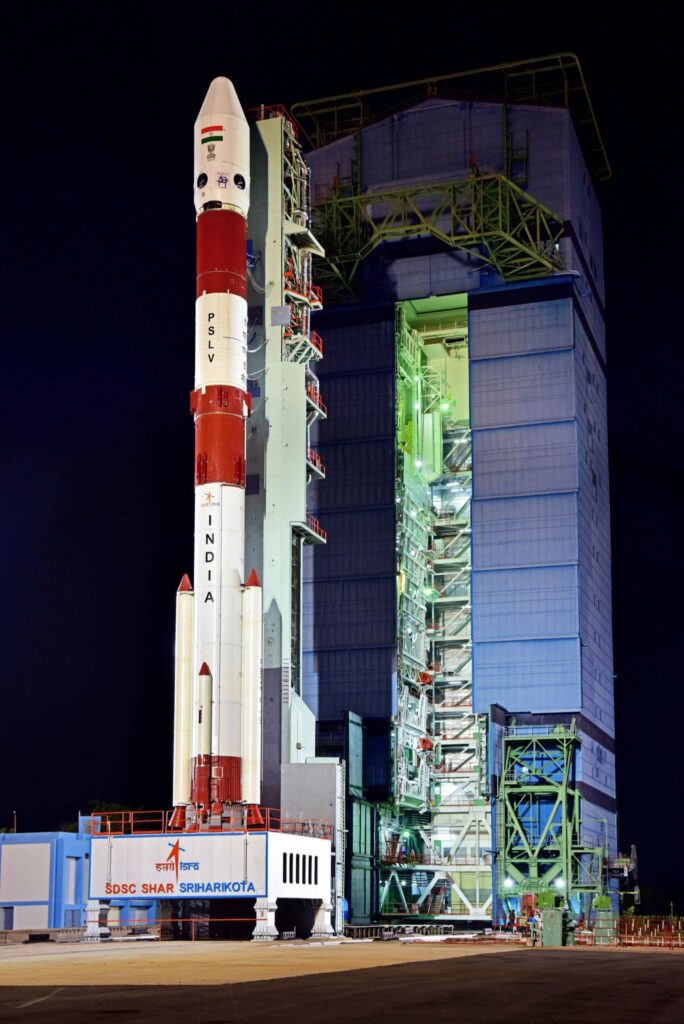
Following this, the Slippers2Sat (S2S) was manufactured within Nepal. It was tested in India and launched from China. Most recently the Munal satellite was also made in Nepal and tested and launched from India. These three missions represent a significant leap in Nepal’s capability.
Nepal Academy of Science and Technology (NAST) established the Space Research Centre (SRC) to promote space science and technology. Er.Hari Ram Shrestha who leads SRC said that space technology is necessary for building local technical capacity. “In a region prone to earthquakes and other natural disasters, satellite based communication and radio frequencies are the most important communication tools,” he added.
Space technology allows for coordination in disaster and hazard prone areas. It is the backbone of modern weather forecasting, navigation and telecommunications. In agriculture, satellite data can identify pest threats allowing farmers to reduce the impact thereby increasing the crop yields. Beyond the practical advantages, Shrestha believes that the transfer of such technology will increase innovative startups and a business ecosystem.
However, the path to space is paved with both success and setbacks. While S2S was a success, confirmed by regular beacons and one way communication after five days, the Munal satellite unfortunately lost its way in January after an unsuccessful rocket launch in India. These risks showed the complexities of the field.
S2S and Munal mission is the joint collaboration between NAST and Antarikshya Pratisthan Nepal (APN). Currently, the APN team is preparing for the next stage including an MOU with Exo-launch to utilize SpaceX rockets. The SpaceX rocket will be used for the upcoming flight of NepaliSat-2 and the RSMS-sat project according to Dr. Abhas Maskey, the founder of APN. RSMS is an ambitious constellation of 10 satellites currently in the manufacturing phase by APN.
As we look forward to 2027/28 for the launch of NepaliSat-2 which is twice the size of our first satellite, we need reliable launch partners. While regional neighbors like India and China are convenient, the recent uncertainties have led researchers to look increasingly towards other options for technological reliability.
This pursuit of space is not merely about science, it is an exercise in ‘Space Diplomacy’. Historically, space was a pillar of the Cold War. However, cooperation was desirable despite geopolitical tensions. India provides an example of this. During the Cold War, India used space diplomacy to advance its own exploration and science. In 1984, Rakesh Sharma became the first Indian citizen to travel to space. He flew through the Soviet Soyuz T-11 spacecraft as part of the Interkosmos program. Nepal can use its soft power diplomacy to collaborate with the space giants to send Nepal’s first astronaut in space.
Today, the International Space Station stands as a testament to this spirit. It represents a joint collaboration between the US, Europe, Russia, Japan and other nations. Nepal can follow this blueprint by using its soft diplomacy skills to engage with rising global economies such as the UAE and other nations to further our interests in this sector.
The architect of many of Nepal’s efforts on CubeSat, Dr. Maskey of APN argues that we must focus on high-value low-weight exports. He specifically points toward ISAM i.e. In Space Assembly and Manufacturing. This will be a trillion dollar industry that does not require a pre-existing moon base or asteroid mining to be profitable. ISAM technology allows for cost efficient engineering and mission reliability by assembling components directly in the vacuum of space. By focusing on ISAM, Nepal can position itself as a trusted global partner in a niche that rewards technical precision over the sheer scale of manufacturing.
The economic arguments for a robust space policy are undeniable. The Space Report 2025 (Q2) shows that the global space economy has hit a record 613 billion dollars, with the commercial sector constituting 78% of that growth. Projections from the World Economic Forum and McKinsey & Company suggest the economy will reach 1.8 trillion dollars by 2035. This growth is driven by a decrease in launch costs too, nearly 10 fold over the past 20 years, this has enabled frequent and diverse missions.
In 2025 alone, there were 329 orbital launch attempts globally. This is a massive increase from the 114 launches seen in 2020. Commercial entities now account for 87% of deployed satellites, while civil and defense sectors account for only 10%.
This shift from government led missions to commercial ventures creates a massive opening for countries like Nepal. Thailand, Peru and other nations are already on board.
Nepal is geographically situated between two of the world’s emerging space giants, where both India and China both have successfully reached the Moon and Mars. They are capable of high tech, low-cost manufacturing and we can seek and learn their technology to meet our national needs.
While the experience of CubeSat launch has shown avenues, there are still some uncertainties in data acquisition, launch schedule and success. Our National Science, Technology and Innovation Policy, 2019 has clearly stated the use of satellites and drone technology in different sectors like disaster response, however, Nepal lacked its own Space Policy.
We have even been allocated two geostationary orbital slots by the International Telecommunication Union (ITU) for fixed satellite service (FSS) and Broadcast Satellite Service (BSS) to provide nationwide internet, television broadcasting, telecommunication and disaster management. If we are to move from being a nation that simply watches the space to one that utilizes it. We should bridge the gap between scientific research and our national policy and start drafting Space Policy for the development of space and rocket science.
Discoveries in space have earthly impacts, for example, learning about the hole in the ozone layer. For Nepal space technology must be linked to climate change, spatial analysis, telecommunications and broadcasting. By leveraging the success of the above mentioned satellite projects we must collaborate with different nations to meet our national interest.
The ambition ignited by NepaliSat-1 in 2019 must not be allowed to flicker out. It was a project that brought together students and researchers from Nepal, Sri Lanka and Bhutan under the guidance of Professor Mengu Cho at Kyutech. It placed Nepal on the global space map.
The global space economy is moving toward one trillion dollars in the 2040s. Nepal must decide if it will remain a passenger or become a participant. Through Space Diplomacy a focus on innovative technologies like ISAM, domestic capacity building can ensure the next form of soft diplomacy. Today, the space industry is a billion dollars landscape of opportunity. It’s time Nepal claims its place within it.