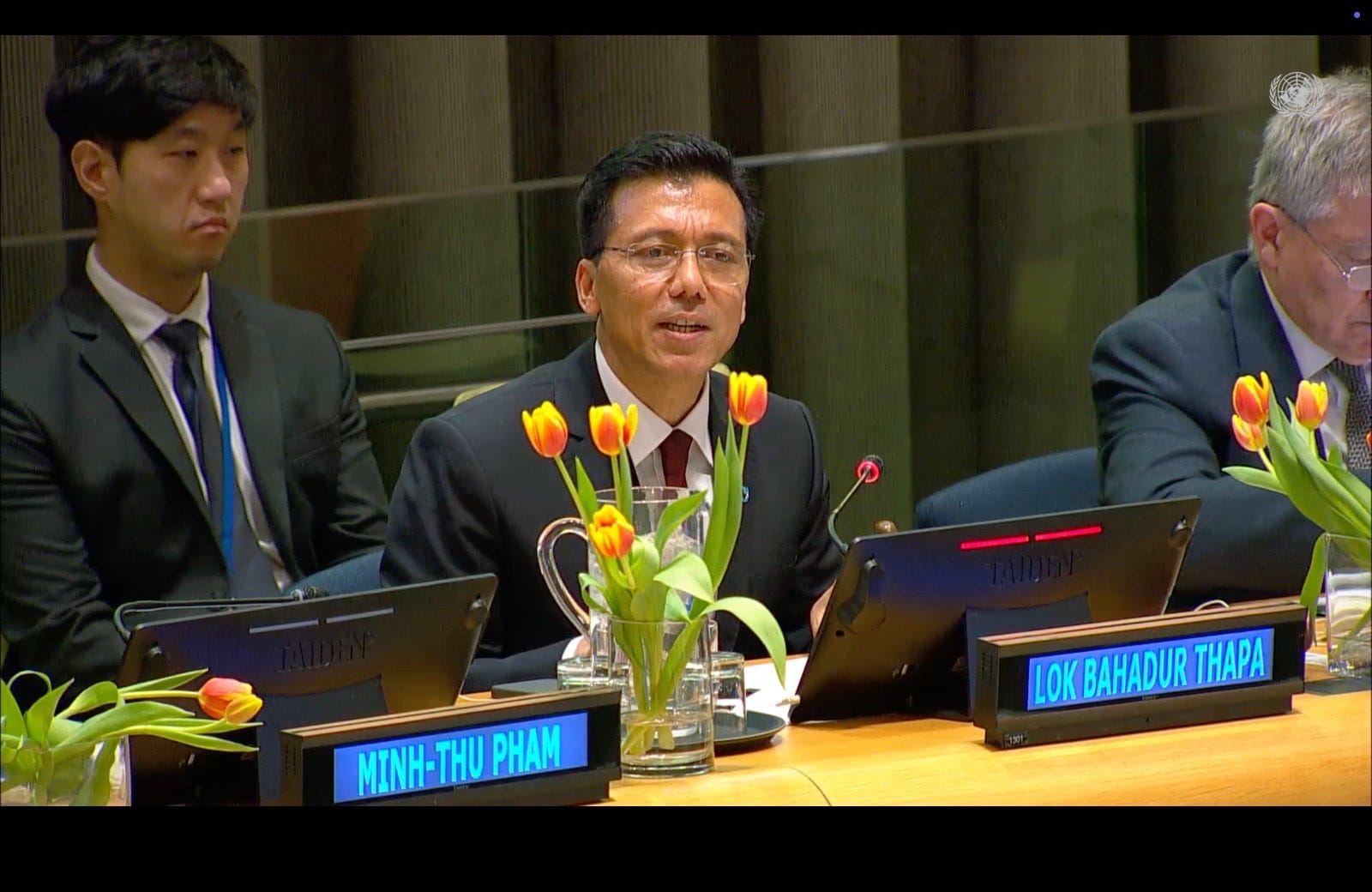
It is my great pleasure to welcome you to this special meeting of ECOSOC on Agrifood Systems Transformations, a priority of my presidency. We are gathering at a pivotal moment for the agri-food sector. Despite progress and recovery achieved in recent years, we are far from meeting SDG targets on ending hunger and food insecurity by 2030.
According to the 2025 State of Food Security and Nutrition report, an estimated 638 to 720 million people were affected by hunger in 2024 worldwide. That same year, about 2.3 billion people in the world faced moderate or severe food insecurity. Ninety-six million more people in the world are facing chronic hunger than in 2015. Hunger today is not born of scarcity or inadequate production, but of injustice, conflict, exclusion, and systems that continue to deny millions the means to live with dignity.
This is the stark reminder that the world is drifting from our shared promise that no one is left behind.
This is not only a development setback, but a profound moral failure. Transformation of our agrifood systems is fundamental to food security, livelihoods, health, and environmental sustainability. It is, at its core, about protecting our people, preserving our planet, and ensuring our shared prosperity. This is also about strengthening rural resilience, accelerating progress on the 2030 Agenda, and delivering better results for those most at risk of being left behind. Together, these efforts form the thread that links the environmental, social, and economic pillars of sustainable development.
Addressing the agrifood systems, therefore, remains central to how societies advance, how societies flourish, and how societies endure. Yet we are witnessing our agrifood systems come under profound and mounting pressure, testing our capacity to serve the needs of a rapidly changing world. They face a confluence of challenges, including rising food insecurity, accelerating effects of climate change, growing unemployment, unsustainable agricultural practices, inadequate investment and financing, restricted market access, insufficient infrastructure, and significant gaps in skills, knowledge, and technology.
They also place significant environmental, health, and social burdens on communities and the ecosystems that sustain them. And, they continue to fall short of ensuring healthy diets, dignified livelihoods, and greater resilience for millions across the world. To confront these realities, we need coordinated, innovative, and inclusive solutions.
Agrifood systems are central to the strength of our economies and to the well-being of our societies. They contribute significantly to the national GDP. They are a major source of employment, particularly in rural areas, employing around 40 percent of the global workforce and accounting for more than 60 percent of all jobs across Africa.
They provide livelihoods for over a billion of people across the entire value chain. Their transformation therefore carries immense potential — with an estimated more than 10 trillion dollars in benefits across health, social well being, economic growth, and environmental sustainability. Yet, the resources required to unlock this huge potential remain far from adequate.
Despite the rise in global agricultural investments, current financing for sustainable and inclusive agrifood systems still falls far short of the scale, urgency, and structural transformation required. Equally insufficient is access to technology and innovation, whose diffusion continues to elude many countries and communities. These gaps are even more pronounced in countries in special situations — including LDCs, LLDCs, SIDS, and across Africa — where fiscal space is more constrained, debt burdens are heavier, and the pace of innovation and technology adoption remains limited and uneven.
For them, the promise of agrifood transformation is real, but the means to achieve it remain limited.
This is why finance and technology — together with capacity building and expanded market access — must be recognized as the critical enablers of progress. These are the levers that will determine whether our agrifood systems can evolve to meet the demands of our time. The question before us is thus how to align these drivers of transformation in support of agrifood systems — at scale, with equity, and with sustained commitment.
Today’s meeting has been organized with the support of FAO, WFP and IFAD. Our first panel will welcome speakers from across the financing landscape to discuss how existing finance can be channeled more effectively; how financing can be scaled up; and the types of cross-sectoral partnerships that are needed to support agrifood systems.
Also, while crucial, finance must also be coupled with innovation to help find new solutions to everyday challenges. Digital technologies are shaping a new frontier for the agrifood sector. We must both adopt and adapt to these technologies while also ensuring that they are accessible and equitable. The second half of the meeting will welcome youth innovators to showcase their work on leveraging technologies to support agrifood systems.
We will explore how to harness and scale innovations in ways that are most supportive to local communities on the frontlines of agrifood systems transformations. Our discussions will place particular emphasis on young people and the indispensable role they play in driving this transformation. Currently, 1.2 billion people are between the ages of 15 and 24 years old. There is a 7% projected rise in the world’s youth population by 2030. We must empower youth and encourage their meaningful engagement to ensure agrifood systems transformations are inclusive, sustainable, and future-ready.
Today’s meeting is a timely opportunity to identify and amplify priority areas for action to ensure that agrifood systems transformations can deliver for people everywhere and support prosperity in current and future generations.
The challenges demand ambition, coherence, and collective resolve.
(The article is an edited version of the opening remarks by Ambassador Lok Bahadur Thapa, President of ECOSOC, at the ECOSOC Special Meeting on Agrifood Systems Transformations, held on 16 February 2026 in New York.)