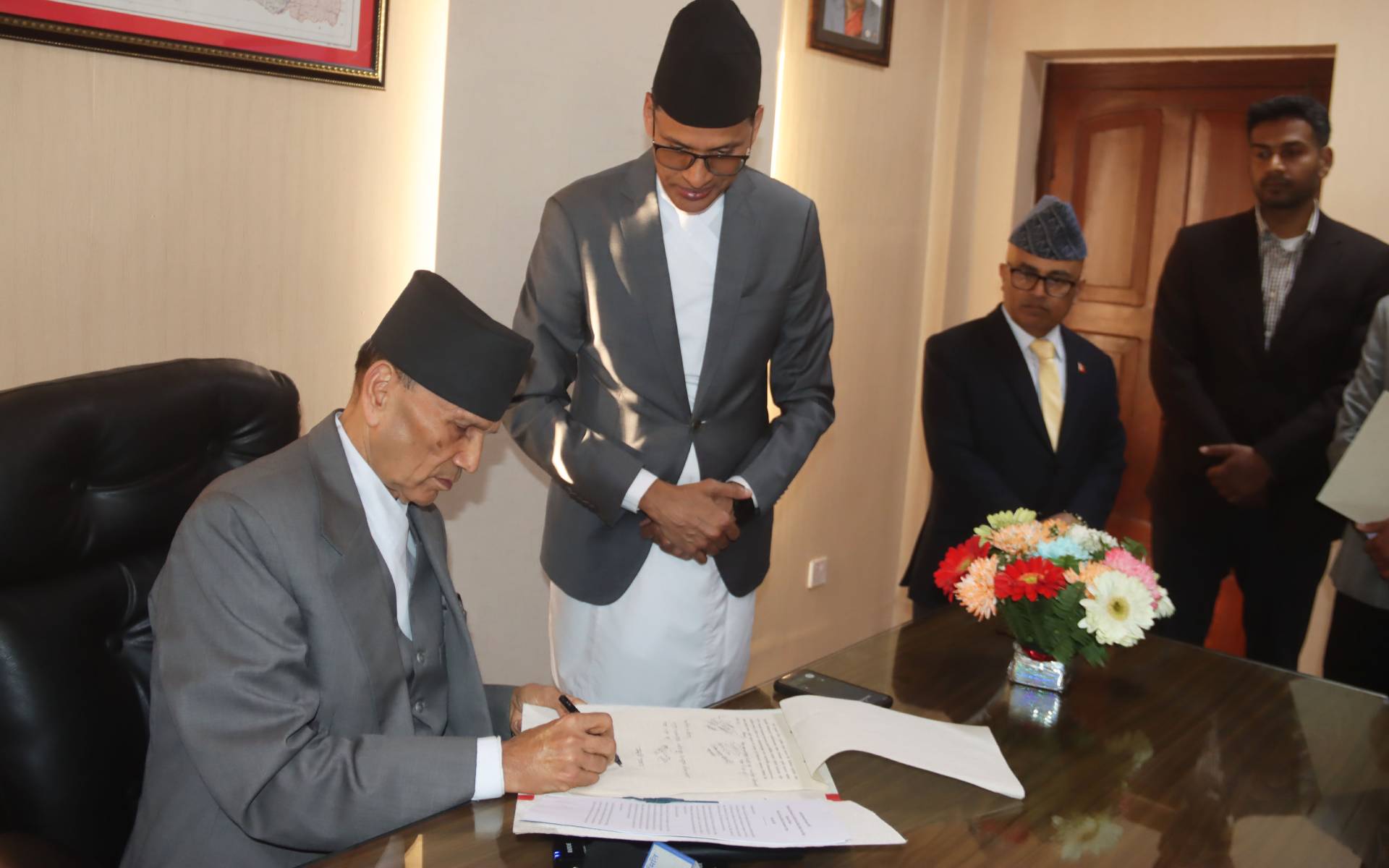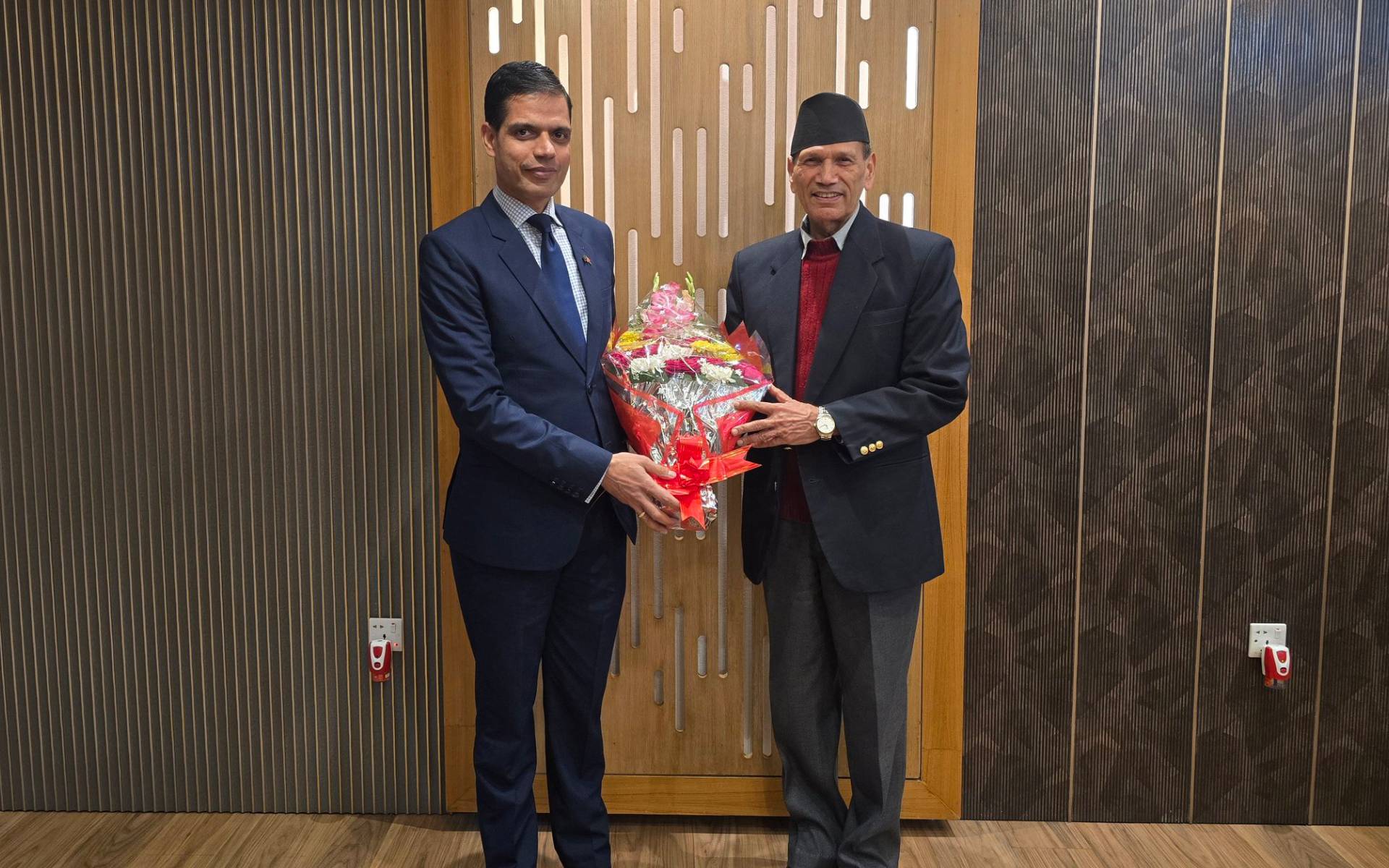

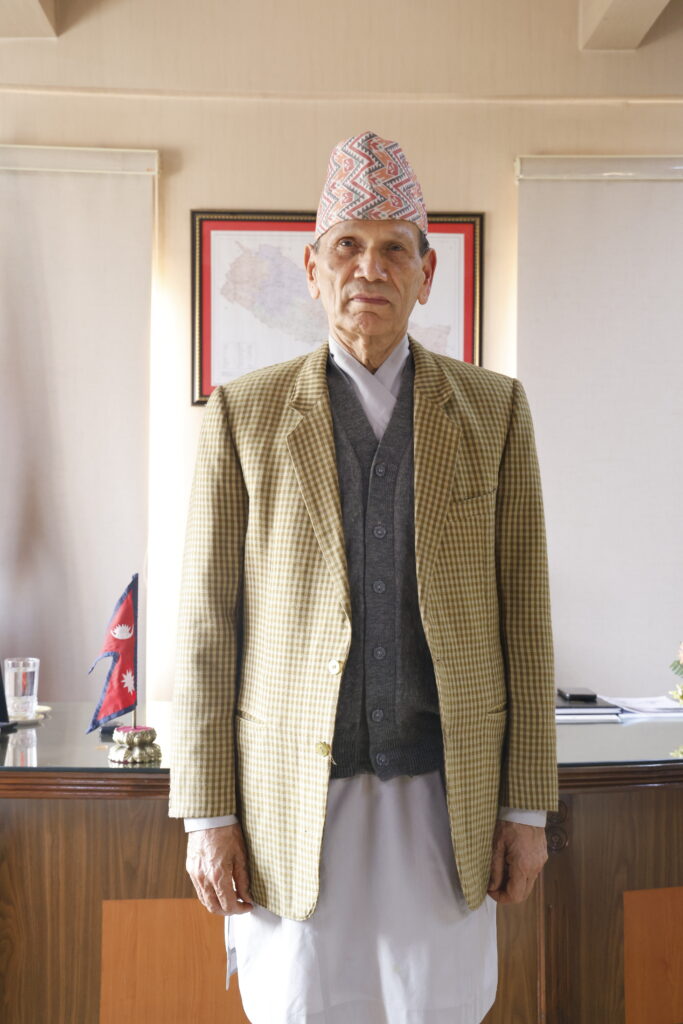
Lieutenant General (Retired) Bala Nanda Sharma, renowned for his unique ability to lead in times of both war and peace, and respected for his exemplary leadership at home and abroad, assumed office as Foreign Minister of Nepal. This appointment represents one of the most pivotal responsibilities of his distinguished public career—steering Nepal’s foreign policy during a defining moment in the country’s history.
The Sushila Karki-led government appointed Sharma as Minister for Foreign Affairs on December 26. His appointment not only filled the vacancy at the Ministry of Foreign Affairs following the Gen Z–led movement, but also ensured experienced leadership at a time of global volatility. Although the primary mandate of the present government is to conduct the House of Representatives election scheduled for March 5, Minister Sharma is tasked with navigating Nepal’s foreign affairs in global power rivalry, where global developments can have immediate implications for Nepal and its people. Sharma is the first former army officer to be appointed foreign minister after 1990, and the second overall after Major General (Retired) Padam Bahadur Khatri, who served as foreign minister from 1982 to 1985 under the Surya Bahadur Thapa-led government.
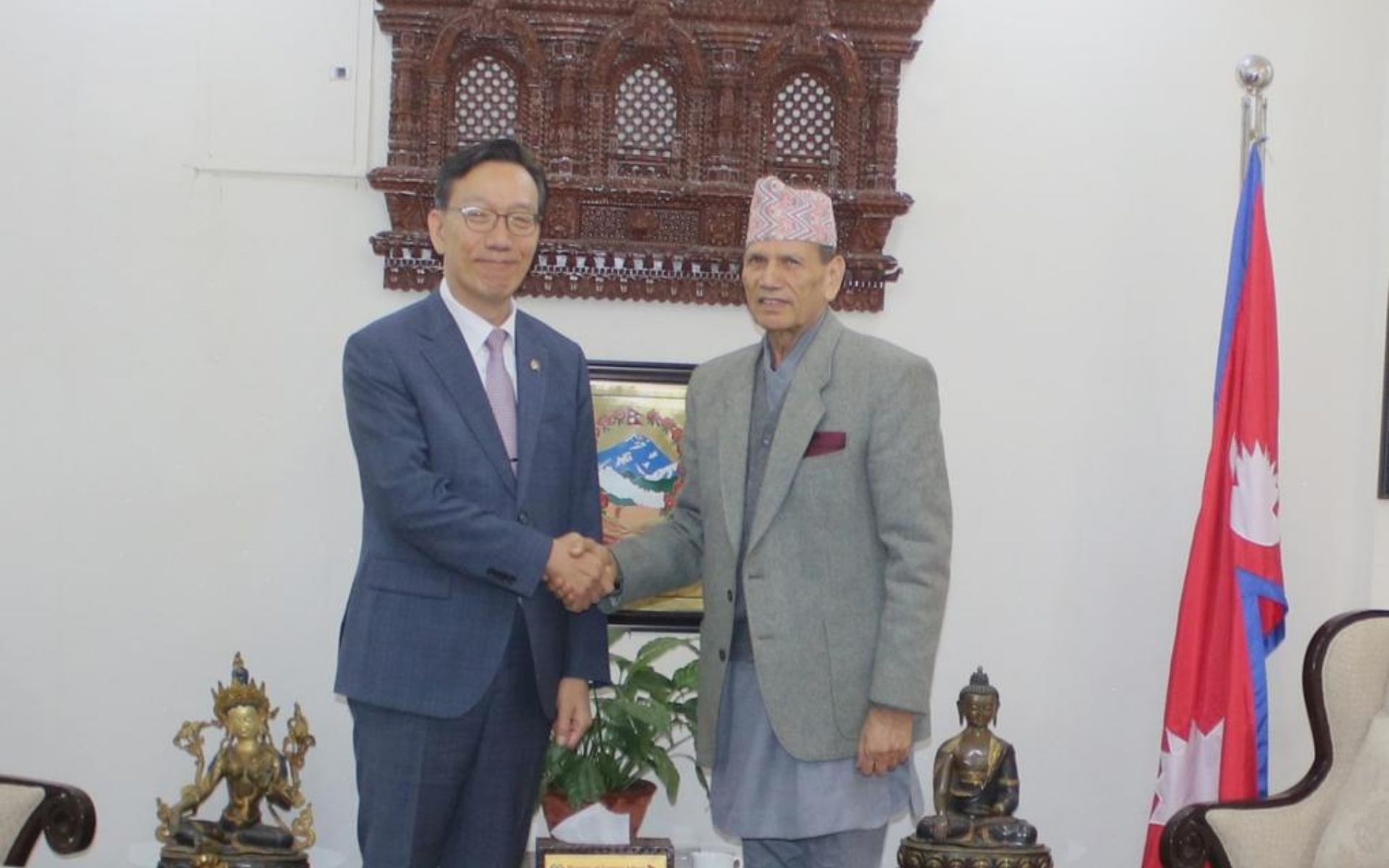
Following his oath of office and secrecy before President Ram Chandra Paudel at a special ceremony at the President’s Office, Sharma assumed charge at the ministry and addressed diplomats and officials.
Sharma completed the Royal Military Staff College course at Camberley (United Kingdom) and the National Defence College program in New Delhi (India). He holds an M.A. in History from Tribhuvan University (Kathmandu) and has been decorated with the Gorkha Dakshin Bahu and Trishakti Patta III.
He joined the Royal Nepal Army in 1969. After basic training at the Royal Nepal Army Academy, he was commissioned into the Regiment of Artillery. Over the course of his military career, he received extensive training both at home and abroad. As a mid-level officer, he served as Assistant Senior Military Officer with the United Nations Interim Force in Lebanon (UNIFIL), Brigadier Major in an Infantry Brigade, and Chief Instructor at the Royal Nepalese Army School and the Staff College. He commanded an Infantry Battalion and served as Defence Attaché to the USSR, led an Artillery Brigade, and was Commandant of the Royal Nepal Army Command and Staff College. As a General, Sharma served as a Director of Military Training, Master General of Ordnance, and played a strategic role in shaping national security policy, including the restructuring of the Royal Nepal Army. He commanded an infantry division at home and was appointed as Force Commander of the United Nations Disengagement Force in the Golan Heights on 16 January, 2004 by UN Secretary-General Kofi Annan. With thirty nine years of military service, Sharma retired from the Nepal Army in 2008.
From March 2009 to April 2013, Sharma contributed as Coordinator of Secretariat for the Special Committee for Supervision, Integration and Rehabilitation of Maoist Army Combatants, which was instrumental to facilitate the integration, voluntary retirement and rehabilitation of Maoist Army Combatants along with monitoring of arms and armies across the seven main and 21 satellite cantonments. Sharma is widely regarded as a professional of extra-ordinary coordinating ability and coordinated with governments led by Puspa Kamal Dahal, Madhav Kumar Nepal, Jhal Nath Khanal, Dr. Babu Ram Bhattrai and Khil Raj Regmi during the management of arms and armies.
In May 2021, K. P Oli led government appointed Lt. Gen. Sharma for the responsibility of the Chief Executive Officer of the COVID-19 Crisis Management Centre (CCMC). Sharma also served as a Chairperson of Infrastructure Development of the Committee of National Defense University and now the foreign minister in the current administration—an uncommon distinction in Nepal’s polarized political landscape. In addition, Lt. Gen. Sharma served as a visiting faculty member at the Central Department of Conflict, Peace, and Development Studies Tribhuvan University. He also established a master’s program in Crisis Management at Samarpan Academy, served as its principal, and contributed as visiting faculty at Chulalongkorn University in Thailand and at various military academies worldwide.
After assuming office, Minister Sharma emphasized his commitment to mentoring the next generation. “I have already reached the peak of my career. I want to transfer all my knowledge, exposure, and experience to the new generation,” he said, recalling his nearly 35-year association with the foreign ministry, including his tenure as defence attaché. Stressing transparency, he added, “I am like an open book. Anyone who works with dedication and in the interest of this ministry can shoulder responsibility and will be recognized.”
Said Dinesh Bhattarai, former Ambassador and former Foreign Affairs Adviser to two Prime Ministers: Sher Bahadur Deuba and Shushil Koirala, the newly appointed foreign minister is an accomplished performer. “He handled the peace process in a highly complicated situation, and his role was praiseworthy.” He added that Minister Sharma’s key responsibility would be to convince neighbouring countries and the international community to support and coordinate in ensuring that elections are held on time.
Chiranjibi Bhandari, Assistant Professor, Tribhuvan University and Former Staff Officer at the Secretariat of the Special Committee for Supervision and Integration of Maoist Army Combatants, said that “appointment of Lt. Gen. Sharma as Foreign Minister is the best decision of the Karki-led government”. He added, “Sharma’s proven leadership abilities and distinguished stature in Peace, Security and Diplomacy is an advantage for the overall nation to create a conducive environment for the March 5 election along with upholding Nepal’s global credibility, achieving national interests with its foreign policy, and building trust with international partners.”