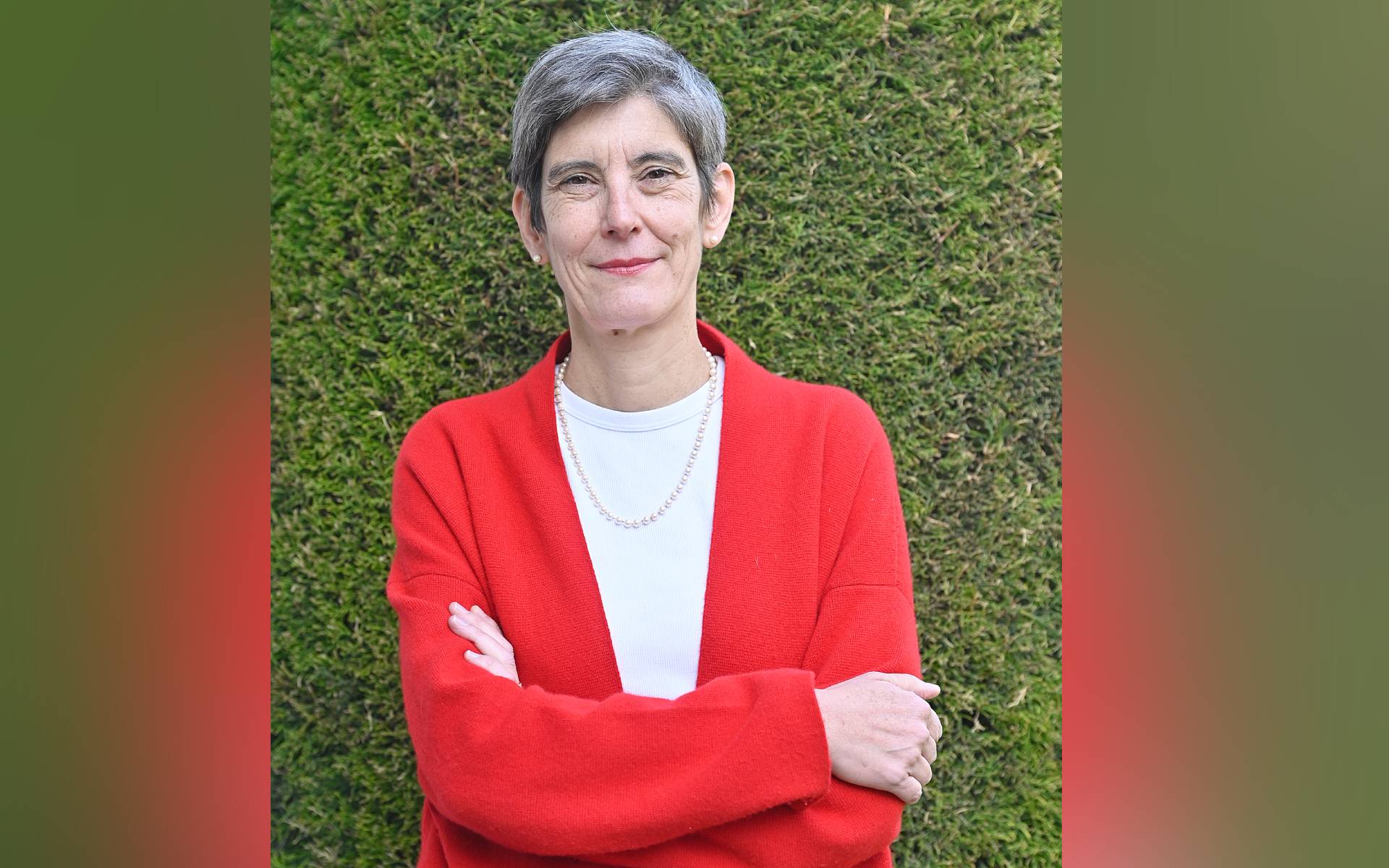
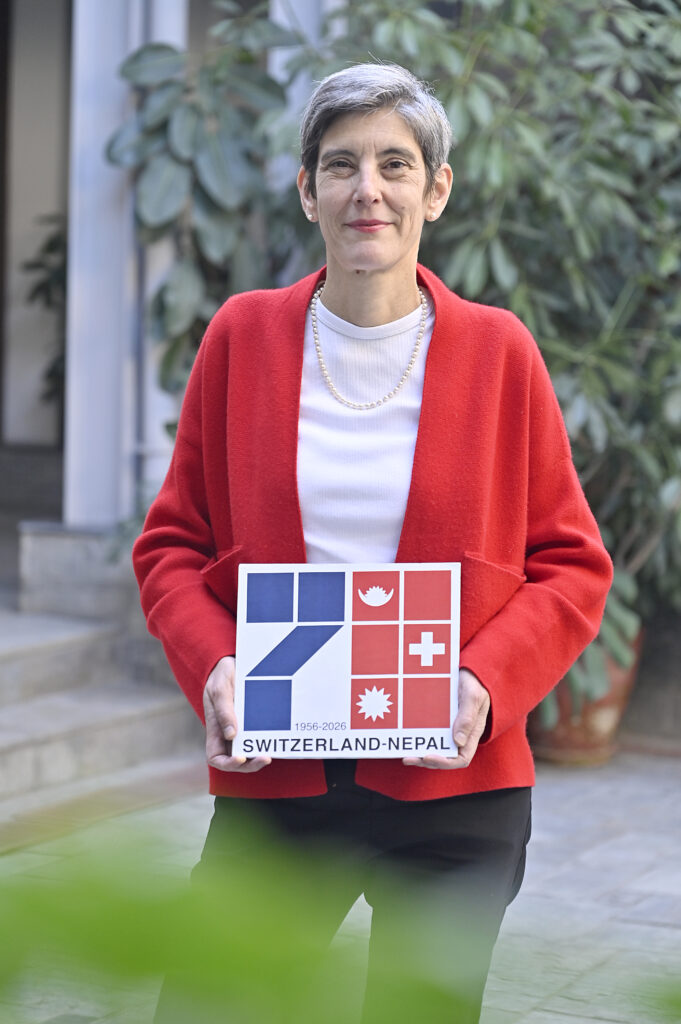
Nepal and Switzerland share a long-standing and cordial relationship dating back to the establishment of diplomatic ties in 1956. Over nearly seven decades, Switzerland has been one of Nepal’s most consistent and trusted development partners, extending support without strategic or political conditions. Even before opening its embassy in Kathmandu in 2009, Switzerland maintained a consular presence from 1956, reflecting the depth of its engagement. Through the Swiss Agency for Development and Cooperation (SDC), Switzerland has made significant contributions to Nepal’s development in areas such as local governance, infrastructure, agriculture, vocational skills, and community empowerment. The construction of over 10,000 trail bridges has greatly improved access to education, healthcare, and markets in remote areas. Switzerland has also stood firmly with Nepal during crises, including the 2015 earthquake and the COVID-19 pandemic. As Nepal approaches LDC graduation in 2026 and the 70th anniversary of diplomatic ties, the partnership is evolving toward stronger economic cooperation and investment. The Diplomat Nepal interviewed H.E. Dr. Danielle Meuwly, Swiss Ambassador to Nepal, on the occasion of 70 years of bilateral relations between Switzerland and Nepal.
Switzerland and Nepal have shared almost seven decades of relations. How do you see the growing relations between the two countries?
Switzerland was one of the first European countries to establish relations in 1956, with our Ambassador in New Delhi at that time also accredited to Nepal.
But the connection started even earlier. In the 1950s, Swiss geologist Toni Hagen was invited to carry out extensive fieldwork in Nepal. His mapping of the country and pioneering research really laid the foundation for Switzerland’s early development engagement.
Since then, our cooperation has kept evolving. To further deepen our relationship, it felt natural to open a resident Embassy in 2009, in the same building as the Swiss Cooperation Office in Ekantakuna. And Nepal also strengthened its side of the relationship: in 2000, its Permanent Representative to the UN in Geneva had been accredited as Ambassador to Switzerland.
Looking back, the achievements of this partnership of seven decades are truly remarkable. And as we celebrate the 70th anniversary in 2026, it will be a great moment to reflect on everything we have accomplished together and on what more we can do in the years ahead.
You arrived in Nepal in 2023; after spending two years here, how would you describe your experience in Nepal so far?
I feel privileged to represent Switzerland in Nepal. My time here has been professionally rewarding and personally inspiring. I’ve seen the lasting impact of our cooperation. I inaugurated the 10,000th trail bridge during its handover to the Government of Nepal. These bridges serve 19 million people and save on average 2.5 hours on essential travel. And we keep launching new initiatives to improve governance, support SMEs [Small and Medium-sized Enterprises], and boost climate resilience. Arriving in autumn 2023, I have seen my share of natural disasters, for example, the Jajarkot and Rukum earthquake. Switzerland responded quickly with humanitarian aid, rebuilding schools and health posts, training masons, and providing psychosocial support. I have always been impressed by the resilience of the Nepali people in the face of such difficulties.
What has marked my experience most is travelling across Nepal, meeting communities and getting to learn about inspiring initiatives. I’m impressed by the creativity and determination of Nepal’s youth, starting businesses and engaging in their communities. The recent protests show that fulfilling youth aspirations will be key to shaping Nepal’s future.
Switzerland is one of Nepal’s oldest and most trusted development partners. What are Switzerland’s current priorities regarding Nepal?
We are very proud of this legacy. It is a strong foundation, which will help us move our partnership from aid to trade.
Our cooperation programme rests on three pillars: first, supporting Nepal’s federal journey. Second, creating more economic opportunities. Third, making migration safer and supporting the reintegration of returnees. And in all our activities, we integrate climate action and gender equality, and whenever possible digital solutions to increase transparency and efficiency.
Our cooperation has much evolved over the years along with Nepal itself. The pioneering initiatives in the past included cheese-making and potato seed farming, building roads and bridges. Following the adoption of the new Constitution in 2015, Switzerland embraced the system-building approach across federal, provincial, and local levels to support Nepal’s federal transition into tangible outcomes for its people. On this journey, we focus on strengthening provinces as new entities according to their constitutional mandate, and empowering local governments.
Beyond development, we also work to boost economic ties, promote trade and investment, partner with the Nepal-Swiss Chamber of Commerce, and connect Swiss and Nepali businesses.
Switzerland helped Nepal during the peace process in 2006. However, Nepal is yet to complete the transitional justice process. How do you see the ongoing TJ process in Nepal?
Nepal has made important progress since the Comprehensive Peace Accord in 2006. A milestone was achieved in August 2024 with the third amendment to the Truth and Reconciliation Commission Act. This was a significant step in recognising the rights of victims to reparation. Switzerland remains fully committed to supporting Nepal’s transitional justice process — a process that is Nepali-led and victim-centred.
Now, the challenge remaining is implementation. Expectations are high, especially among victims who have long called for justice, transparency, and accountability, demands that strongly resonate with Nepal’s younger generation. Operationalising the trust fund for reparations will be absolutely key. We are working with the Government to finalize the details of the Swiss contribution to the trust fund.
How do you see the high-level engagements between the two countries?
At the diplomatic level, we were fortunate to have vibrant exchanges, which underscore the depth of our ties. In June 2024, Nepal’s President Ram Chandra Paudel met with Swiss President Amherd; then in March 2025, our Foreign Ministers met first in Geneva and in July, Swiss Foreign Minister Ignazio Cassis visited Nepal in turn. In November, Ambassador Arno Wicki, Assistant Director General of Swiss Agency for Development and Cooperation (SDC), also came to Nepal to gain first-hand insights into challenges following the GenZ protests.
These exchanges not only reflect the strength of our relationship, they also drive concrete projects. For example, the visit of the Chairwoman of Switzerland Global Enterprise, Ruth Metzler-Arnold, in 2024 played an important role in exploring opportunities for Swiss companies to contribute to innovative and sustainable infrastructure solutions in Nepal.
And in addition to these visits, we have regular bilateral political consultations every two years, the next one will be in 2026 in Kathmandu.
What fundamental principles have guided Switzerland’s engagement with Nepal since 1956?
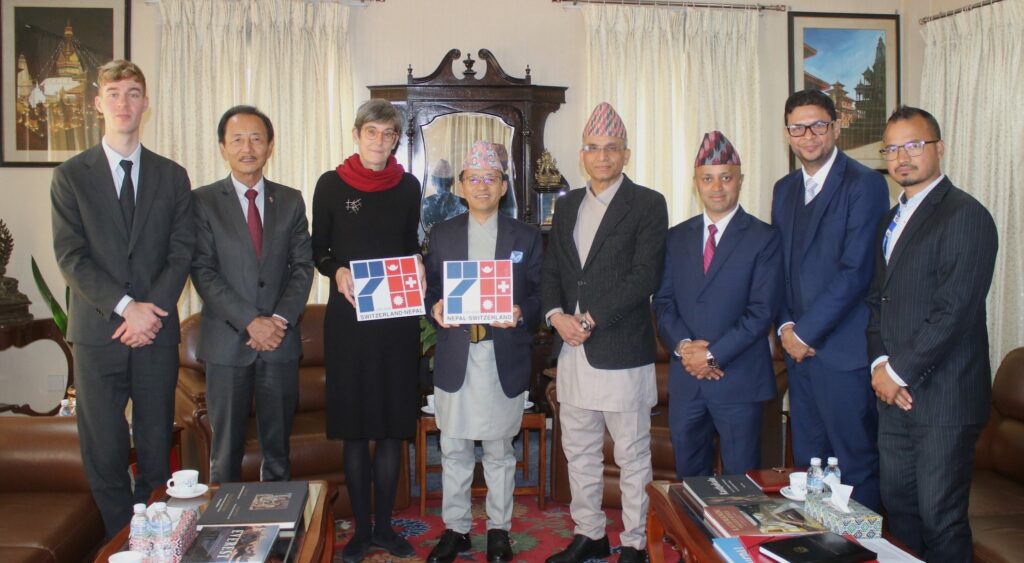
Since the very beginning, Switzerland’s engagement has been built on solidarity with and respect for Nepal’s ownership of its development path. These principles have guided us and shaped a partnership focused on dialogue, inclusivity, and strong institutions rather than short-term fixes. This has carried us through many milestones: the completion of the Lamosangu-Jiri road, the construction of trail and motorable bridges, community forestry and the adoption of the first Forestry Sector Master Plan, the increased attractiveness of industry-based vocational training for young people to name a few.
These principles remain at the heart of our work, as we continue to join forces on climate action, private sector development, and inclusive governance, all with one goal: contributing to a more just, stable, and prosperous Nepal.
Is Switzerland supporting any specific climate or renewable energy projects in Nepal?
Yes, climate resilience is becoming an increasingly important part of Switzerland’s cooperation with Nepal. Our two mountainous countries face similar challenges, from melting glaciers to the vulnerability of fragile mountain ecosystems. This shared reality has really strengthened our partnership in disaster risk reduction and climate adaptation.
Switzerland brings well-established expertise in areas like multi-hazard risk assessment and early warning systems that can be readily replicated regionally because climate and environmental challenges do not stop at borders. We know action is urgent, but resources are limited, so collaboration is key.
That is why Switzerland recently joined the Asian Development Bank and the World Bank in signing an MoU to strengthen Nepal’s capacity for disaster risk management.
We are also supporting the World Bank’s regional clean air initiative across the Indo-Gangetic Plain, and we have been a long-standing supporter of ICIMOD, the organization promoting climate-resilient, green, and inclusive development across the Hindu Kush Himalayan region. These efforts reflect our belief that transboundary cooperation is essential.
Nepal is set to graduate from the Least Developed Country (LDC) status in 2026. What will be the role of Switzerland?
Switzerland is committed to supporting Nepal’s sustainable graduation from Least Developed Country status. Our focus is on creating an environment that attracts investment — both domestic and foreign — and helps local businesses grow.
One key area is access to finance. Traditional lending in Nepal is often short-term and risk-averse, which makes it hard for local SMEs to expand. That is why we work with the Nepali authorities and the financial sector to create enabling conditions for innovative financing instruments. In Koshi Province, for instance, together with the provincial government, we are piloting an innovative risk-reduction mechanism to make credit more accessible for SMEs. For the private sector to thrive, what is key is to have good framework conditions, political stability, but also fair and transparent rules and regulations, creating a level-playing field. Openness is also essential to bring in new sources of finance for local businesses. We try to connect firms with Development Finance Institutions like the Swiss Investment Fund for Emerging Markets (SIFEM), which has already made two investments in Nepal’s financial sector, so that SMEs can access the longer-term financing and patient capital they need.
Let me also stress that foreign investment is not just about money, it brings technical know-how, encourages the adoption of international standards, and strengthens good governance. Every Swiss franc or dollar invested has a multiplier effect: creating jobs, driving innovation, and boosting economic growth. This is essential to unlock the potential of Nepali businesses, help them compete globally and create jobs for the youth in Nepal.
How can Nepal attract more Swiss investors and tourists?
Nepal’s natural beauty and cultural richness continue to attract Swiss tourists. Tourism contributes about 6% to Nepal’s GDP. The number of Swiss travelers has been rising steadily, and better air connectivity will help. In 2024, Switzerland signed an Aviation Service Agreement with Nepal, allowing SWISS to sell Zurich–Kathmandu flights via Delhi through code sharing, which represents a major step forward.
Switzerland has supported Nepal’s tourism for decades, from building trail bridges and roads to developing trekking routes like the Mundum Trail. Building on this, we launched the Tourism Trail Development Project in Koshi Province to enhance culturally significant trails, aiming to create 2,000 new jobs.
There’s strong potential for Swiss investment in tourism, cable cars, hospitality, and more. Partnerships like Swiss hospitality school EHL with GATE College in Kathmandu show how tourism and education can create opportunities for youth and strengthen ties. Beyond tourism, Nepal can attract more Swiss investors by improving regulatory transparency, infrastructure, and openness. Swiss companies see opportunities in infrastructure, healthcare, and IT. The Embassy regularly organizes fact-finding missions with the Nepal-Swiss Chamber of Commerce and Switzerland Global Enterprise.
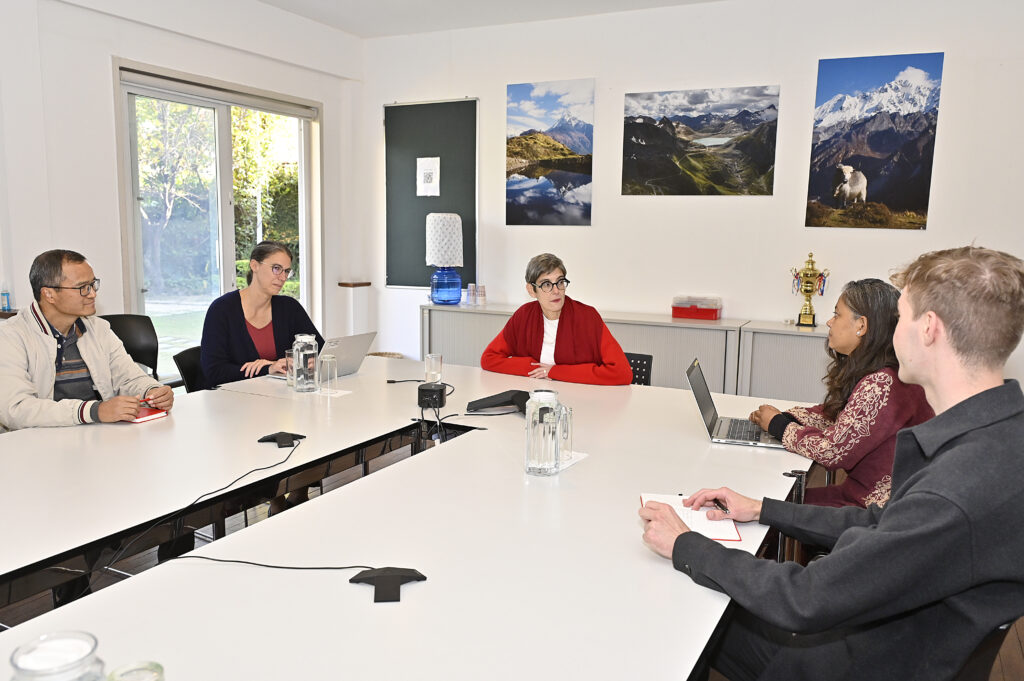
How has Switzerland contributed to Nepal’s federalization and democratic governance?
Switzerland has been a strong partner in Nepal’s federal journey, supporting the transition from a unitary state to a federal democratic republic. Based on our own experience, we believe that strong, accountable institutions are key to building a cohesive and peaceful multicultural society. Decentralization matters because it brings services closer to people while ensuring accountability and efficiency. That is good value for taxpayers’ money!
Our cooperation focuses on strengthening institutions at all three levels of government. We are working with provincial and municipal authorities to strengthen fiscal federalism, aligning resources with responsibilities, improving planning and execution, and boosting transparency through digital systems. This is crucial to make efficient use of resources, which translates into better services for citizens.
A great example is the integrated disaster response center being developed in Koshi Province. Co-financed by Switzerland, the provincial government, and municipalities, it will provide coordinated services for fire outbreaks, ambulances, mortuary care, and policing. This is a good example of intergovernmental collaboration that directly benefits communities.
People-to-people ties have played a key role in Switzerland–Nepal relations. How do you see their impact, including the legacy of Toni Hagen?
Deep people-to-people ties between Switzerland and Nepal are the backbone of our relationship. Toni Hagen is the most famous name, but countless other stories reflect the same spirit of friendship.
For decades, Swiss visitors have come to Nepal, drawn by the Himalayas and the warmth of its communities. Many came, and continue to come, as doctors, teachers, nurses, or volunteers, building friendships, health posts, orphanages, and projects that make a real difference. Almost every week, I get to know of new initiatives by Swiss citizens in Nepal. Recently, I attended the 20th anniversary of the Pasang-Lhamu-Nicole-Niquille hospital in Lukla, named after two strong women. It has cared for thousands each year, mothers, children, porters, climbers, and villagers. These stories show that our ties go far beyond institutions.
You have worked, collaborated, and interacted with many Nepali people. How would you describe them?
Nepali are among the most resilient and warm people I have ever met. Whether in remote villages or busy cities, I have seen an incredible commitment to progress, even in the face of challenges.
And what truly gives me hope for Nepal’s future is the energy of its youth, not to mention Gen Z! Their creativity, confidence, and global outlook are powerful.
How would you describe Nepal from an art and culture perspective?
Nepal is rich in art and culture, topics close to my heart. Kathmandu’s cultural scene is vibrant, with galleries serving as creative hubs for artists to meet, collaborate, and showcase their work. There’s always something happening: exhibitions, concerts, and events like Katjazz, Jazzmandu, or Echoes in the Valley that celebrate Nepal’s musical talent.
But it’s not just Kathmandu. We support initiatives reaching communities nationwide, such as the travelling Kathmandu International Mountain Film Festival (KIMFF), which brings powerful stories to diverse audiences. Nepali cinema is gaining global recognition too: films regularly feature at Swiss festivals like the Fribourg International Film Festival (FIFF), and in 2024, actress Thinley Lhamo won Best Acting Performance at Locarno for her role in Shambala.
We’re proud to strengthen Nepal’s cultural sector through exchanges and initiatives that help artists share their work. The Swiss Nepal Chamber of Commerce also organizes exhibitions of Nepali artists in Switzerland.
As we look ahead to the next chapter of our partnership, how can Switzerland and Nepal work together to advance Nepal’s aspirations?
2026 will be tremendously important for Nepal. We look forward to free and fair elections in Nepal and to continuing a partnership built on mutual respect and shared values. As mountainous countries, we have common interests and ambitions. I hope to see Nepal move forward with its aspirations for peace, prosperity, accountability, and transparency, creating more opportunities for all Nepali!
Lastly, do you want to add anything more?
I am deeply moved by the messages of sympathy and solidarity from the people of Nepal following the tragic fire on New Year’s Eve in Crans-Montana. These gestures reaffirm the strong bond between our countries.