Kathmandu: In a country like Nepal, where challenging terrain can limit physical access, the ability to coordinate virtually across all levels of government can make a life-saving difference. When disasters strike, coordination is just as critical as response.
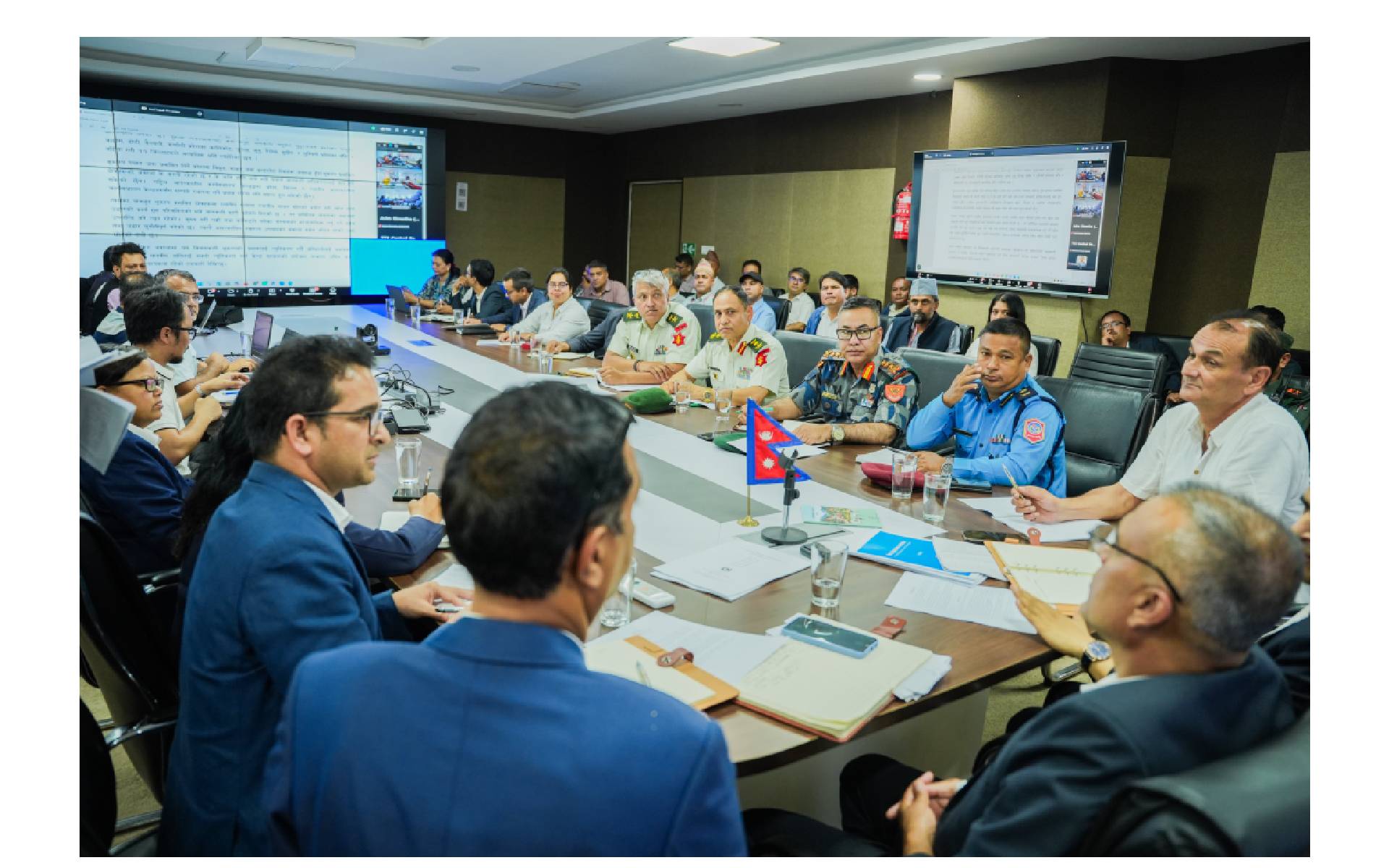
Through the EU Civil Protection and Humanitarian Aid funded Super- II project, implemented by a UNDP-led consortium with UNICEF Nepal, UNWomennepal and Handicap International- Humanity and Inclusion, a virtual Tabletop Simulation (TTX) brought together federal, provincial and local Emergency Operation Centers (EOCs), Health Emergency Operation Centers (HEOCs), and the National Disaster Risk Reduction and Management Authority Nepal’s National Disaster Risk Reduction and Management Authority to test Nepal’s disaster coordination systems.
Using a simulated 7.9-magnitude earthquake on the Kalikot–Bajura border, participants navigated the critical first 48 hours of an emergency through a fast-paced, three-hour exercise with six evolving scenario “injects.” The simulation tested communication systems, decision-making, coordination protocols and the operational readiness of institutions, all in a fully virtual environment.
The lessons captured will help strengthen more resilient, responsive and adaptive coordination mechanisms from the federal to the local level, ensuring Nepal is better prepared when real emergencies occur.
Building on six provincial and municipal in-person simulations held across Sudurpashchim, Lumbini and Karnali provinces, this exercise marks another important step towards a more disaster-resilient Nepal.