Kathmandu: The Government of Finland and the United Nations Development Programme (UNDP) have signed an agreement to provide additional funding of Rs 103.79 million to expand the Renewable Energy for Resilient Agri-Food Systems (RERAS) project in Nepal. The project is funded by the Government of Norway and implemented in partnership with the World Food Programme (WFP).
With the new funding, Nepal’s Home-Grown School Feeding programme under the Mid-Day School Meals Programme will be expanded to 427 schools across 10 municipalities in Bajura, Surkhet and Baitadi districts. The initiative will promote climate-resilient agriculture, improve local crop productivity, and strengthen market linkages between farmers, cooperatives and schools, ensuring a steady supply of nutritious, locally produced food for children.
The project aims to provide daily nutritious midday meals to 30,000 students. It will also improve access to clean energy for meal preparation by constructing or rehabilitating 10 climate-smart school kitchens, installing Metallic Improved Cooking Stoves (MICS) in 40 schools and Electric Induction Cooking Stoves (EICS) in 10 schools.
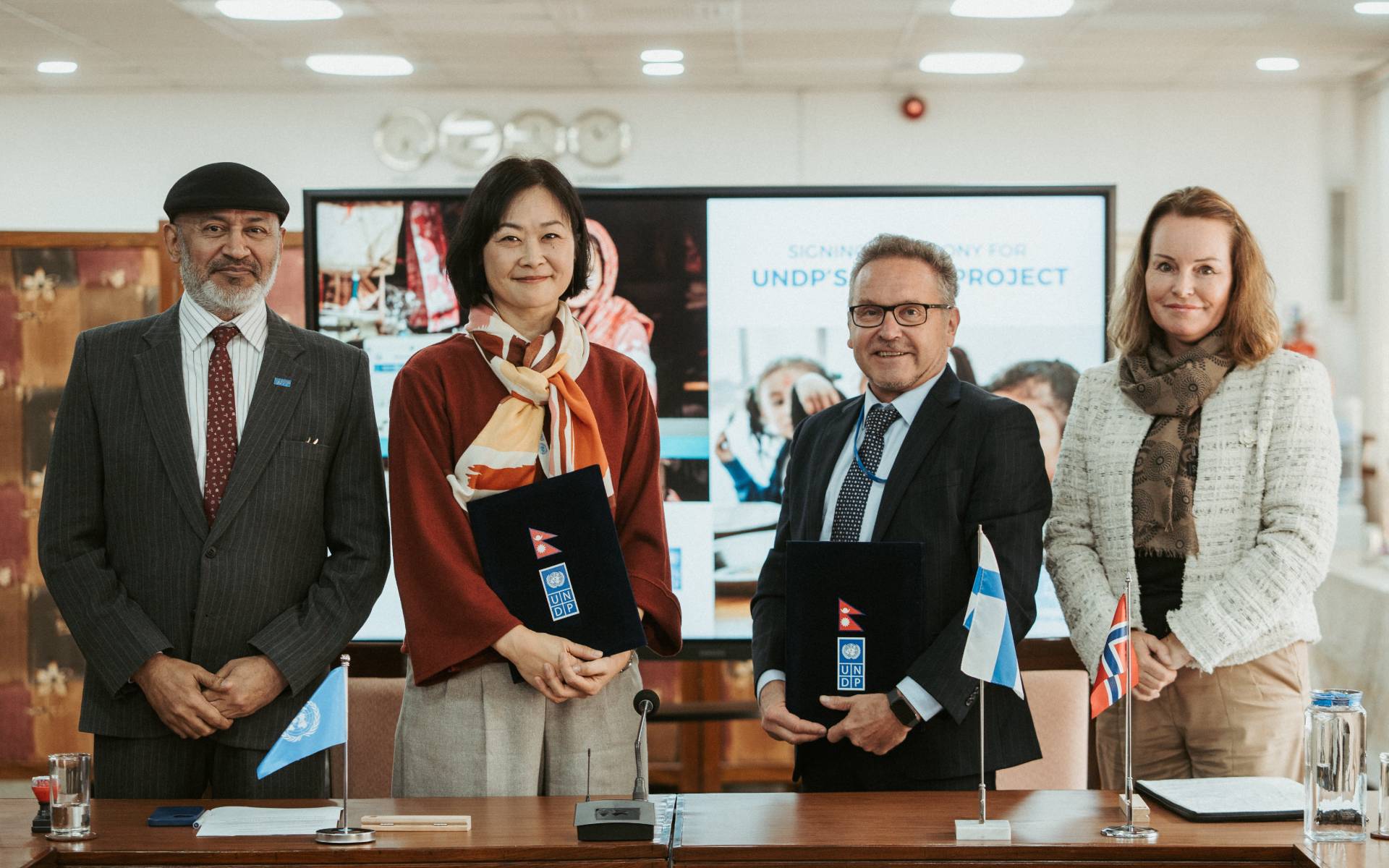
The agreement was signed by Petri Puhakka, Ambassador of Finland to Nepal, and Kyoko Yokosuka, UNDP Nepal Resident Representative. Ambassador Puhakka said Finland, as co-chair of the Global School Meals Coalition, is committed to ensuring equitable access to nutritious school meals and supporting climate-resilient development in Nepal through strong Nordic cooperation.
Yokosuka said the partnership strengthens school nutrition by linking farmers and cooperatives to schools, boosting local productivity through climate-resilient agriculture, and promoting clean energy solutions for cooking. WFP Country Director Riaz Lodhi said home-grown school meals not only improve child nutrition but also drive inclusive economic growth and strengthen food systems in the long term.
Since its launch in July 2023, the RERAS project has supported local governments in Karnali, Sudur Paschim and Bagmati provinces. By using renewable energy for farming, irrigation, processing, storage and marketing, the project has benefited 10,000 households and improved access to clean energy for more than 150,000 people.