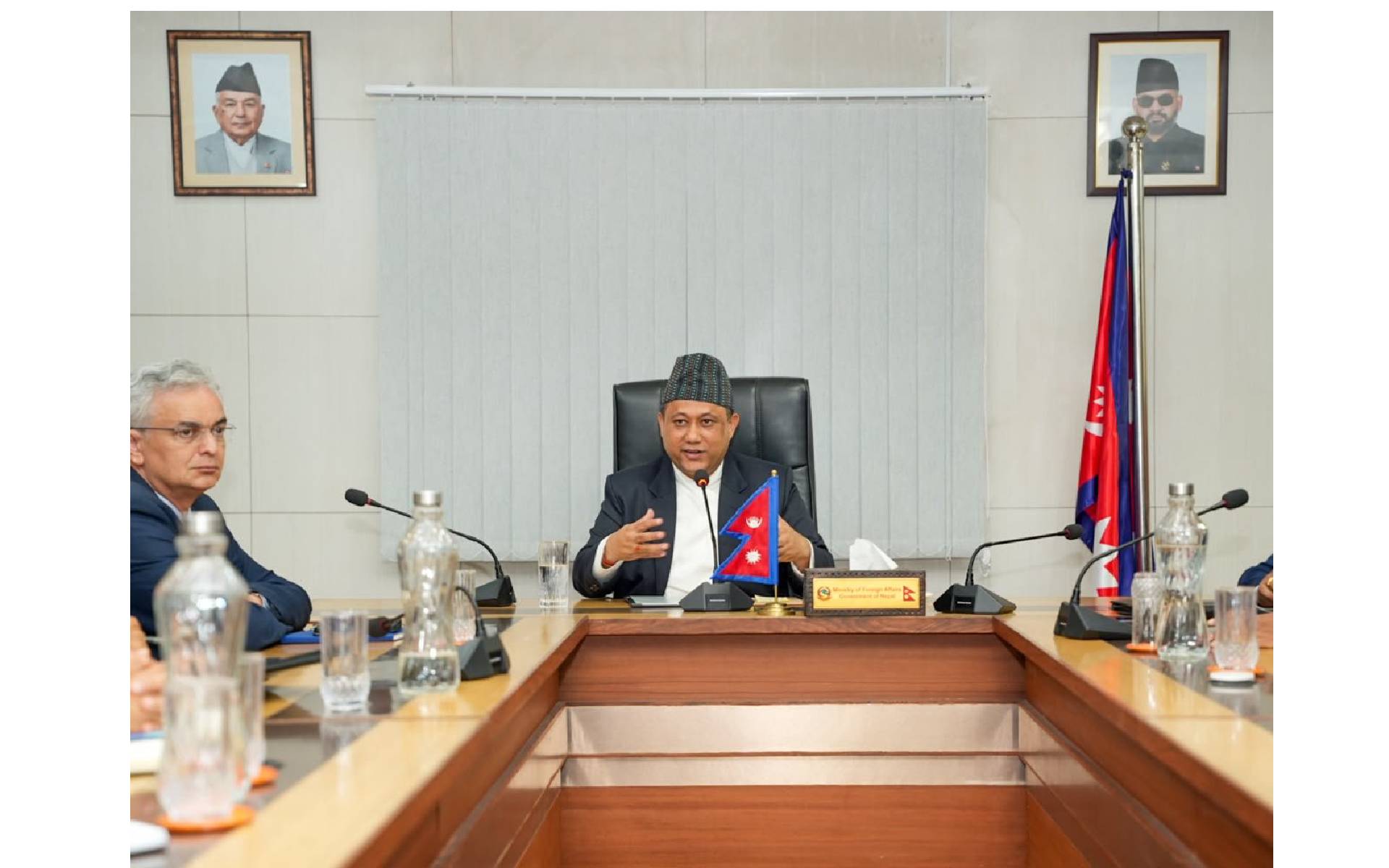
Kathmandu: Foreign Minister Shisir Khanal has said that the Himalayan agenda, climate finance and climate justice will be raised with priority in the 31st Conference of the Parties to the United Nations Framework Convention on Climate Change (COP-31).
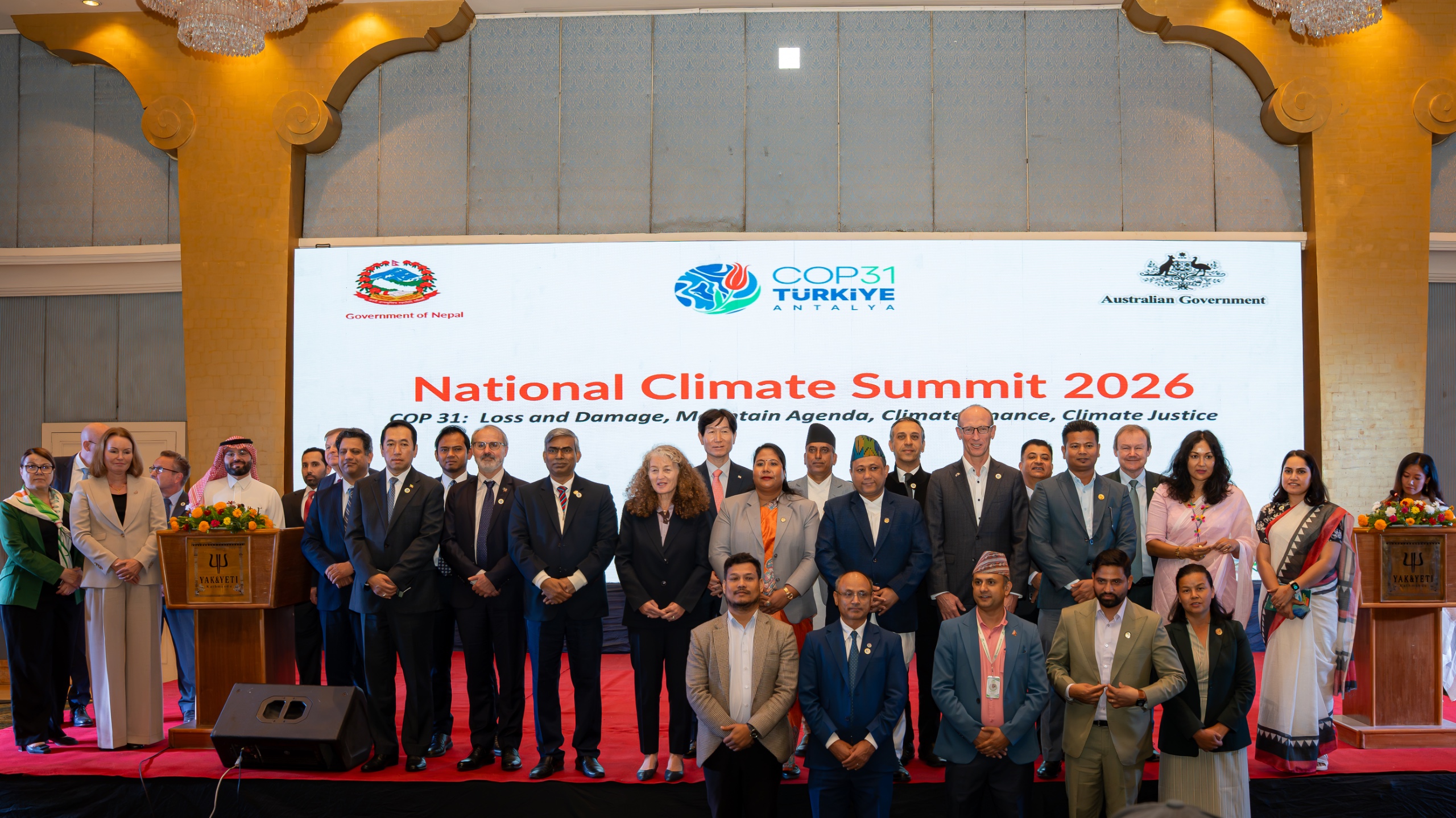
Addressing the National Climate Summit-2026 organized for the preparation of COP-31 to be held in Turkey, Foreign Minister Khanal said, “In the upcoming COP-31, Nepal will raise the mountain agenda, climate-related damages and losses, climate finance and climate justice with priority. Protection of the mountains should be considered as a shared global responsibility. The ecological stability of the Himalayan region is inextricably linked to the water, food, energy and economic security of millions of people far beyond our borders. Therefore, protecting our mountains is a shared global responsibility.”
At a conference organized by the Ministry of Agriculture, Forestry and Environment, Foreign Minister Khanal said that Nepal will take initiatives to make international climate cooperation result-oriented in COP-31. Minister Khanal said that the specific problems and risks of the Himalayan region should be covered with priority in the international climate talks. Minister Khanal clarified that the goal of limiting the global temperature increase to 1.5 degrees Celsius determined by the Paris Agreement is particularly important for the Himalayan countries.
“An increase in temperature, even temporarily, beyond the prescribed limits can accelerate the melting of glaciers, destabilize sensitive ecosystems and make environmental changes irreversible,” said Foreign Minister Khanal.
Recalling that Nepal raised the Himalayan issue on the international stage through the International Expert Dialogue on Himalayas, People’s Life and Climate Change in 2024 and the Everest Dialogue in 2025, Foreign Minister Khanal said that this campaign will be continued through the next Everest Dialogue to be held in 2027. Foreign Minister Khanal informed that Nepal will lobby for regular high-level dialogue on Himalayan issues, separate mountain action plan and systematic inclusion of mountain area risk in global climate policy in COP-31. Foreign Minister Khanal said that addressing the damages and losses caused by climate change should become an important criterion of international climate solidarity.
“Apart from economic damage, there are also serious and long-term losses such as displacement of communities, erosion of cultural heritage and disruption of traditional livelihoods,” Minister Khanal said. Minister Khanal mentioned that the decision to temporarily allocate 20.16 million US dollars to Nepal from the Fund for Addressing Damages and Losses is an important achievement of international climate cooperation. Minister Khanal said that 20 million US dollars have been set aside for rehabilitation and reconstruction and 1.6 million US dollars for monitoring and supervision fees.
“Now we have to move forward with this progress, ensure sufficient funds in the fund, simplify the access process and make arrangements to provide timely assistance, especially to countries facing devastating climate disasters,” Minister Khanal said.
Minister Khanal clarified that Nepal will continue to advocate for predictable, grant-based financial resources and early aid mechanisms for post-disaster rehabilitation and uplifting reconstruction. Minister Khanal emphasized that climate finance should be available easily, fairly and according to national priorities.
He said that although Nepal’s contribution to climate change is low, the damage and risks from it are increasing. Nepal’s greenhouse gas emissions are negligible, but climate damage is increasing. On the other hand, our forest, glacier and mountain ecosystems are contributing to maintaining environmental stability far beyond our borders.
Minister Khanal said that the international climate system should address the situation of countries that contribute less to climate change but suffer disproportionately more damage. Minister Khanal also stressed on the need to ensure meaningful participation of women, children, indigenous peoples, persons with disabilities and marginalized communities in the climate decision-making process. Minister Khanal mentioned that the Himalayas and the Pacific Ocean are interconnected parts of the same global ecosystem and said that the effect of melting glaciers will reach river systems, agricultural areas and coastal communities. The Himalayas and the Pacific Ocean are connected through a common planetary system. The impact of melting glaciers extends to river systems, agricultural landscapes and coastal communities.
Minister Khanal said that the ‘Sagarmatha to Sea’ initiative by Nepal will further confirm the need for international solidarity by embracing this interrelationship. Mentioning that the coordinated efforts of the entire nation are necessary to effectively advance Nepal’s priorities in COP-31, Minister Khanal called for moving forward with a common vision and implementation-oriented commitment at the national level.
“Our collective success will ultimately be measured by the resilience of communities, the preservation of ecosystems and the opportunities we ensure for future generations,” said Minister Khanal. Minister Khanal has said that about 4.8 billion US dollars will be needed for the reconstruction and restoration of the damage caused by the Bhotekoshi disaster on August 10 and the subsequent floods. Minister Khanal informed that this amount is equal to about 10 percent of the gross domestic product (GDP) of Nepal.
“Behind these appalling statistics are families who have lost their loved ones, communities struggling to rebuild and decades of development achievements at risk,” Minister Khanal said.