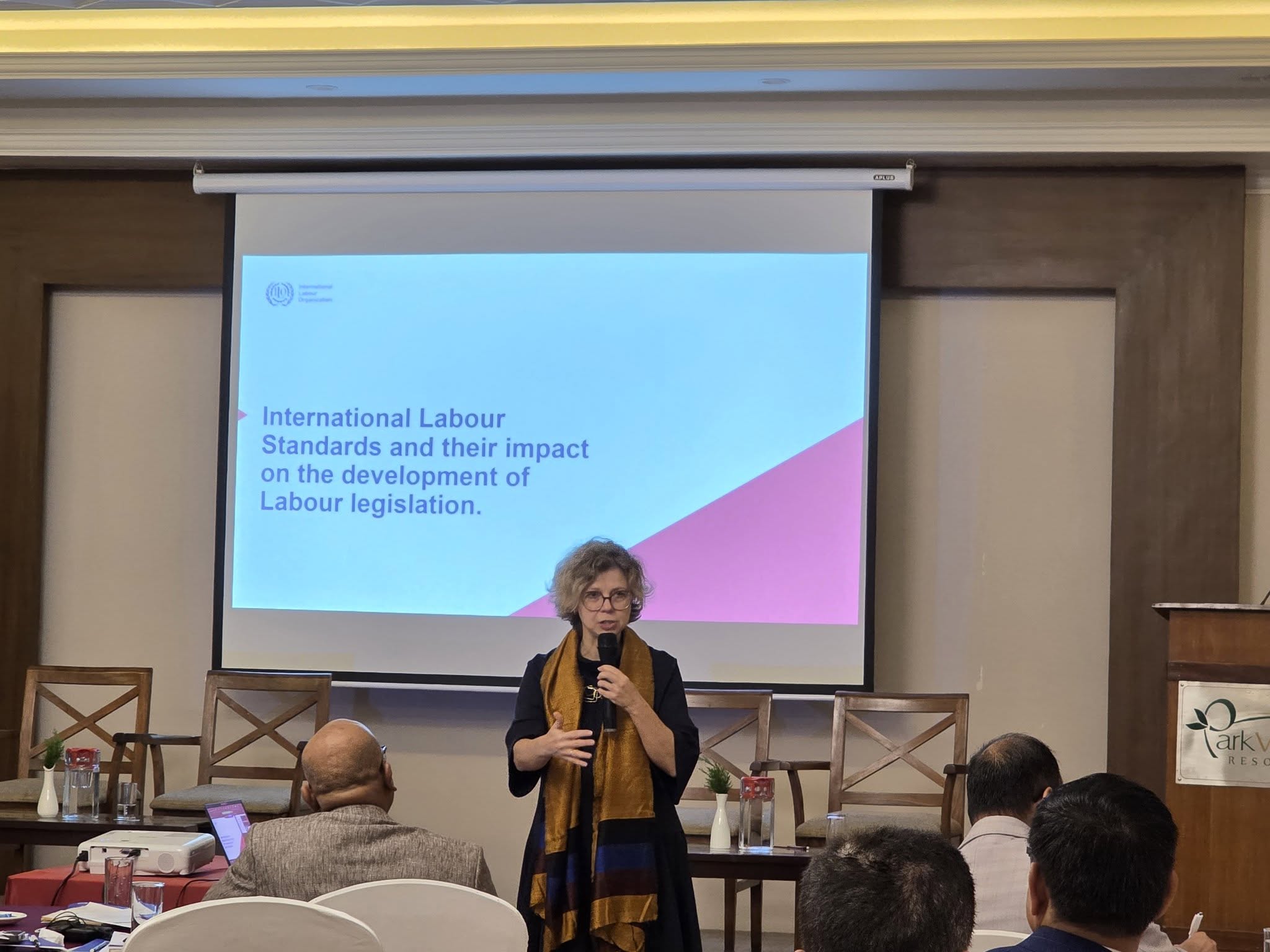
Kathmandu: The ILO and the Ministry of Youth, Labour, and Employment (MoYLE) jointly hosted the National Workshop on Labour Law Reform in Kathmandu. The workshop brought together government representatives, workers’ and employers’ organizations, legal experts, and development partners to discuss international best practices, changing labour markets, and stronger protections for workers in the informal economy.
Speaking at the event, Dr. Dipak Kaphle, Secretary at MoYLE, highlighted, “Labour reform is no longer optional, it is a necessity. The changing context of work demands that we rethink our labour market policies and laws. From formalizing workers through labour registration to adapting to AI, climate change, gig work, and platform economies, Nepal must pursue comprehensive labour reforms that promote inclusion, protection, and decent employment opportunities for all.”
The workshop explored how Nepal’s labour laws can better respond to emerging forms of work, including platform work, domestic work, home-based work, and other non-standard forms of employment. Discussions also focused on aligning labour law reforms with International Labour Standards and ensuring fundamental principles and rights at work for all workers.
Elena Gerasimove, Legal/Labour Law Specialist at ILO, remarked, “ILO international labour standards provide a strong foundation for labour law reform. Nepal can draw guidance not only from the Conventions it has ratified, but also from other relevant standards and supervisory body comments.”
She further added, “Nepal has made important commitments through the ratification of fundamental, governance, and technical ILO conventions. Building on these commitments, labour reforms should address key issues such as employment protection, fixed-term contracts, working time, occupational safety and health, collective bargaining, and protections for workers in new forms of employment.”
ILO Nepal stated that the recommendations emerging from the workshop will help inform Nepal’s labour law reform process and contribute to a more inclusive, future-ready labour law framework that reflects the changing world of work.