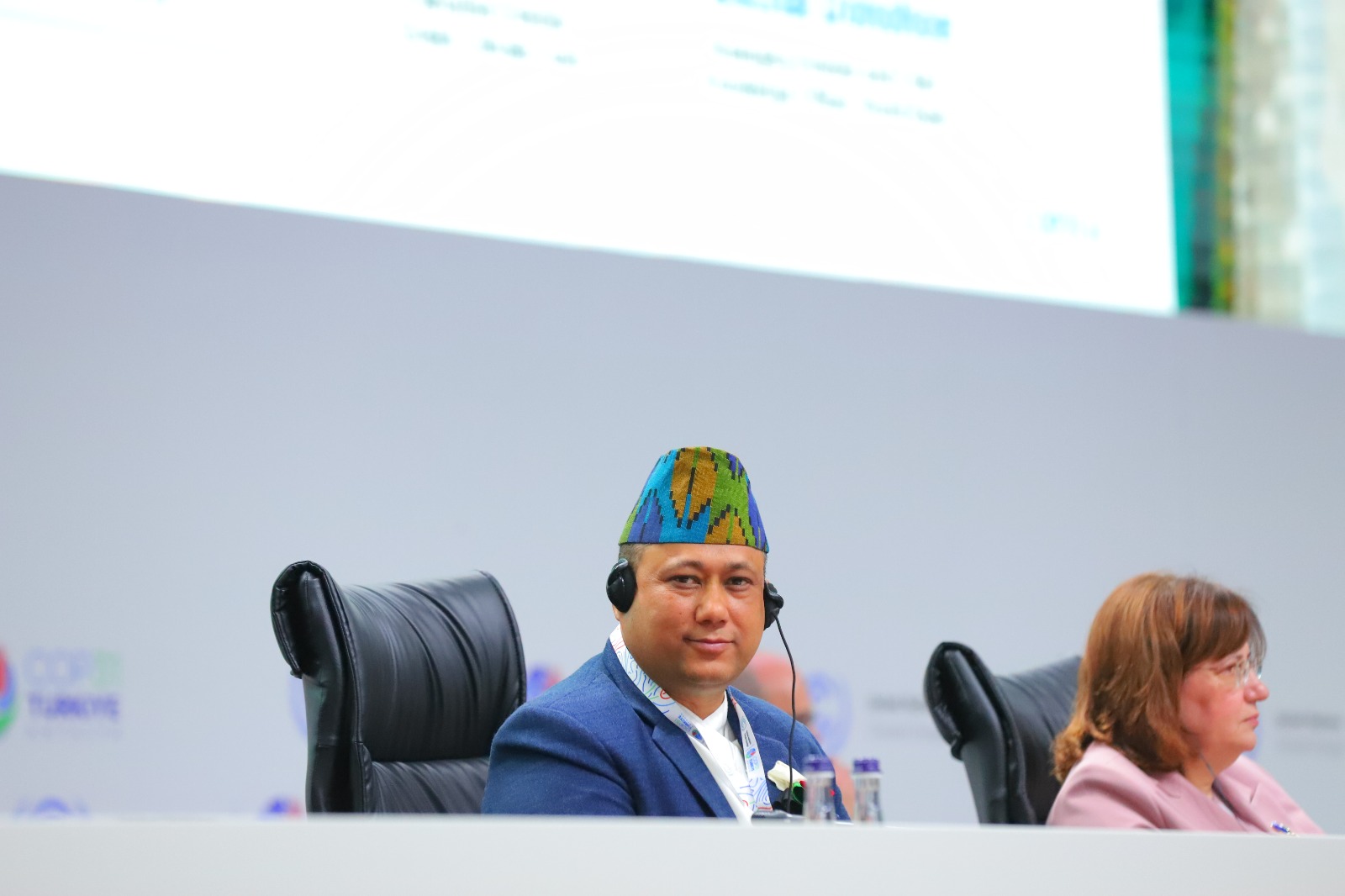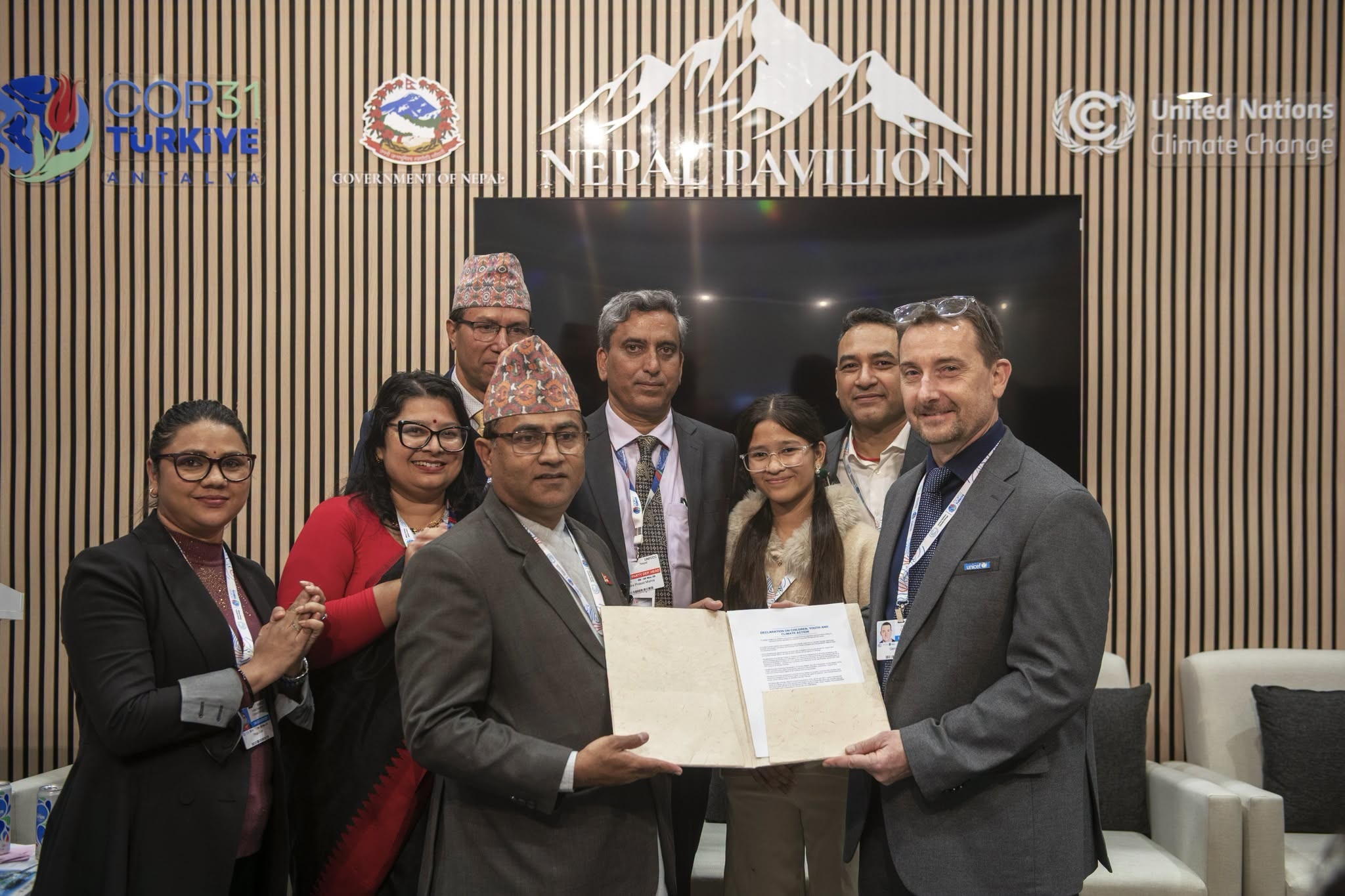
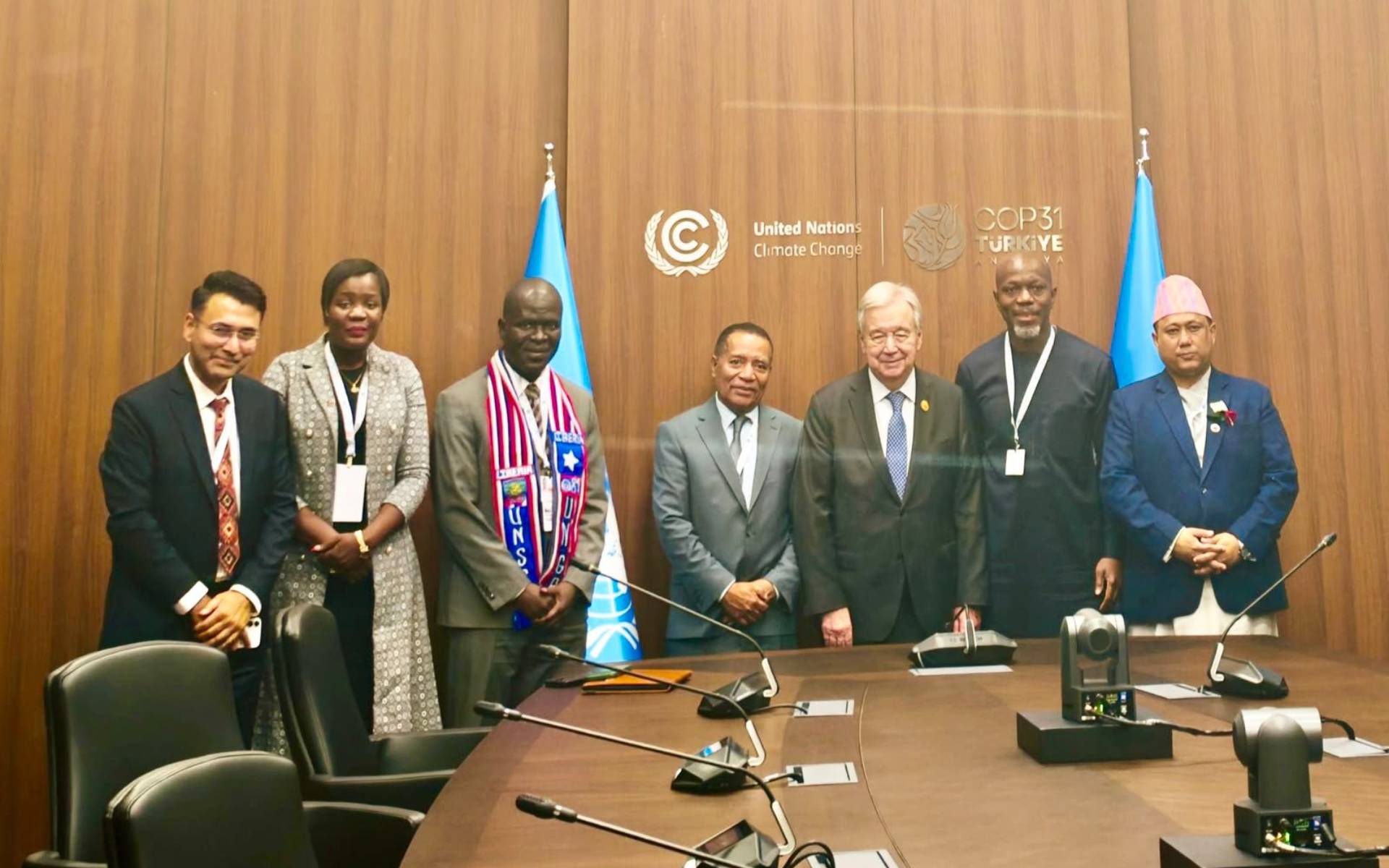
Kathmandu: Mountain countries have called for stronger international cooperation, increased climate finance and urgent action to address escalating climate risks, following a series of devastating disasters across the Hindu Kush Himalaya region.
Speaking at the 31st UN Climate Change Conference (COP31) on November 15, representatives from Nepal and Bhutan, the International Cryosphere Climate Initiative (ICCI) and the International Centre for Integrated Mountain Development (ICIMOD) warned that recent disasters in Nepal and Bhutan underscored the growing vulnerability of mountain communities to climate-related hazards.
According to ICIMOD, the warning comes less than three months after a massive rock-and-ice collapse above Nepal’s Rasuwa district triggered a devastating flood along the Nepal-China border and the Trishuli River corridor, causing widespread destruction, loss of life and billions of dollars in damage.
Another ice-rock avalanche struck Gorkha district in October, while a glacial lake outburst flood in Bhutan’s Shintaphu region damaged roads, bridges and downstream livelihoods, reads a statement issued by ICIMOD.
Speakers said the disasters were not isolated incidents but reflected a changing mountain risk landscape threatening communities, infrastructure, water security and economies across the region.
“Every time there’s a disaster in the Himalayas, we tend to call it a wake-up call. The question before us is: what will it take for us to wake up and take action?” the statement quoted Dr Pema Gyamtsho, director general of ICIMOD, as saying.
Scientists also highlighted new findings from the Rasuwa disaster, which showed that satellite observations had detected significant movement on the Langtang Lirung slope in the weeks before its collapse. The findings demonstrate the potential of emerging monitoring technologies to identify high-risk mountain areas before disasters occur.
However, participants stressed that scientific advances alone would not save lives without adequate investment, preparedness and regional cooperation.
The rapid movement of floodwaters towards the border corridor highlighted how mountain hazards could cross national boundaries within minutes, overwhelming conventional warning systems. Speakers called for stronger transboundary monitoring, real-time information sharing, coordinated early warning systems and greater cooperation among countries sharing mountain ecosystems and river basins, the statement added.
The panel also highlighted findings from the recent ICCI-UNEP report Overshoot and the Cryosphere, which warns that exceeding 1.5 degrees Celsius of global warming would cause irreversible losses of snow and ice, increasing the risks of floods, water insecurity and other mountain hazards for generations.
“There is no negotiating with the melting point of ice. Ice melts at zero degrees. Overshoot should not be normalised. For the world’s ice, it means emergency situations,” said Pam Pearson, director of ICCI.
Speakers said mountain regions were already warming faster than the global average and warned that decisions taken during this decade would shape the future of glaciers, water supplies and mountain communities across Asia.
The press conference followed a high-level dialogue on advancing the mountain agenda held on November 12. Bhutan, Nepal, Kyrgyzstan and Tajikistan convened the dialogue with support from ICIMOD to push for greater recognition of mountain-specific risks and vulnerabilities in international climate negotiations.
Although mountain issues have received growing attention in recent UN climate processes, speakers said recognition must translate into concrete action to protect vulnerable communities.
“The Himalayas are often seen as a Shangri-La, a place of peace and meditation. But climate change is affecting us, and that Shangri-La is under threat,” said Sonam Tashi, director of the Department of Environment and Climate Change of Bhutan.
Participants also highlighted the growing economic costs of climate change in mountain countries, where disasters are increasingly damaging transport networks, energy systems, agricultural production, livelihoods and critical infrastructure.
They called for greater investment in disaster preparedness, monitoring of high-risk mountain areas, early warning systems, adaptation measures and responses to loss and damage. They also stressed the need to ensure that climate finance reaches vulnerable mountain communities before disasters strike.
“The multilateral system must respond at the scale of the challenge. The needs on the ground far exceed the resources currently available,” said Manjeet Dhakal, a member of Nepal’s COP31 delegation and lead adviser to the Least Developed Countries Group.
Speakers said mountain countries were not seeking special treatment but recognition of the challenges they face on the climate front line, where glacier retreat, thawing permafrost, extreme rainfall and cascading disasters are becoming increasingly frequent and severe.
They urged governments at COP31 to strengthen support for mountain adaptation, improve access to climate finance, enhance scientific cooperation and accelerate emissions reductions to limit global warming overshoot in both magnitude and duration.