Kathmandu: Nepal has called for a dedicated global work programme on mountains and climate change, seeking greater international attention to the growing climate vulnerabilities of mountain ecosystems and communities.
Leading Nepal’s delegation to the 31st Conference of the Parties (COP31) to the UN Framework Convention on Climate Change (UNFCCC) in Antalya, Türkiye, Hon. Foreign Minister Shishir Khanal urged countries to incorporate mountain-specific indicators into global adaptation and climate finance frameworks.
Khanal returned home on Saturday, November 14, after attending the first week of the conference. Hon. Agriculture, Forests and Environment Minister Gita Chaudhary will lead the Nepali delegation during the remaining high-level meetings and negotiations scheduled in the final week until November 20.
During the conference, Nepal highlighted the specific climate challenges facing mountain countries and called for stronger international action on mountain ecosystems, climate justice, adaptation finance and loss and damage.
Nepal also pressed for equitable access to climate finance, stronger support for addressing loss and damage, scientific monitoring of glaciers and mountain ecosystems, and more effective early warning systems, according to a statement issued by the Ministry of Foreign Affairs on Saturday, November 14.
Addressing the conference’s opening plenary on November 9, Khanal drew the international community’s attention to the devastating impacts of recent climate-induced disasters in Nepal on people’s lives, livelihoods, infrastructure and ecosystems.
He called for the establishment of a dedicated work programme on mountains and climate change under COP31, stressing the need to incorporate mountain-specific indicators into the Global Goal on Adaptation and the New Collective Quantified Goal on Climate Finance.
He also urged the international community to support Nepal’s efforts to accelerate post-disaster reconstruction and recovery.
Speaking at the High-Level Dialogue on Adaptation on November 10 on behalf of the least developed countries (LDCs), Khanal said countries that had contributed the least to climate change were bearing its disproportionate impacts. He stressed that adaptation must be recognised as an integral component of climate justice.
He called for translating international commitments on adaptation finance into credible implementation plans, simplifying access to financial resources and supporting the implementation of national adaptation plans, including through locally led initiatives.
At the Antalya Leaders’ Summit on November 11, Khanal and Chaudhary joined other world leaders and senior officials, including UN Secretary-General Antonio Guterres.
Addressing a high-level event on Early Warnings for All on the same day, Khanal underscored the importance of effective early warning systems in protecting mountain communities. He highlighted the need for reliable data collection in high-altitude areas, satellite-based monitoring, snow surveillance and the dissemination of warnings in local languages.
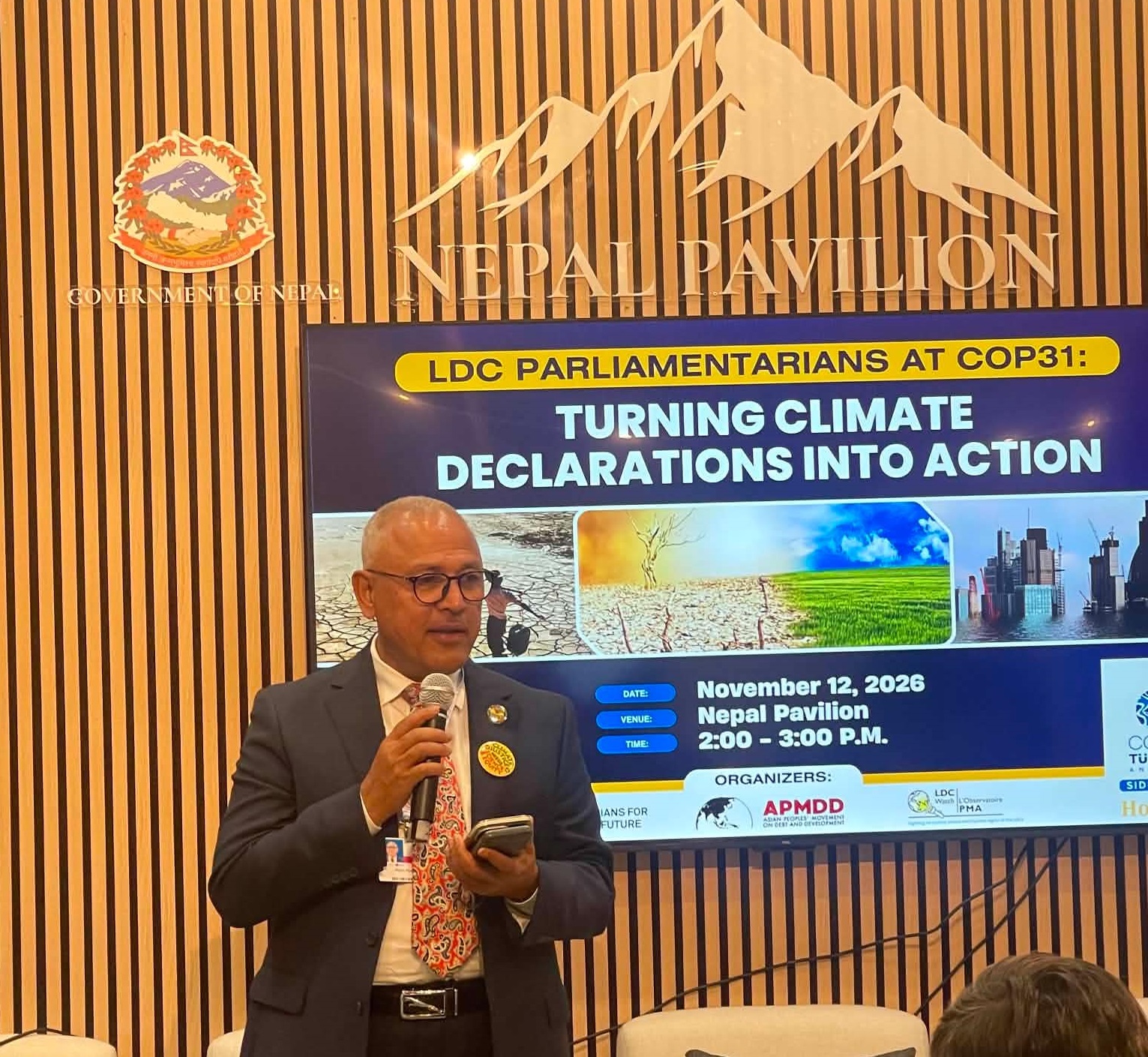
Addressing a side event at the Nepal Pavilion on November 11, Khanal called for regional cooperation, technology transfer and knowledge-sharing to address shared climate challenges in the Hindu Kush Himalaya region.
On November 12, Nepal jointly organised a high-level event on advancing the mountain agenda with Bhutan, Kyrgyzstan, Pakistan and Tajikistan. Khanal called for bringing mountain-related concerns into the mainstream of global climate negotiations, warning that a crisis in mountain regions would have consequences for humanity as a whole.
He also called for deep emissions cuts, grant-based climate finance rather than loans, timely and equitable funding for loss and damage, glacier monitoring and stronger multi-hazard early warning systems.
Nepal also organised a high-level side event on strengthening mountain resilience through adaptation finance in collaboration with Bhutan, Kyrgyzstan and international partners, including the International Centre for Integrated Mountain Development (ICIMOD) and Zoï Environment Network. Khanal briefed participants on the human, physical and economic losses caused by recent devastating floods in Nepal and stressed the need for adequate and accessible adaptation finance to strengthen mountain resilience.
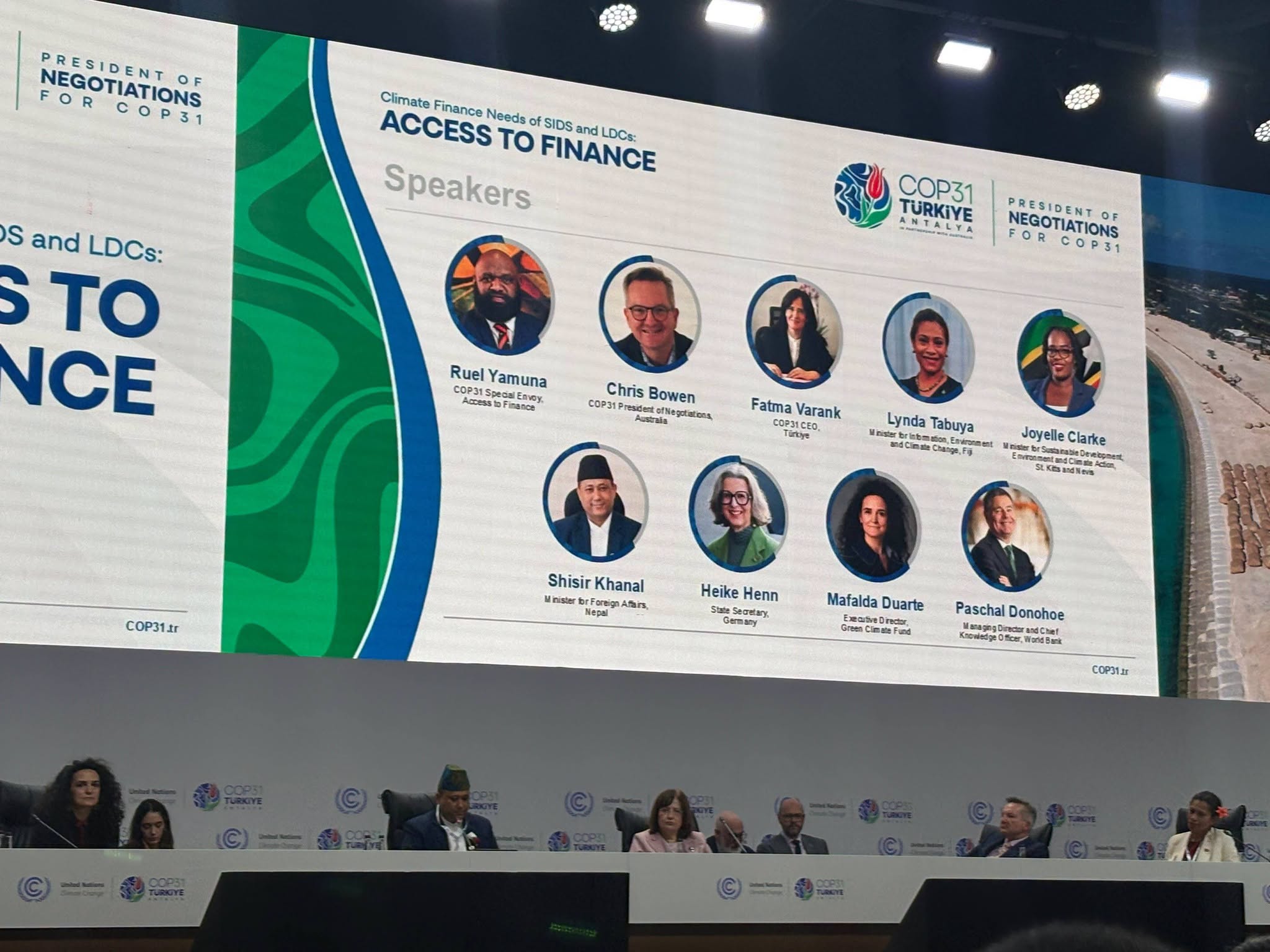
He also spoke at an event on access to climate finance for small island developing states and least developed countries on November 13, emphasising the need for predictable, accessible and grant-based financing for climate-vulnerable countries and fragile mountain ecosystems.
On the sidelines of the conference, Khanal held separate meetings with Ethiopian Foreign Minister Gedion Timothewos, Finland’s Minister for Foreign Trade and Development Ville Tavio, and UN Secretary-General Antonio Guterres. The discussions covered various issues of mutual interest.
He also interacted with representatives of the Non-Resident Nepali Association’s National Coordination Council in Türkiye, reiterating the government’s commitment to addressing the concerns of Nepalis abroad, improving digital consular services and protecting the rights and interests of migrant workers, particularly women.
According to the Foreign Ministry, Nepal’s participation in COP31 focused on bringing the specific climate vulnerabilities of mountain countries into the global climate agenda and advocating equitable access to climate finance, effective action on loss and damage, scientific monitoring of mountain ecosystems, technology transfer and stronger regional cooperation.