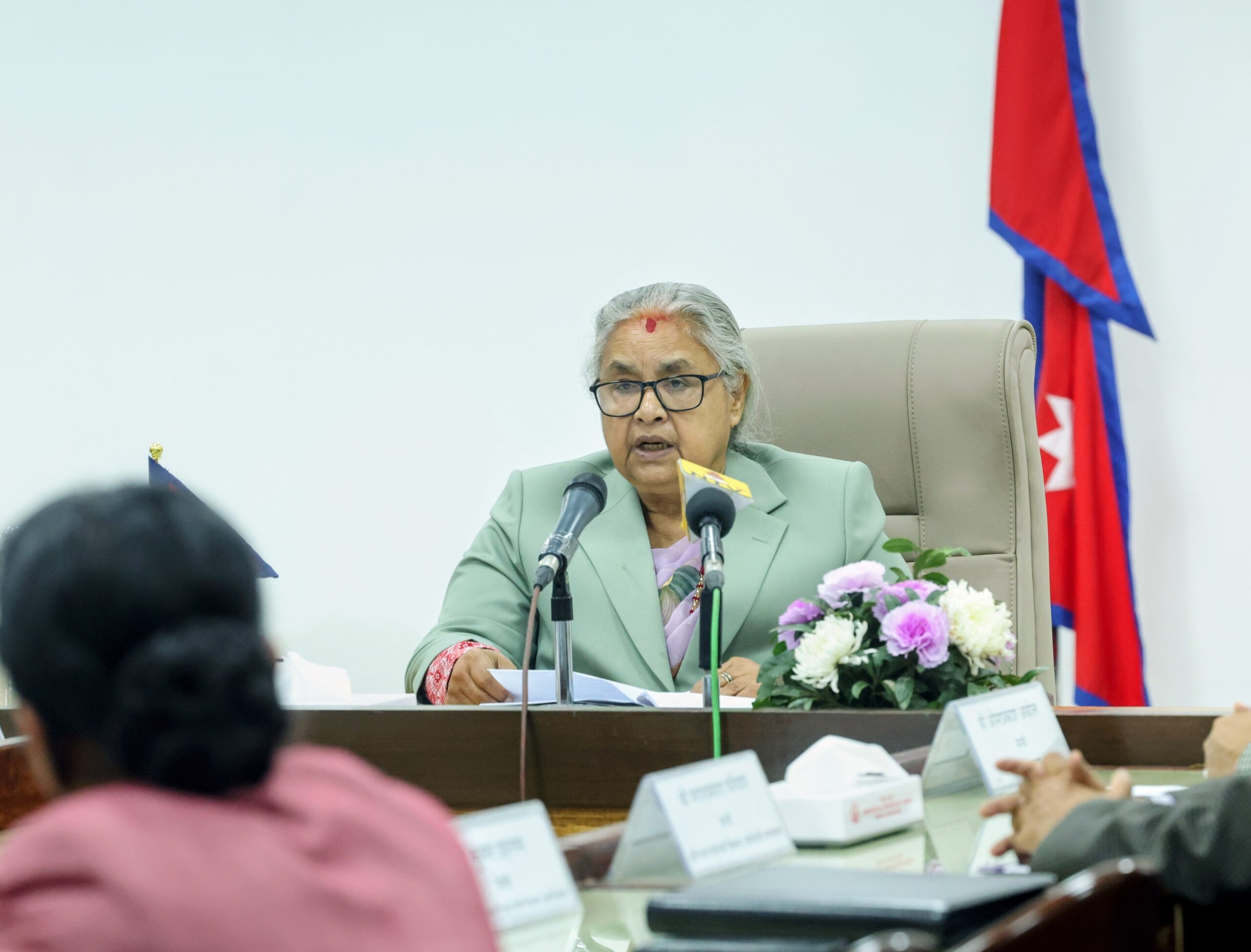
Kathmandu: Prime Minister Sushila Karki has called for stronger efforts to ensure rights, justice, and opportunities for all women and girls, stating that meaningful participation and dignity for women are essential for strengthening democracy and building an equitable society.
Speaking at a special event marking the International Women’s Day on March 8 at Singha Durbar in Kathmandu, Prime Minister Karki extended greetings to Nepali citizens at home and abroad. This year marks the 116th International Women’s Day, observed globally under the theme “Rights, Justice, Action for All Women and Girls,” while Nepal marked the day with the national commitment to ensure rights, justice, and opportunities for all women and girls.
Prime Minister Karki emphasized that International Women’s Day is not merely a celebration but a day to remember the historic struggles for women’s rights, equality, and dignity. She said it is also an opportunity to review achievements, identify unfinished tasks, and renew commitments toward building a more equal society.
Referring to Nepal’s recent political developments, the Prime Minister noted that the country had just completed the election for the House of Representatives of Nepal, with vote counting still underway. She said the election was held under extraordinary circumstances rather than a regular schedule but was conducted peacefully and democratically.
“The successful completion of the election and the democratic and constitutional outlet it has provided is not a small achievement,” she said. “It is a victory for the Nepali people, a victory for the nation, a victory for the Constitution, and a victory for the Nepali people’s unwavering faith in democracy and the rule of law.”
She expressed gratitude to the Election Commission of Nepal, security personnel, civil servants, political parties, candidates, and domestic and international observers for their contributions to ensuring a peaceful electoral process.
Highlighting democratic values, the Prime Minister said that in democracy, a ballot is not just a piece of paper but a symbol of citizens’ dignity. She stressed that the people are the ultimate source of power and that elected representatives must continuously earn public trust.
“Although the legal mandate may last five years, its moral legitimacy must be renewed every moment through the people’s trust,” she said, warning against arrogance, abuse of power, or disrespect toward citizens.
Prime Minister Karki noted that while women’s access to resources and opportunities has increased over the years, achieving respect and dignity remains a challenge. She emphasized that ensuring equal opportunity means eliminating discrimination, injustice, and corruption while fostering a culture of accountability and fairness toward all citizens.
She also acknowledged that corruption lies at the root of inequality, discrimination, and injustice, and called for stronger collective efforts to address these challenges.
The Prime Minister highlighted that Nepal’s Constitution guarantees women’s rights as fundamental rights and promotes inclusive participation, gender equality, and social justice as guiding principles of state governance. Women’s participation has increased significantly in state structures over the past decade, from local governments to the federal parliament.
Various policies and programs have been implemented to expand women’s access to education, healthcare, employment, entrepreneurship, and leadership, contributing to positive changes in women’s social, economic, and political empowerment, she said.
However, Karki admitted that many challenges remain. Women still face discrimination, unequal opportunities, gender-based violence, and deep-rooted cultural inequalities. Many continue to lack access to quality education, basic health services, dignified employment, and meaningful leadership roles.
“The discrimination that women once faced in household spaces has taken new forms in workplaces today,” she said.
The Prime Minister stressed that the goal should not only be increasing women’s participation but ensuring meaningful and effective participation.
She also noted that not all women share the same circumstances, pointing out that women from marginalized communities face greater challenges. She specifically highlighted the need for stronger representation of Dalit women and women from Karnali, Madhes, and other marginalized communities in policymaking.
Karki said building an equitable society based on equality, empowerment, and social justice is a historic responsibility shared by the state, political parties, civil society, the private sector, the media, and national and international development partners.
“Only when women receive respect, security, and equal opportunities will democracy be strengthened and the true spirit of the Constitution realized,” she said.
Concluding her remarks, the Prime Minister called on all stakeholders to work together to strengthen gender equality, democratic values, and social justice, expressing hope that International Women’s Day would further reinforce commitments to equality, inclusion, and democracy.