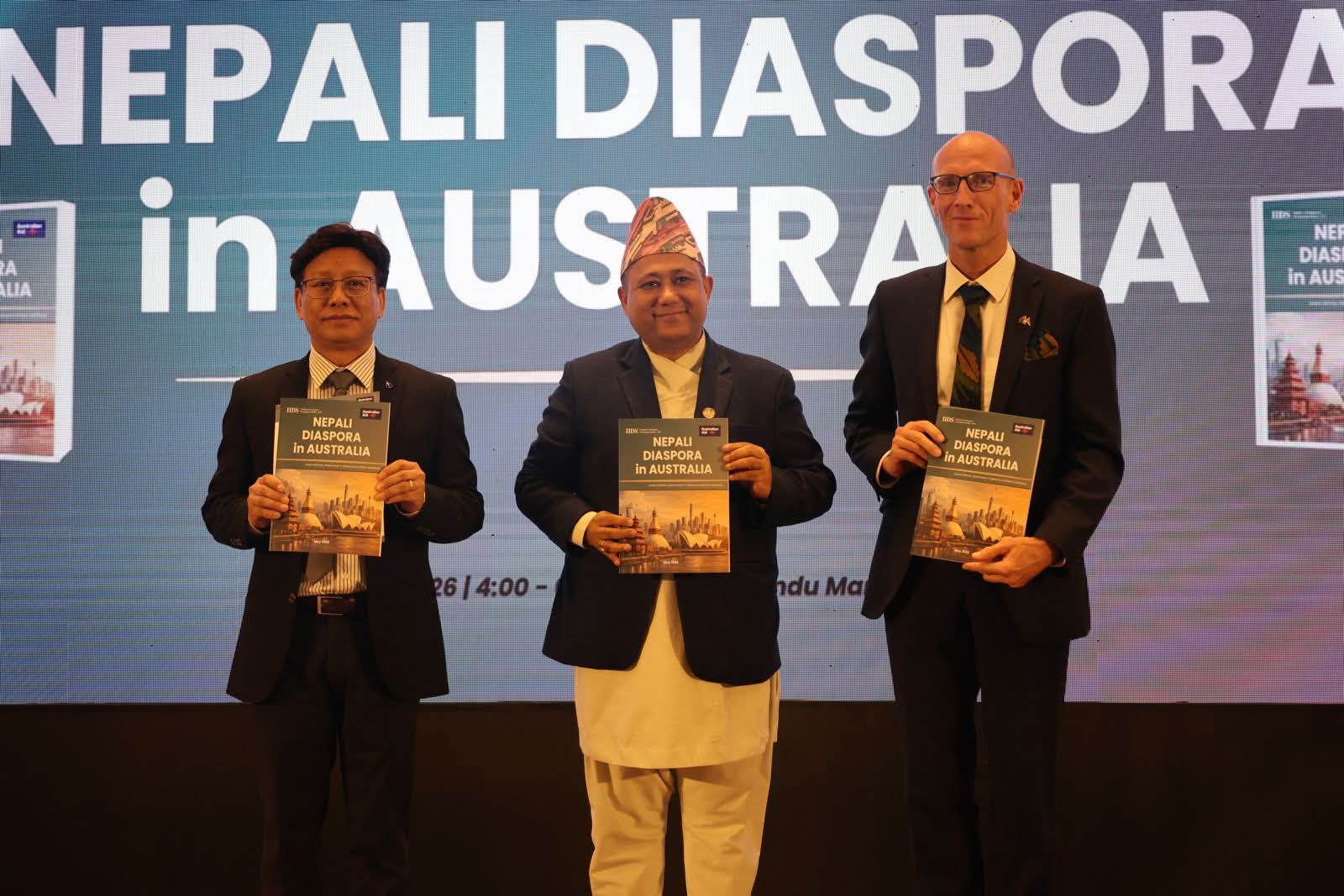
Kathmandu: The Institute for Integrated Development Studies (IIDS), in collaboration with the Australian Embassy in Nepal, organized the official launch and dissemination event of the report “Nepali Diaspora in Australia” at Kathmandu Marriott Hotel on May 18. The event brought together policymakers, diplomatic representatives, diaspora leaders, academics, private sector representatives, development partners, and other stakeholders to discuss the growing role of the Nepali diaspora in strengthening Nepal Australia relations.
The report highlights the remarkable growth and transformation of the Nepali born community in Australia. According to the latest figures cited in the study, the Nepali born population in Australia reached an estimated 213,580 by June 2025, rising sharply from 122,506 recorded in the 2021 Australian Census and almost five times higher than the community’s size in 2014. This growth reflects not only migration, but also the emergence of a young, educated, economically active, and increasingly settled Nepali community in Australia.
The study, based on a survey of 1,089 respondents, shows that education has been the main pathway of migration, with 61.16 percent of respondents moving to Australia for higher education. Over time, this education led migration has gradually developed into a more diverse and professionally active community. Many respondents are now working across key sectors such as health and care, IT and technology, hospitality, engineering, finance, and business services.
Income patterns also indicate growing economic stability within the community. Survey findings show that the largest share of respondents, 45.27 percent, earn between AUD 65,001 and AUD 120,000 annually, while the estimated median annual income is around AUD 77,039. These figures suggest that the Nepali diaspora in Australia is not only integrating into the labour market, but also moving towards greater financial confidence and long term settlement.
Biswash Gauchan, FCA and Executive Chair of IIDS, who set the tone with a striking reality check: diaspora remittances account for over 30% of Nepal’s GDP, nearly $15 billion for an economy of $45 billion. That’s not a footnote but a foundation. And if harnessed well, Dr. Gauchan believes it could fast-track Nepal’s development and produce the country’s second billionaire from among its own diaspora. He stated that the diaspora’s role in fast-tracking Nepal’s development is immense and it is now on us to reciprocate, by finding meaningful ways to engage them socially and economically.
Sneha Ghimire, Senior Program and Research Assistant at IIDS, presented the major findings of the study. She noted that the diaspora’s role is expanding beyond traditional remittance flows, with growing contributions in investment, entrepreneurship, professional networks, trade linkages, cultural exchange, and knowledge transfer. Survey findings show that 34.99 percent of respondents have made formal investments. However, among those who have invested, 51.18 percent invest only in Australia, while 22.57 percent invest only in Nepal. This points to both the financial capacity of the diaspora and the need to create a more enabling investment environment in Nepal.
Simon Ernst, Australian Ambassador to Nepal, offered a perspective that went beyond numbers, speaking to the depth, diversity, and growing influence of the Nepali community in Australia. He noted that the diaspora’s value extends well beyond remittances; it is Nepal’s living network worldwide. And in a moment that drew smiles from the room, he observed that the exchange is already happening in both directions, visible even in the coffee and cafe culture taking shape across Kathmandu. He emphasized the Nepali diaspora is an asset, not just for the community abroad, but for Nepal itself. It gives the country connections across the world that can be leveraged for greater benefit. This report, we hope, provides strong evidence-based guidance on how that potential can be harnessed.
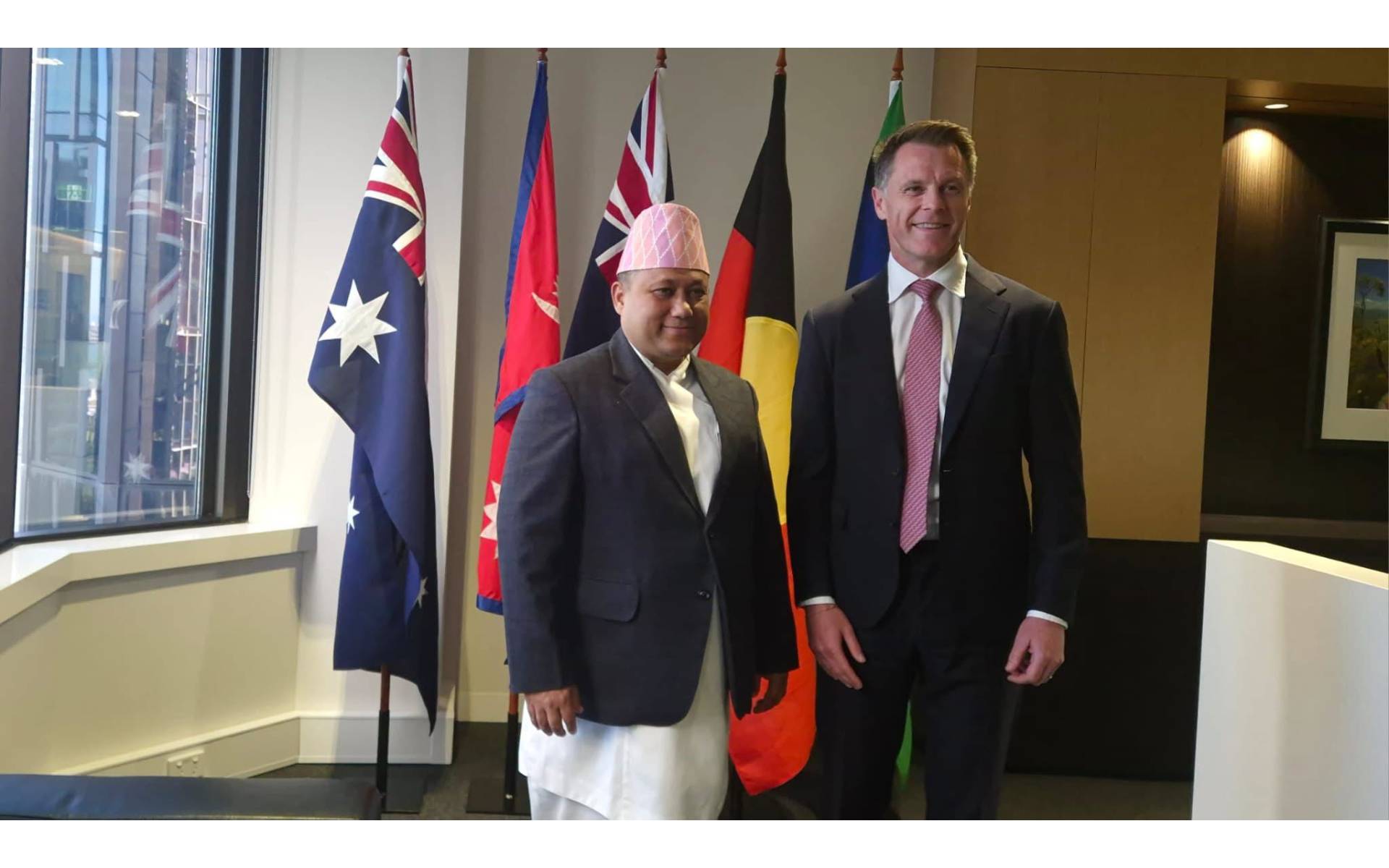
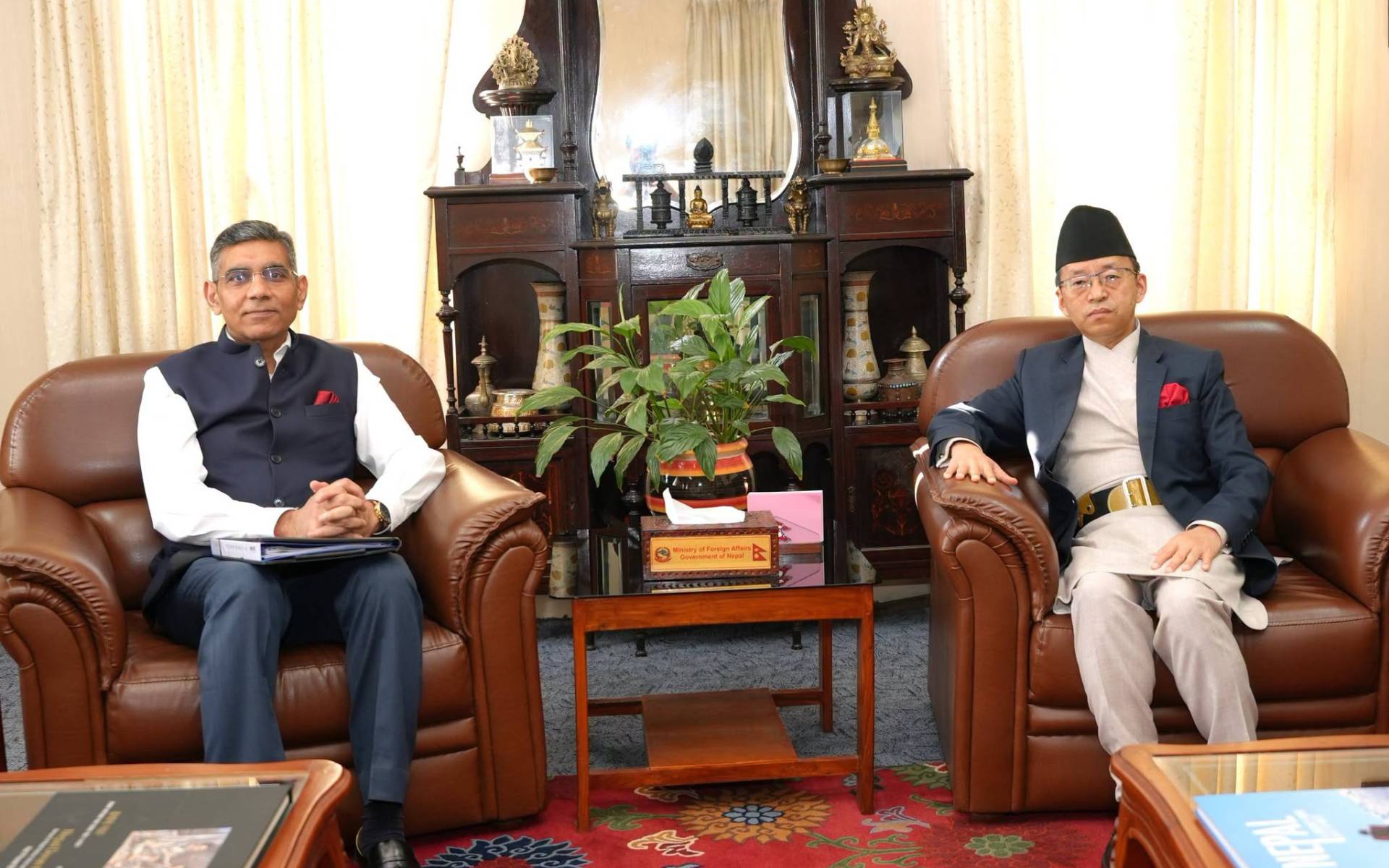
Shishir Khanal, Minister for Foreign Affairs, shared that his presence at the launch was driven by genuine curiosity and by early-stage deliberations already underway within the ministry. He was direct about the constraints: Nepal’s constitution currently makes no provision for dual citizenship, making it a legislative wall, not just a policy gap. But rather than stopping there, he pointed to NRN citizenship as a viable avenue worth pursuing, and signaled that the ministry is actively working to identify what can be unlocked within the existing legal framework.
The study also shows that the diaspora’s connection with Nepal remains strong. 50.27 percent of respondents visit Nepal mainly to meet family and friends. In terms of frequency, 37.74 percent visit Nepal every two to three years, while 10.38 percent visit at least once a year. At the same time, 61.71 percent of respondents intend to remain in Australia, suggesting that the diaspora is becoming more permanently settled while still maintaining emotional, cultural, and economic ties with Nepal.
The report launch was followed by a rich panel discussion moderated by Akhilesh Upadhyay, Policy Lead at IIDS. The panelists consisted of Birendra Raj Pandey, Former President of CNI; Meena Poudel, Social Analyst and Researcher; and Pjay Shrestha, Founder and CEO of Digital Consulting Ventures. The panelists brought perspectives from the private sector, academia, and the digital economy. The conversation moved beyond remittances, exploring investment opportunities in energy, agriculture, and digital infrastructure; the case for an integrated migration policy; and the critical role of cultural exchange and incentive-driven engagement. The consensus was clear: the diaspora’s potential is vast – but realizing it demands coordinated policy, clear communication, and genuine political will.
The report further identifies key policy issues that could shape future diaspora engagement. Survey data shows that 73.04 percent of respondents believe dual citizenship would strengthen their Nepali identity and sense of belonging, while 66.39 percent identify dual citizenship as a major policy measure that would encourage more investment in Nepal. At the same time, respondents pointed to major barriers to investment, including bureaucratic delays, economic uncertainty, policy and legal changes, lack of transparency, and complicated tax and legal systems.
The event concluded with closing remarks by Durga Bhattarai brought the event full circle, from vision to accountability. Drawing on his years at the Ministry of Foreign Affairs, he reflected on what Nepal has promised its diaspora and how much of that promise remains unfulfilled. His message to the state was measured but direct: the diaspora’s opportunities are vast, and meeting them demands genuine flexibility and sincerity in return. He pointed to existing frameworks — the bilateral consultation mechanism and the 2024 TIFA – as foundations worth building on, and expressed quiet satisfaction at seeing people-to-people ties between Nepal and Australia finally coming into their own.