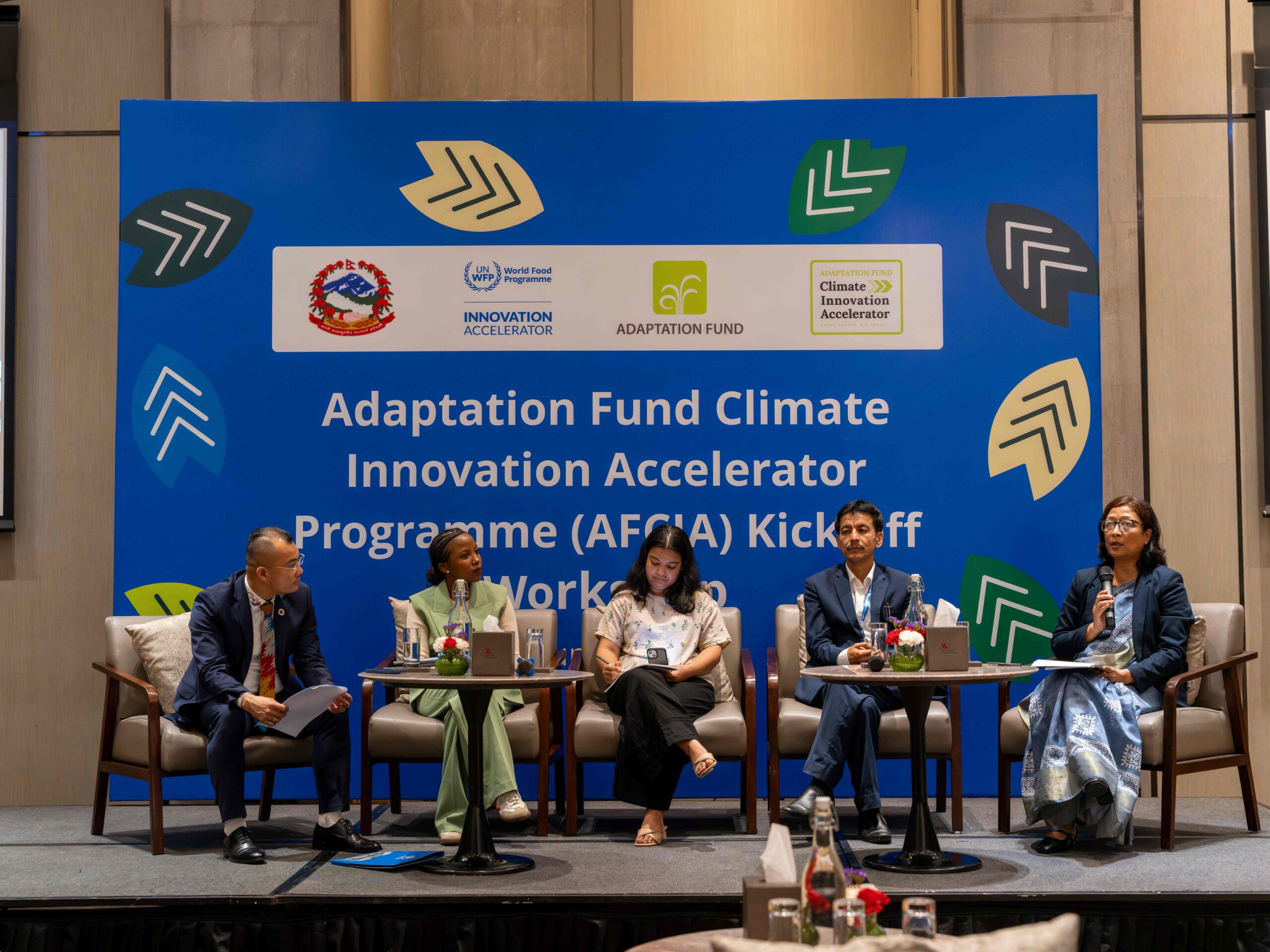
Kathmandu: The United Nations World Food Programme (WFP), in collaboration with the Ministry of Agriculture, Forests and Environment, kicked off the implementation phase of the Adaptation Fund Climate Innovation Accelerator (AFCIA) on June 8, marking a major step towards strengthening climate resilience and food security in Nepal.
The accelerator supports local start-ups to pilot and scale solutions across the food system, including solar-powered irrigation and clean energy solutions, digital advisory platforms for farmers, satellite-based insurance and climate data tools and market and value chain innovations for smallholders. The solutions are designed to help communities better adapt to rising climate risks—including floods, droughts, heatwaves and extreme weather—that threaten lives, livelihoods and food systems across the country.
As part of the global AFCIA programme, WFP launched an open call for applications in September 2025, receiving 278 applications. Four startups from Nepal—aQysta Nepal, DV Excellus, Gham Power and PlantSat—were selected as finalists and participated in an innovation bootcamp, in Munich in January 2026. With the programme now entering its in-country implementation phase, these innovators will begin a nine-month acceleration journey, receiving technical support, mentorship and funding to test and refine solutions with strong potential for impact and scalability.
“Innovation plays a critical role in helping communities adapt to the unprecedented challenges posed by climate shocks,” said Riaz Lodhi, WFP Nepal Country Director. “By supporting local solutions and strengthening partnerships, we can build more resilient food systems and safeguard livelihoods across Nepal.”
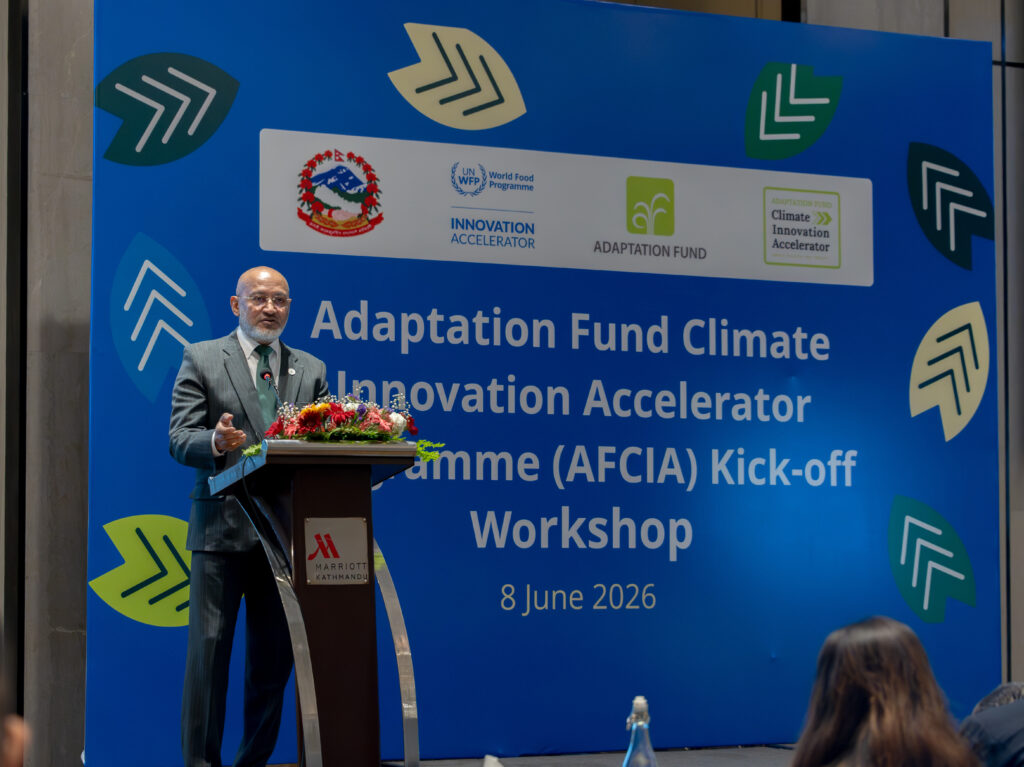
The event brought together representatives from government, development partners, academia and the private sector to explore pathways for scaling climate-smart solutions nationwide. Discussions focused on strengthening collaboration, leveraging investment, and accelerating the transition from pilot projects to large-scale impact.
“The Government of Nepal recognizes the urgent need to scale climate adaptation solutions that are locally relevant and sustainable,” said Dr. Govinda Prasad Sharma, Secretary, Ministry of Agriculture, Forests and Environment. “Through partnerships with WFP, we aim to empower innovators and strengthen resilience across our agricultural systems and vulnerable communities.”
The AFCIA programme takes a holistic approach across the food system—from natural resource management and agricultural production to distribution and consumption. It aims to strengthen local capacity, foster partnerships and bridge gaps between current practices and climate-resilient outcomes in line with global development goals, including Zero Hunger (SDG 2).
His Excellency Rob Fenn, British Ambassador to Nepal, said, “Nepal presents a unique opportunity as a living laboratory for climate adaptation and innovation. Across its diverse landscapes—from high mountain communities to smallholder farming systems—we see how local knowledge and ingenuity, combined with targeted investment, can drive transformative change.” He added, “Initiatives like AFCIA demonstrate the power of partnership in scaling these solutions.” He further encouraged universities, research institutions and innovators globally to engage with Nepal, learn from its experiences, and collaborate in advancing solutions for a changing climate.
The AFCIA programme is part of a broader global effort supported by the Adaptation Fund to accelerate innovation and support communities most vulnerable to climate impacts.